Description
Voltage Confirmed Before Dispatch — Every XZF450 automatic edge banding machine ships with electrical schematics matched to your facility’s exact voltage and frequency, eliminating arrival-day surprises.
Technical Specifications
| Parameter | Value |
|---|---|
| Model | XZF-450 |
| Product Type | Automatic Edge Banding Machine |
| Total Power | 9.5 kW |
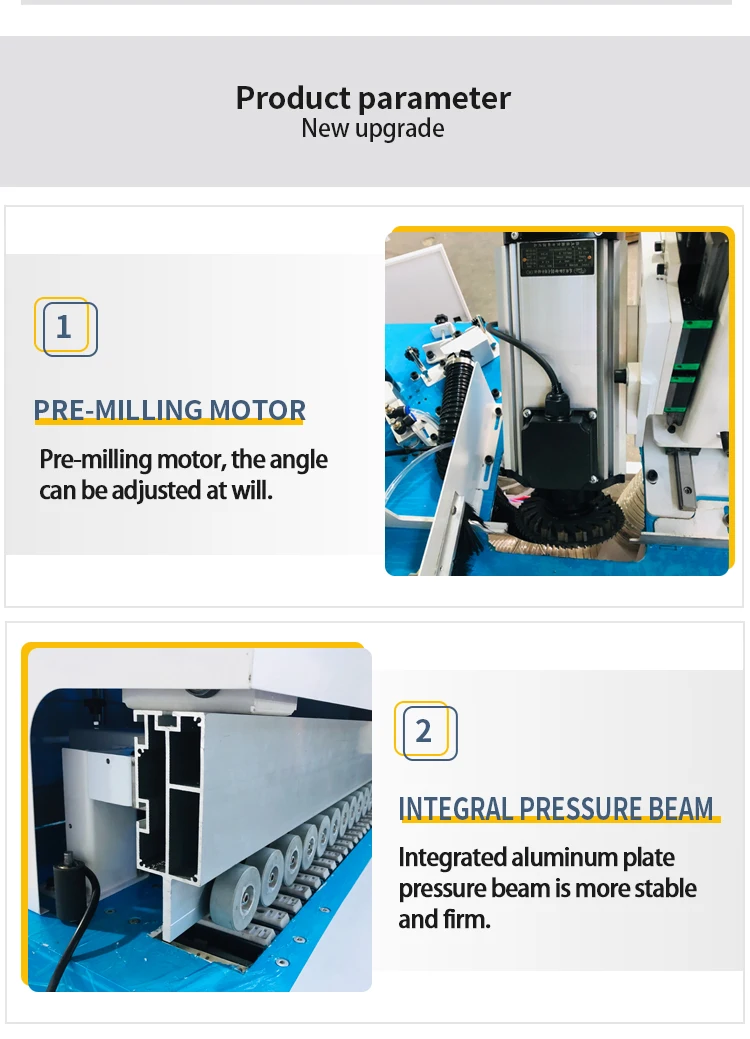
| Pre-milling Motor | 4 kW |
| Trimming Power | 2.2 kW × 2 |
| Polishing Power | 0.4 kW × 2 |
| Edge Power | 0.16 kW |
| Transmission Power | 180 W |
| Vacuum Power | 550 W |
| Voltage | 380V / 415V (frequency to be confirmed per destination market) |
| Feed Speed | 0–12 m/min (variable) |
| Edge Banding Thickness | 0.3–3 mm |
| Edge Banding Height | 0–50 mm |
| Minimum Sheet Length | 30 cm |
| Minimum Sheet Width | 15 cm |
| Glue Pot Capacity | 4000 ml |
| Air Source Pressure | 0.5–0.7 MPa |
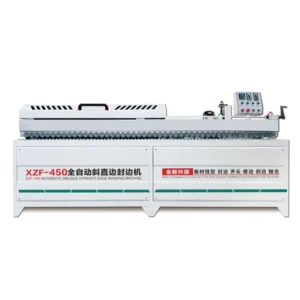
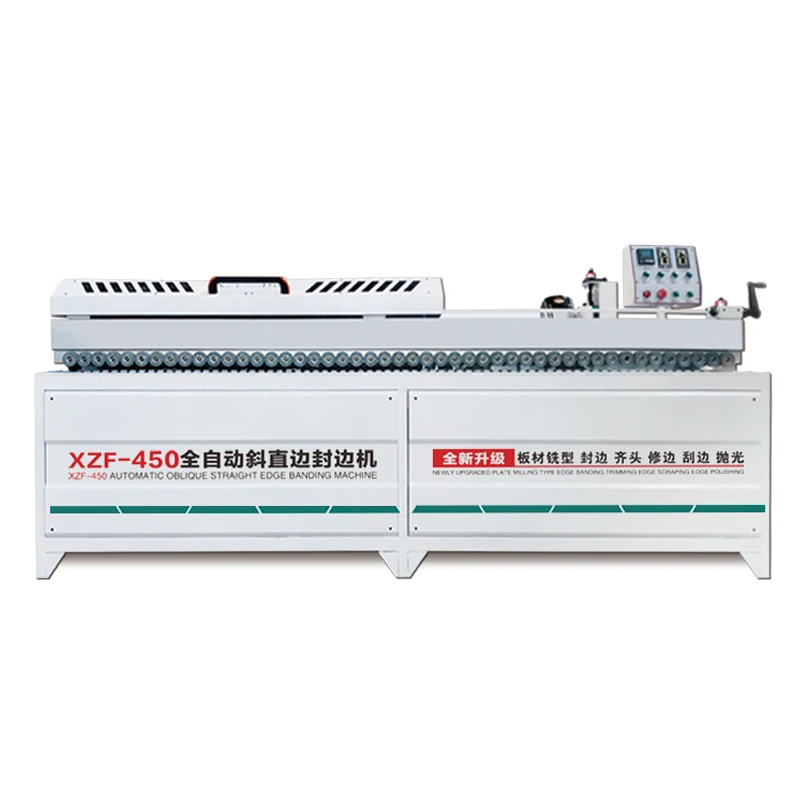
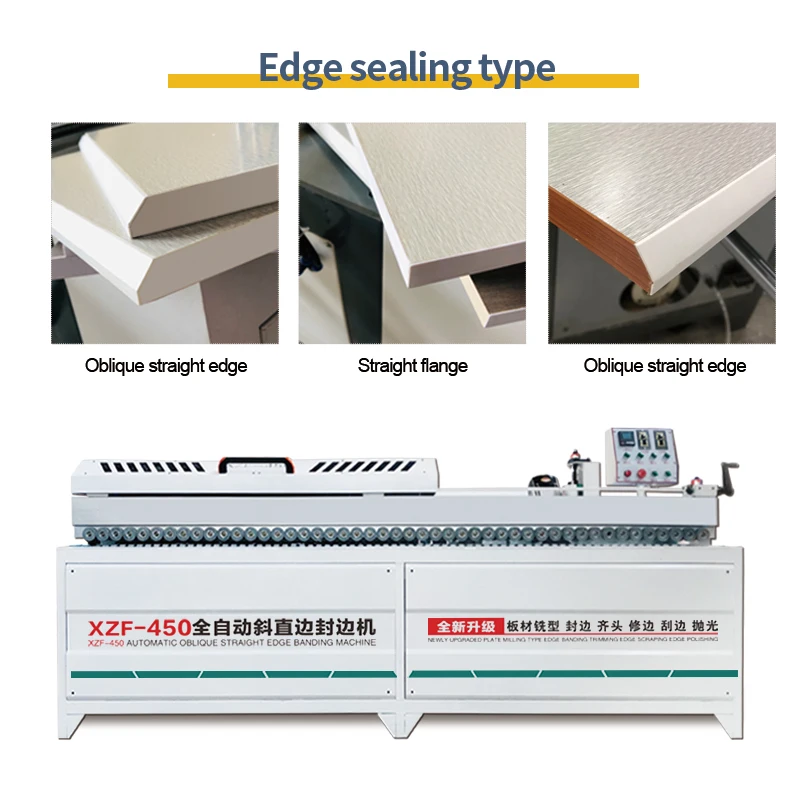
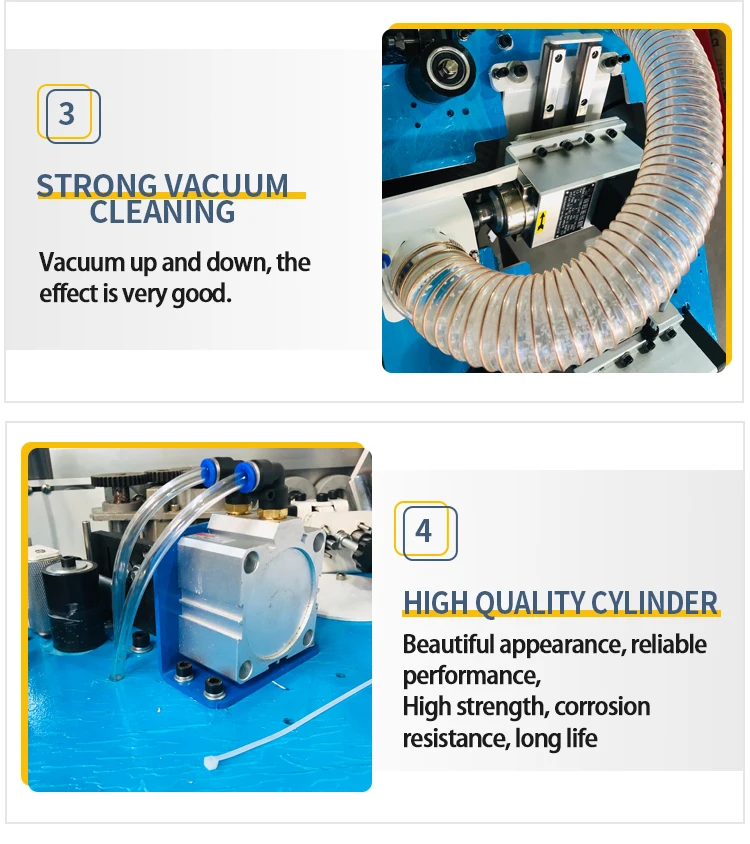
| Standard Functions | Plate milling, 30°/45°/60° edge banding, trimming, scraping, polishing, high-power vacuuming |
| Overall Dimensions (L×W×H) | 300 × 65 × 135 cm |
| Net Weight | 430 kg |
| Plug Options | EU, USA, AU, UK |
| Language Options | Chinese and English standard; other languages customizable |
Application Suitability
| Application | Material or Output |
|---|---|
| Cabinet door edge finishing | MDF and melamine-faced board with PVC or ABS edge banding |
| Custom furniture panel processing | Plywood and particleboard with veneer or polymer banding |
| Solid wood panel edge sealing | Solid wood board and blockboard with matching wood veneer strips |
| Polymer door profile banding | Polymer door components requiring 45-degree bevel edge treatment |
| Medium to large batch production runs | Straight and 45-degree edges across mixed substrate schedules |
Why the Voltage Question Should Come Before the Price on Any edge banding machine in stock
A machine that cannot run on your local grid is scrap metal in a crate.
I have walked into workshops from Romania to Mexico where a brand-new edge bander sat idle for weeks because the quoted voltage did not match the facility’s three-phase supply. The buyer focused on feed speed and trimming stations, but never confirmed whether the machine was wound for 380V/50Hz or 415V/60Hz. By the time the mismatch surfaced, the return window had closed and rewinding the motor locally cost more than the freight. [NEED_CITE: voltage and frequency standards by export market]
Every XZF450 leaves the factory with a confirmed electrical schematic and plug type matched to the buyer’s written specification. The 9.5 kW total load requires a dedicated circuit — something worth verifying against your workshop’s panel capacity before the machine arrives rather than on commissioning day.
Stock Availability and Dispatch Timing
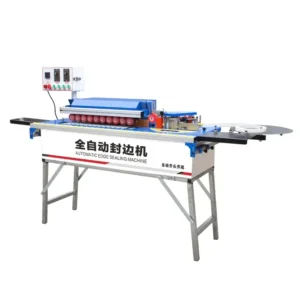
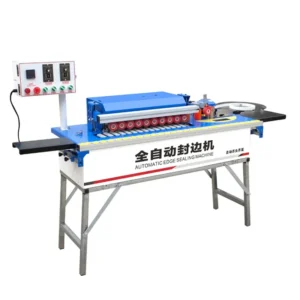
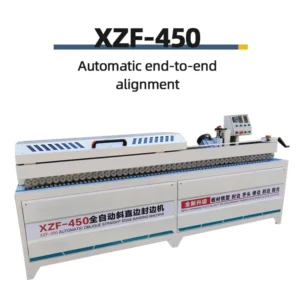
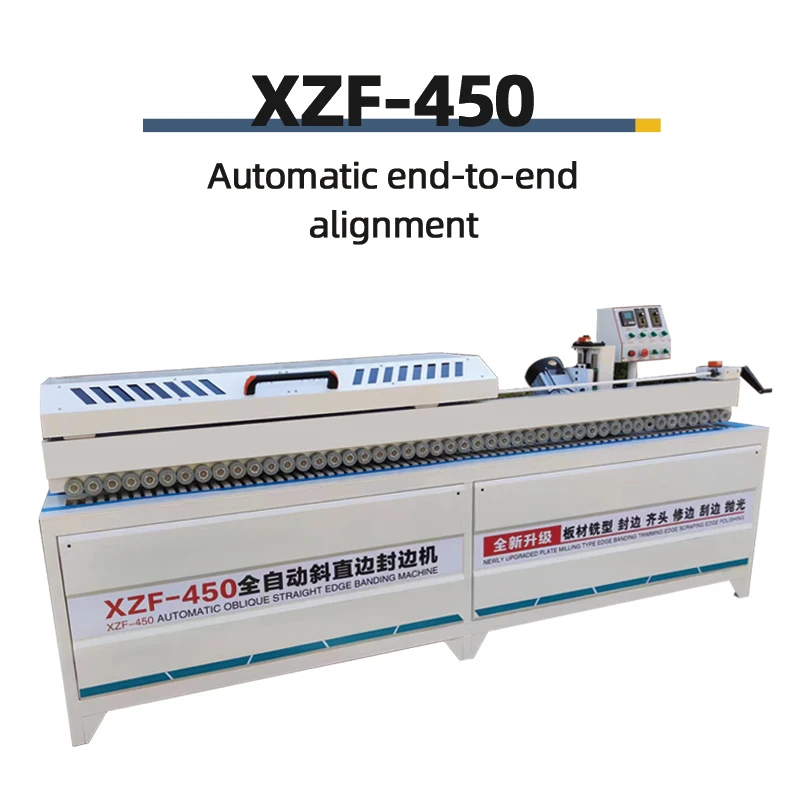
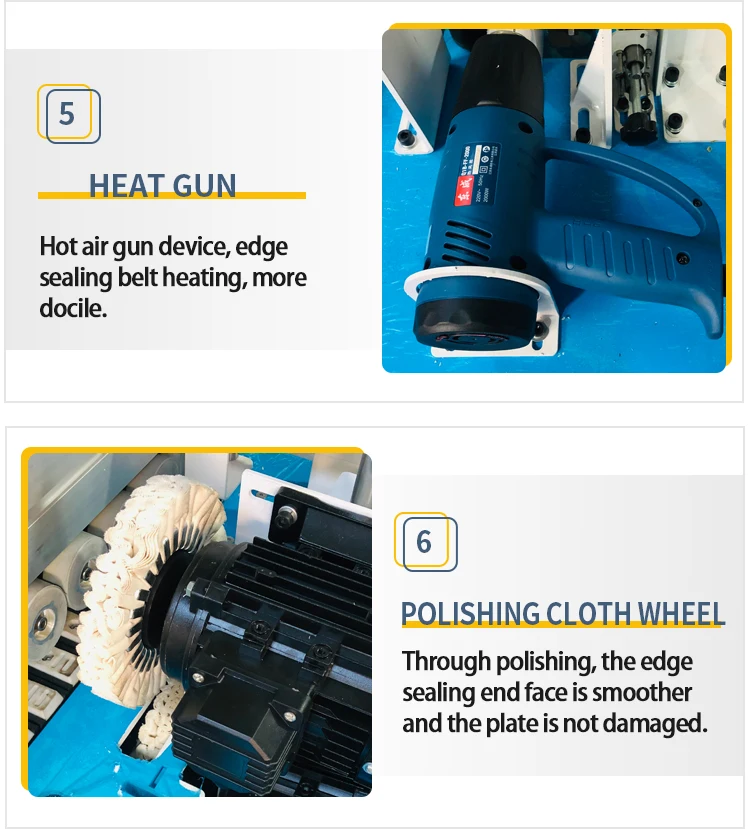
Workshops expanding a production line or replacing a failed manual bander rarely have the luxury of waiting through a full build cycle. The XZF450 is held as an edge banding machine in stock for buyers who need a full-automatic unit dispatched quickly. Seven integrated functions — pre-milling, gluing, end trimming, rough and fine trimming, scraping, and polishing — mean the machine arrives as a complete edge processing cell rather than a base unit that still needs add-on modules.
Voltage and control panel language are configured before dispatch so the machine is production-ready on arrival, not a project for your local electrician and translator.
Throughput Matching for Cabinet and Furniture Lines
A stocked machine only solves the problem if it fits your existing line speed. The variable feed rate from 0 to 12 m/min lets the XZF450 keep pace with upstream panel saws and downstream boring stations without creating a bottleneck at the edge finishing stage. For joinery workshops moving from a manual feed bander, the jump to continuous automatic feed at this speed range represents a noticeable increase in daily panel output without requiring a second shift.
Cabinet makers running mixed schedules — MDF carcases in the morning, plywood shelving in the afternoon — benefit from the quick-change edge banding thickness range of 0.3 to 3 mm. [NEED_CITE: typical edge banding thickness requirements for cabinet and furniture production]
How the Specification Sheet Translates on the Shop Floor
The 4 kW pre-milling motor deserves attention because it determines how much material the machine can remove before the gluing station. When panel saw cuts leave micro-chipping on melamine surfaces, the pre-mill heads clean the edge to expose a fresh substrate face, which directly improves glue adhesion. A motor of this rating handles heavy stock removal on particleboard without stalling at higher feed rates.
The 4000 ml glue pot capacity supports sustained production runs before requiring a refill. For shops running high-gloss PVC on cabinet doors, maintaining stable glue temperature across a long batch is essential — a small pot cycles through heating and cooling too quickly, causing inconsistent bond lines. The paired 2.2 kW trimming motors and 0.4 kW polishing motors work in sequence to produce a finished edge that does not require secondary hand work before the panel moves to assembly or packing.
Air consumption at 0.5–0.7 MPa is within the range of a standard workshop compressor, but confirm your airline can sustain that pressure at the machine’s inlet, not just at the compressor outlet, especially if multiple pneumatic tools share the same line.
The Hidden Cost of Skipping Configuration Checks
A machine bought from stock without confirming feed height compatibility can create problems downstream. If the panel transfer table at your boring station sits at a different height than the XZF450’s outfeed, operators spend the day wrestling boards across a gap — and scratched panels from mishandling negate whatever time the automatic feed saved. [NEED_CITE: material handling mismatches in panel processing lines]
Ignoring the 300 × 65 × 135 cm footprint and 430 kg weight until the crate arrives leads to another common failure: the machine physically blocks a fire exit or cannot pass through the workshop door. Measure the route from unloading point to installation position before placing the order.
Why Source This Machine Here
In-house manufacturing with patented cutting mechanisms means the XZF450 is built and tested under one roof, not assembled from subcontracted sub-assemblies with unknown tolerances.
Four-stage quality control — incoming material, in-process, finished product, and pre-shipment verification — ensures the unit you receive has been run on actual panel stock before crating, not just powered on for a photo.
Voltage, plug type, and control panel language are customized as standard, not treated as special requests that add weeks to lead time.
Engineer-led configuration recommendations arrive as a formal quotation within 24 hours of inquiry, with the electrical schematic included so your electrician can verify the circuit before the machine ships.
Documentation & Verification
- Factory test record run on your specified panel material and edge thickness before dispatch
- Electrical schematic with confirmed voltage, frequency, and plug type for your facility
- Operation and maintenance manual delivered in your operator’s agreed language
- Spare parts list with part numbers for trimming blades, scraper inserts, and polishing wheels
- Packing photographs showing crate condition and machine securing before container loading
Installation, Commissioning & Support
- Dedicated 380V/415V three-phase circuit required for the 9.5 kW total load; confirm breaker rating before arrival
- 300 × 65 × 135 cm footprint requires level concrete floor with clearance on both infeed and outfeed sides
- Machine ships as a single unit at 430 kg; plan forklift or pallet jack access from dock to position
- First-run commissioning includes glue temperature calibration for your specific edge banding material and substrate
- Operator training covers feed speed adjustment, pre-mill depth setting, and trimming station alignment
- Consumable spare parts including trimming blades and polishing wheels identified on the included parts list
What to Include in Your Inquiry
Send the specific panel materials you run most often, the edge banding type and thickness you use, and your workshop’s three-phase voltage and frequency. If you are integrating the XZF450 into an existing line, include the feed height and throughput of your upstream saw and downstream boring or drilling station so the configuration can be matched before the machine ships.
Frequently Asked Questions
Q: What is the current stock availability and dispatch lead time for the XZF450?
A: The XZF450 is held in stock as a ready-to-ship configuration. Once your voltage, frequency, plug type, and control panel language are confirmed in writing, the unit goes through pre-shipment testing and is prepared for dispatch. Typical lead time from order confirmation to container loading runs in the range of days rather than weeks, though exact timing depends on customization scope and destination port scheduling.
Q: Can the voltage, frequency, and plug type be confirmed before the machine ships?
A: Yes. Before any XZF450 leaves the factory, you receive a written confirmation of the voltage, frequency, and plug type matched to your facility. An electrical schematic is included with the documentation package so your electrician can prepare the dedicated circuit and verify compatibility ahead of delivery. Mismatches discovered on arrival are eliminated through this pre-dispatch verification process.
Q: Is the control panel available in my operator’s language, and is it ready on delivery?
A: Chinese and English are standard on the control panel. Additional languages are configurable before shipment. The language is set and verified during pre-shipment testing so your operator faces a readable interface on day one. Confirming the required language at the inquiry stage ensures it is completed before dispatch rather than requiring an on-site software update.
Q: Can I order a single unit now and add matching line equipment later?
A: The XZF450 operates with a feed height and throughput range compatible with a broader family of woodworking machines from the same manufacturer. When you are ready to add upstream panel saws or downstream boring stations, the line can be configured for matched material flow without replacing the edge bander. Share your future expansion plans at the inquiry stage so compatibility is built into the initial recommendation.