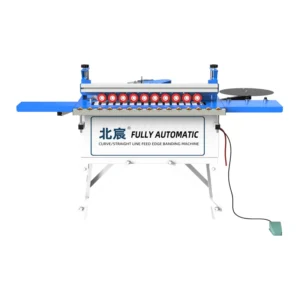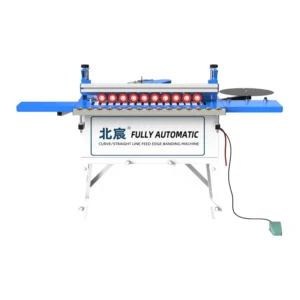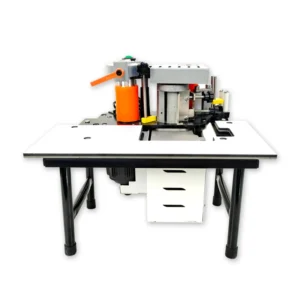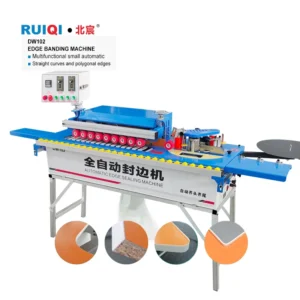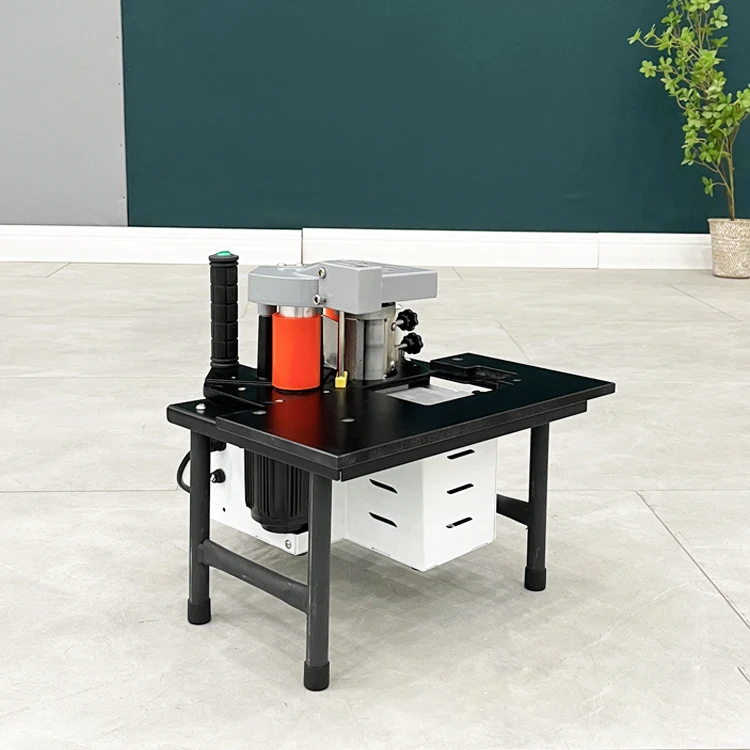
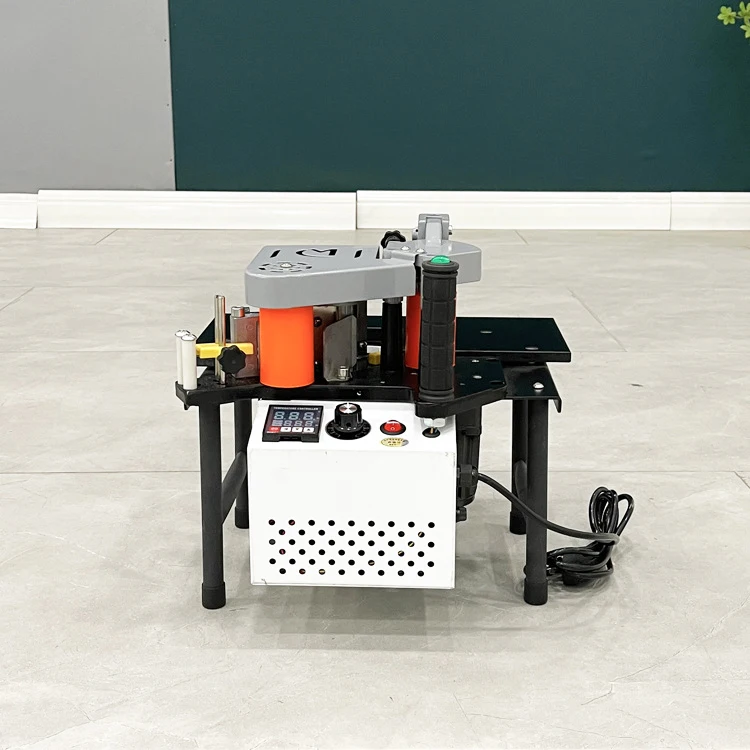
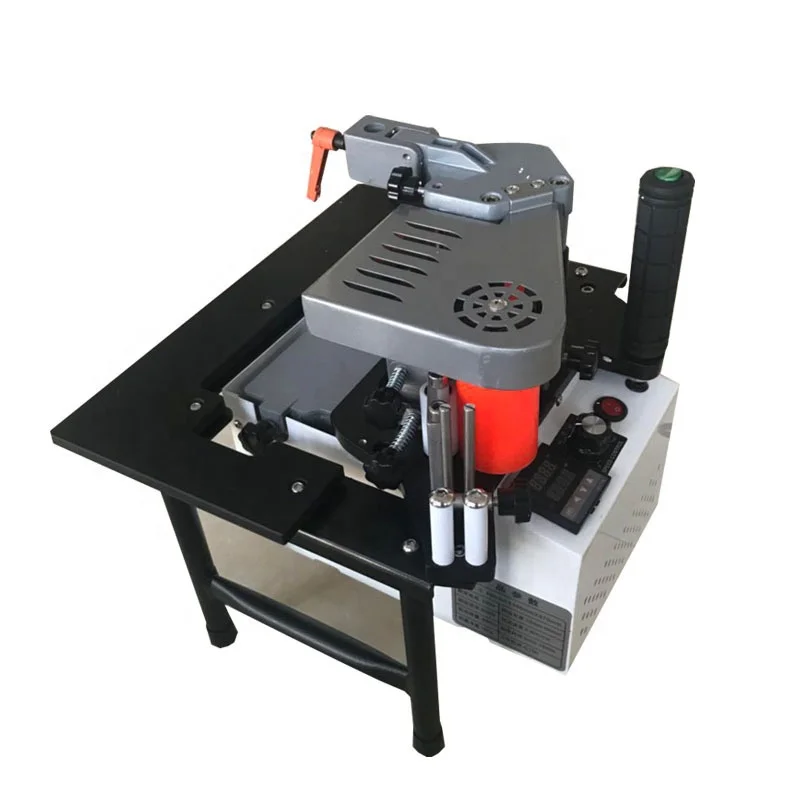
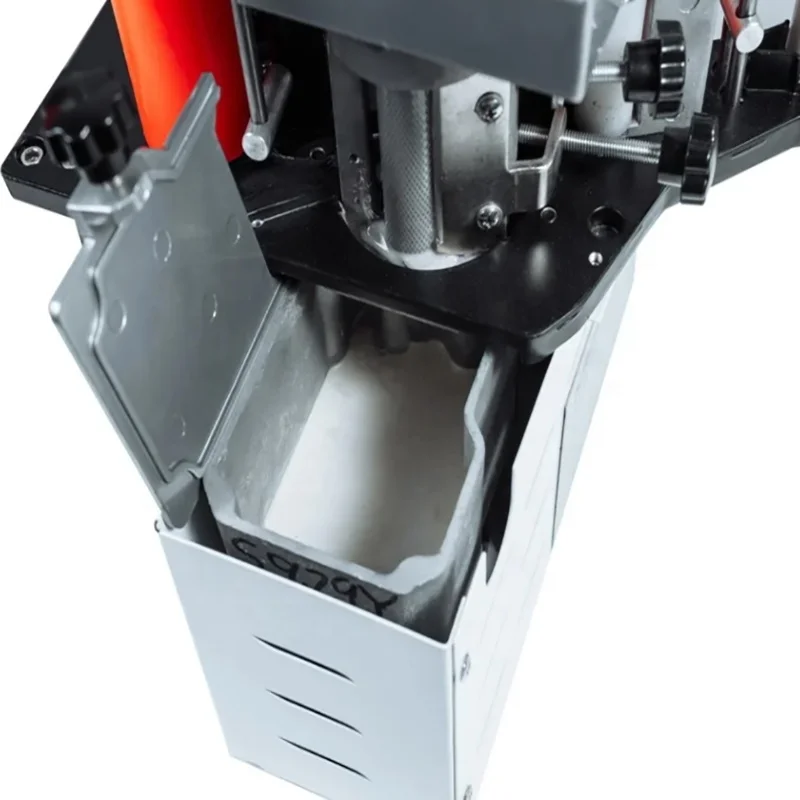
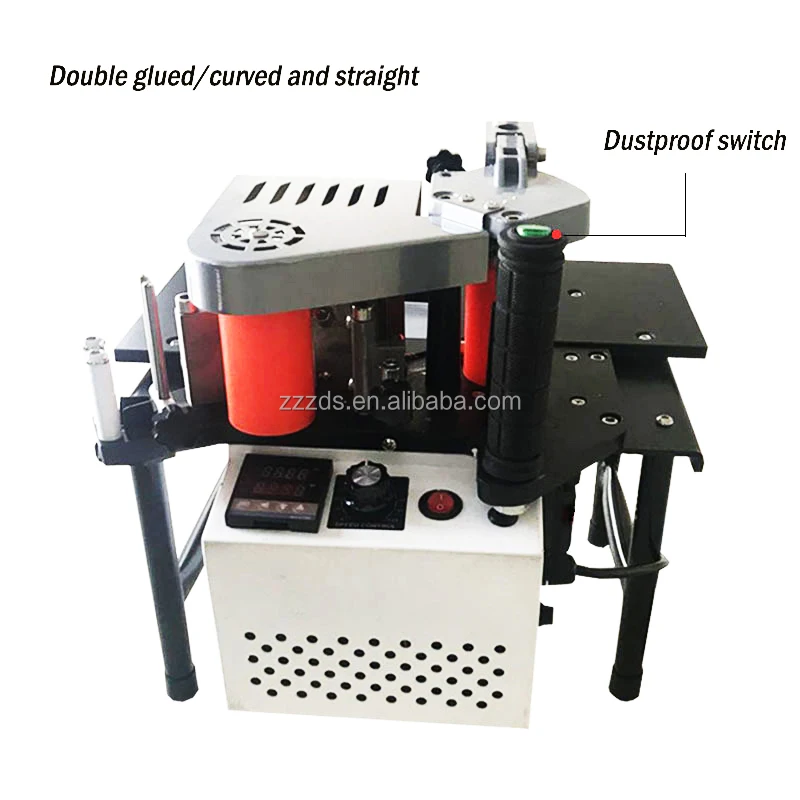
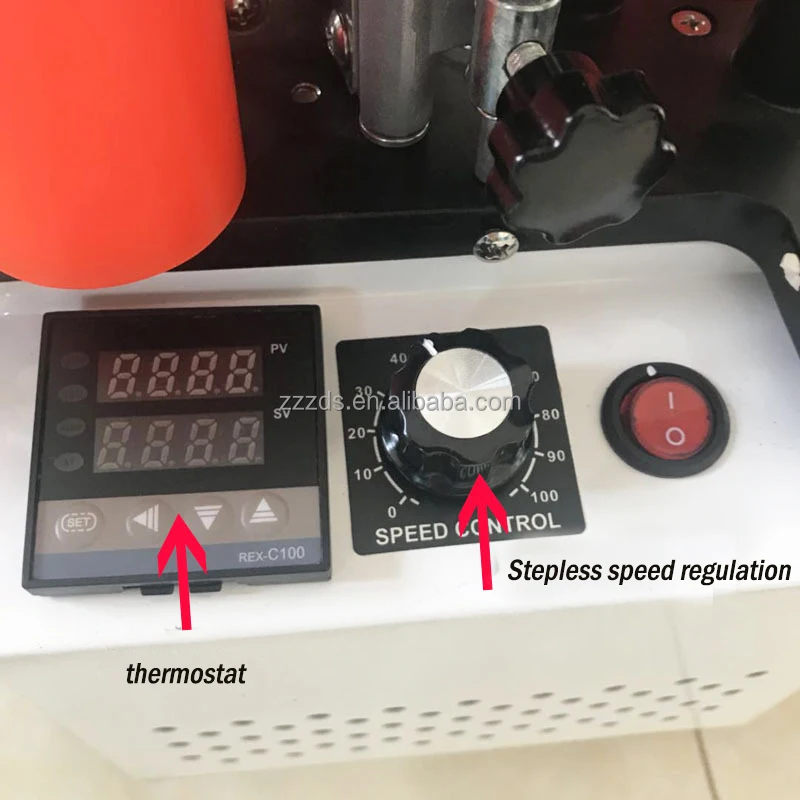
Description
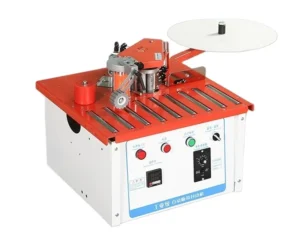
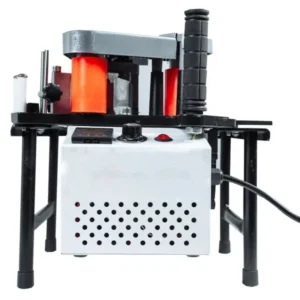
Stocked Inventory Ready — Portable edge bander units held in warehouse with multiple plug configurations, dispatched only after voltage and frequency confirmation against buyer’s local grid standard.
Technical Specifications
| Parameter | Value |
|---|---|
| Product Type | Portable Edge Banding Machine |
| Shape of Edge-banding Plates | Curved, Straight and Special-shaped Sheet |
| Edge Thickness Range | 0.3–3mm |
| Edge Sealing Speed | 0–6 m/min (basis not stated in source — confirm material / edge banding type) |
| Edge Sealing Height | 7–60mm |
| Gluing Method | Double-sided gluing |
| Glue Pot Volume | 1000ml |
| Machine Weight | 14kg |
| Plug Options | EU / AU / UK / USA / CN |
| Logo Customization | Available |
| Warranty | 1 year (source value — verify against manufacturer catalog) |
Application Suitability
| Application | Material or Output |
|---|---|
| Small woodworking workshops transitioning from manual edge finishing | MDF, plywood and particleboard panels with PVC or veneer edge banding |
| On-site joinery and custom cabinet installation | Solid wood panels with curved and special-shaped edge profiles |
| Low-volume repair and rework of damaged edge banding | PVC and veneer strips from 0.3mm to 3mm thickness |
| Prototype and sample runs before full production line commitment | Mixed panel substrates including particleboard and MDF |
Why the Voltage Question Should Come Before Everything Else
A portable edge bander that arrives with the wrong plug or incompatible frequency is a 14kg paperweight sitting on your workshop floor. Confirm your local voltage and frequency before confirming the order, not after the crate arrives.
I once dealt with a cabinet maker in West Africa who received a machine wired for 220V/50Hz when his workshop ran on a different supply. The machine sat idle while an electrician sourced a step-down transformer that introduced its own reliability problems. A Portable Edge Bander in stock with the correct EU, AU, UK, USA or CN plug option avoids this entirely — but only if the specification conversation happens before the unit leaves the warehouse. Most electrical mismatches in exported woodworking equipment trace back to assumptions made at the quotation stage rather than deliberate misrepresentation [NEED_CITE: voltage and frequency standards by export market].
Immediate Dispatch Without the Usual Waiting Game
Most small workshop owners do not have the luxury of waiting eight weeks for a machine to be built. This Portable Edge Bander in stock is pulled from warehouse inventory, inspected, and configured with your specified plug type before dispatch. The 14kg weight means it ships as standard freight rather than requiring specialized heavy-equipment logistics, which shortens the delivery chain considerably for international buyers.
Plug Configuration Matched to Your Workshop
The five plug options — EU, AU, UK, USA and CN — cover the majority of export markets, but plug shape alone does not guarantee compatibility. Frequency differences between 50Hz and 60Hz regions affect motor speed and glue pot heating cycles. Every unit is checked against the buyer’s confirmed electrical standard before crating. This verification step prevents the situation where a machine physically plugs in but runs at the wrong thermal profile, causing inconsistent glue adhesion on PVC and veneer banding materials [NEED_CITE: CE machinery directive requirements for industrial equipment].
Understanding What the Specification Sheet Actually Tells You
The 0.3–3mm edge thickness range is the critical number for material planning. Thin 0.3mm veneer requires precise temperature control to prevent scorching, while 3mm PVC demands sufficient glue volume and pressure to achieve full adhesion across the bonding surface. The double-sided gluing method applies adhesive to both the panel edge and the banding strip simultaneously, which improves bond consistency compared to single-sided systems where glue transfer depends entirely on surface contact pressure.
The 7–60mm edge sealing height covers standard panel thicknesses from thin shelf boards to thick worktop substrates. If your production regularly uses panels outside this range, a full-size automatic edge bander with adjustable pressure beam is the appropriate investment. The 1000ml glue pot volume supports intermittent use throughout a working day without constant refilling, though the pot should be purged at day’s end to prevent cured adhesive from blocking the feed mechanism. The 0–6 m/min feed speed range allows the operator to slow down on tight curves where banding alignment requires more attention.
The Cost of Skipping the Spare Parts Conversation
The most common failure point on a portable unit of this class is wear on the edge banding guide rollers and the trimming blade. When these consumables wear out and no spares are on hand, the machine stops — and sourcing replacements locally in many regions is difficult or impossible. I have seen workshops lose productive weeks waiting for a single guide wheel to arrive from overseas. Ordering a spare parts kit at the same time as the machine is not an upsell tactic; it is the difference between a brief maintenance pause and a full production halt [NEED_CITE: typical spare parts lead times for imported woodworking machinery].
Why Buyers Source This Machine Through This Channel
Stock availability means your order is not queued behind larger production runs. The unit you see listed is the unit that ships, not a placeholder for a machine yet to be assembled.
Voltage and plug configuration are confirmed in writing before dispatch, so the machine connects to your workshop supply on arrival.
The double-sided gluing system and 0.3–3mm edge range are verified against your specified banding material before the unit is crated.
Documentation including the electrical schematic and operation manual is prepared in your agreed language, not handed over as a generic packet.
Engineer-led configuration review ensures the portable unit is appropriate for your volume and panel types, with a formal recommendation if a larger machine would better serve your throughput needs.
Documentation & Verification
- Electrical schematic confirming voltage and frequency matched to your local supply
- Operation and maintenance manual prepared in your operator’s agreed language
- Factory test record documenting glue adhesion performance on your specified edge banding material
- Spare parts list identifying consumable components with recommended replacement intervals
- Packing photographs showing machine condition and accessory completeness before crate closure
Installation, Commissioning & Support
- Requires a dedicated circuit matching the confirmed voltage; avoid sharing with heavy-start equipment
- Glue pot initial heat-up requires approximately 15 minutes before first banding application
- Guide roller alignment should be verified after transport before running production panels
- Spare consumable kit recommended at order to cover guide rollers and trimming blades
- Monthly glue pot cleaning prevents cured adhesive buildup that affects feed consistency
Before You Request a Quote
To confirm whether this portable unit fits your workflow, share your most common panel substrate and the edge banding material you intend to use — PVC, ABS or veneer all behave differently through the feed mechanism. Confirm your local voltage, frequency and plug type so the correct configuration is allocated from stock. If your daily edge banding volume exceeds what a manual-feed portable unit can sustain, say so upfront and an engineer will advise whether a semi-automatic or full automatic machine better matches your output requirement.
Frequently Asked Questions
Q: What plug and voltage options are available, and how do I confirm the right one for my country?
A: Five plug types are held in stock — EU, AU, UK, USA and CN. Before dispatch, provide your local voltage and frequency so the correct unit is allocated. The electrical schematic confirms compatibility. If your region uses a standard not listed, raise this during the inquiry stage so alternative wiring can be evaluated before the order is finalized.
Q: Is this portable edge bander in stock and how fast can it ship?
A: Stocked units are available for fast dispatch once voltage, plug type and documentation language are confirmed. Lead time depends on destination and shipping method selected. Request a dispatch timeline during inquiry with your delivery address so freight options and transit estimates can be provided alongside the formal quotation.
Q: What edge banding materials and thicknesses does this machine handle?
A: The machine accepts PVC and veneer edge banding from 0.3mm to 3mm thick, applied with double-sided gluing from a 1000ml glue pot. Thin veneer requires careful temperature management, while thicker PVC benefits from the full glue volume. Confirm your specific banding material during inquiry so a compatibility test can be arranged if needed.
Q: Can this machine handle curved and special-shaped edges, or only straight panels?
A: The unit is designed for curved, straight and special-shaped panel edges. The portable format allows the operator to guide the machine along non-linear profiles that a fixed automatic edge bander cannot reach. Feed speed should be reduced on tight radii to maintain banding alignment and consistent glue contact across the curve.
Q: What is the warranty coverage and how do I get spare parts if something wears out?
A: The machine carries a one-year warranty covering manufacturing defects. Consumable parts such as guide rollers and trimming blades are not covered under warranty but should be ordered as a spare kit with the machine to avoid downtime. Spare parts are shipped directly from the factory with documented specifications to ensure fitment.