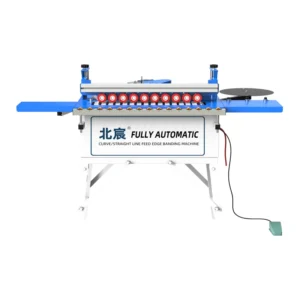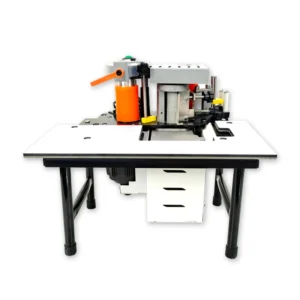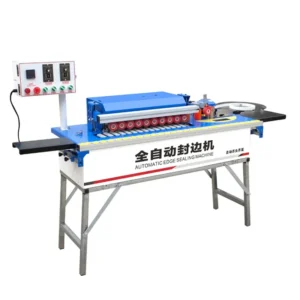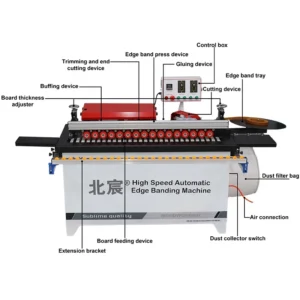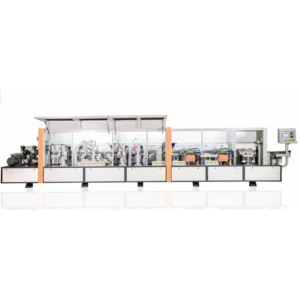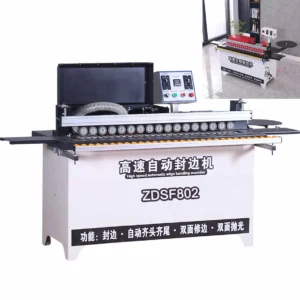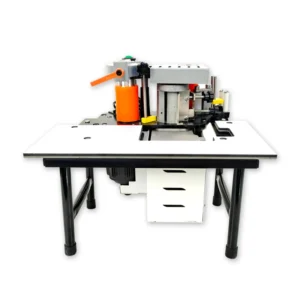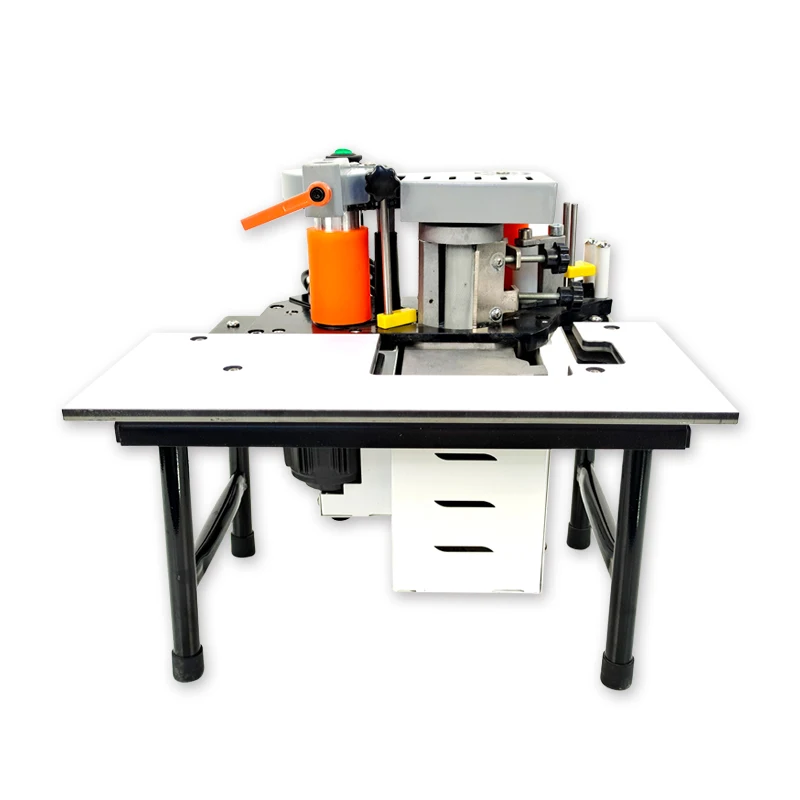
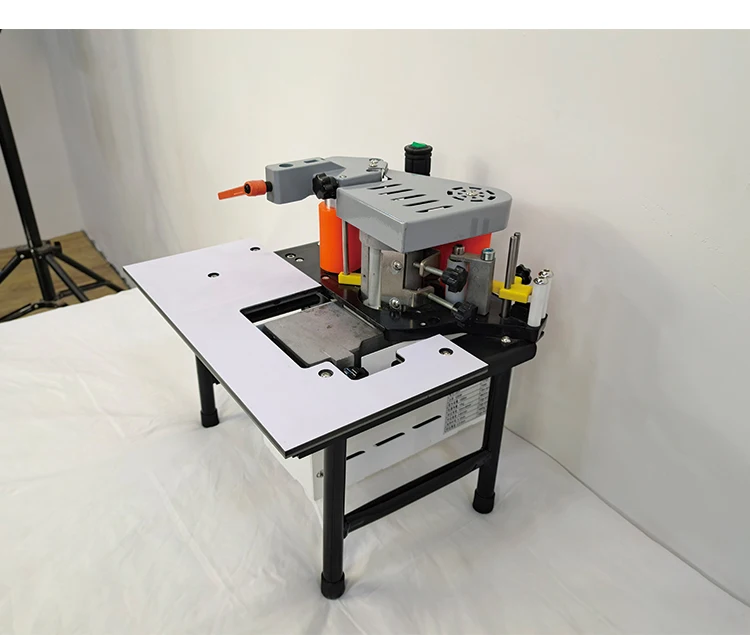
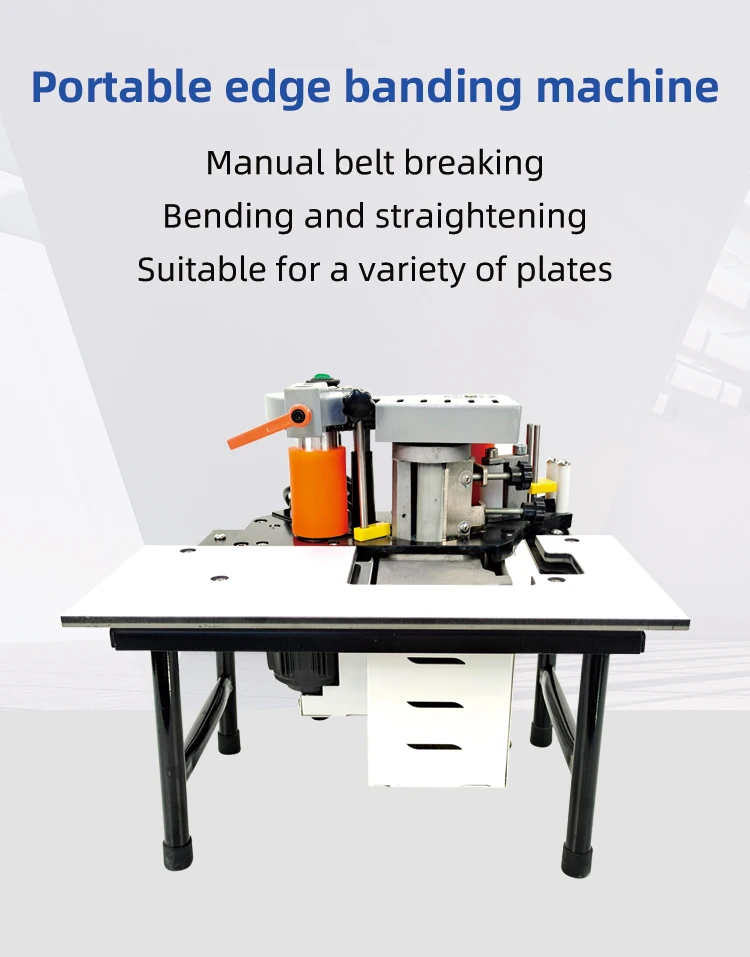

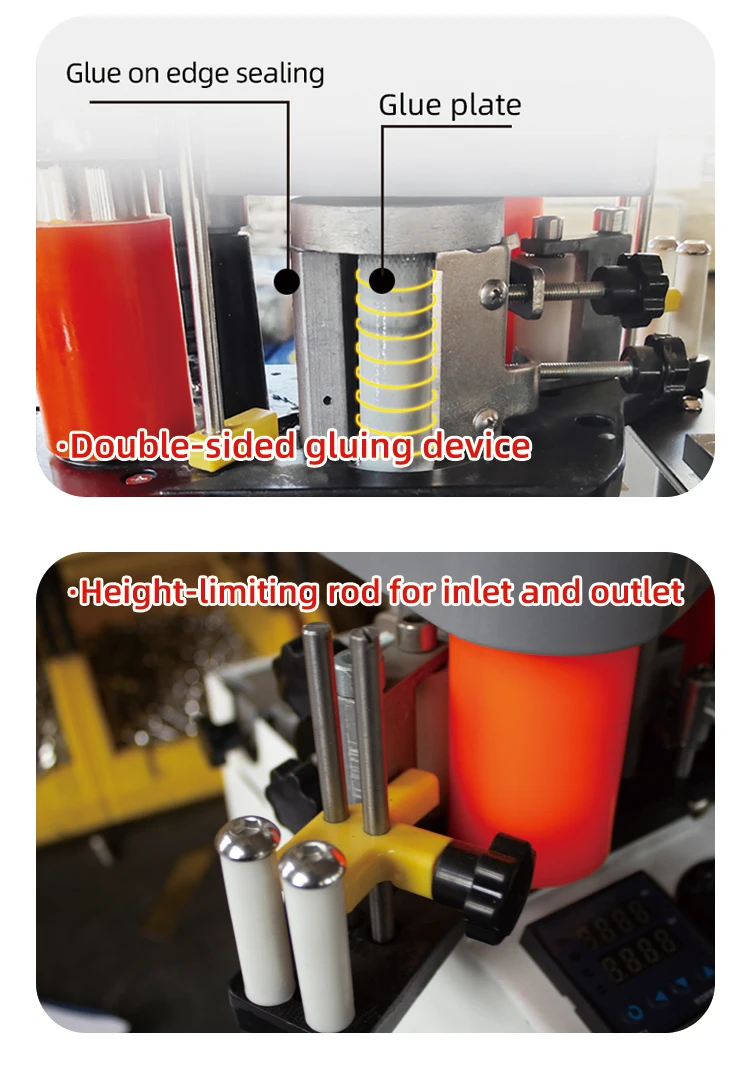

Description
Stocked and Verified — every ST-30 unit is voltage-confirmed and plug-matched to your market before it leaves the Ningjin factory floor, so it runs the day it arrives.
Technical Specifications
| Parameter | Value |
|---|---|
| Model | ST-30 |
| Product Type | Portable Edge Banding Machine |
| Total Power | 1000W |
| Voltage | 220V / 380V / customizable |
| Edge Banding Height | 0–50 mm |
| Edge Banding Thickness | 0.3–3 mm |
| Minimum Sheet Length | 250 mm |
| Minimum Sheet Width | 30 mm |
| Edge Power | 20W |
| Glue Pot Capacity | 1000 ml |
| Air Source Pressure | 0.5–0.8 MPa |
| Product Size | 380 × 350 × 350 mm |
| Product Weight | 12 kg |
| Suitable Edge Banding Tape | ABS, PVC, Melamine, Veneer |
| Edge Type | Straight and Curve |
| Assembly State | Portable, Lightweight |
| Control Panel Language | Chinese, English, customizable (Spanish, French, etc.) |
| Plug Options | EU, USA, AU, UK |
| Standards | CE, ISO 9001 |
Application Suitability
| Application | Material or Output |
|---|---|
| Small joinery workshop edge finishing | MDF and plywood panels with PVC or ABS tape |
| On-site cabinet fitting and interior decoration | Particleboard and melamine-faced board with matching melamine edging |
| Custom furniture prototype and short-run production | Solid wood panels with real wood veneer banding |
| Mobile or benchtop edge banding for curved profiles | Curved and shaped panel edges across all compatible substrates |
Why the Voltage Question Must Come Before the Crate
A portable edge bander that cannot plug in is a 12 kg paperweight sitting on your workshop floor.
I spent weeks troubleshooting a shipment to Southeast Asia because the local supply was 220V single-phase and the machine was wired for a three-phase industrial line. The customer waited for a transformer while their installation crew sat idle. That Portable Edge Banding Machine in stock should not become a lesson in electrical incompatibility. Since that incident, I treat voltage confirmation and plug type as the very first line of every order — before we talk about edging thickness or glue temperature. [NEED_CITE: voltage and frequency standards by export market]
Dispatch Timing That Respects Your Project Schedule
When a small workshop commits to a fitted kitchen deadline, the last thing the team needs is a multi-week production lead on a compact machine. The ST-30 is held in ready stock so that once your voltage, plug type, and control panel language are confirmed, dispatch follows within a typical short window rather than a full production cycle. This matters most for first-time buyers who are replacing a manual edge banding process and need consistent results before the next client walkthrough.
Compact Footprint Without Sacrificing Material Range
The 380 × 350 × 350 mm body and 12 kg weight mean the ST-30 sits on a standard workbench or travels to a job site in the back of a van. Despite the portable form, it accepts edge banding tape from 0.3 mm melamine up to 3 mm ABS and real wood veneer, and it handles both straight and curved profiles. That material flexibility is what separates a genuine workshop tool from a hobby-grade gadget. [NEED_CITE: CE machinery directive requirements for portable woodworking equipment]
Reading the Numbers Behind a Portable Edge Bander
The 0–50 mm edge banding height range covers everything from thin cabinet shelving to thicker worktop panels, so you are not forced to buy a second machine when a client specifies a 40 mm door stile. The 0.3–3 mm tape thickness range is significant because veneer at 0.3 mm demands careful glue flow and feed pressure, while 3 mm ABS requires more trimming force and a well-heated glue pot — the 1000 ml capacity handles a full shift of intermittent use without constant refills. The 0.5–0.8 MPa air pressure requirement is standard for pneumatic trimming and pressing cylinders, meaning any small workshop compressor will suffice. Minimum sheet dimensions of 250 mm length and 30 mm width allow narrow drawer sides and small offcut pieces that a full-size edge bander would simply reject.
The Hidden Cost of Skipping Pre-Shipment Verification
A Portable Edge Banding Machine in stock is only valuable if it actually bands edges cleanly when you unbox it. I have seen small machines arrive at workshops with glue pots that were never heated during factory testing, leaving the buyer to discover uneven adhesion on their first real job. Without a documented pre-shipment test record, you have no baseline to reference when something looks wrong. The tolerance between the feed roller and the edging guide can shift during transit, and without verification photographs taken under running conditions, you are troubleshooting blind. [NEED_CITE: common causes of edge banding adhesion failure on portable machines]
Why Buyers Source This Model Through Our Stock Channel
In-house manufacturing in Ningjin means every ST-30 unit is assembled, tested, and packed on the same site — there is no third-party trading layer adding lead time or miscommunication. Voltage confirmation is documented in an electrical schematic before the machine enters the crate, eliminating the transformer-waiting scenario I described earlier. Four-stage quality control covers incoming component checks, in-process assembly inspection, finished-product running tests, and pre-shipment verification, so the unit that arrives matches the test record you received. Customization of control panel language — English, Spanish, French, or others — is handled before dispatch rather than left as an afterthought. Single-unit orders are the norm here, not an exception that requires negotiation.
Documentation & Verification
- CE declaration of conformity specific to the ST-30 portable edge bander
- ISO 9001 certificate covering manufacturing and quality management processes
- Factory test record showing edge banding results on your specified panel thickness
- Electrical schematic with confirmed voltage, frequency, and plug type for your market
- Operation and maintenance manual in your agreed language with illustrated spare parts list
Installation, Commissioning & Support
- Benchtop placement on a stable surface rated for 12 kg with clearance around the 380 × 350 mm footprint for panel feed
- Dedicated 220V or 380V circuit matching the confirmed voltage specification with appropriate breaker rating for the 1000W total power draw
- Pneumatic connection to a compressor delivering 0.5–0.8 MPa through a standard quick-connect fitting
- First-run glue pot warm-up and feed speed calibration using sample offcuts from your actual panel stock
- Operator familiarization with straight and curved edge setups using the supplied language-specific manual
- Spare glue pot heater element and trimming blades included in the recommended initial consumables package
Tell Us What You Need So We Can Ship the Right Unit
Share your local voltage and frequency, the plug type used in your region, and the control panel language your operators will read. Let us know the primary panel materials and edge banding tape types you work with — MDF with PVC, plywood with veneer, or particleboard with melamine — so we can run a matching pre-shipment test. If your workshop has existing upstream cutting equipment, mention the typical panel dimensions so we can confirm the ST-30 handles your shortest and narrowest pieces without issue.
Frequently Asked Questions
Q: What voltage and plug will be supplied with the ST-30?
A: Before dispatch, we confirm your local voltage and frequency in writing and document it on an electrical schematic. Plug options include EU, USA, AU, and UK types. The unit ships wired and tested for your exact supply, so there is no need for an external transformer or adapter on arrival.
Q: Can I see a sample panel banded on the ST-30 before I order?
A: We run your specified panel material and edge tape through a stocked ST-30 and send you a factory test record with photographs of the banded edge. This lets you evaluate glue line quality and trim finish on your actual substrate before committing to an order.
Q: What is the dispatch lead time for a stocked ST-30 unit?
A: Once voltage, plug type, and control panel language are confirmed, a stocked unit typically moves to pre-shipment testing and packing within a short window rather than a full production cycle. We provide a confirmed dispatch date at the point of order confirmation.
Q: How do I switch between curved and straight edge banding on this machine?
A: The ST-30 handles both profiles in one setup. For curved edges, the adjustable guide follows the panel contour while the feed roller maintains consistent pressure. The operation manual in your chosen language illustrates the adjustment steps with diagrams for each profile type.
Q: Which spare parts and consumables should I order with the machine?
A: We recommend including replacement trimming blades, a spare glue pot heater element, and an initial supply of edge banding tape in your material types. The spare parts list in your documentation package identifies every wear component with part numbers for straightforward reordering.