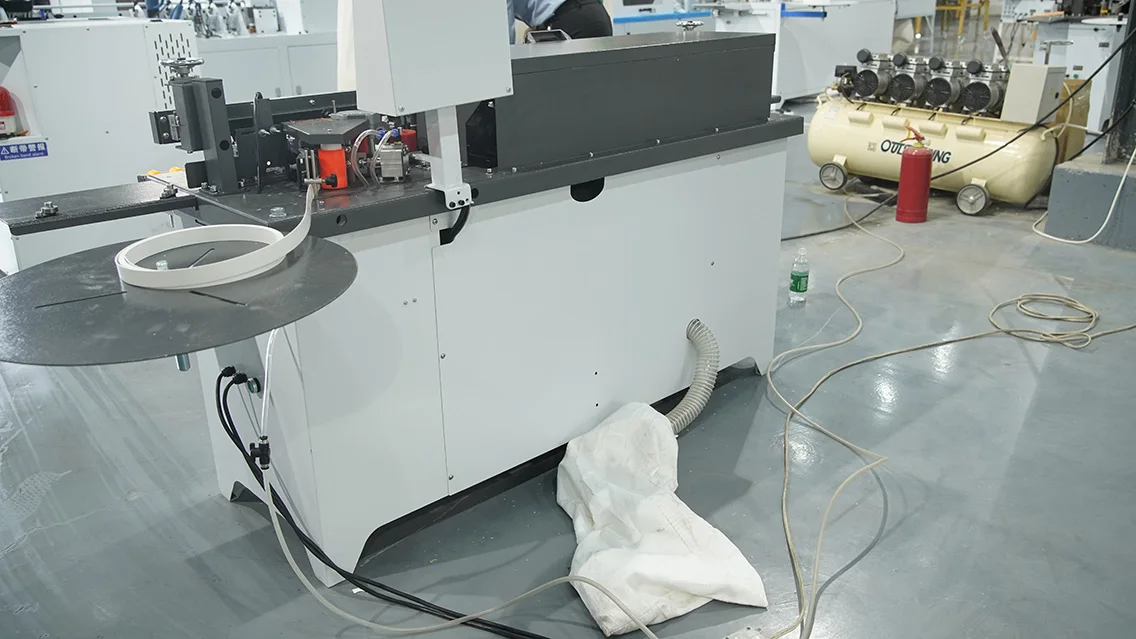
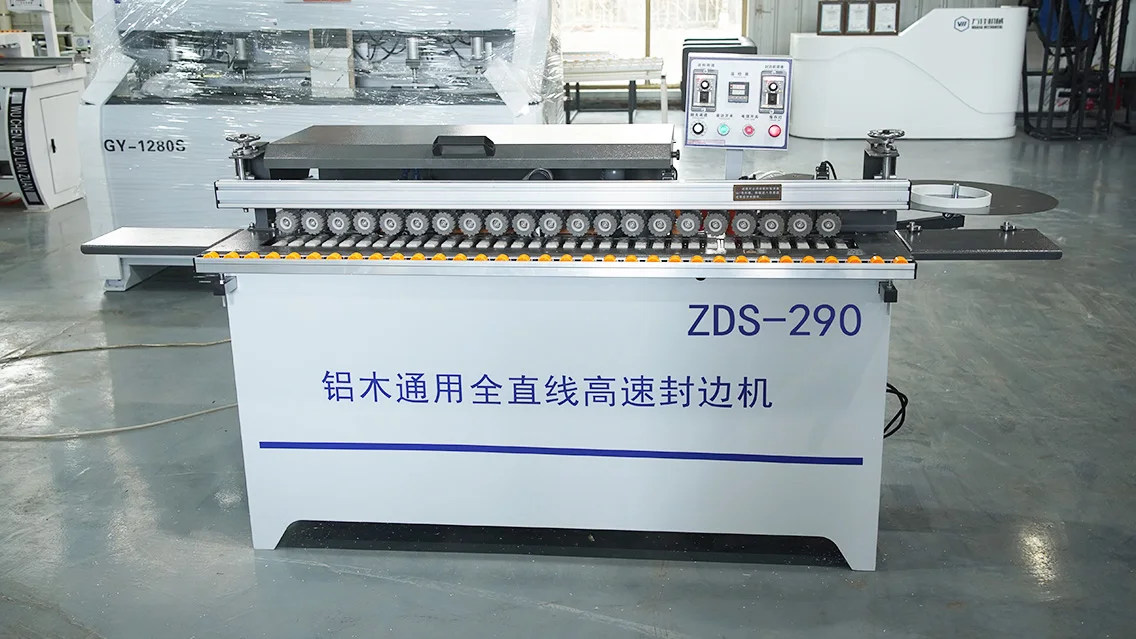
Description
Ready-stock dispatch — the Zds290 ships with voltage and electrical documentation locked before crating, so your workshop avoids the transformer delay that stalls entire production lines.
Technical Specifications
| Parameter | Value |
|---|---|
| Model | Zds290 |
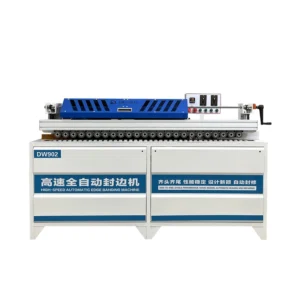
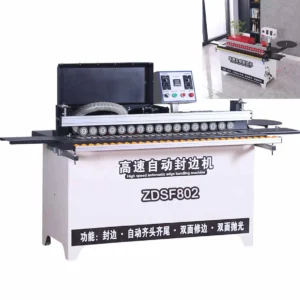
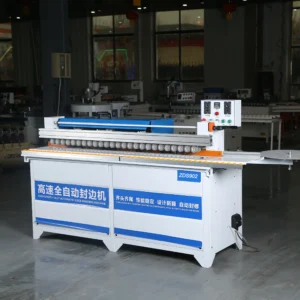
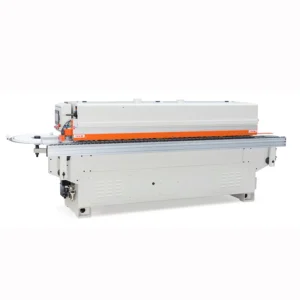
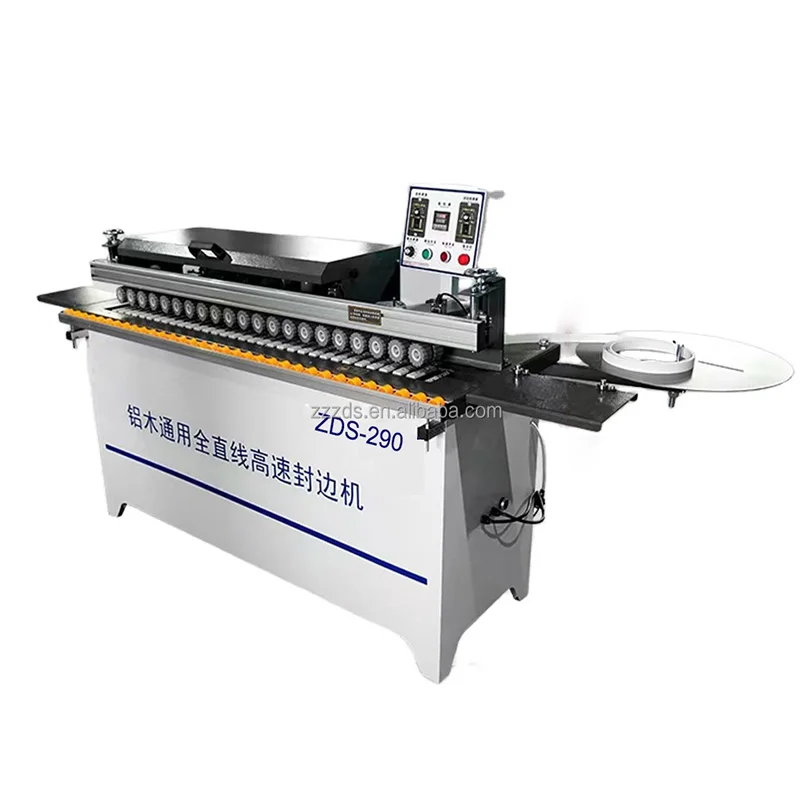
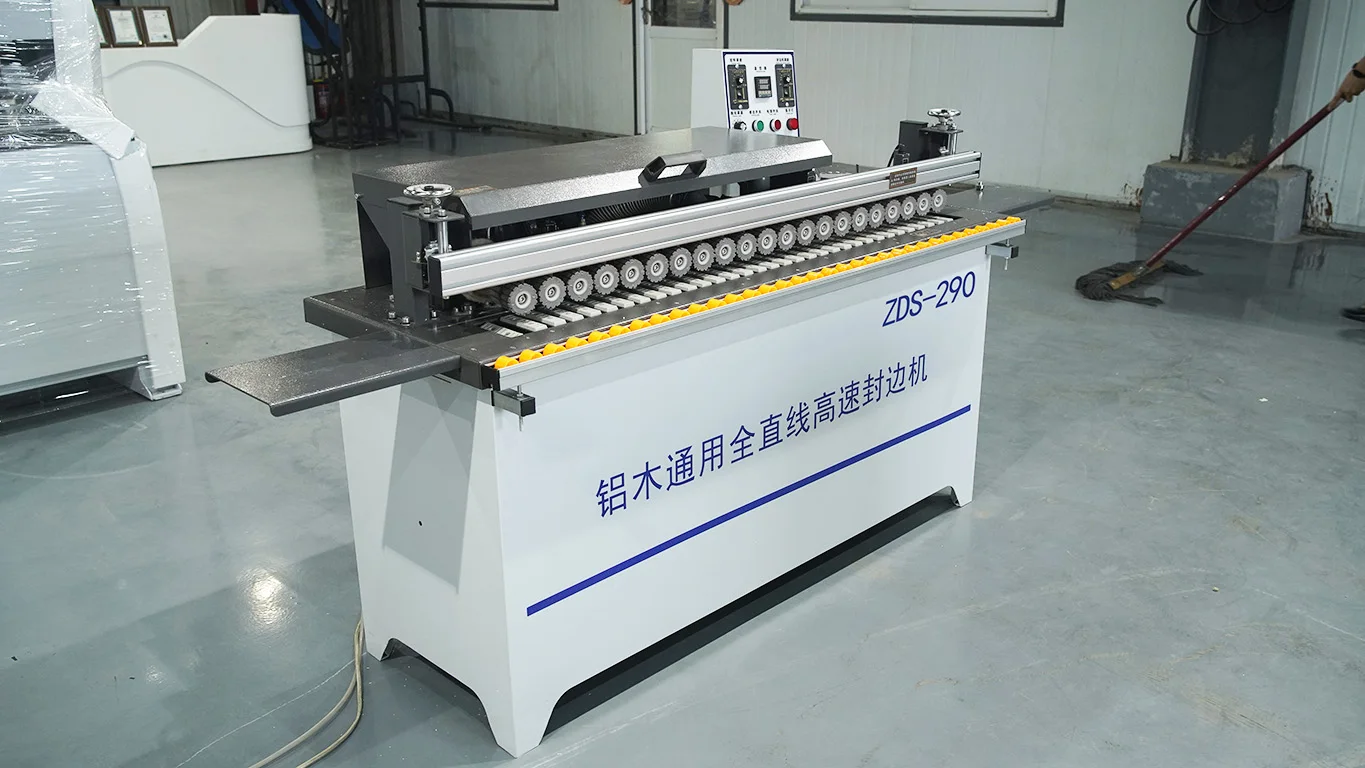
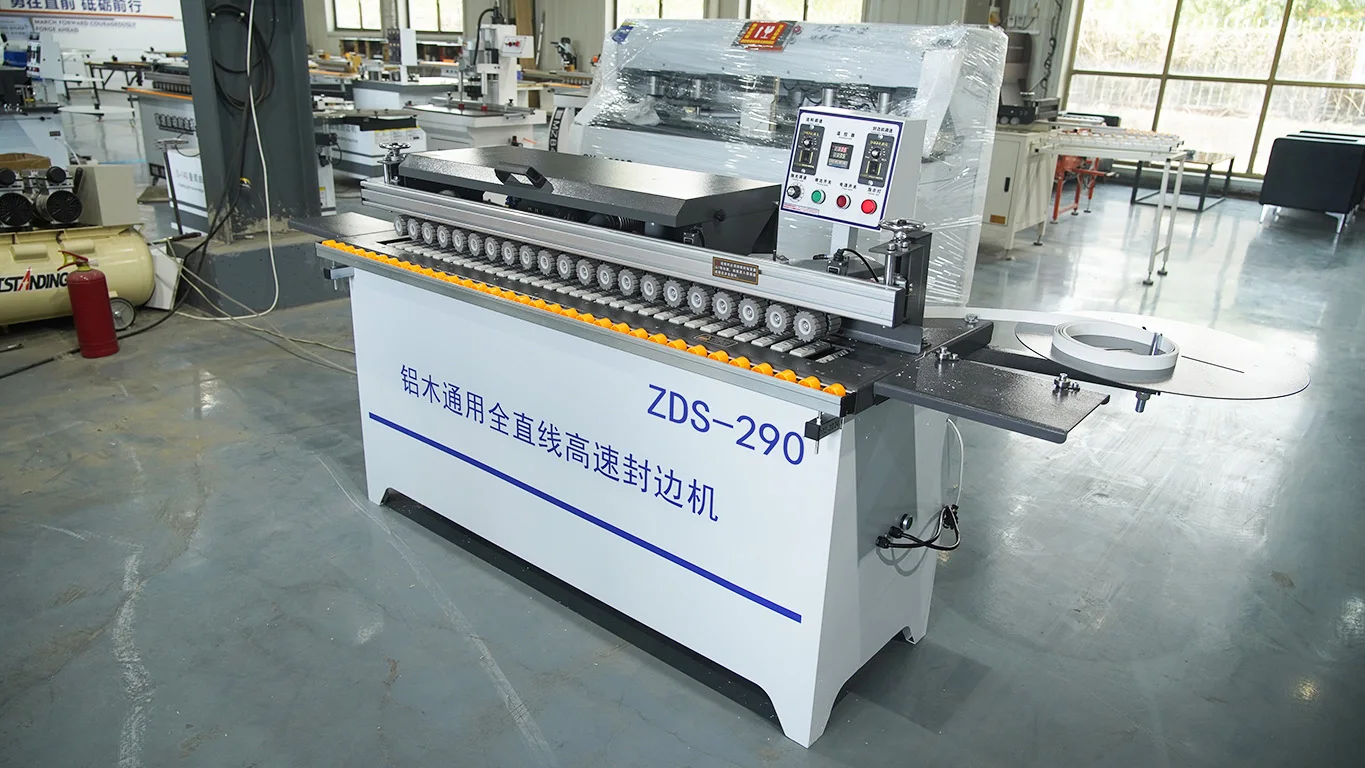
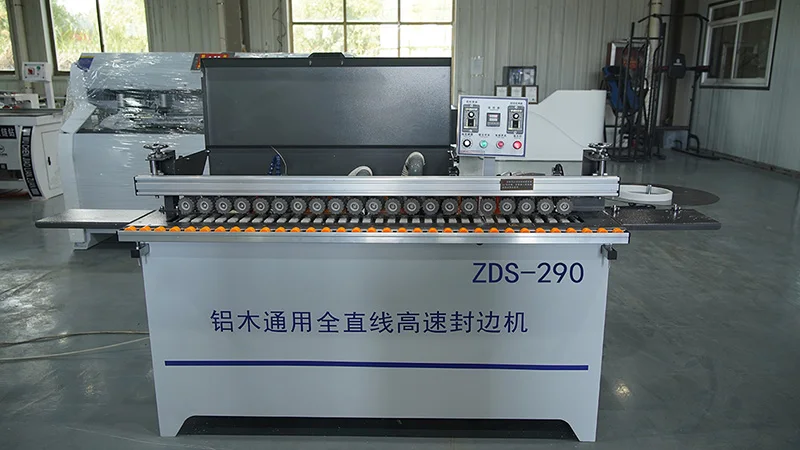
| Product Type | Aluminum-Wood Universal Full Linear High-Speed Edge Banding Machine |
| Rated Voltage | 220V |
| Rated Power | 4165W |
| Heating Power | 800W (5-10 min heat-up) |
| Conveying Motor | 180W |
| Trimming Motors | 800W × 2 |
| Polishing Motors | 180W × 2 |
| Vacuuming Power | 1200W |
| Glue Pot Capacity | 1000ml |
| Rated Air Pressure | 0.6-0.8 MPa |
| Edge Banding Speed | 6 m/min (basis not stated in source — confirm board format / material / thickness) |
| Strip Thickness Range | 0.5-2.5mm |
| Sheet Thickness Range | 10-50mm |
| Machine Size | 150 × 57 × 96 cm |
| Pressure Beam | Integrated thickened aluminum alloy |
| Pressure Wheel | Double-row inclined |
| Board Thickness Display | Digital display |
| Pressure Beam Adjustment | Hand-crank wheel |
| Glue Application | Imitation glue pot with concave-convex gum wheel |
| Secondary Processing | Secondary scraping and cleaning |
| Assembly State | Partially assembled (user manual and video teaching provided) |
| Warranty | 1 year (factory defect spare parts replacement) |
Application Suitability
| Application | Material or Output |
|---|---|
| Cabinet door edge banding | MDF and particleboard with PVC strip 0.5–2.5mm |
| Custom furniture panel finishing | Plywood panels with veneer edge banding |
| Small-batch joinery production | Solid wood panels requiring clean trim and polish |
| Workshop backup or secondary edge bander | Mixed board runs across 10–50mm sheet thickness |
| Aluminum-wood composite panel edging | Aluminum-wood boards with matching strip material |
Why the Voltage Question Must Come Before the Order
A machine that arrives at the wrong voltage sits idle while your entire line waits for a transformer.
I worked the assembly floor before moving into export dispatch, and the pattern is always the same: a buyer focuses on feed speed and trim stations, signs off on the order, and the Zds290 arrives in a country where the three-phase supply runs at a different frequency. The machine cannot start. The workshop calls a local electrician who needs a custom transformer, and that procurement alone can take weeks [NEED_CITE: voltage and frequency standards by export market]. Every other station in the line — the saw, the boring machine, the press — sits idle because the edge banding bottleneck holds up the entire workflow.
This is the reason we treat the edge banding machine in stock fast delivery conversation differently. Before the Zds290 leaves the Shandong facility, the electrical schematic and voltage confirmation document are sent to the buyer and their local electrician for cross-check. The 220V configuration is confirmed against the destination grid, not assumed. A frequency mismatch is just as damaging as a voltage mismatch, and it does not show up on a standard spec sheet until the motor refuses to reach rated speed on the shop floor.
Dispatch Timing That Matches Workshop Urgency
When a joinery shop decides to move from manual edge banding to their first machine, the window between decision and installation needs to be short. Long procurement cycles kill momentum. The Zds290 is held as an edge banding machine in stock fast delivery candidate, meaning the unit is built, tested, and crated on a timeline measured in days rather than the multi-week production queues that custom-built orders require. For a cabinet maker who just landed a contract and needs output capacity immediately, this timing difference determines whether the first delivery deadline is met.
Single-Unit Orders Without Procurement Overhead
Large factory lines negotiate equipment in batches with dedicated purchasing teams. A small workshop buying one Zds290 does not have that infrastructure. The ordering process here strips away the back-and-forth: stock status is confirmed at inquiry, the edge banding machine in stock fast delivery lead time is quoted upfront, and shipping options are presented with the formal proposal. No minimum order complexity, no waiting to be grouped into a container schedule that prioritizes larger buyers.
Reading the Numbers That Actually Affect Edge Quality
The 10–50mm sheet thickness range covers the standard panel stock used in cabinet and furniture production, from thin shelf boards to thick countertop substrates. The digital board thickness display paired with the hand-crank pressure beam adjustment means the operator sets the clearance to a known value rather than eyeballing it — a setup that directly affects whether the pressure wheels seat the strip evenly across the panel edge. The 0.6–0.8 MPa air pressure requirement feeds the pneumatic cylinders that control pressure wheel engagement; insufficient compressor capacity shows up as inconsistent strip adhesion, not as an obvious machine fault [NEED_CITE: pneumatic supply requirements for edge banding equipment]. The concave-convex gum wheel design distributes glue across the strip width more evenly than a flat roller, reducing the visible glue line that causes panel rejection during assembly inspection. The secondary scraping and cleaning station removes residual adhesive before the panel exits the machine, which matters when downstream stations require clean edges for hinge boring or dowel insertion.
The Cost of Skipping Configuration Verification
When an edge bander arrives with control panel labels in a language the operator cannot read, the machine technically works but the workshop cannot commission it. Setup parameters for glue temperature, feed speed, and trim depth remain at factory defaults that may not match the local strip material. Operators then run panels at incorrect settings, producing edge quality that fails assembly checks, and the blame lands on the machine rather than the configuration gap [NEED_CITE: CE machinery directive requirements for industrial equipment]. The Zds290 documentation package addresses this by including the operation and maintenance manual in the buyer’s agreed language before the machine ships, not as an afterthought.
Why Buyers Source This Machine Through This Channel
The four-stage QC process — incoming material, in-process, finished product, and pre-shipment verification — applies to every Zds290 regardless of order size. Pre-shipment test records are generated on the buyer’s specified panel thickness range, not on a generic sample. Voltage and frequency confirmation is completed with the buyer’s electrician before crating. The spare parts list and packing photographs are provided so customs clearance at the destination port proceeds without documentation gaps. An engineer reviews the buyer’s production requirement and issues a formal quotation within one working day, not an automated response. Factory visits are available for buyers who want to see the Zds290 run on their own panel stock before committing.
Documentation & Verification
- CE declaration of conformity covering the Zds290 electrical and mechanical safety requirements
- Factory test record run on your specified sheet thickness and strip material before crating
- Electrical schematic with 220V configuration confirmed and signed off before dispatch
- Operation and maintenance manual translated into your operator’s working language
- Spare parts list with part numbers matching the Zds290 assembly for reorder accuracy
- Packing photographs documenting crating condition for freight insurance claims
Installation, Commissioning & Support
- The 150 × 57 × 96 cm footprint requires a level concrete floor with clearance for panel infeed and outfeed
- A dedicated 220V circuit rated for the 4165W total draw must be installed before the Zds290 arrives
- Partially assembled state means final pressure beam and conveyor alignment is completed on-site using the provided video guide
- First-run commissioning includes verifying the 0.6–0.8 MPa air supply against the pneumatic cylinder response
- Operator training covers the digital thickness display setup and concave-convex gum wheel glue adjustment
- The 1000ml glue pot requires scheduled cleaning to prevent cured adhesive buildup between production runs
Getting Your Zds290 Quoted
To move from inquiry to formal quotation, share your panel material types, the strip thickness range you run most frequently, and your local voltage and frequency specifications. Let us know your workshop floor space and whether the Zds290 will feed into an existing line or operate as a standalone station. If you have specific edge quality requirements for a current contract, describe the acceptance criteria so the pre-shipment test can be run against those standards.
Frequently Asked Questions
Q: What is the actual dispatch lead time for the Zds290 — is it truly ready to ship or made to order?
A: The Zds290 is held in ready-stock status, meaning the unit is assembled and available for pre-shipment testing upon order confirmation. Dispatch lead time depends on the destination port and any voltage documentation cross-check required with your local electrician. Typical timelines are quoted at the inquiry stage so you can plan installation around a confirmed date rather than an estimate.
Q: Can the 220V configuration be adjusted to match my local voltage and frequency before shipment?
A: Voltage customization from 110V to 440V is available as a standard option. The adjustment is made at the factory before dispatch, and the updated electrical schematic is sent to your electrician for verification. Frequency compatibility is confirmed at the same stage, because a voltage match alone does not guarantee the motors will reach rated speed on your local grid.
Q: What edge banding materials and thicknesses does the Zds290 handle in practice?
A: The Zds290 processes PVC and veneer edge banding in the 0.5–2.5mm strip thickness range, applied to MDF, plywood, particleboard, and solid wood panels within the 10–50mm sheet thickness range. The concave-convex gum wheel design accommodates variation in strip width, and the secondary scraping station cleans residual adhesive before the panel exits.
Q: What does customs clearance look like, and is door-to-door shipping available?
A: Shipping options including door-to-door delivery are quoted at the order stage based on your destination. Customs documentation support is provided as part of the dispatch package, including the CE declaration, packing photographs, and commercial invoice formatted for your country’s import requirements. Your freight forwarder receives the full document set before the vessel departs.
Q: What is covered under the one-year warranty, and how are spare parts supplied afterward?
A: The one-year warranty covers factory defects with spare parts replacement for the Zds290. The spare parts list provided at delivery includes part numbers cross-referenced to the assembly, so reorder requests are matched accurately. Wear components such as trimming blades and gum wheels are identified separately with recommended replacement intervals based on production volume.