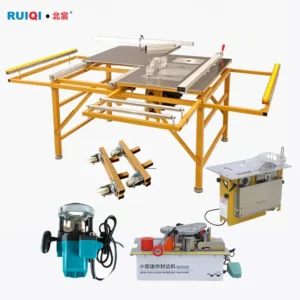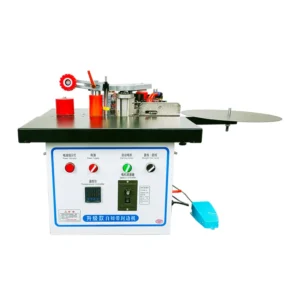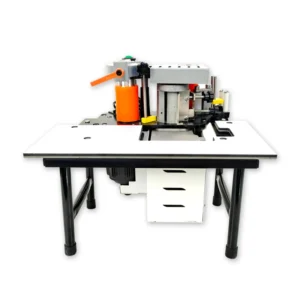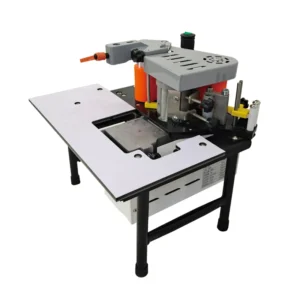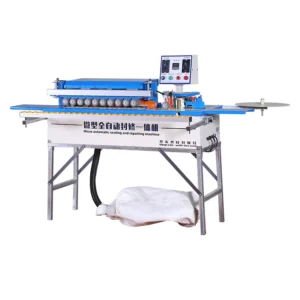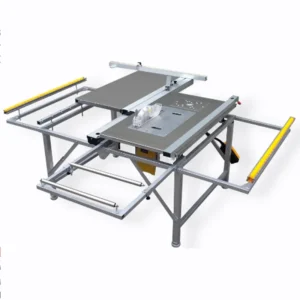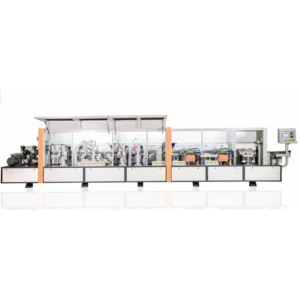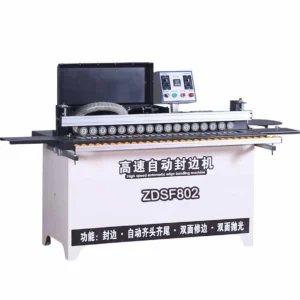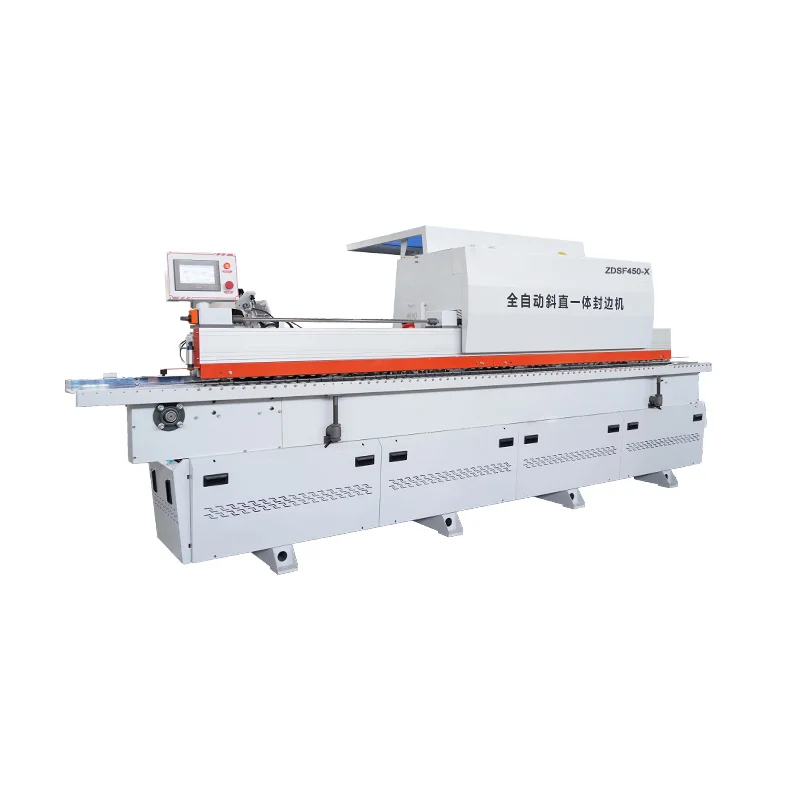
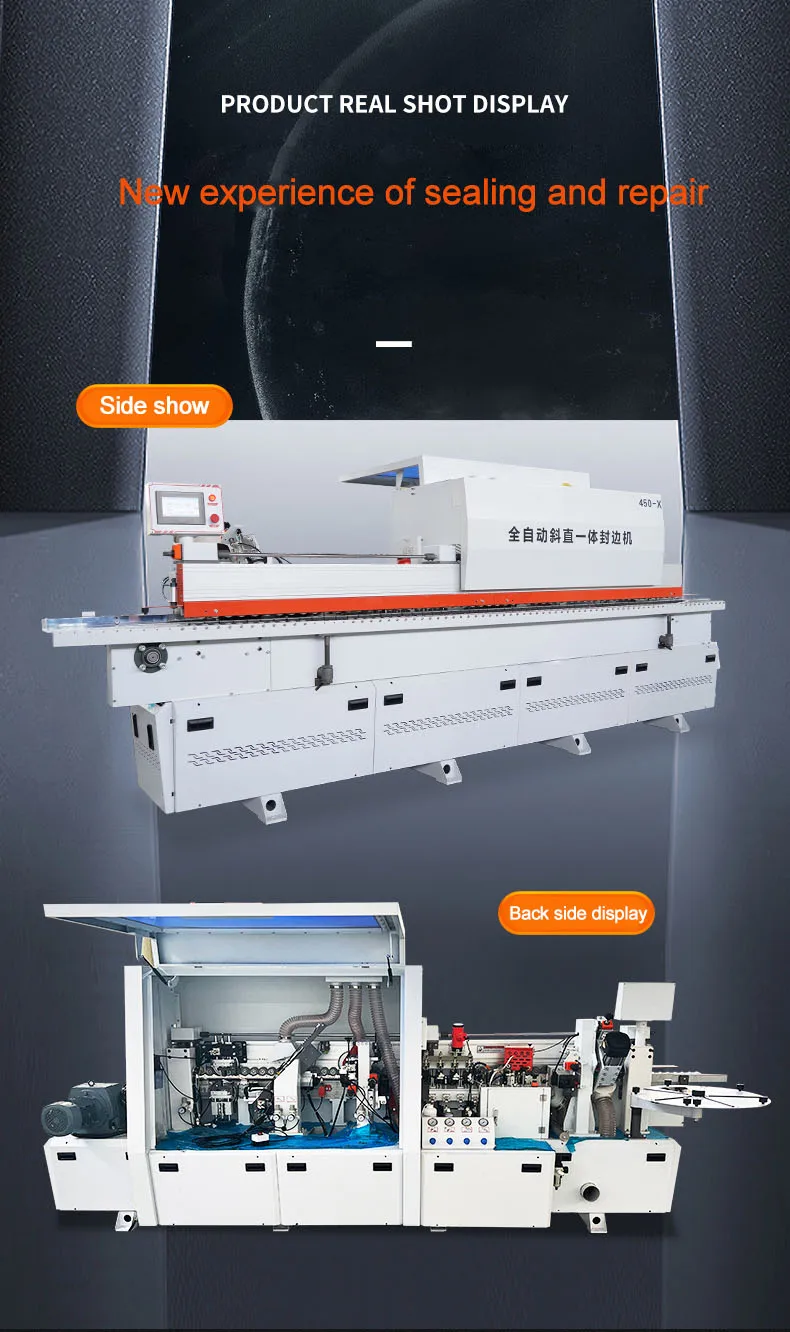
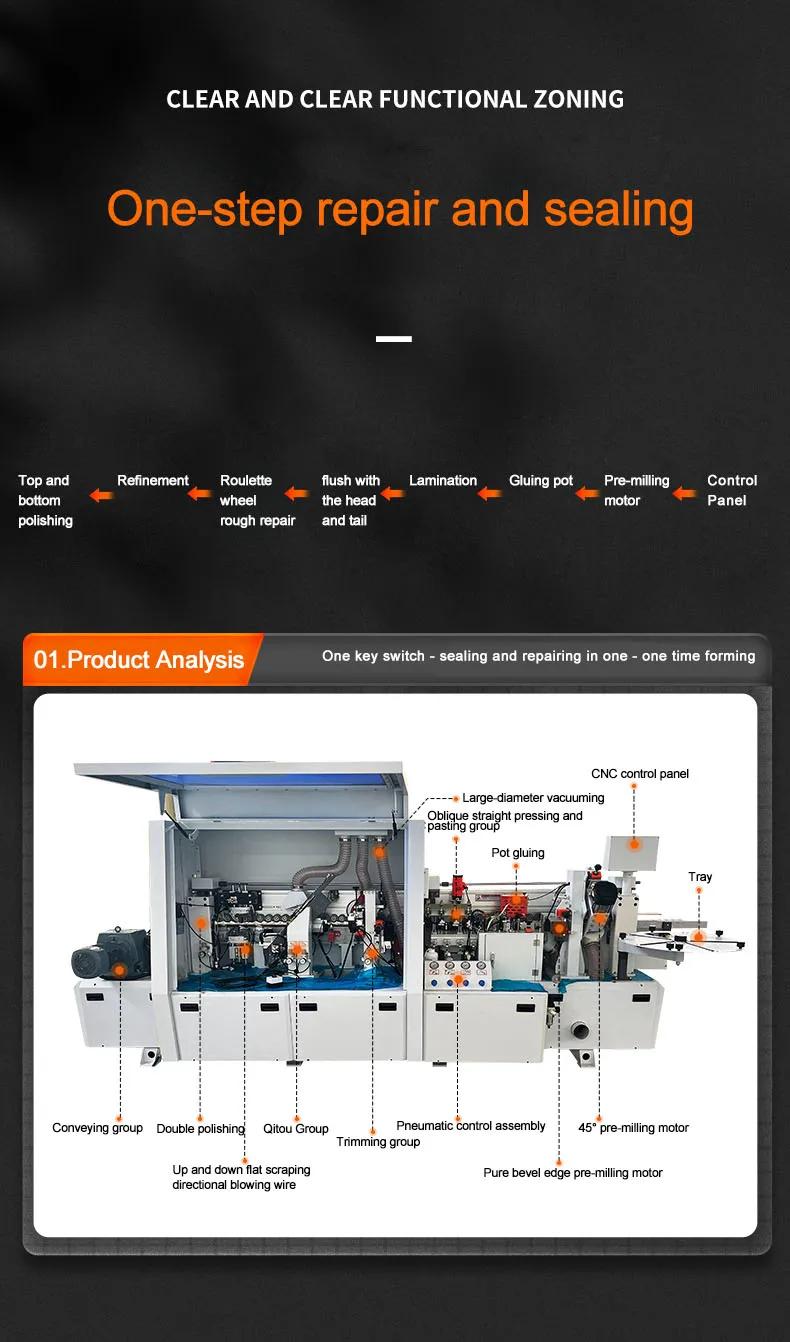
Description
Voltage-Verified Dispatch — every unit leaves the factory only after matching your site’s three-phase supply, so the control panel powers up on day one instead of waiting for a transformer.
Technical Specifications
| Parameter | Value |
|---|---|
| Product Type | Automatic Edge Banding Machine |
| Overall Dimensions | 4350 × 920 × 1650 mm |
| Total Power | 17.5 kW |
| Voltage & Frequency | 380V / three-phase five-wire / 50Hz (configurable from 110V to 440V) |
| Conveying Motor | 2.2 kW with frequency converter |
| Feed Speed | 0–12 m/min variable speed, inclined straight edge |
| Edge Strip Width | 20–50 mm |
| Edge Banding Thickness | Up to 1.2 mm (material dependent) |
| Panel Thickness Range | 18 / 22 / 25 mm |
| Minimum Panel Width | >100 mm |
| Minimum Panel Length | >250 mm |
| Edge Banding Material | PVC |
| Glue Pot Capacity | 2000 mL |
| Glue Pot Temperature | 150–170°C |
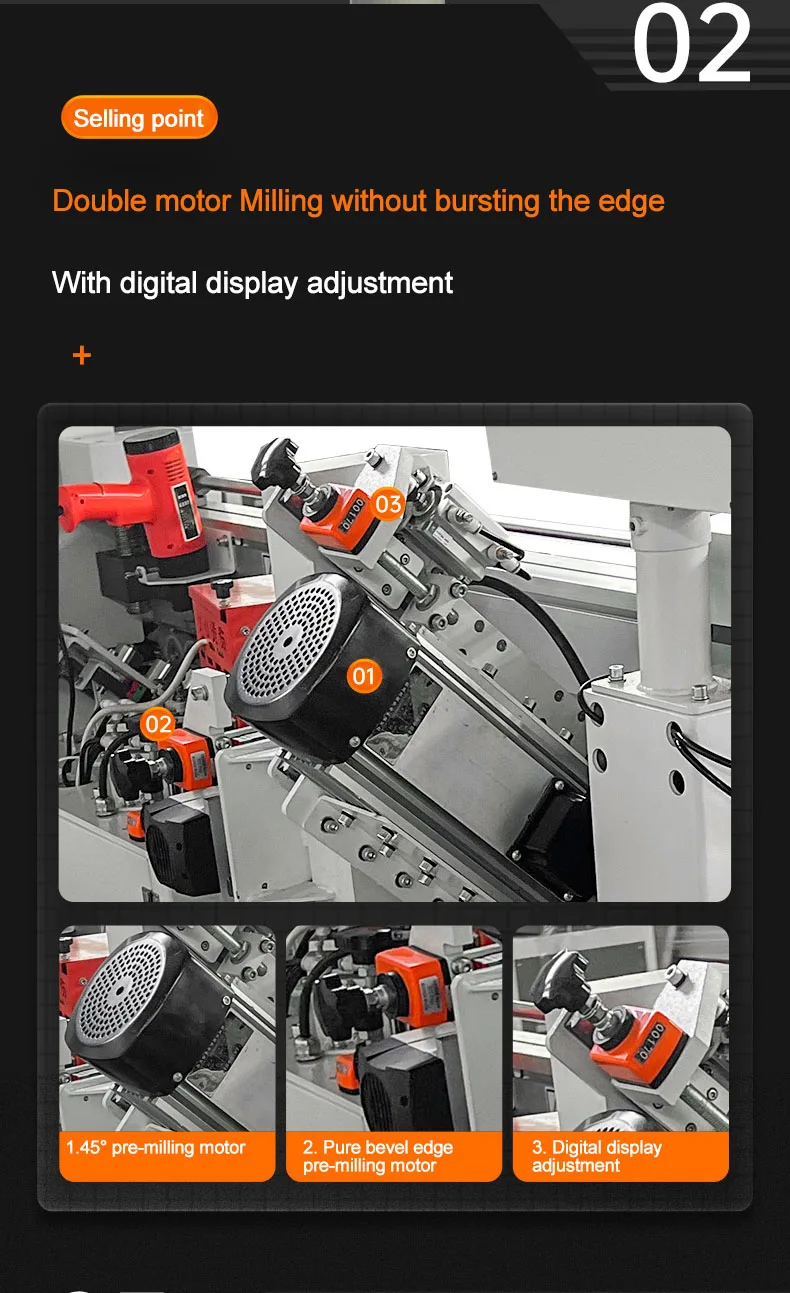
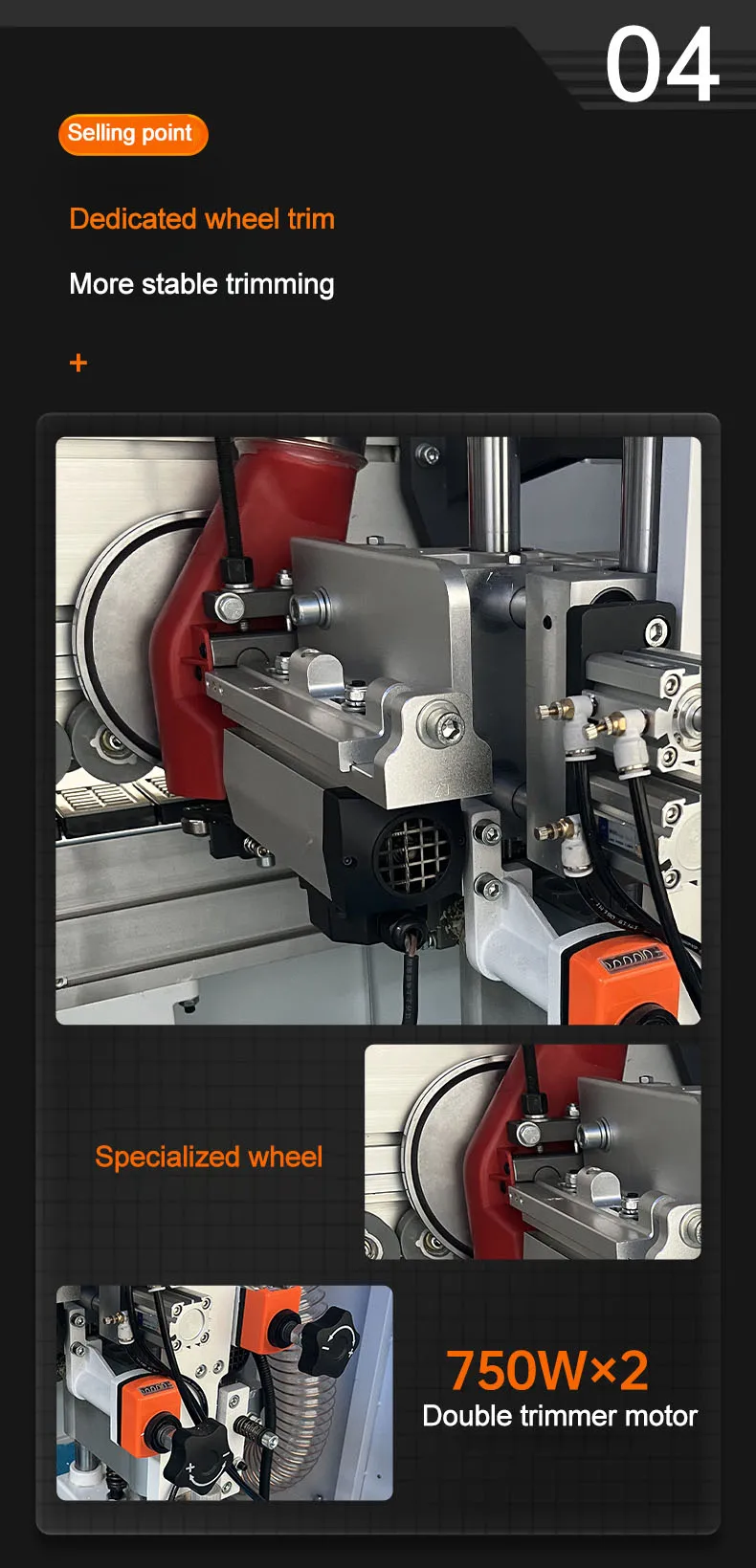
| Trimming Motor | 0.75 kW × 2 |
| End Trimming Motor | 0.37 kW × 2 |
| Polishing Motor | 0.37 kW × 2 |
| Milling Motor B | 3.5 kW |
| Slotted Motor | 0.8 kW (220V) |
| Selection Motor A | 4 kW |
| Heat Gun Power | 2 kW |
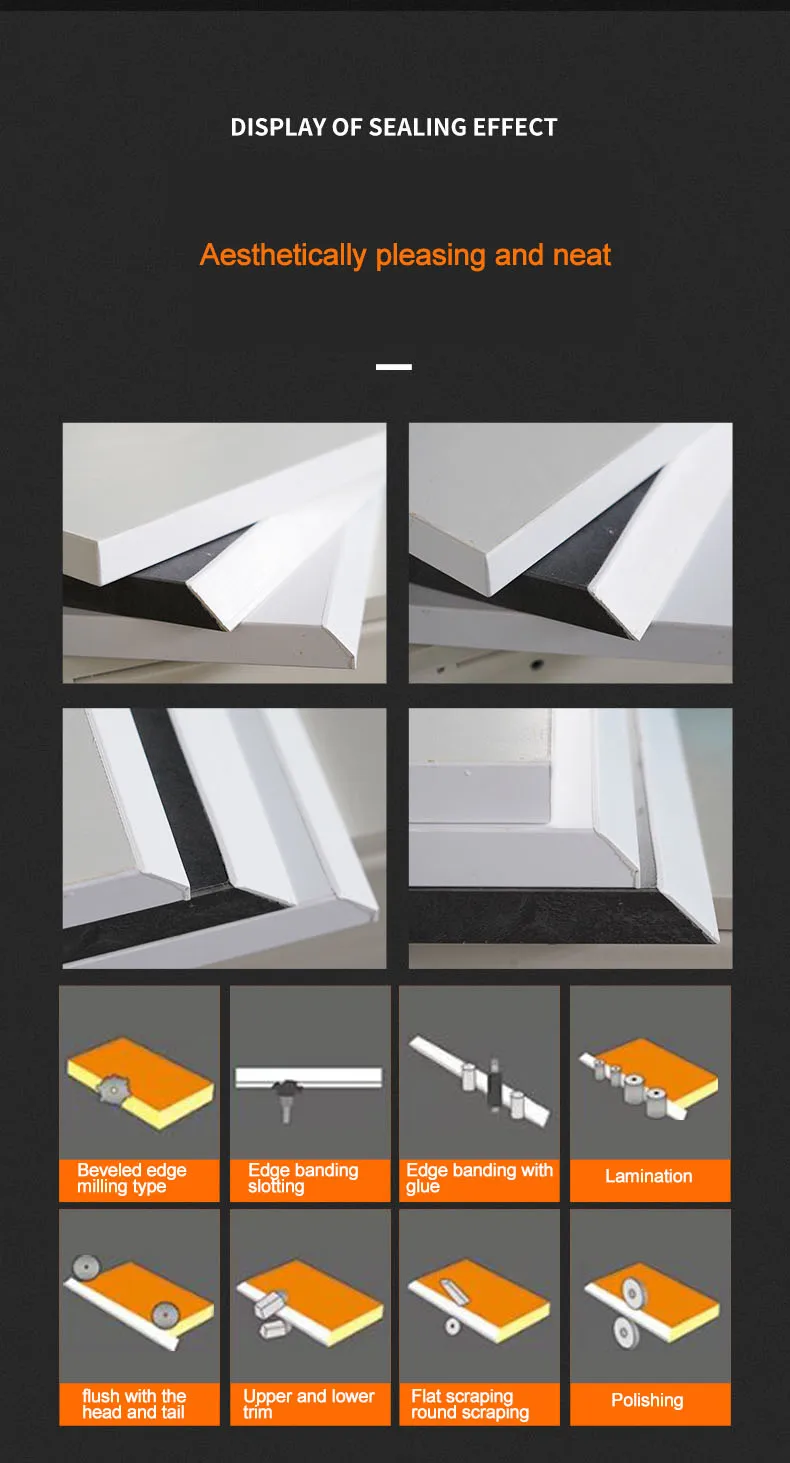
| Bevel Capability | 45 degree |
| Air Source Pressure | 0.6–0.8 MPa |
| External Dust Port | 100 mm diameter |
| Control System | Xinjie industrial touch screen with Xinjie industrial inverter |
| Key Features | Fully assembled, 45° bevel and straight edge, variable feed, frequency converter on conveying and lifting motors |
Application Suitability
| Application | Material or Output |
|---|---|
| Custom cabinet door edge finishing | MDF and particleboard panels with PVC edge strips |
| Decorative furniture component production | Plywood panels requiring 45° bevel edge banding |
| Small workshop panel processing upgrade | Straight and beveled edge banding on 18–25 mm boards |
| Replacement capacity during peak orders | MDF and particleboard shelving, carcass, and drawer front panels |
Why the Voltage Question Should Come Before the Price
Confirm your site’s supply voltage and frequency before the machine is crated, not after it arrives at your dock.
I once shipped an automatic edge bander rated for 380V into a region running a 415V grid. The buyer had no idea their facility voltage differed from the standard we quoted on. The machine sat idle on the shop floor for nearly a month while they sourced a step-down transformer. That delay cost them production days and goodwill with their own customers. Now, before any edge banding machine in stock moves to the shipping bay, the electrical confirmation sheet is matched against the buyer’s actual site supply. [NEED_CITE: voltage and frequency standards by export market]
Ready Stock Means Shorter Wait, Not Lower Standards
When a workshop needs capacity fast, the temptation is to buy whatever is on the floor. This automatic bevel edge banding machine in stock has already passed the same four-stage quality check applied to built-to-order units — incoming material inspection, in-process verification, finished product testing, and pre-shipment validation. The difference is lead time, not build discipline. You receive a machine that has run test panels under factory conditions before it is wrapped for transport.
Dispatch With Your Site Conditions Already Accounted For
Ordering from stock does not mean accepting a fixed configuration. The voltage and frequency can be confirmed against your local grid before dispatch, and the Xinjie touch screen can be set to an operator language your team actually reads. These adjustments happen during the pre-shipment window, which is far shorter than a full build cycle but still long enough to get the electrical and control details right. [NEED_CITE: CE machinery directive requirements for industrial equipment]
Reading the Specs That Matter on the Shop Floor
The 0–12 m/min variable feed speed, managed by a frequency converter on the 2.2 kW conveying motor, lets operators dial in the pace based on panel material and strip width rather than running everything at one fixed rate. The glue pot operates between 150°C and 170°C, which covers standard EVA hot-melt adhesives used for PVC edge banding on MDF, particleboard, and plywood. A 2000 mL glue pot capacity means fewer refill interruptions during a full shift. The 100 mm dust extraction port should be connected to a workshop collection system to keep trimmings and adhesive residue off the feed chain and polishing wheels — a detail that directly affects edge finish consistency over time.
The Hidden Cost of Skipping Configuration Checks
Buying a single machine without verifying feed height compatibility with your existing conveyor or upstream saw means the unit may sit at the wrong transfer point, forcing operators to hand-lift panels between stations. Mismatched throughput between a fast panel saw and a slower edge bander creates a bottleneck that no amount of overtime fixes. And when the control panel is in a language the operator cannot read, commissioning stalls until someone translates every parameter on screen. [NEED_CITE: common commissioning delays in imported woodworking machinery]
What Buying From This Stock Channel Actually Gets You
In-house manufacturing with patented cutting mechanisms means the trimming and end-trimming units on this machine are built and tested in the same facility that handles OEM production. Voltage, language, and specification customization are treated as standard order steps, not special requests. The four-stage quality check runs on stock machines identically to custom builds, with pre-shipment verification documented in photographs. An engineer reviews your panel thickness range and edge strip width before confirming the order, rather than leaving configuration to chance.
Documentation & Verification
- Factory test record run on your specified panel thickness before dispatch
- Electrical schematic confirming your local voltage and frequency setting
- Operation and maintenance manual written in your agreed operator language
- Spare parts list matched to the trimming and polishing consumables on this unit
- CE declaration of conformity for the specific machine serial number
- Packing photographs showing crate condition and accessory completeness
Installation, Commissioning & Support
- Requires a level concrete floor with clearance around the 4350 × 920 mm footprint for panel infeed and outfeed
- Dedicated three-phase circuit sized for the 17.5 kW total load with proper grounding
- Machine ships fully assembled; connect power, air supply at 0.6–0.8 MPa, and dust extraction before first run
- Glue pot temperature and feed speed calibrated to your PVC strip and panel material during commissioning
- Xinjie touch screen parameters set and operator walkthrough completed before production handover
- Spare trimming cutters and polishing wheels identified from the included parts list for first reorder
Before You Request a Quote
Share your panel material types and the thickness range you run most often, along with the edge strip width and material you plan to use. Confirm your facility’s supply voltage, phase configuration, and frequency so the electrical package is set before packing. If your workshop has existing upstream saws or downstream boring stations, note their feed heights and throughput so this machine slots into the line without transfer gaps.
Frequently Asked Questions
Q: What models are currently in stock and what is the dispatch lead time?
A: This bevel-capable automatic edge banding machine is stocked and can be prepared for dispatch once voltage confirmation and documentation are finalized. Lead time from order to shipping is shorter than a custom build because the mechanical assembly is complete. Exact dispatch dates are confirmed at order placement based on current warehouse status and your site verification timeline.
Q: How do I confirm the correct voltage and frequency for my country before ordering?
A: Provide your facility’s rated supply voltage, phase configuration, and frequency — typically found on your main distribution panel or utility agreement. The electrical package is then configured to match before the machine leaves the factory. This step is mandatory in the order process to prevent the situation where a machine arrives and cannot be powered on without an external transformer.
Q: What shipping options are available and can door-to-door delivery be arranged?
A: The machine ships as a fully assembled unit. Ocean freight, inland trucking, and combined multimodal routes are available depending on your destination. Door-to-door delivery can be quoted once the final address and site access conditions are confirmed. Shipping documentation including customs paperwork is prepared as part of the dispatch package.
Q: Is the machine fully assembled on arrival or does it require on-site installation?
A: The machine arrives fully assembled. On-site work is limited to connecting the three-phase power supply, the compressed air line at 0.6–0.8 MPa, and the 100 mm dust extraction duct. Spare parts that ship in knock-down packing are listed separately. First-run calibration of glue temperature and feed speed is done after these connections are in place.
Q: What is the warranty coverage and how are replacement spare parts handled?
A: Warranty terms are confirmed with the quotation and cover manufacturing defects in components such as motors, the Xinjie control system, and the glue pot assembly. The spare parts list shipped with the machine identifies consumables like trimming cutters and polishing wheels so you can plan your first reorder. Replacement parts are dispatched from the factory with technical guidance on installation.