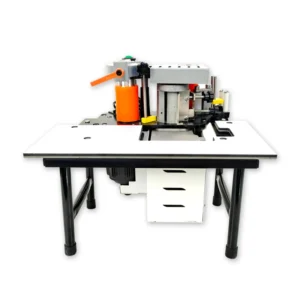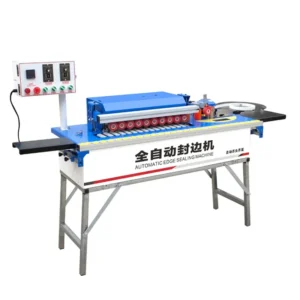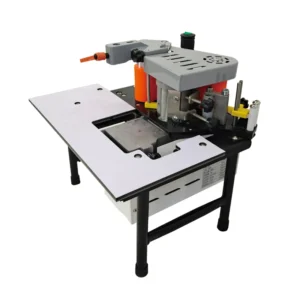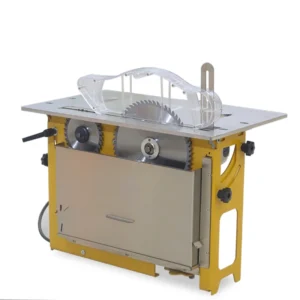
Description
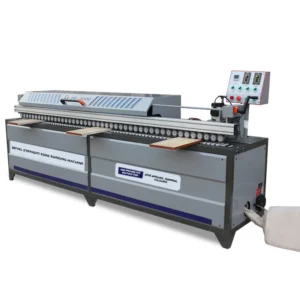
Ready for immediate dispatch — DW1800 configured with confirmed voltage, plug type, and control language before the crate leaves our Ningjin facility, so it runs the day it arrives.
Technical Specifications
| Parameter | Value |
|---|---|
| Model | DW1800 |
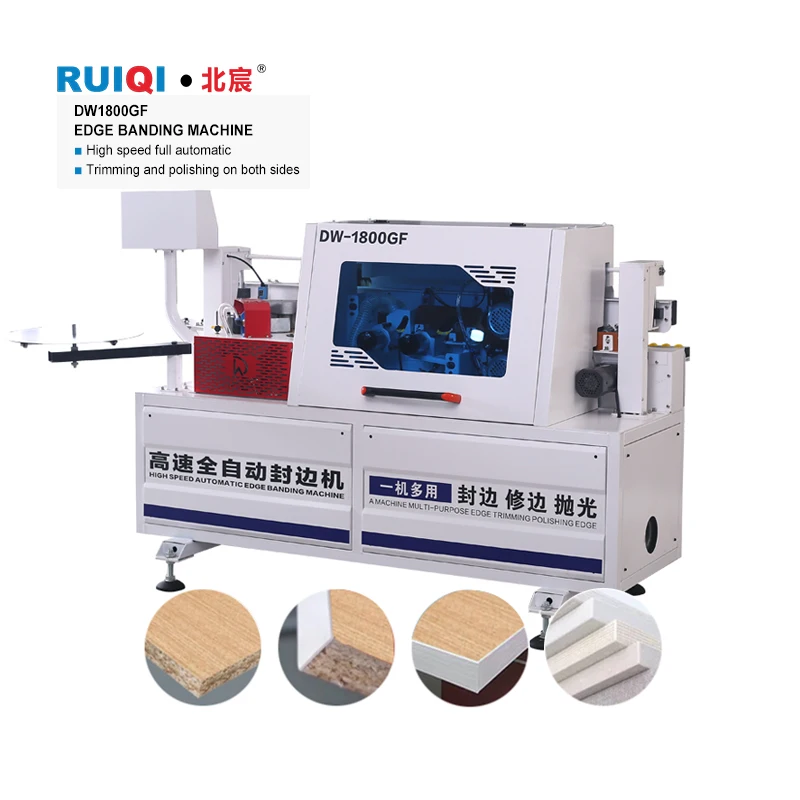
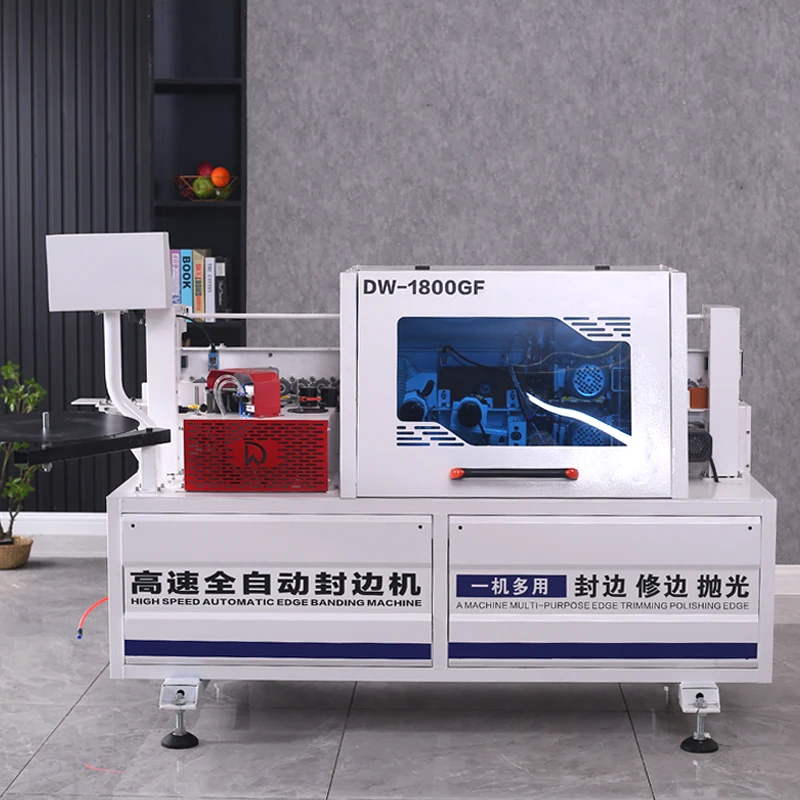
| Product Type | Automatic Edge Banding Machine |
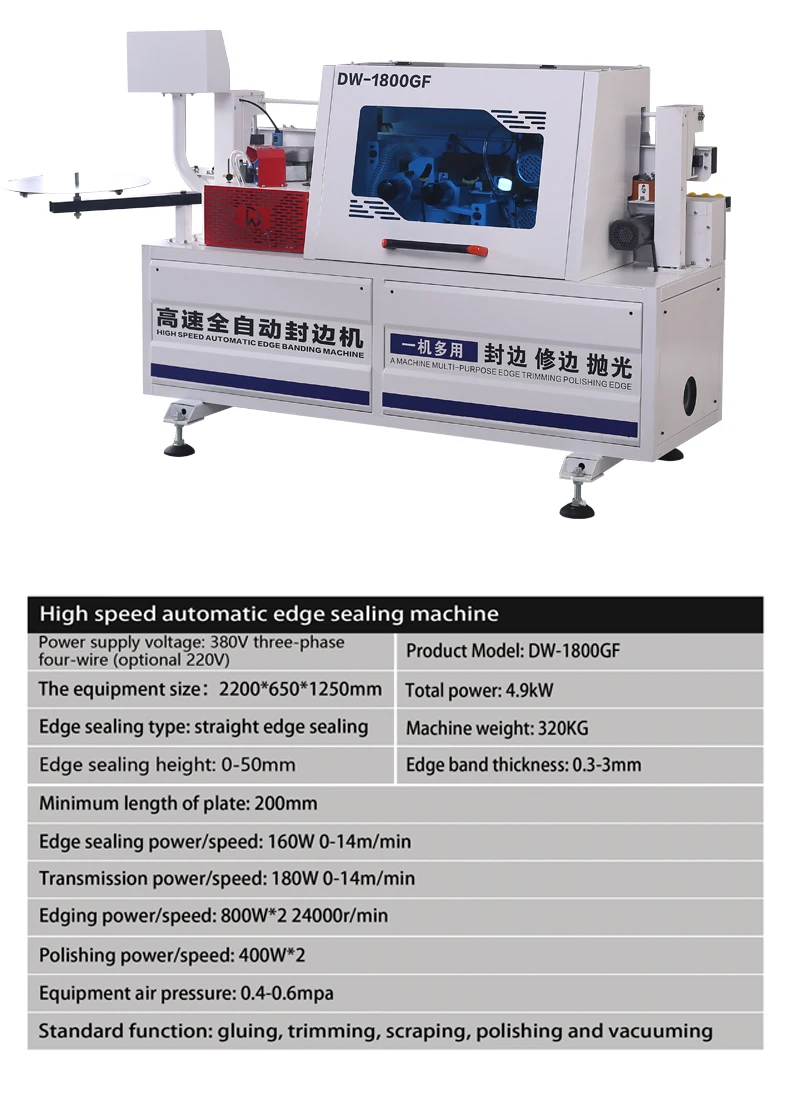
| Total Power | 4.9 kW |
| Voltage Options | 380V / 220V / 415V (frequency confirmed pre-shipment) |
| Feed Speed | 0–14 m/min |
| Edge Banding Thickness Range | 0.3–3 mm |
| Panel Thickness Range | 0–50 mm |
| Minimum Sheet Dimensions | 200 mm (L) × 100 mm (W) |
| Glue Pot Capacity | 4000 ml |
| Trimming Motors | 800 W × 2 at 24,000 r/min |
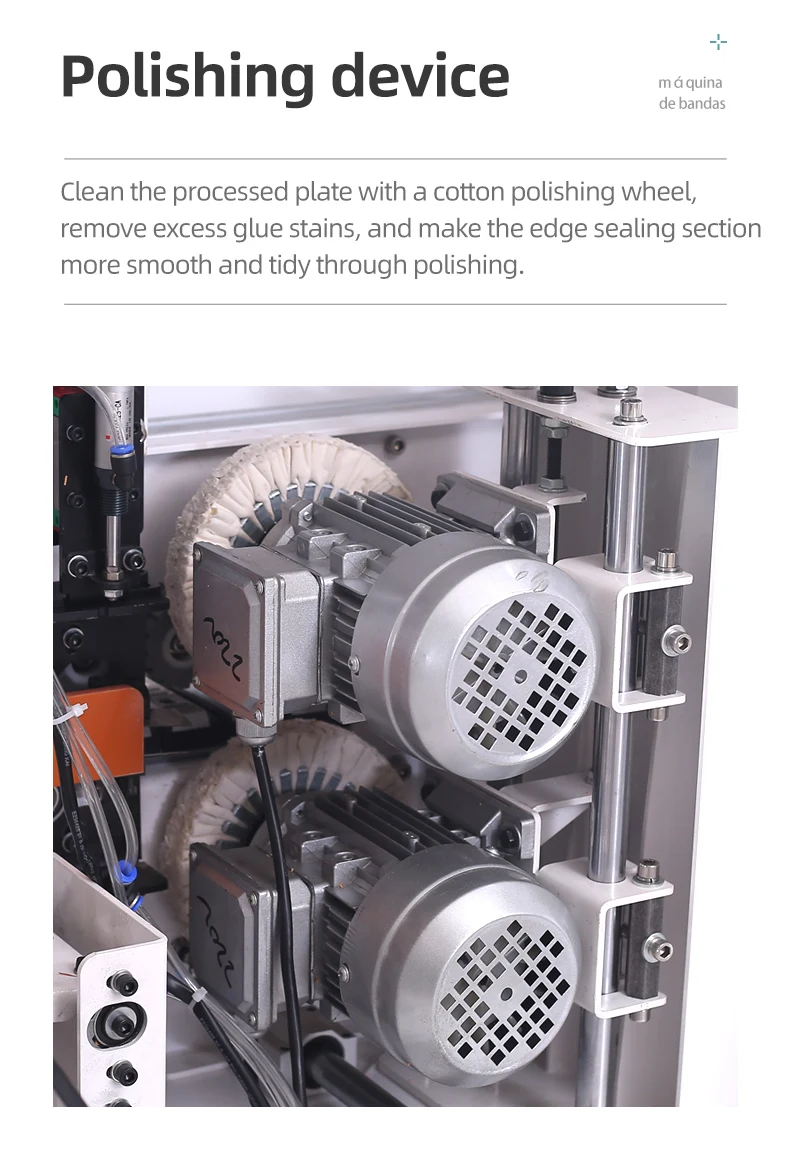
| Polishing Motors | 380 W × 2 |
| Vacuum Power | 550 W |
| Air Source Pressure | 0.4–0.6 MPa |
| Overall Dimensions (L×W×H) | 220 × 65 × 125 cm |
| Net Weight | 320 kg |
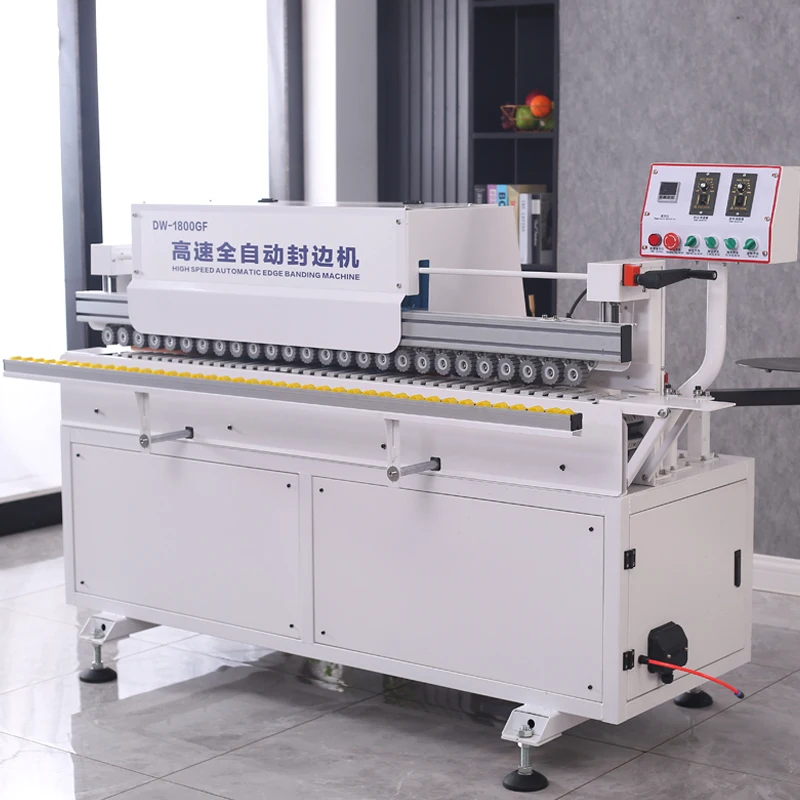
| Guide Structure | Roll-ball differential mobile table |
| Workstation Frame | Extruded aluminum alloy |
| Standard Processes | Double-sided gluing, top/bottom trimming, top/bottom polishing, front/rear alignment, flexible edge scraping, dust extraction |
| Language Options | Chinese and English standard; others customizable |
| Plug Options | EU, USA, AU, UK |
Application Suitability
| Application | Material or Output |
|---|---|
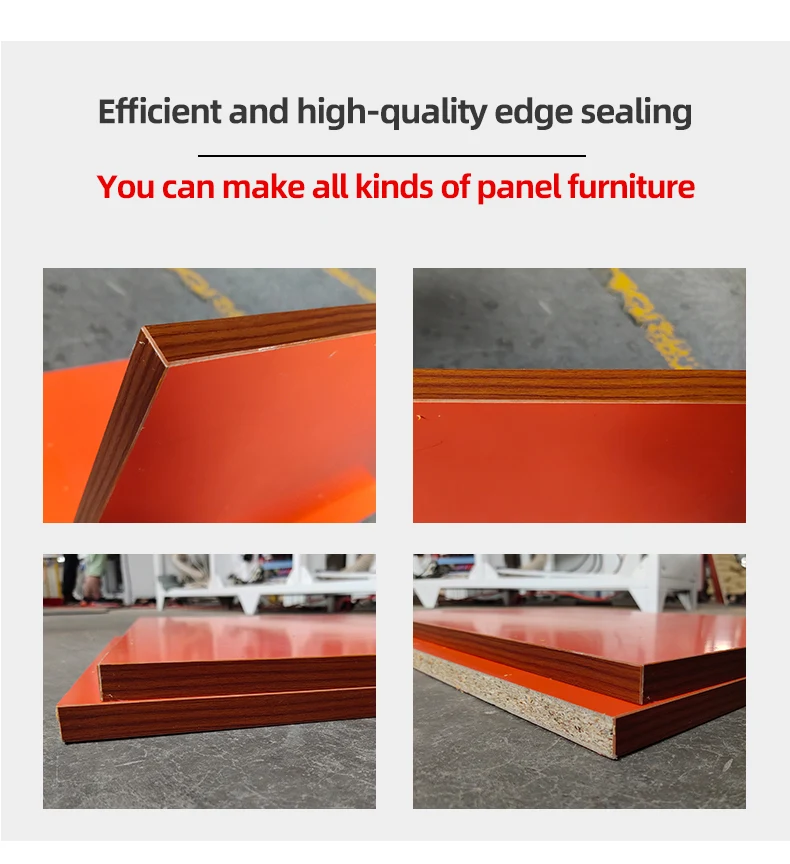
| Custom cabinet door and carcass production | MDF and particleboard with 0.4–2 mm PVC edge banding |
| Plywood furniture panel finishing | Plywood panels with veneer or PVC banding up to 3 mm |
| Small-batch joinery components | Solid wood and blockboard with straight-edge profiles |
| Office and shop fixture panels | Melamine-faced board with matched PVC edging |
| Retail display and shelving | Particleboard and organic glass plates with thin banding |
Why the Voltage Question Must Come Before the Shipping Date
An automatic edge banding machine in stock is only useful if it matches your workshop’s electrical supply.
I have watched crated machines sit on factory floors for weeks because nobody confirmed whether the local grid ran 50 Hz or 60 Hz before dispatch. The DW1800 ships in 220V, 380V, or 415V configurations, but voltage is only half the story — frequency mismatch can push a 24,000 r/min trimming spindle to a speed the bearings were never rated for, or starve a glue pot heater that expects a different cycle. [NEED_CITE: voltage and frequency standards by export market]. Locking in both values before the machine leaves the line avoids a situation where the operator powers up and trips the workshop breaker, or worse, runs the machine at degraded performance without realizing it.
Stock Configuration Confirmed Before Dispatch
Every DW1800 pulled from stock goes through a verification checklist before crating. The electrical schematic is matched to your confirmed voltage and frequency, the plug type is swapped if the default does not fit your region, and the control panel labels are set to the language your operators read. This step replaces the common scenario where an automatic edge banding machine in stock arrives with a Chinese-only interface and a plug that requires an adapter nobody thought to order.
What "In Stock" Actually Means for Lead Time
When we confirm a DW1800 unit is in stock, it means the mechanical assembly is complete and the machine has passed its factory run test. The remaining work is electrical configuration and language setup — tasks measured in hours, not weeks. This matters for workshops that have a production gap to fill or a new contract starting on a fixed date, where waiting through a full build cycle is not an option. [NEED_CITE: typical lead times for stocked versus built-to-order woodworking machinery].
Reading the Specs That Actually Affect Your Panels
The 0–14 m/min feed speed range lets operators slow the line when running thick 3 mm PVC that needs longer glue contact time, then speed up for thin 0.4 mm veneer on small drawer sides. The 4000 ml glue pot holds enough adhesive for continuous runs without stopping to refill mid-batch, which matters when panel stacks are tall and the operator cannot afford a cold glue line halfway through a job. The roll-ball differential guide keeps panels aligned through the trimming and polishing stations — if the guide drifts, the top and bottom trimmers cut unevenly and the polishing wheels leave a visible ridge on one edge. Panel thickness capacity from 0 to 50 mm covers everything from 3 mm backing boards up to thick blockboard shelving, so the same machine handles the full material range in a cabinet shop.
The Cost of Skipping Configuration Checks
A machine that arrives with the wrong voltage does not just sit idle — it blocks the production schedule downstream. Panels stay unfinished, hardware cannot be fitted, and delivery dates slip. I have seen workshops try to compensate with a step-down transformer, only to find the trimming motors overheat under load because the transformer cannot sustain the inrush current when two 800 W spindles start simultaneously. [NEED_CITE: electrical load considerations for multi-motor woodworking machines]. The same applies to air supply: the DW1800 requires 0.4–0.6 MPa, and a compressor that cannot hold that pressure will cause the pneumatic pressure rollers to release mid-feed, leaving a panel with half-bonded edging that has to be stripped and re-run.
Why Buyers Source This Model Through This Channel
Stock availability means the DW1800 can ship within days rather than entering a build queue, which suits workshops filling an immediate capacity gap. Voltage and plug configuration are confirmed against your local supply before dispatch, not left to chance at the port of entry. Each machine ships with a factory test record showing it ran on your specified panel thickness, so you see evidence of performance before you open the crate. The operation manual is written in your agreed language, reducing commissioning time on the shop floor. Engineer-led configuration support is available within 24 hours of inquiry, so the specification sheet matches what your workshop actually processes.
Documentation & Verification
- CE declaration of conformity applicable to the DW1800 edge banding machine
- Factory test record run on your specified panel thickness and edge material
- Electrical schematic confirming voltage, frequency, and plug type before crating
- Operation and maintenance manual in your operators’ language
- Spare parts list with part numbers matching the as-shipped configuration
- Packing photographs documenting machine condition at dispatch
Installation, Commissioning & Support
- Allow a floor area of at least 250 × 100 cm to accommodate the 220 cm frame and operator clearance
- Connect to a dedicated circuit rated for the confirmed voltage at 4.9 kW total draw
- Machine ships as a single skid — position with a forklift, then level using the adjustable feet
- First power-up: verify spindle rotation direction and glue pot temperature before feeding panels
- Air line must deliver a stable 0.4–0.6 MPa; install a regulator and moisture trap upstream
- Initial trim and polish wheel alignment checked at the factory; re-verify after transport settling
What We Need to Match the Right Unit to Your Line
Share the panel materials you run most often, the edge banding type and thickness, and your local voltage and frequency. If your operators need a specific control panel language or your workshop has ceiling height constraints, mention those up front. We will confirm a matching DW1800 from stock with a specification sheet and dispatch timeline.
Frequently Asked Questions
Q: How fast can a DW1800 ship once voltage and language are confirmed?
A: Once we lock in your voltage, frequency, plug type, and control panel language, the configuration work on a stocked unit typically takes a few working days. We then arrange freight based on your preferred shipping terms and send packing photographs before the crate leaves the facility.
Q: Which edge banding materials does the DW1800 handle reliably?
A: The machine runs PVC and veneer edge banding from 0.3 mm to 3 mm thick. Before dispatch, we ask what specific banding material and adhesive you plan to use so the glue pot temperature and feed speed are set accordingly. This avoids the bubble and delamination problems that show up when settings are left generic.
Q: What control panel language will the machine arrive with?
A: Chinese and English are standard on the control interface. If your operators work in a different language, we configure the panel labels and screen text before shipment. Confirming this during the order stage avoids a situation where the machine runs but nobody on the floor can read the error codes.
Q: What should we check the first time we power up the DW1800?
A: Verify the voltage at the outlet matches the machine nameplate, confirm spindle rotation direction, and let the glue pot reach operating temperature before feeding any panel. Run a scrap piece of your actual panel and edge material first, then adjust the trimming and polishing stations to match your finished edge requirement.