

Description
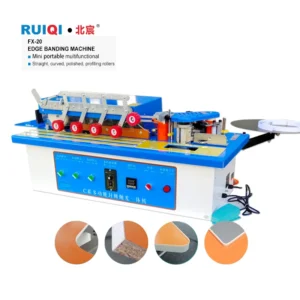
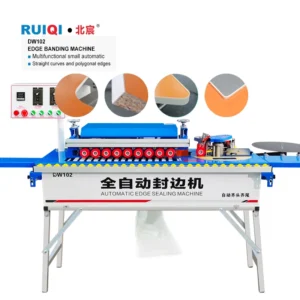
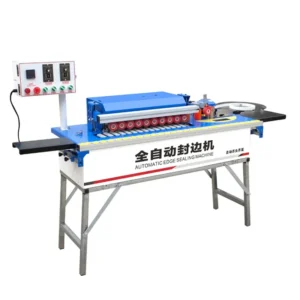
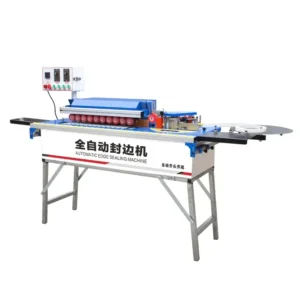
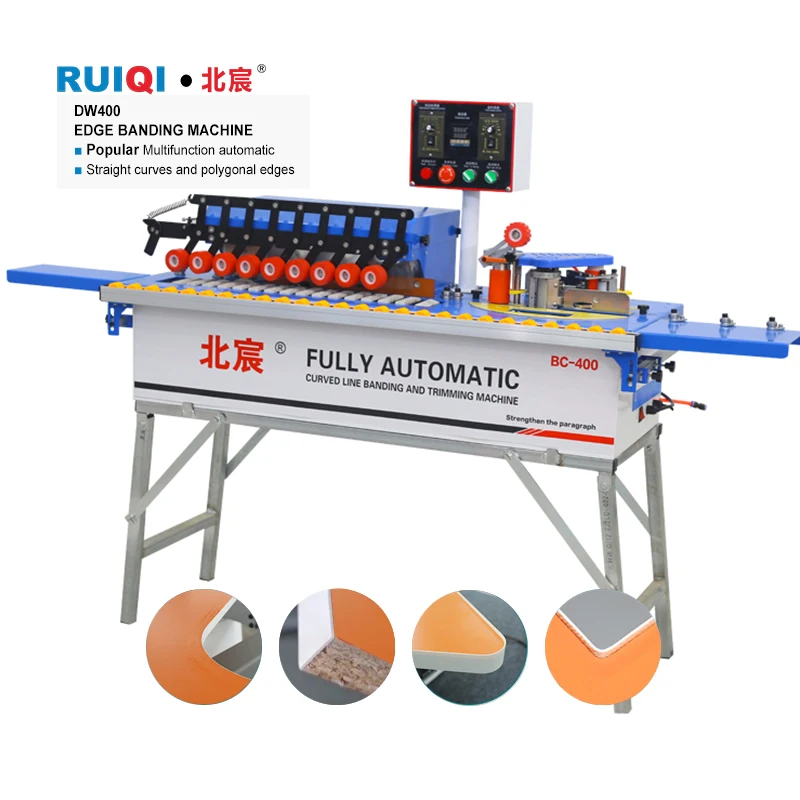
Stocked Edge Bander with Pre-Dispatch Voltage Verification — the DW400 ships only after written confirmation of your local voltage and frequency, with plug and language settings matched to your workshop before the crate is sealed.
Technical Specifications
| Parameter | Value |
|---|---|
| Model | DW400 |
| Product Type | Edge Banding Machine |
| Rated Power | 3800W |
| Voltage & Frequency | 220V / 380V / Customization (50Hz/60Hz to be confirmed) |
| Overall Dimensions (L×W×H) | 116 × 47 × 69 cm |
| Net Weight | 70 kg |
| Minimum Sheet Length | 25 cm |
| Minimum Sheet Width | 10 cm |
| Edge Banding Height Range | 0–50 mm |
| Edge Banding Thickness Range | 0.3–3 mm |
| Trimming Motors | 650W × 2 |
| Polishing Motors | 180W × 2 |
| Glue Pot Capacity | 1000 ml |
| Dust Extraction Vacuum Power | 1200W |
| Air Supply Requirement | 0.5–0.8 MPa |
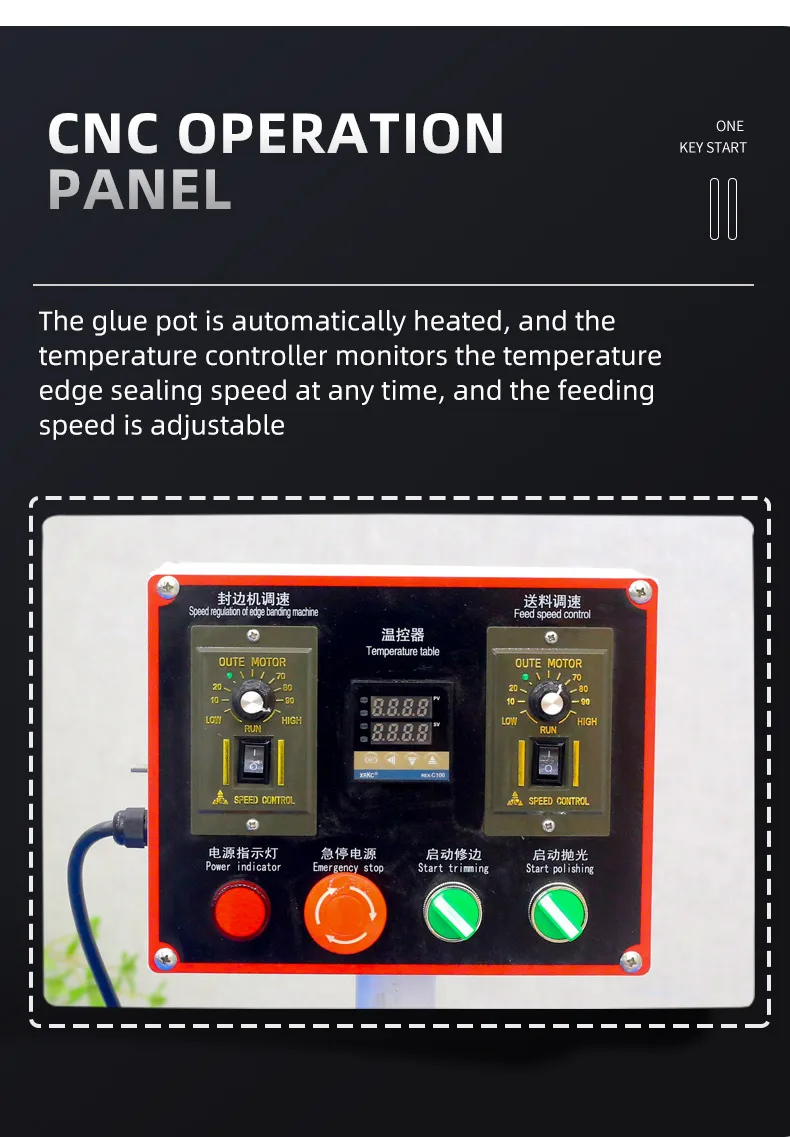
| Control Panel Languages | Chinese, English standard; others customizable |
| Plug Options | EU, USA, AU, UK |
Application Suitability
| Application | Material or Output |
|---|---|
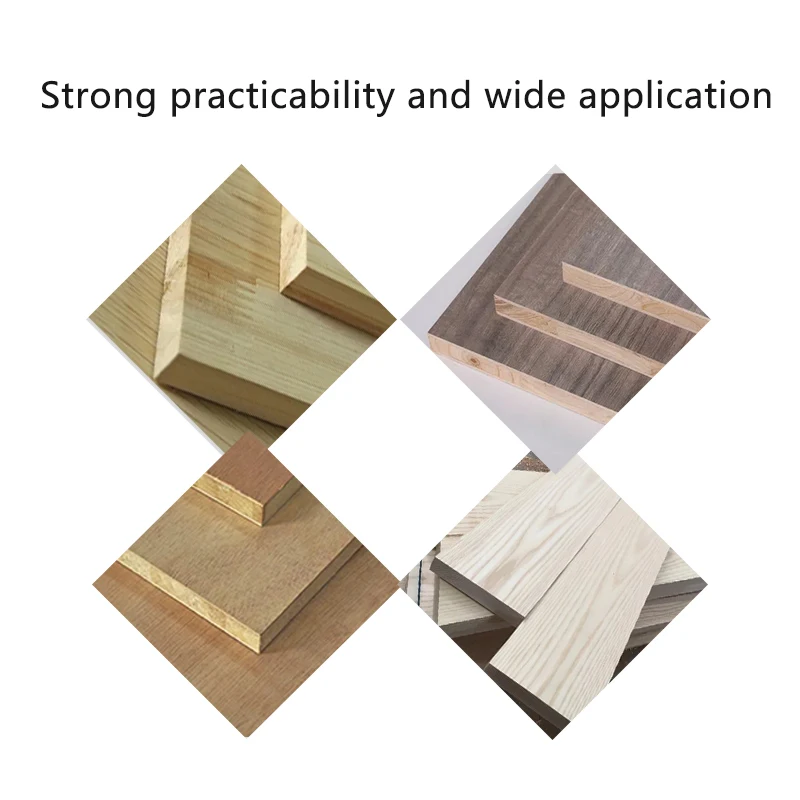
| Cabinet door edge finishing | MDF and particleboard with PVC or veneer banding |
| Office furniture panel edging | Plywood and blockboard with 0.3–3 mm edge strips |
| Small-batch custom joinery | Polymer door components requiring straight edge trimming and polishing |
| Workshop transition from manual banding | Wood panels processed in single-unit or short-run production |
Why Voltage Confirmation Must Happen Before the Machine Leaves the Factory
A machine rated for 380V/50Hz will underperform on a 208V/60Hz supply, and the glue line is the first place you will see it fail.
I have watched an edge bander arrive at a North American cabinet shop, get wired up, and produce clean-looking edges for the first twenty minutes — until the operator tried to peel the banding off a finished door and it released with almost no resistance. The glue pot was not reaching temperature on the local supply. The shop had to rework an entire batch of cabinet fronts before anyone traced the fault to a voltage mismatch that was never confirmed at the quotation stage. This edge banding machine in stock fast delivery listing exists so you can avoid exactly that outcome: the DW400 is configured and tested against your written voltage specification before dispatch [NEED_CITE: voltage and frequency standards by export market].
Dispatch Readiness Without the Configuration Guesswork
Most ready-to-ship edge banders are stocked in a single default configuration, and the buyer discovers the plug type or control language only after uncrating. The DW400 follows a different path: your edge banding machine in stock fast delivery order is matched to one of four plug standards — EU, USA, AU, or UK — and the control panel is set to your agreed language before the machine enters its pre-shipment test cycle. This eliminates the first-week commissioning delays that small workshops can least afford when a machine sits idle waiting for an adapter or a translated manual.
Compact Footprint for Workshops Still Building Their Floor Layout
The DW400 occupies a 116 × 47 cm floor space and weighs 70 kg, which means it can be positioned against a wall or between existing panel saws and assembly benches without a dedicated foundation. For a joinery workshop moving from hand-applied edge banding to a mechanized process, this footprint matters. You are not rearranging the entire shop floor to accommodate one machine. The 1000 ml glue pot supports sustained runs through a typical day of cabinet components without requiring mid-shift refills, keeping operator attention on feed quality rather than consumable management [NEED_CITE: CE machinery directive requirements for industrial equipment].
What the Specification Sheet Means on the Shop Floor
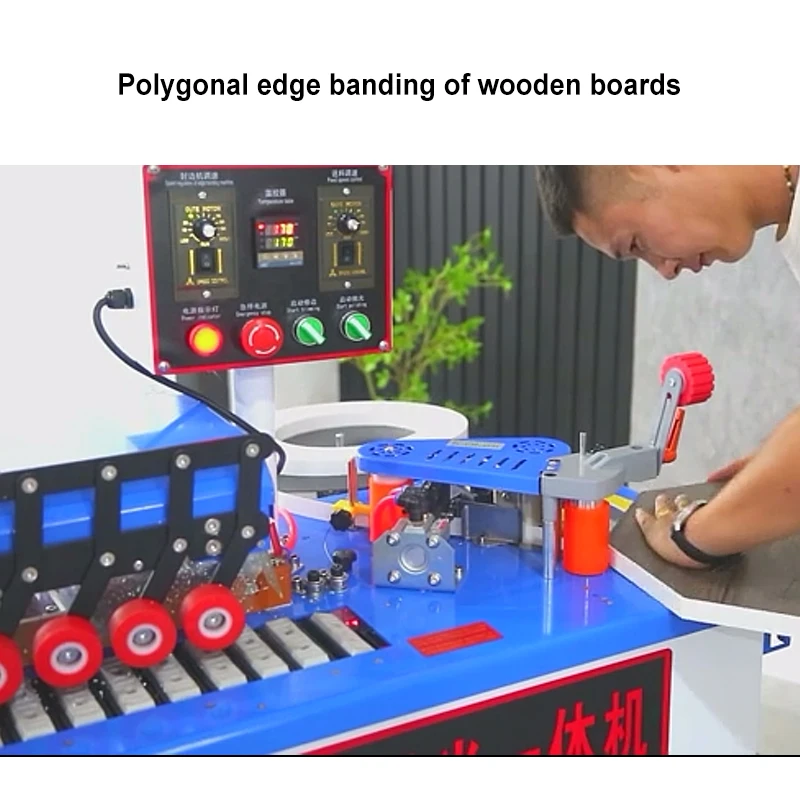
The edge banding thickness range of 0.3–3 mm covers both thin PVC strips used on melamine cabinet carcases and thicker veneer or ABS materials common on visible furniture edges. Two 650W trimming motors handle the excess material removal after the band is applied, while two 180W polishing motors follow to clean the trimmed edge flush with the panel surface. The minimum sheet dimensions — 25 cm length and 10 cm width — define the smallest offcut this machine can process, which matters when you are edging narrow stile components or drawer front blanks. The air supply requirement of 0.5–0.8 MPa falls within the output range of a standard workshop piston compressor, so no dedicated high-pressure system is needed to operate the pneumatic feed and pressure zones. A 1200W vacuum unit handles dust extraction at the trimming and polishing stations, reducing airborne particle accumulation in the immediate work area.
The Hidden Cost of Skipping the Compatibility Check
When a workshop buys a single edge bander without verifying feed height alignment with their existing panel saw, the mismatch surfaces only during the first production run. Panels cut at one thickness reference may not seat correctly against the banding pressure rollers, producing inconsistent glue transfer along the edge. Similarly, ordering a machine specified for 380V three-phase power into a facility running single-phase 220V results in a unit that simply will not start. These are not defects — they are procurement gaps, and they cost time and money to resolve after the machine is on your floor [NEED_CITE: industrial equipment voltage compatibility requirements].
What Backs This Machine Beyond the Product Page
In-house manufacturing with patented cutting mechanisms means the trimming accuracy you see on the test panel is traceable to the tool geometry, not to a third-party spindle dropped into a generic frame. Voltage, plug type, and control language customization are treated as standard order-line items, not as special requests that add weeks to the timeline. A four-stage quality check — incoming material, in-process, finished product, and pre-shipment verification — runs on every DW400 before it is crated. Engineer-led configuration review happens within 24 hours of your inquiry, so the machine you order is the one suited to your panel materials and local power supply. Factory visits are available if you want to watch your specific panel stock run through the machine before it ships.
Documentation & Verification
- Factory test record run on your specified panel thickness and edge banding material
- Electrical schematic confirming your ordered voltage and frequency configuration
- Operation and maintenance manual delivered in your agreed language
- Spare parts list with reorder codes for trimming cutters and polishing wheels
- Packing photographs showing the crated machine before dispatch
Installation, Commissioning & Support
- Requires a level floor section within the 116 × 47 cm footprint, no special foundation
- Dedicated electrical circuit matching your confirmed 220V or 380V supply and plug type
- Arrives assembled; connect compressed air at 0.5–0.8 MPa and dust extraction hose
- First-run parameter setting for glue temperature and feed speed included in the manual
- Trimming and polishing motor brushes and cutters listed as standard consumables
- Daily cleaning of the glue pot and pressure roller zone recommended to maintain edge quality
Before You Place the Order
Send your panel material type, typical panel thickness, and the edge banding material you run most often so the engineer can confirm the DW400 is the right fit. Include your workshop voltage and frequency — a photo of your existing machine nameplate or electrical panel is often the fastest way to confirm this. Let us know your preferred control panel language and plug standard so these are locked in before the pre-shipment test begins.
Frequently Asked Questions
Q: Is this model in stock and what is the dispatch lead time?
A: The DW400 is held in ready-to-ship inventory. Once your voltage, plug type, and control language are confirmed in writing, the machine goes through its pre-shipment test and is dispatched. Typical lead time from confirmed order to crate is measured in days, not weeks, though exact timing depends on the customization scope requested.
Q: Can you confirm the correct voltage and plug type for my country before shipping?
A: Yes. We require written confirmation of your local voltage and frequency before the machine enters the pre-shipment test. Plug options include EU, USA, AU, and UK standards. An electrical schematic reflecting your confirmed configuration ships with the machine for your local electrician.
Q: What languages are available on the control panel?
A: Chinese and English are standard. Other languages can be configured before dispatch based on your operator requirements. The operation manual is also supplied in the agreed language to ensure your team can complete commissioning without translation delays.
Q: Can I order a single unit, or is there a minimum order quantity?
A: Single-unit orders are accepted with the same configuration and pre-shipment verification process applied to larger orders. The DW400 is stocked specifically to support individual machine purchases by workshops and small production facilities.
Q: What spare parts ship with the machine and how do I reorder consumables?
A: A spare parts list with reorder codes is included in the documentation package. Consumable items such as trimming cutters and polishing wheels are identified separately so you can plan reorder intervals based on your production volume and material types.