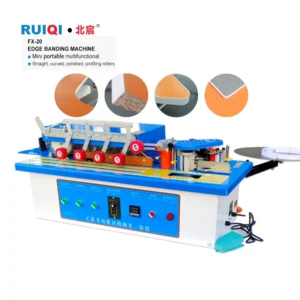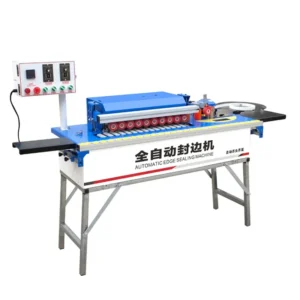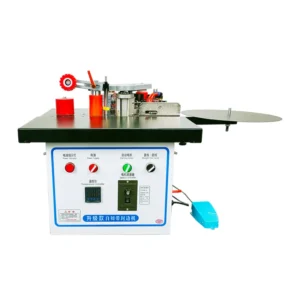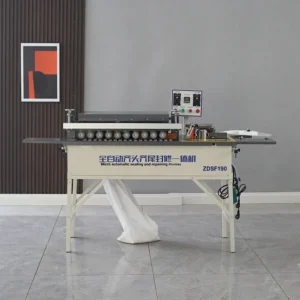
Description
Voltage-Matched Stock — every 802 unit is checked against your facility’s grid frequency and voltage before it leaves the dock, so you won’t face a silent machine on arrival.
Technical Specifications
| Parameter | Value |
|---|---|
| Model | 802 |
| Product Type | Automatic Edge Banding Machine |
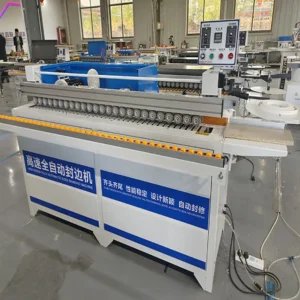
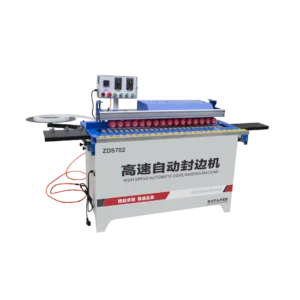
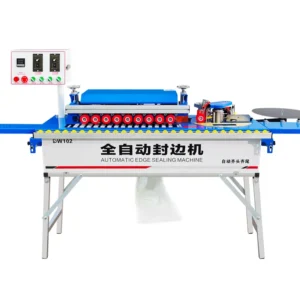
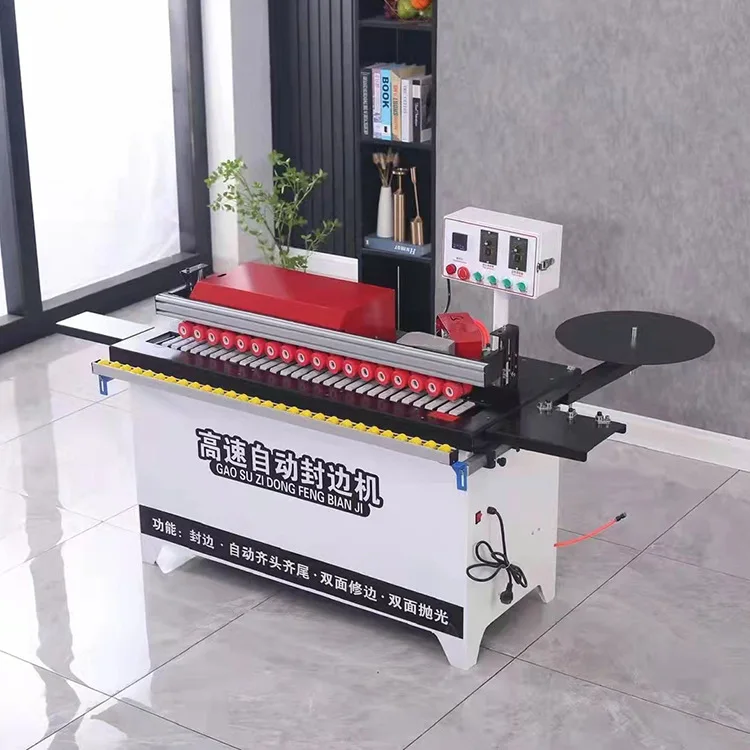
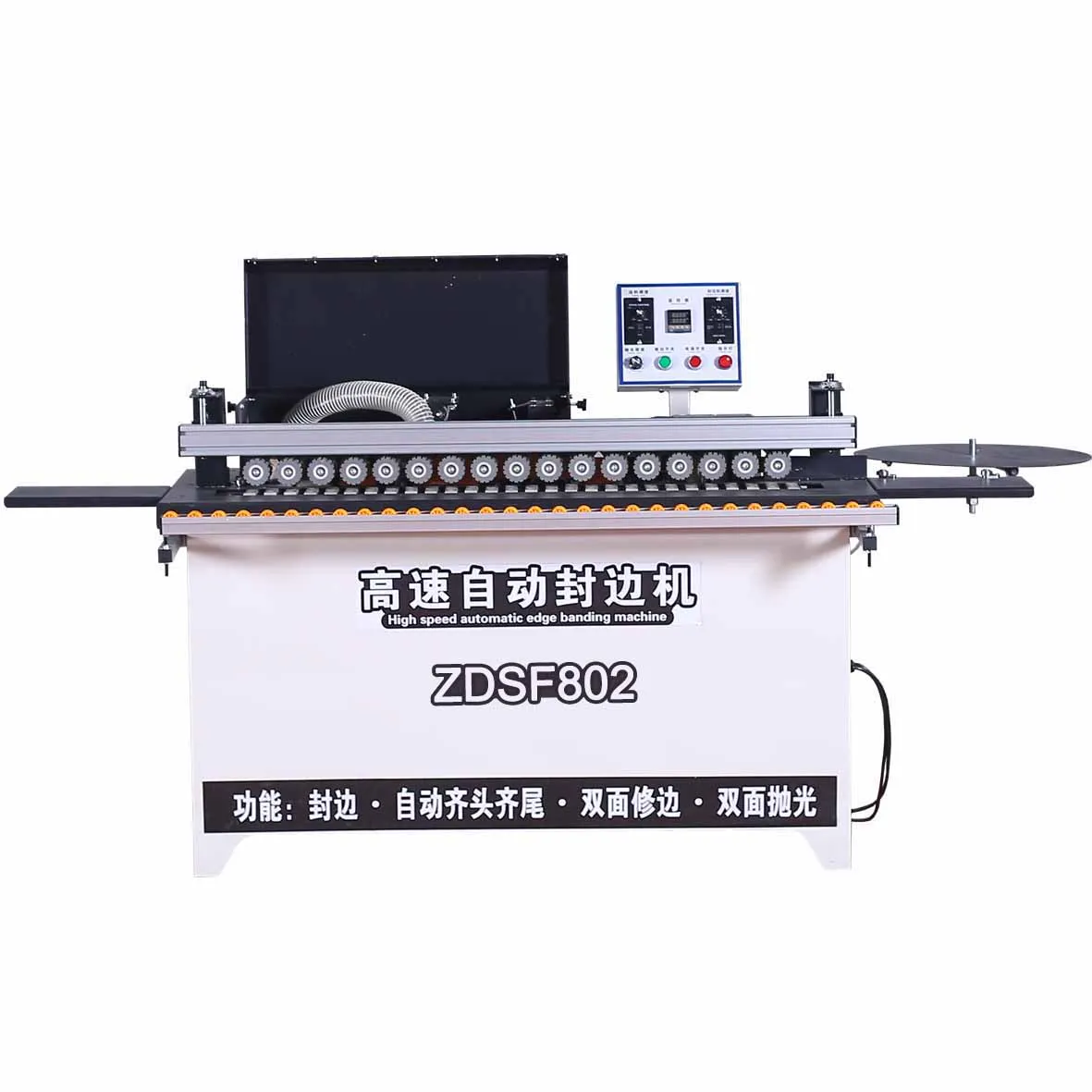
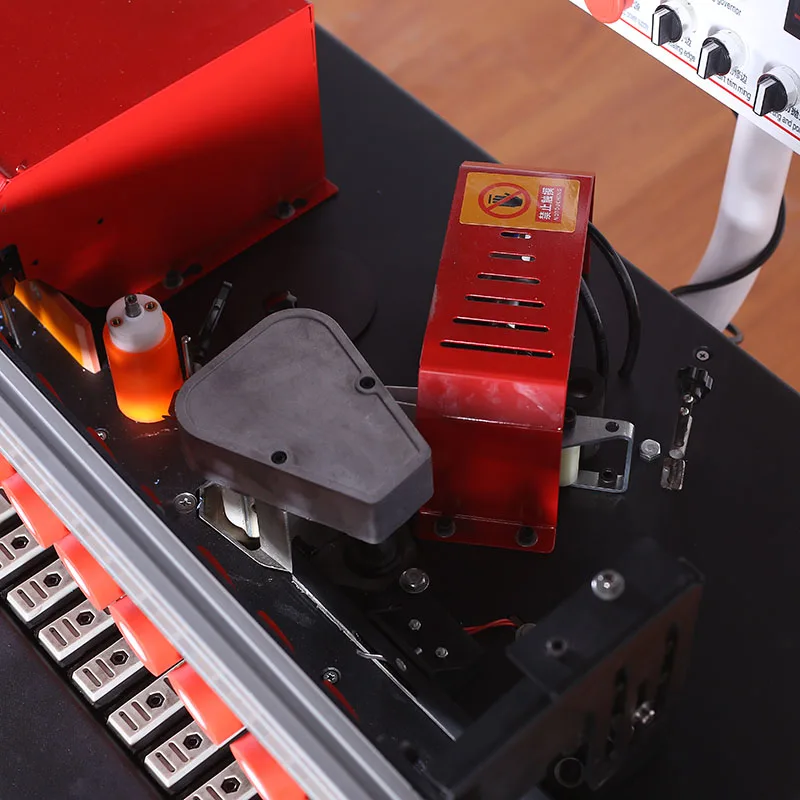
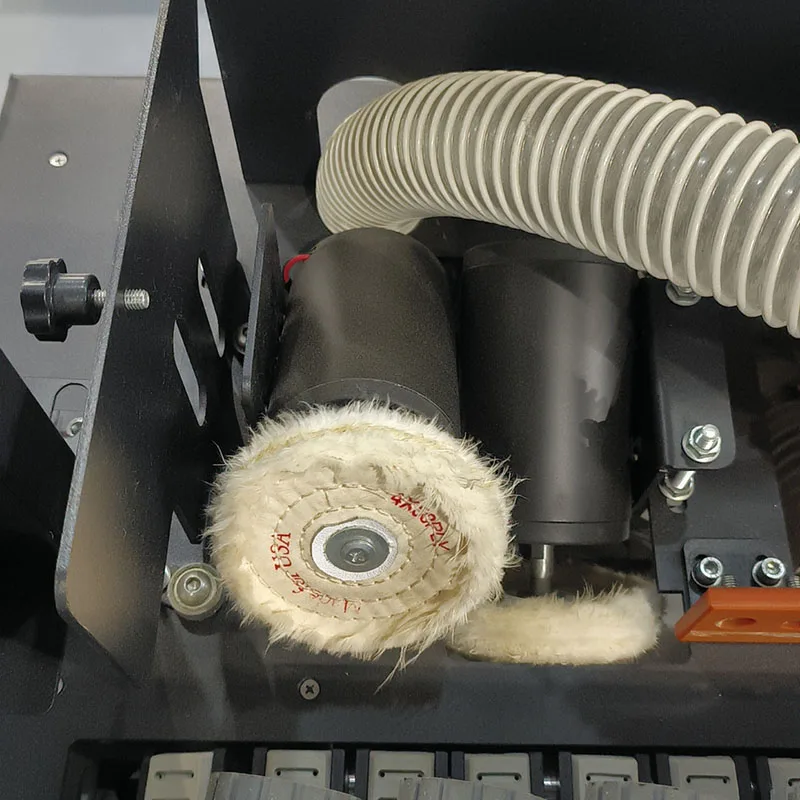
| Function Sequence | Automatic plate feeding, end cutting, head and tail trimming, upper and lower polishing |
| Edge Banding Type | Straight line |
| Rated Voltage | 220V (frequency to be confirmed at order) |
| Rated Power | 4kW |
| Trimming Motor Power | 800W × 2 |
| Polishing Motor Power | 180W × 2 |
| Dust Suction Power | 1200W |
| Glue Pot Heating Power | 1000W (5–10 min heat-up) |
| Glue Pot Capacity | 4000ml |
| Feed Speed | 0–10 m/min |
| Conveyor Belt Speed | 0–10 m/min |
| Strip Thickness Range | 0.5–2.5 mm |
| Panel Thickness Range | 10–50 mm |
| Rated Air Pressure | 0.4–0.6 MPa |
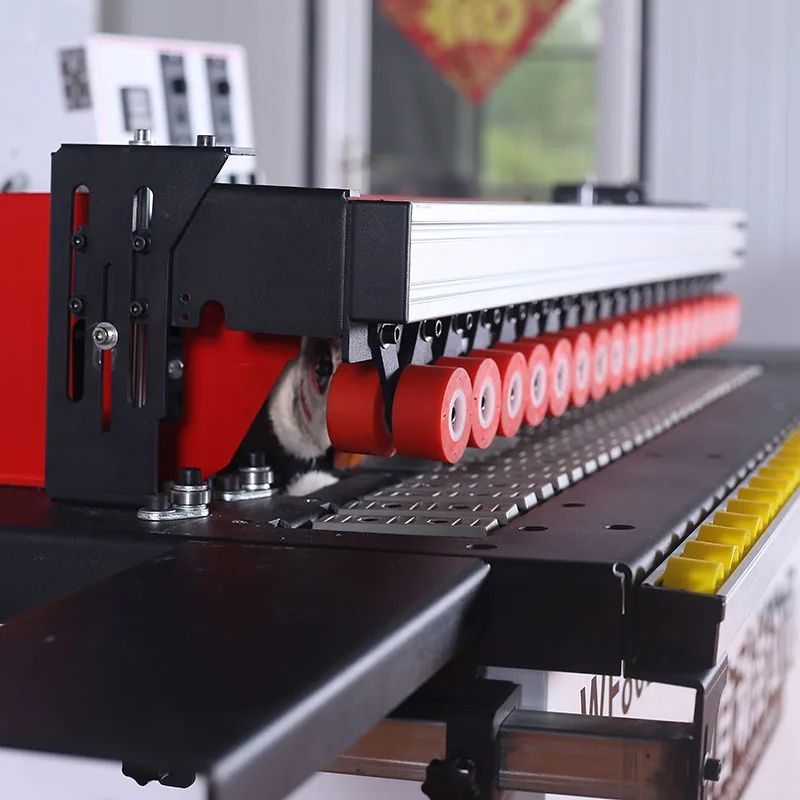
| Pressure Beam | One-piece integrated, double rows of pressure wheels |
| Conveyor Belt Material | Silicone |
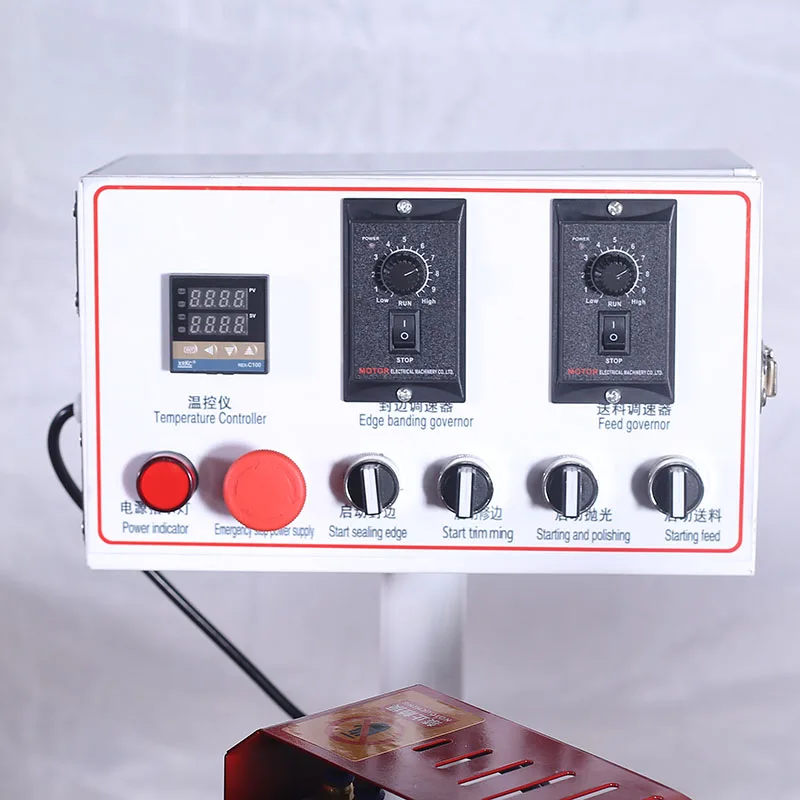
| Control Interface | Digital display glue pot temperature, independent switches |
| Overall Dimensions | 130 × 65 × 75 cm |
| Machine Weight | 150 kg |
| Assembly State | Partially assembled, some on-site assembly required |
Application Suitability
| Application | Material or Output |
|---|---|
| Cabinet door and carcass edge sealing | MDF and particleboard panels with PVC edging |
| Custom furniture straight-line banding | Plywood and blockboard up to 50 mm thick |
| Small-batch workshop production | Veneer and PVC strips 0.5–2.5 mm on panel substrates |
| Joinery startup transitioning from hand banding | Standard sheet stock for shelving, drawer fronts, and worktops |
Why Voltage Verification Must Come Before the Automatic Edge Bander in Stock Ships
A machine wired for the wrong frequency will burn out its heating element before you finish your first panel.
I spent years running the Latin America route, and one shipment still haunts me. We sent an automatic edge bander to a cabinet shop in Ecuador — the control panel firmware was in English, the operator spoke only Spanish, and the machine sat idle for two full days while we pushed a firmware update remotely. That experience reshaped how I handle every dispatch: confirm the operator’s language and the facility’s voltage before the crate is nailed shut [NEED_CITE: voltage and frequency standards by export market]. When you order an Automatic Edge Bander in stock from this catalog, the voltage conversation happens first, not as an afterthought on the shipping documents.
Stock Availability and Dispatch Timing
Keeping the 802 available as an Automatic Edge Bander in stock means the unit is assembled, tested, and sitting on the warehouse floor — not waiting on a production queue. Workshops that have just won their first contract or need to replace a failed machine cannot afford multi-week build schedules. This model ships with its 4000 ml glue pot pre-calibrated and its silicone conveyor belt tensioned, cutting on-site commissioning to the time it takes to level the frame and connect air and power.
Single-Unit Orders Without Minimum-Quantity Friction
Many factories scaling from manual banding to their first automatic machine only need one unit to prove the workflow. The stocking model here supports single-unit orders with the same pre-shipment test protocol applied to bulk runs. You receive packing photographs before the crate is sealed, so you can verify condition and completeness without waiting for the container to cross an ocean [NEED_CITE: pre-shipment inspection standards for woodworking machinery].
Reading the Numbers That Matter on the 802
The 10–50 mm panel thickness range covers the full spectrum of stock used in cabinet carcasses, shelving, and worktop blanks. Feed speed adjusts from 0 to 10 m/min, letting operators slow down for thick veneer that needs careful glue wetting or speed up on thin PVC runs where adhesion is less demanding. The 4000 ml glue pot capacity means fewer refill interruptions during a continuous batch — a practical advantage when a small shop is running fifty cabinet doors back-to-back and cannot afford the temperature drop that comes with stopping to top up the reservoir. The 800 W × 2 trimming motors and 180 W × 2 polishing heads handle the head, tail, and top-bottom finishing in a single pass, which matters for shops that do not have a secondary hand-trimming station downstream.
What Happens When You Skip the Configuration Conversation
A buyer once ordered a compact edge bander for a 60 Hz market, received a 50 Hz unit, and watched the glue pot overshoot temperature within minutes — scorching the PVC and ruining an entire sheet of melamine-faced board [NEED_CITE: thermal degradation of PVC edge banding above recommended glue temperature]. Another workshop received control labels in a language their operator could not read, delaying commissioning while translated overlays were printed locally. These are not manufacturing defects; they are communication failures that happen when the seller treats voltage, frequency, and language as details to sort out later.
Why Procurement Through This Channel Works for Ready-Stock Buyers
Voltage and frequency are confirmed against your facility’s grid before the unit is released from stock, eliminating the dead-on-arrival risk. The 802 ships with an operation and maintenance manual in the language you agree on at order, so the operator can follow the commissioning checklist without translation guesswork. A factory test record covering your specified panel thickness range accompanies every dispatch. The stocking model means lead times are measured in days for crating and carrier handover, not weeks for a build slot. Spare parts lists are matched to the exact configuration you receive, so reorder references are unambiguous when consumables like trimming blades or polishing wheels need replacing.
Documentation & Verification
- CE declaration of conformity covering the 802 automatic edge banding machine
- Factory test record run on your specified panel thickness and edge strip before dispatch
- Electrical schematic with confirmed voltage and frequency for your facility
- Operation and maintenance manual in your agreed operator language
- Spare parts list cross-referenced to your machine’s serial number
Installation, Commissioning & Support
- Level the 130 × 65 cm frame on a flat workshop floor; no special foundation required for the 150 kg unit
- Connect to a dedicated 220V circuit rated for the 4kW total draw with appropriate breaker sizing
- Attach the dust collector hose to the built-in 1200W suction port; no external collector needed
- Allow 5–10 minutes for the 1000W glue pot to reach operating temperature on first power-up
- Set air supply to 0.4–0.6 MPa from a compressor capable of sustaining continuous pneumatic trimming cycles
- Run calibration panels at low feed speed before moving to the full 10 m/min production rate
Starting Your Inquiry
To move an 802 from stock to your dock, share your panel material, typical sheet thickness, and the PVC or veneer strip width you run most often. Confirm your facility voltage, frequency, and the language your operator reads on a control screen. If you already have upstream saws or downstream boring machines, note their feed heights so we can verify conveyor alignment before the unit ships.
Frequently Asked Questions
Q: What voltage options are available and is my local frequency compatible?
A: The standard configuration is 220V. Before dispatch, we confirm both voltage and frequency against your facility’s grid to ensure the 4kW motor array and 1000W glue pot heater operate within rated parameters. If your site runs on a non-standard supply, let us know at inquiry so we can verify compatibility or flag the limitation before you commit to an order.
Q: Is this model currently in stock, and what is the dispatch lead time?
A: The 802 is maintained as ready stock, meaning the unit is assembled and tested rather than built to order. Dispatch lead time covers crating, documentation preparation, and carrier handover, typically measured in days rather than weeks. Exact timing depends on shipping method and destination, confirmed at the point of order placement.
Q: What panel materials and edge banding types does the 802 handle?
A: The machine processes MDF, particleboard, and plywood panels from 10 to 50 mm thick, applying straight-line PVC or veneer strips from 0.5 to 2.5 mm. The one-piece integrated pressure beam and silicone conveyor belt are designed for stable, scratch-free conveyance across these common workshop substrates.
Q: Do I need a separate air compressor, and what air supply is required?
A: Yes, the 802 requires an external compressed air source delivering 0.4–0.6 MPa to operate the pneumatic end-cutting belt breaker and trimming actuators. Your compressor should sustain this pressure continuously during production runs to avoid cycle interruptions at the end-cutting and trimming stations.
Q: What spare parts ship with the machine, and how are replacements sourced?
A: Each unit ships with a matched spare parts list tied to its serial number, covering common wear items like trimming blades and polishing wheels. The digital temperature display and independent switch layout mean most electrical troubleshooting is straightforward using the included schematic before consumable replacement is needed.