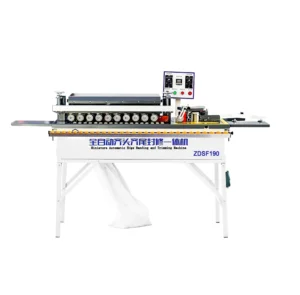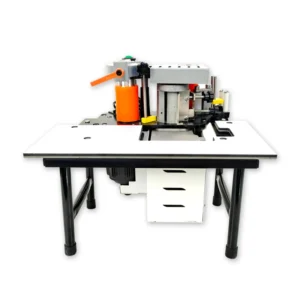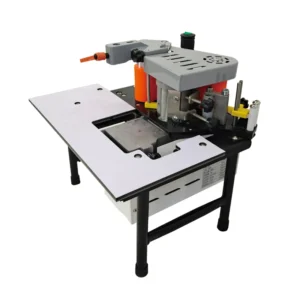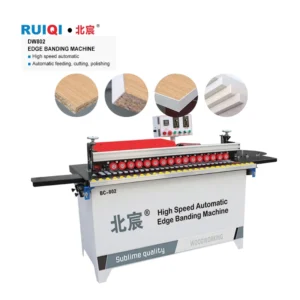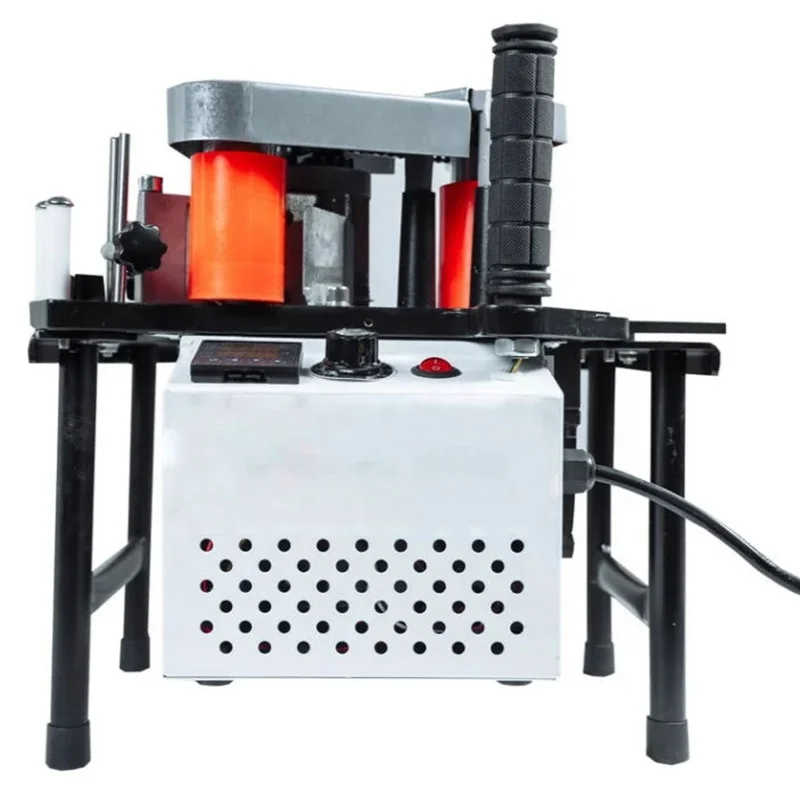
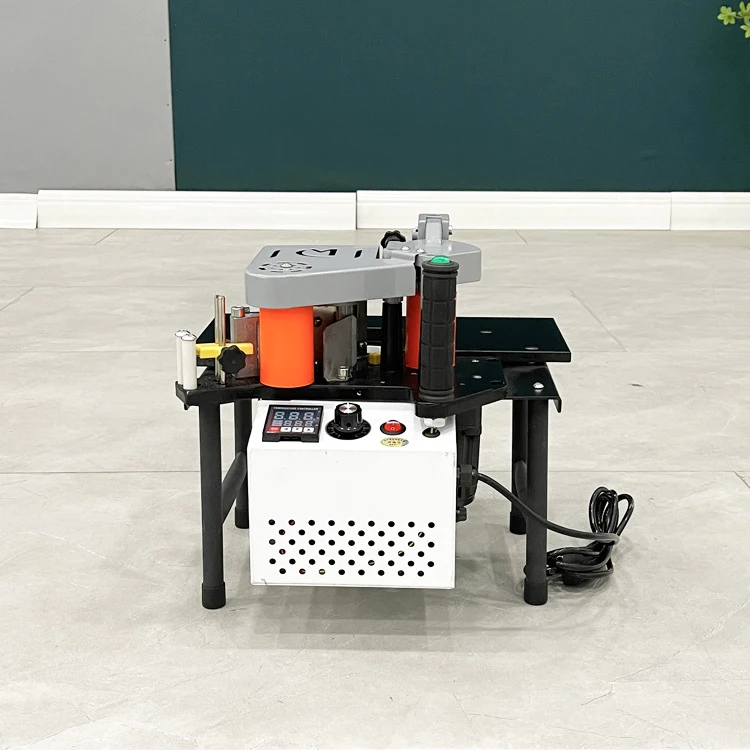
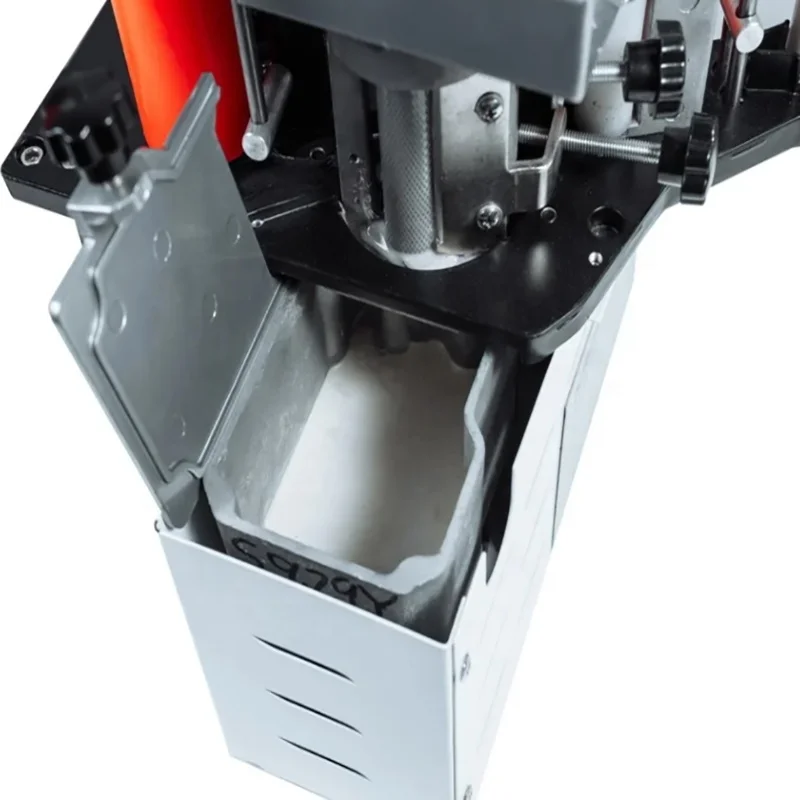
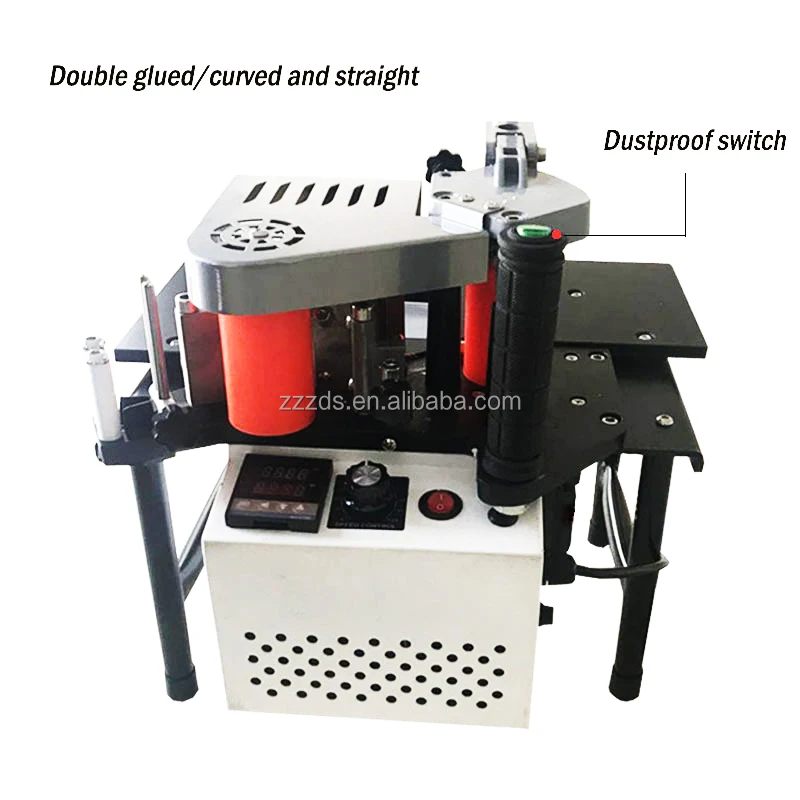
Description
Stocked and configured for your plug type — dispatched with region-matched voltage verification and a language-specific manual so commissioning starts the day it arrives.
Technical Specifications
| Parameter | Value |
|---|---|
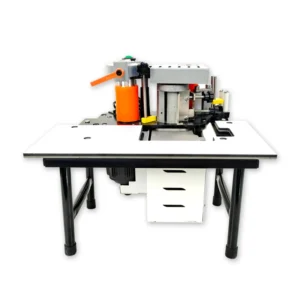
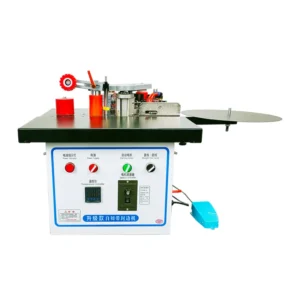
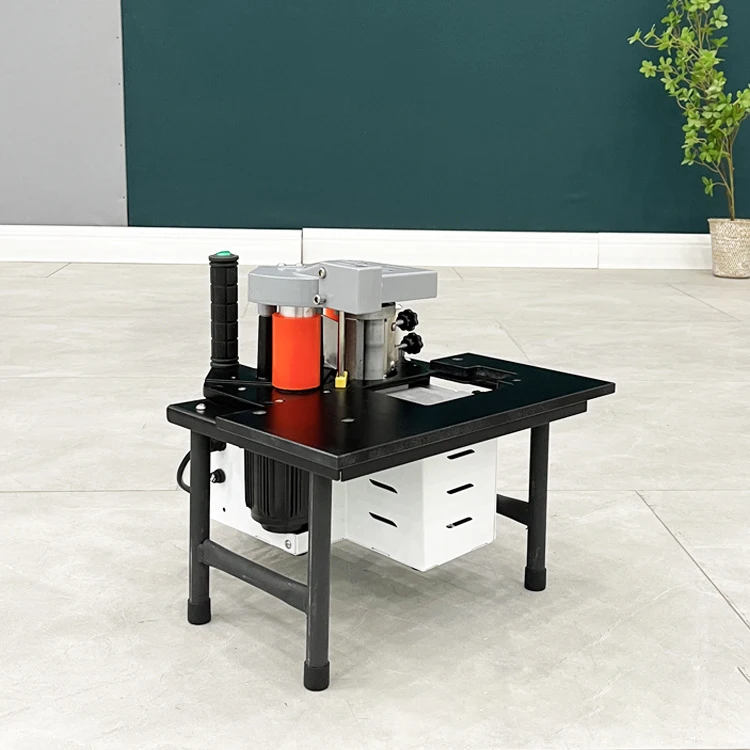
| Product Type | Portable Manual Edge Banding Machine |
| Shape of Edge-banding Plates | Curved, Straight and Special-shaped Sheet |
| Edge Thickness Range | 0.3–3 mm |
| Edge Sealing Speed | 0–6 m/min |
| Edge Sealing Height | 7–60 mm |
| Gluing Method | Double-sided gluing |
| Glue Pot Volume | 1000 ml |
| Machine Weight | 14 kg |
| Plug Options | EU / AU / UK / USA / CN |
| Logo Customization | Available |
Application Suitability
| Application | Material or Output |
|---|---|
| Small workshop furniture production | MDF and plywood panels with PVC edge banding |
| On-site cabinet installation and repair | Curved cabinet fronts with veneer strips |
| Custom joinery and prototype builds | Particleboard and solid wood panels with 0.3–3 mm edging |
| Low-volume shaped panel finishing | Special-shaped sheets requiring flexible edge profiles |
Why the Plug Type Question Beats Every Other Spec
Ordering a portable manual edge banding machine in stock without confirming voltage and plug type is the fastest way to stall a workshop for weeks.
I have stood in European showrooms watching buyers sign purchase orders for compact woodworking units, only to discover six weeks later that the plug is wrong and no adapter rated for the current draw exists locally. The portable manual edge banding machine in stock ships with EU, AU, UK, USA, or CN plugs from the warehouse, but only if someone asks the question before dispatch. When a 14 kg unit arrives with a mismatched plug, the operator either rigs an unsafe adapter or shelves the machine until a proper cable is sourced — both outcomes cost productive hours [NEED_CITE: voltage and frequency standards by export market].
Dispatch That Matches Your Workshop Reality
When a joinery shop transitions from hand-applied edge tape to mechanized banding, the bottleneck is rarely the machine itself — it is the gap between delivery and first productive cut. This portable edge bander leaves the warehouse with the plug and documentation already matched to the destination, removing the two most common commissioning blockers for single-machine orders.
How Stock Availability Shortens the Ramp-Up
Workshops ordering a portable manual edge banding machine in stock typically need it running within days, not weeks. The unit covers curved, straight, and special-shaped profiles without requiring additional tooling or fixture changes, so a small team can move from uncrating to productive edge sealing on standard MDF or plywood panels in a single session. Double-sided gluing across a 1000 ml glue pot means the operator loads the glue once and runs through a full batch of panels before needing to refill — important when floor space is limited and there is no dedicated glue prep station nearby.
What 14 kg Means for On-Site Flexibility
A 14 kg edge bander that handles edge sealing heights from 7 to 60 mm sits in a category where portability is genuine, not marketing language. Installers carrying the unit between job sites can edge-band curved cabinet fronts on location without returning to the workshop, and the manual feed speed up to 6 m/min gives enough control to follow tight radii on veneer strips [NEED_CITE: CE machinery directive requirements for manual portable woodworking equipment]. The trade-off is throughput: this is a low-volume machine, and running it at production-line duty cycles will accelerate wear on the feed mechanism.
Reading the Numbers That Actually Matter on Site
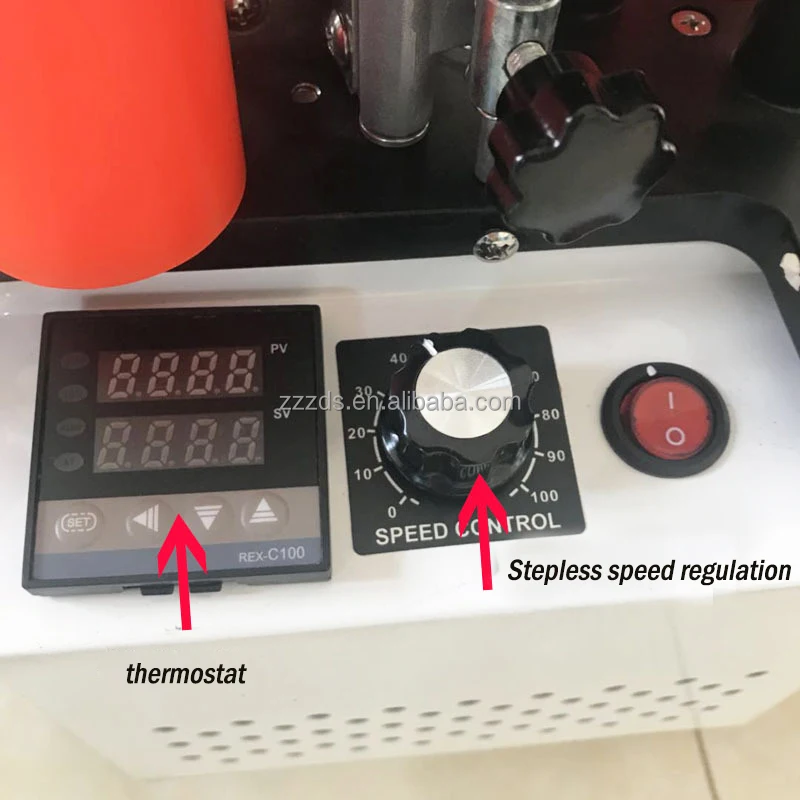
Edge thickness from 0.3 to 3 mm covers the full span from thin PVC veneer wraps to thicker solid-wood banding stock, but the practical implication is about glue spread and pressure. Thicker edges require more adhesive and sustained contact pressure during the bonding window; the double-sided gluing method addresses this by coating both the panel edge and the strip simultaneously, which improves adhesion consistency on porous substrates like particleboard. The 7–60 mm sealing height range accommodates standard 18 mm furniture board as well as thicker countertop panels, but operators should verify that panels exceeding 50 mm still sit flat against the reference fence during curved-edge runs. The 0–6 m/min feed speed is manually controlled, which means edge quality depends partly on operator consistency — a steady hand at 3 m/min generally produces cleaner results than pushing toward the upper limit on curved profiles.
The Cost of Treating a Portable Unit as a Production Machine
I have seen workshops buy a compact edge bander for occasional shaped panels and then push it through eight hundred MDF boards a day, five days a week. The guide rails drift from alignment within months, and panels that should mate flush during assembly arrive with visible offsets [NEED_CITE: edge banding tolerance failures from duty cycle mismatch]. This is not a machine defect — it is a mismatch between the unit’s design envelope and the volume forced through it. Entry-level portable banders are built for flexibility and low-volume runs, not sustained throughput, and substituting one for a full-function automatic line creates downstream assembly failures that cost more to correct than the original machine investment.
Why Procurement Flows Differently Here
- Voltage and plug type are confirmed at order stage, not guessed from the destination country name, so the unit arrives ready to plug in.
- Every portable manual edge banding machine in stock undergoes a pre-shipment test on actual panel material before crating, with a test record included in the documentation pack.
- Operation manuals are produced in the operator’s language before dispatch, eliminating the commissioning delay caused by untranslated control labels and safety instructions.
- Spare parts lists ship with the machine, identifying wear components and their reorder codes so the workshop is not stranded when a glue roller or guide bearing needs replacement.
Documentation & Verification
- CE declaration of conformity matched to the portable edge bander model shipped
- Factory test record on your specified panel thickness and edge material before dispatch
- Electrical schematic confirming plug type and voltage for the destination market
- Operation and maintenance manual in the agreed operator language
- Spare parts list with reorder codes for glue rollers and guide components
Installation, Commissioning & Support
- Single-phase power connection matching the confirmed plug type; no dedicated three-phase circuit required for this 14 kg unit
- Unpack and place on a stable bench surface with at least 600 mm clearance for panel feed on both sides
- Load glue into the 1000 ml pot and run a test strip on scrap MDF to verify adhesion before production panels
- Adjust the fence for curved or straight profiles using the manual guide — no tooling change required
- Clean the glue pot after each session to prevent residue hardening that blocks the feed channel
- Inspect guide bearings weekly and reorder from the included spare parts list when lateral play is detected
Before You Request a Quote
Tell us the panel materials you run most often, the edge banding thickness range, and whether your work is predominantly straight, curved, or mixed. Confirm your local voltage, frequency, and plug type so the unit ships configured for immediate use. If your operators speak a language other than English, specify it so the manual and safety labels are matched accordingly.
Frequently Asked Questions
Q: What plug and voltage options ship from stock and how fast is dispatch?
A: The portable manual edge banding machine ships from stock with EU, AU, UK, USA, or CN plugs. Dispatch timing depends on current warehouse inventory and destination, but stocked units typically leave within days once plug type and voltage are confirmed. No third-party adapter is needed on arrival because the plug is factory-installed to match your market.
Q: Can this portable bander handle both curved and straight panels in the same session?
A: Yes. The machine accepts curved, straight, and special-shaped sheets without requiring fixture changes between profiles. Operators switch between panel shapes by adjusting the manual fence guide and feed direction. Edge thickness from 0.3 to 3 mm and sealing height from 7 to 60 mm remain consistent across all profile types during a single work session.
Q: Is the operation manual available in my language at the time of delivery?
A: The operation and maintenance manual is produced in the language you specify at order confirmation. It ships inside the crate with the machine, covering setup, glue loading, fence adjustment for curved and straight profiles, and routine maintenance. Confirming the language at the order stage prevents the common delay of operating a machine with unreadable documentation.
Q: What spare parts and glue cartridges are available for immediate reorder?
A: The spare parts list shipped with the machine identifies wear items including glue rollers, guide bearings, and feed components with their specific reorder codes. Standard hot-melt glue compatible with PVC, ABS, and veneer edge banding can be sourced locally. Contact the supplier with your reorder codes for direct shipment of proprietary wear parts.
Q: Do you offer door-to-door shipping with customs clearance support?
A: Shipping options including door-to-door delivery are quoted at the order stage based on destination and method selected. Customs documentation support is provided as part of the standard shipment package, including the CE declaration, commercial invoice, and packing details. Specific clearance requirements vary by country and should be confirmed before dispatch.