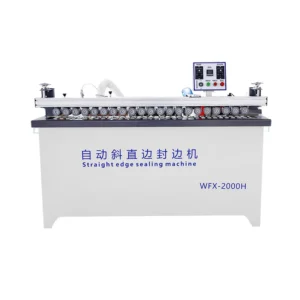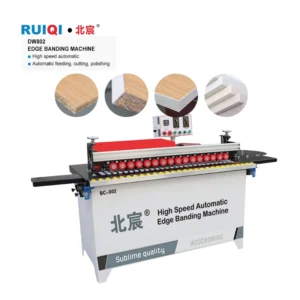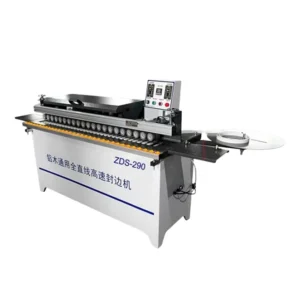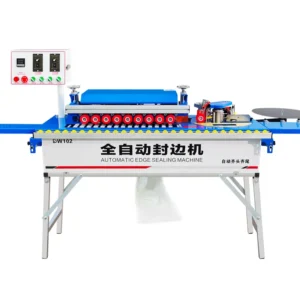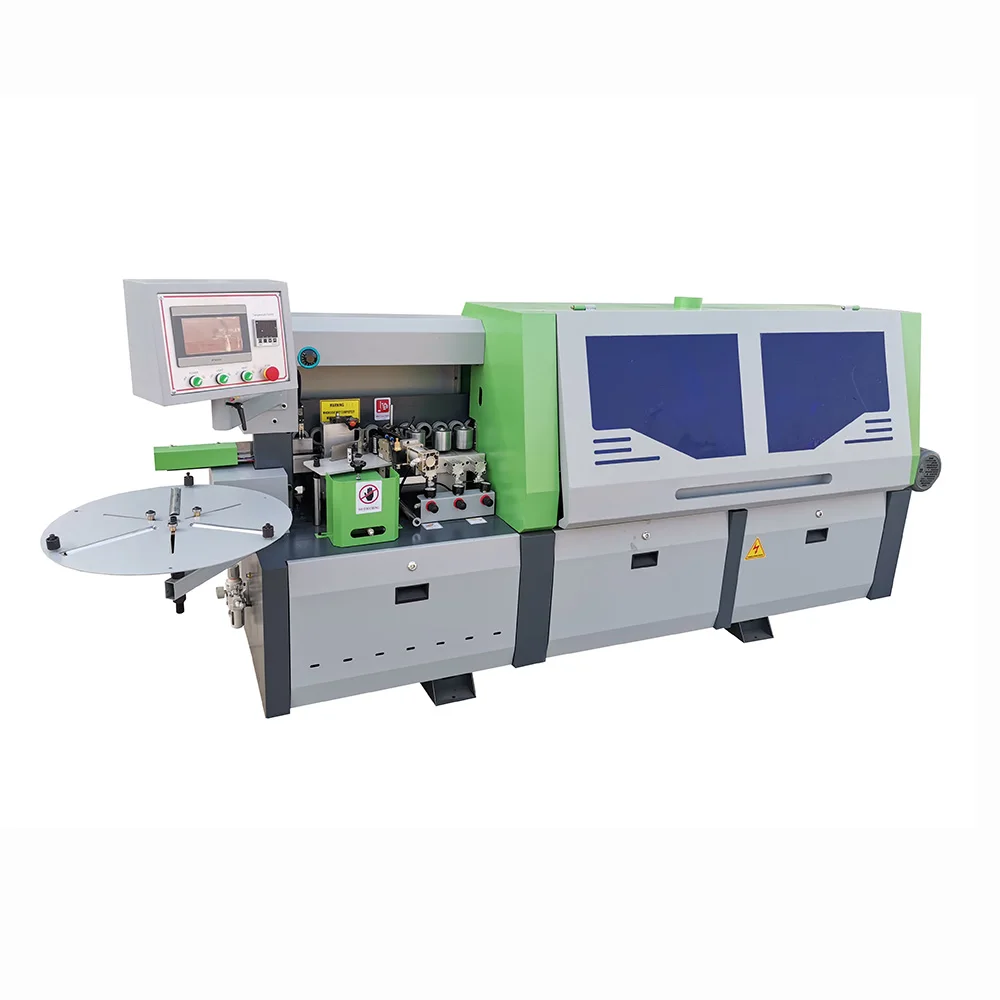
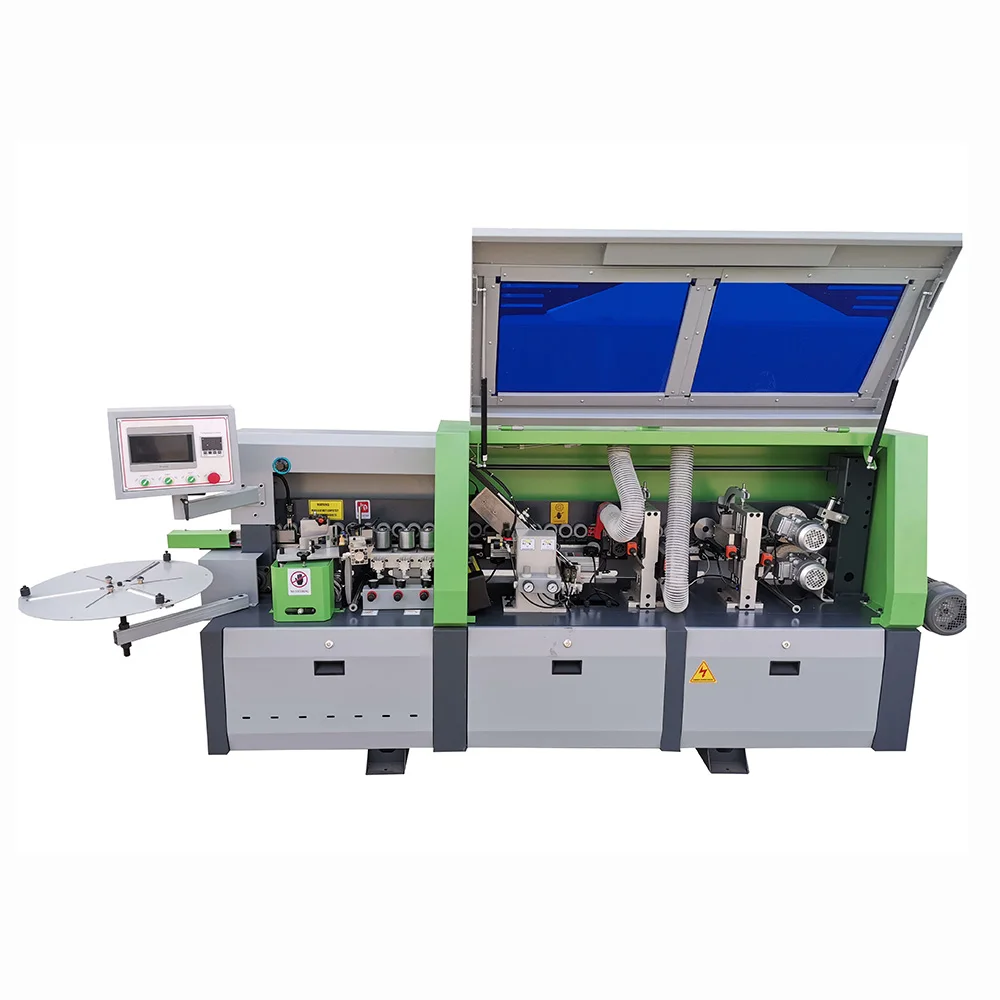
Description
Voltage-verified dispatch — we confirm your facility’s phase, frequency, and control panel language before the ZDS280D leaves our Shandong floor, eliminating the dead-on-arrival shock that stalls commissioning.
Technical Specifications
| Parameter | Value |
|---|---|
| Model | ZDS280D |
| Product Type | Automatic Edge Bander Machine |
| Main Functions | Gluing, End Trimming, Fine Trimming, Scraping, Buffing |
| Working Pressure | 0.6 MPa |
| Panel Thickness Range | 10–60 mm |
| Edge Banding Thickness Range | 0.4–3 mm |
| Conveyor Belt Speed | 16 m/min |
| Min. Panel Width | 60 mm |
| Min. Panel Length | 150 mm |
| Voltage | 380V-3HP (frequency to be confirmed before dispatch) |
| Rated Power | 7.5 kW |
| Net Weight | 700 kg |
| Overall Dimensions (L×W×H) | 3100×700×1400 mm |
| Machine Body | 14 mm high-strength steel plate, frame-type structure, high-temperature quenched |
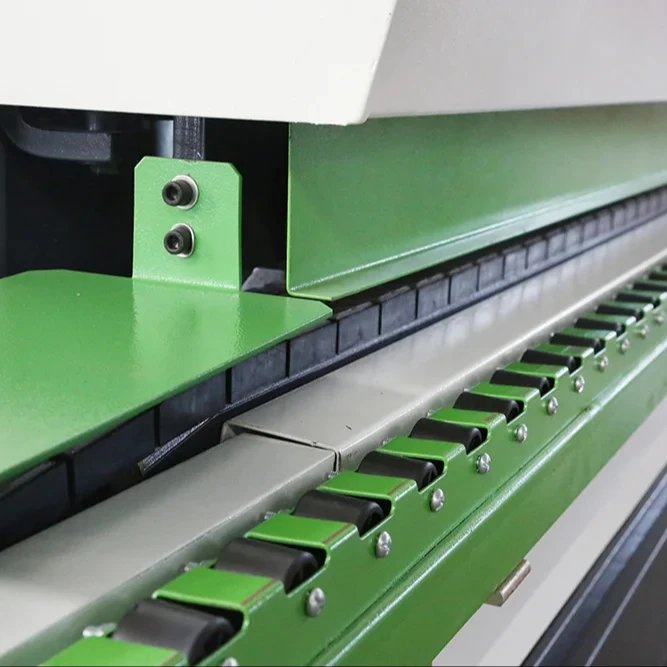
| Conveyor Guide Rail Material | HT260 |
| Conveying Motor | Customized Taiwan brand with thermal protection |
| Head Guide Rail | Taiwan brand |
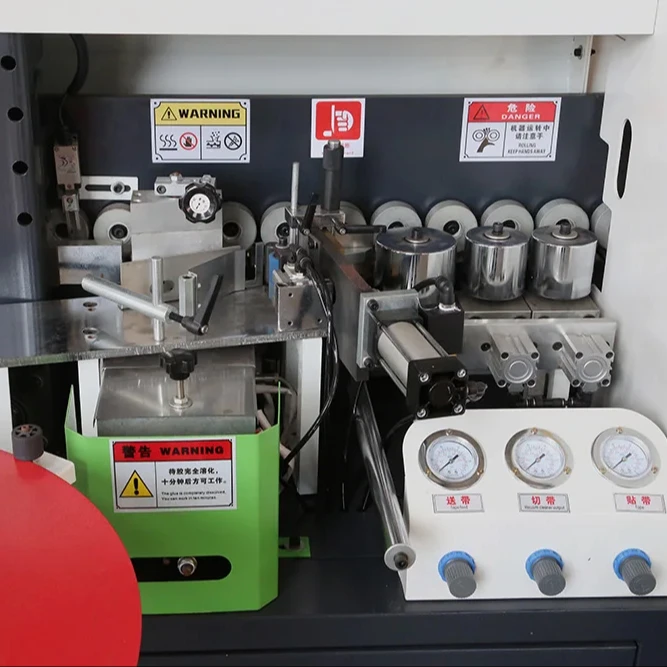
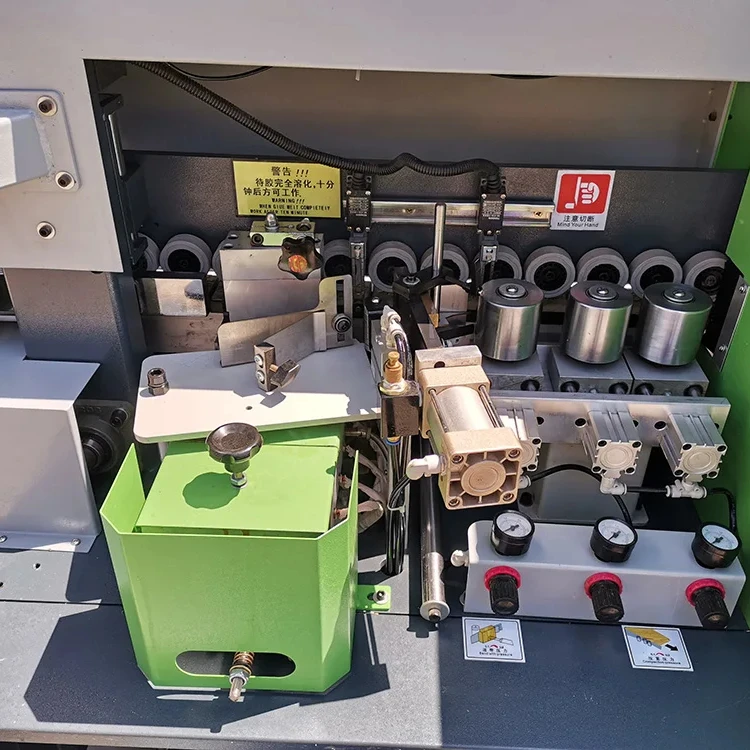
| Pneumatic System | German Festo or Taiwan AirTAC cylinders and safety valves, AirTAC magnetic switches |
| Electrical Components | Delixi/Chint air switches and contactors, Japanese Omron travel switches |
| Control Panel | Standard button/switch panel (language options to be confirmed) |
| Warranty | 1 year |
| Assembly State | Partially assembled, user assembly required for some components |
Application Suitability
| Application | Material or Output |
|---|---|
| Custom furniture panel edge banding | MDF and particleboard with PVC edge banding |
| Cabinet door and carcass production | Melamine-faced board with 0.4–3 mm PVC strips |
| Plywood casegoods edging | Plywood panels with veneer or PVC banding |
| Solid wood component finishing | Solid wood panels requiring fine trimming and buffing |
| Small-batch joinery output | Mixed panel stocks in workshop environments |
Why the Voltage Question Should Come Before the Price for an Automatic Edge Bander Machine in Stock
A machine wired for the wrong frequency will burn out its conveyor motor within the first week of operation.
I have watched containers arrive at overseas ports with 380V/50Hz motors plugged into 60Hz supplies. The conveyor belt runs faster than designed, the glue pot overshoots temperature, and the pneumatic valves chatter. By the time the buyer calls for support, the thermal protection on the conveying motor has tripped repeatedly and the contactor contacts are pitted. This is not a warranty issue; it is a specification mismatch that could have been caught with a single question before the order was placed [NEED_CITE: voltage and frequency standards by export market]. When you source an automatic edge bander machine in stock, confirming the electrical standard of your facility is the first gate, not an afterthought.
Ready-Stock Dispatch Without the Build-to-Order Wait
Workshops that have outgrown manual edge banding rarely have the luxury of waiting eight to twelve weeks for a production slot. The ZDS280D sits in our Shandong facility as an automatic edge bander machine in stock, meaning the lead time collapses from months to the days required for pre-shipment testing and crating. This model covers the five essential stations — gluing, end trimming, fine trimming, scraping, and buffing — so a shop moving from hand-applied PVC to automated feed gets a finished edge in one pass.
What In-Stock Does Not Mean: Skipping the Fit Check
Availability on the floor does not remove the need to verify that the ZDS280D matches your panel mix and daily throughput. A cabinet shop running 200 door fronts a day on 18 mm melamine board will find the 16 m/min feed speed and 10–60 mm thickness range adequate. A high-volume plant pushing 1,000 panels per shift will outgrow this conveyor speed and should be looking further up the range. We ask for your typical panel dimensions, edge banding material, and daily volume before confirming dispatch so the machine you receive is the one your production actually needs [NEED_CITE: matching edge bander throughput to furniture workshop volume].
How the Five-Station Sequence Shapes Edge Quality
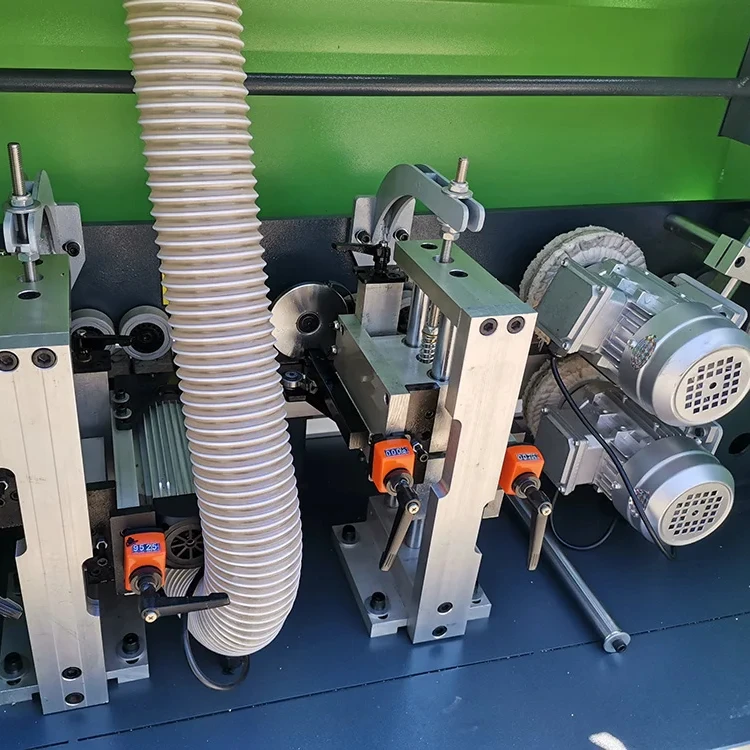
The ZDS280D routes each panel through gluing, end trimming, fine trimming, scraping, and buffing in a single linear pass. The end trimming station removes the overhang at the leading and trailing edges, while the fine trimming knives follow the panel contour to remove excess material along the top and bottom faces. Scraping then takes off the micro-ridges left by the trimming cutters, and the buffing wheel polishes the PVC surface. This sequence matters because skipping any stage — as entry-level three-station machines do — leaves a visible glue line or a sharp arris that the operator must hand-finish downstream, erasing the productivity gain of automation.
Specification Details That Decide Daily Output
The 14 mm high-strength steel plate body, quenched after welding, resists the vibration that lighter frames transmit into the trimming cutters; a stable frame is what holds the fine trimming tolerance consistent across an eight-hour shift. The HT260 cast iron conveyor guide rail provides a wear surface that outlasts the mild steel rails found on lighter-duty machines, which develop grooves under continuous PVC dust abrasion. The Taiwan-brand conveying motor carries thermal protection, a necessary safeguard when a jammed panel stalls the belt and current spikes. The German Festo or Taiwan AirTAC pneumatic cylinders control the pressing rollers and trimming heads; consistent cylinder pressure is what keeps the glue film uniform across panel widths from 60 mm to 600 mm. Rated at 7.5 kW, the ZDS280D draws less current than higher-station models, which matters when a workshop is adding this machine to an existing distribution board without upgrading the main breaker.
The Hidden Cost of Skipping the Pre-Shipment Parameter Test
When a buyer orders without specifying the exact PVC thickness and glue type, the factory sets the machine for standard EVA on 0.4 mm banding. If the shop actually runs 2 mm PVC with PUR adhesive, the glue pot temperature, roller pressure, and feed speed all need adjustment. I have seen this mismatch add a full week of on-site commissioning, with the buyer’s operator running test panels and discarding stock until the parameters are dialed in. Requesting a pre-shipment test on your actual material removes that variable before the crate is sealed [NEED_CITE: edge banding material compatibility with EVA and PUR adhesive systems].
Why This Stock Model Ships With Fewer Surprises
Voltage confirmation happens at order stage, not at the container terminal, so the ZDS280D leaves the floor wired for your supply. The control panel language is set to match your operator team before dispatch, eliminating the first-day confusion of untranslated button labels. Every machine goes through a four-stage quality check — incoming material, in-process, finished product, and pre-shipment verification — with test photographs sent to you before crating. The pneumatic system uses Festo or AirTAC components that are serviceable through local distributors in most markets, so a leaking cylinder does not become a weeks-long parts wait. Engineer-led configuration means we recommend whether this five-station model fits your volume or whether you should be looking at a six-station variant with pre-milling.
Documentation & Verification
- Factory test record run on your specified panel thickness and edge banding material
- Electrical schematic confirming voltage, phase, and frequency matched to your facility
- Operation and maintenance manual in the language you specify at order
- Spare parts list with consumable recommendations for your chosen PVC or veneer stock
- Packing photographs showing crating and load securing before container loading
- CE declaration of conformity for markets requiring machinery directive compliance
Installation, Commissioning & Support
- Requires a level concrete floor capable of supporting the 700 kg machine weight plus dynamic load
- Dedicated 380V three-phase circuit with breaker sized to the 7.5 kW rated power
- Partially assembled on arrival; conveyor extension and dust hood require on-site fitting
- First-run parameter tuning for your specific glue type, PVC thickness, and panel width
- Operator training covers the button panel sequence and daily guide rail cleaning routine
- Spare trimming cutters and buffing wheels ship with the machine for initial consumable coverage
Before You Request a Quote, Prepare These Details
Send us your typical panel material and thickness range, the PVC or veneer edge banding thickness you run most often, and your daily panel count so we can confirm whether the 16 m/min feed speed matches your throughput target. Tell us your local voltage, phase, and frequency so the motor and transformer are matched before the ZDS280D leaves our floor. If your operators need the control panel in a language other than Chinese or English, specify that at inquiry so the membrane switch overlay is printed accordingly.
Frequently Asked Questions
Q: Is this model in stock and what is the dispatch lead time?
A: The ZDS280D is held as ready stock in our Shandong facility. After you confirm voltage, frequency, and control panel language, we run a pre-shipment test on your specified material. Dispatch typically follows within several business days of that test, depending on crating and your chosen shipping arrangement.
Q: Can the voltage and frequency be matched to my country’s electrical standard before shipping?
A: Yes. We confirm your facility’s voltage, phase, and frequency at the order stage and configure the motor, transformer, and electrical components accordingly. This verification is standard procedure, not an optional extra, so the machine runs from the first day it is connected.
Q: What control panel language options are available and can it be set before delivery?
A: The standard button panel can be supplied with labeling in multiple languages, confirmed at inquiry. We set the panel before dispatch so your operators are not reading translated stickers applied on site. Specify your required language when you submit your material and volume details.
Q: What edge banding materials and thicknesses does the ZDS280D handle?
A: The machine processes PVC, melamine, and veneer edge banding from 0.4 mm to 3 mm thick, applied to MDF, particleboard, plywood, and solid wood panels between 10 mm and 60 mm in thickness. If you run PUR adhesive rather than standard EVA, tell us at order so the glue pot and roller settings are adjusted before the test run.
Q: Do you arrange door-to-door shipping and customs clearance support?
A: We provide export packing photographs, commercial invoice, packing list, and certificate of origin documentation to support your customs broker. Freight forwarding and door-to-door delivery can be quoted separately based on your destination port or final address, with shipping options presented before you confirm the order.