

Description
Verified Power & Plug Match — each DW400 leaves the floor with a voltage-frequency check and a plug that fits the destination socket, not a hope.
Technical Specifications
| Parameter | Value |
|---|---|
| Model | DW400 |
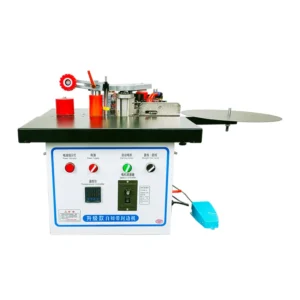
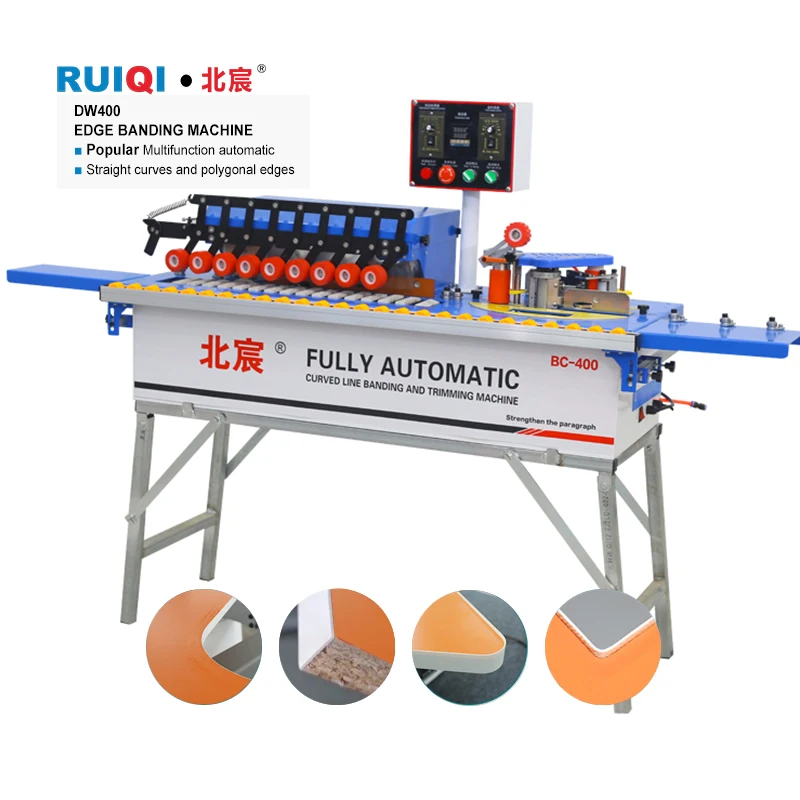
| Product Type | Portable Edge Banding Machine |
| Total Installed Power | 3800W |
| Voltage & Frequency Options | 220V or 380V (frequency confirmed per destination) |
| Edge Trimming Motors | 650W × 2 |
| Polishing Motors | 180W × 2 |
| Feed Transmission Motor | 60W |
| Edge Feeding Motor | 20W |
| Vacuum Extraction | 1200W |
| Glue Pot Capacity | 1000 ml |
| Edge Banding Height Range | 0–50 mm |
| Edge Banding Thickness Range | 0.3–3 mm |
| Minimum Sheet Length | 25 cm |
| Minimum Sheet Width | 10 cm |
| Required Air Pressure | 0.5–0.8 MPa |
| Overall Dimensions (L×W×H) | 116 × 47 × 69 cm |
| Net Weight | 70 kg |
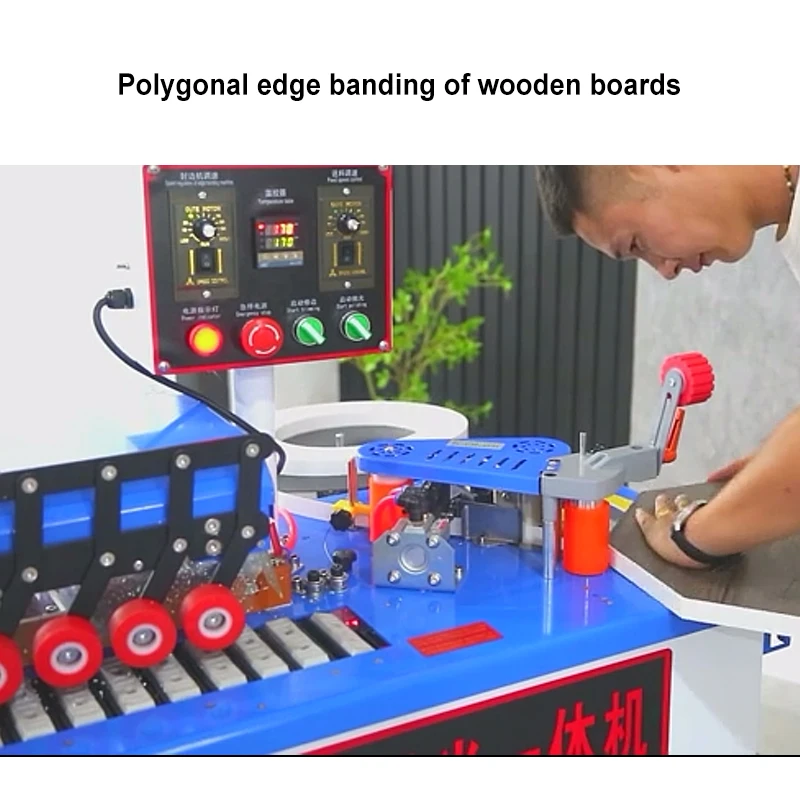
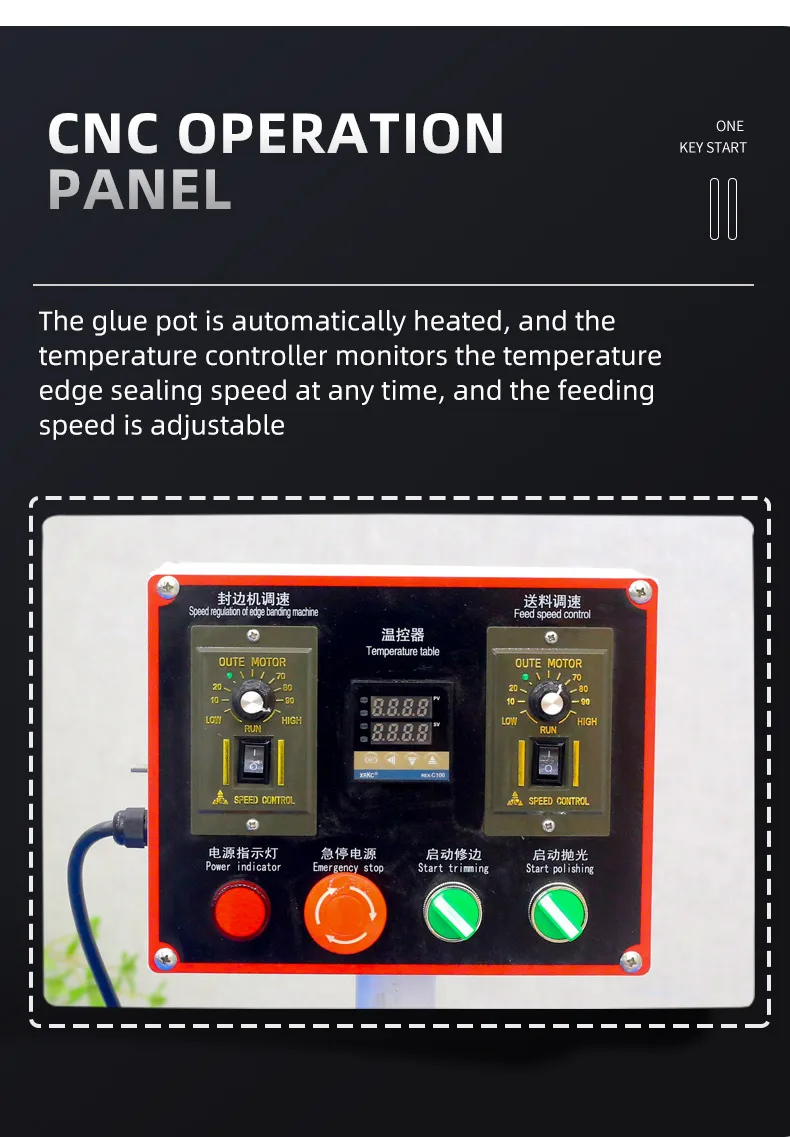
| Control Interface | Manual push-button |
| Language on Panel | Chinese / English (Spanish and others on request) |
| Plug Standard at Dispatch | EU / USA / AU / UK (selected before shipment) |
| Assembly State | Fully assembled, tabletop format |
| Standard Functions | Straight banding, trimming, polishing |
| Feed Speed | (basis to be confirmed) |
| Panel Thickness Range | (basis to be confirmed) |
| Certification | CE (verify per unit) |
Application Suitability
| Application | Material or Output |
|---|---|
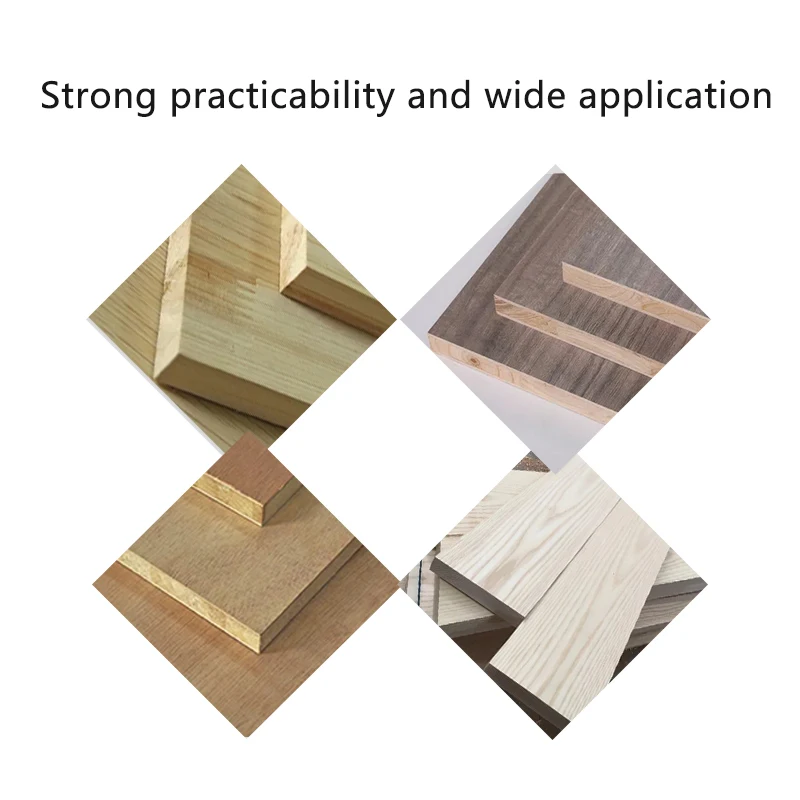
| Cabinet door and carcass edge finishing | MDF and particleboard with PVC or melamine tape |
| Small-batch custom shelving | Plywood and blockboard with veneer or PVC banding |
| On-site wardrobe and fit-out work | Pre-cut wood panels requiring portable hot-melt banding |
| Prototype and sample production | Polymer door panels and laminated board blanks |
| Backup capacity beside a full-size line | Straight-edge workpieces within the 0–50 mm height window |
Why Voltage Must Be Settled Before the Machine Ships
A mismatched supply is the most common reason an edge banding machine in stock still sits idle three weeks after arrival.
I watched a joinery shop in Amman lose an entire production run because the bander was wired for a supply that simply did not exist in their building. The glue roller drifted between cold and overheated, PVC tape lifted at every corner, and the line waited for a transformer that took longer to clear customs than the machine took to build. When you are buying a compact unit meant to start earning the day it is plugged in, that kind of delay defeats the purpose. [NEED_CITE: voltage and frequency standards by export market]
What "Ready to Ship" Actually Covers
Stock on the floor only matters if the unit is configured for the buyer’s actual workshop. For this portable edge banding machine in stock, that means the voltage, plug, and panel language are locked down before the crate is closed. A 220V/50Hz unit bound for Southeast Asia is a different machine, electrically, from the same chassis heading to a 110V/60Hz territory, and the heating element and motor windings must reflect that choice before dispatch.
What a 70 kg Footprint Buys You
A tabletop bander is not a replacement for a full automatic line; it is a tool for the jobs that do not belong on one. Installers finishing scribe panels on a hotel fit-out, small shops running a second shift of simple straight edges, and prototyping cells that need hot-melt quality without occupying a full bay — these are the environments where moving a 70 kg unit on a pallet jack is a genuine advantage. [NEED_CITE: typical workshop compressor ratings for portable woodworking tools]
Reading the Spec Sheet Against Real Workpieces
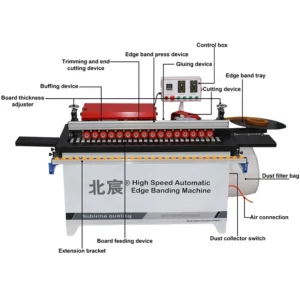
The 1000 ml glue pot sets the rhythm of the day: large enough to sustain a small-batch run without constant refills, small enough to heat from cold in a reasonable window at shift start. The 650W × 2 trimming motors are the pair that actually defines edge quality, removing the PVC or veneer overhang cleanly before the 180W × 2 polishing motors finish the radius. The 0.3–3 mm banding thickness range covers standard PVC, melamine, and most veneers used in cabinet work, while the 0–50 mm height window keeps the machine honest about which workpieces belong on it and which belong on a full-size automatic. Air demand at 0.5–0.8 MPa is the range most mid-size workshop compressors already deliver, so adding this unit rarely forces a compressor replacement.
The Cost of Skipping the Compatibility Check
Buyers who order a portable bander on lead time alone tend to discover the gaps only after unpacking. A control panel in a script the operator cannot read turns commissioning into a guessing game. A plug that does not match the local socket means a day lost to an electrician before the first panel is edged. A feed height that does not match the thickness of the board the shop actually runs turns a straight-edge job into a two-pass compromise, and the visible glue line follows the piece all the way to the customer. [NEED_CITE: common commissioning faults on imported woodworking machinery]
Why Source This Unit Through This Channel
Stock availability is only useful when paired with pre-dispatch verification, and that is the role this store is built around. Every DW400 is run against a sample of your panel material before the crate is closed, so edge finish is confirmed on the substrate you actually process rather than on a generic test board. Voltage and plug are documented on the test record, not left to an assumption. Spare parts — trimming cutters, glue roller sleeves, feed belt segments — are packed with the machine and reorderable through the same channel. Configuration options like Spanish-language panels or non-standard plugs are treated as dispatch decisions, not as afterthoughts raised at the dock.
Documentation & Verification
- Factory test record photographed on your specified panel thickness and edge material
- Voltage, frequency, and plug standard confirmed on the dispatch checklist
- Operation and maintenance manual supplied in the language agreed at order
- Electrical schematic matching the as-shipped winding and heating element
- Packing photographs of the wooden crate before handover to the forwarder
Installation, Commissioning & Support
- Bench or stand must carry 70 kg with clearance around the 116 × 47 × 69 cm envelope
- Dedicated circuit matching the confirmed 220V or 380V rating, not a shared workshop drop
- Air line regulated to 0.5–0.8 MPa with a moisture trap upstream of the machine
- Glue pot loaded and heated through one full cycle before the first production panel
- Operator walk-through on push-button sequence and manual feed technique
- Trimming and polishing consumables identified with reorder part numbers at handover
What to Include With Your Inquiry
Send the panel materials you actually process, the edge banding thickness you run most often, and your workshop supply voltage and frequency. Add the plug standard used on your existing equipment and the language your operators read on a control panel. If you have a sample panel you can forward, a pre-shipment test run on that exact blank is the cleanest way to confirm the edge finish before the machine ships.
Frequently Asked Questions
Q: What voltage and plug will my DW400 ship with, and is it confirmed before dispatch?
A: Voltage, frequency, and plug standard are locked in during the order stage, not assumed at packing. The dispatch checklist records the exact configuration — 220V or 380V, EU, USA, AU, or UK plug — and a photograph of the electrical plate is included in the pre-shipment documentation so there is no surprise at the bench.
Q: Is this edge banding machine in stock now, and what is the dispatch lead time?
A: Stock status is confirmed at the point of order along with the configuration required for your workshop. Once voltage, plug, and panel language are agreed, the pre-shipment test and packing are scheduled, and dispatch typically follows within the same working week for standard configurations.
Q: Can I run a sample panel through the machine before it ships?
A: Yes. Forward a sample of your actual panel with the edge material you plan to use, and a test run is completed and photographed before crating. This confirms edge finish, glue adhesion, and trimming quality on your substrate rather than on a generic test piece.
Q: What spare parts ship with the machine, and how are replacements ordered?
A: A starter set of trimming cutters, polishing pads, and glue roller consumables is packed with the unit, listed on the spare parts sheet. Reorders are placed through the same channel the machine was purchased, referenced by the part numbers in the manual.
Q: What panel thickness and edge banding materials does the DW400 handle?
A: The machine accepts edge banding from 0.3 mm to 3 mm thick and up to 50 mm high, covering standard PVC, melamine, and veneer tapes. Panel thickness range is confirmed against your sample before dispatch to ensure the feed path matches the boards your workshop actually processes.