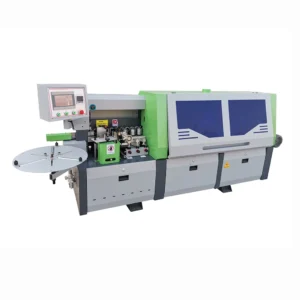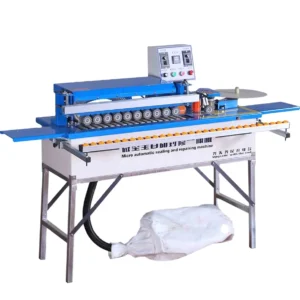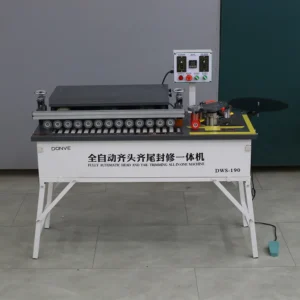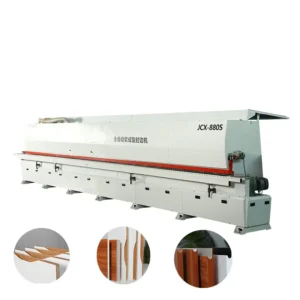
Description
Fast Dispatch Verification — every ZDSF400 leaves the floor only after your local voltage and panel sample have been tested against the glue pot and feed chain.
Technical Specifications
| Parameter | Value |
|---|---|
| Model | ZDSF400 |
| Product Type | Automatic Edge Banding Machine |
| Edge Type | Straight line |
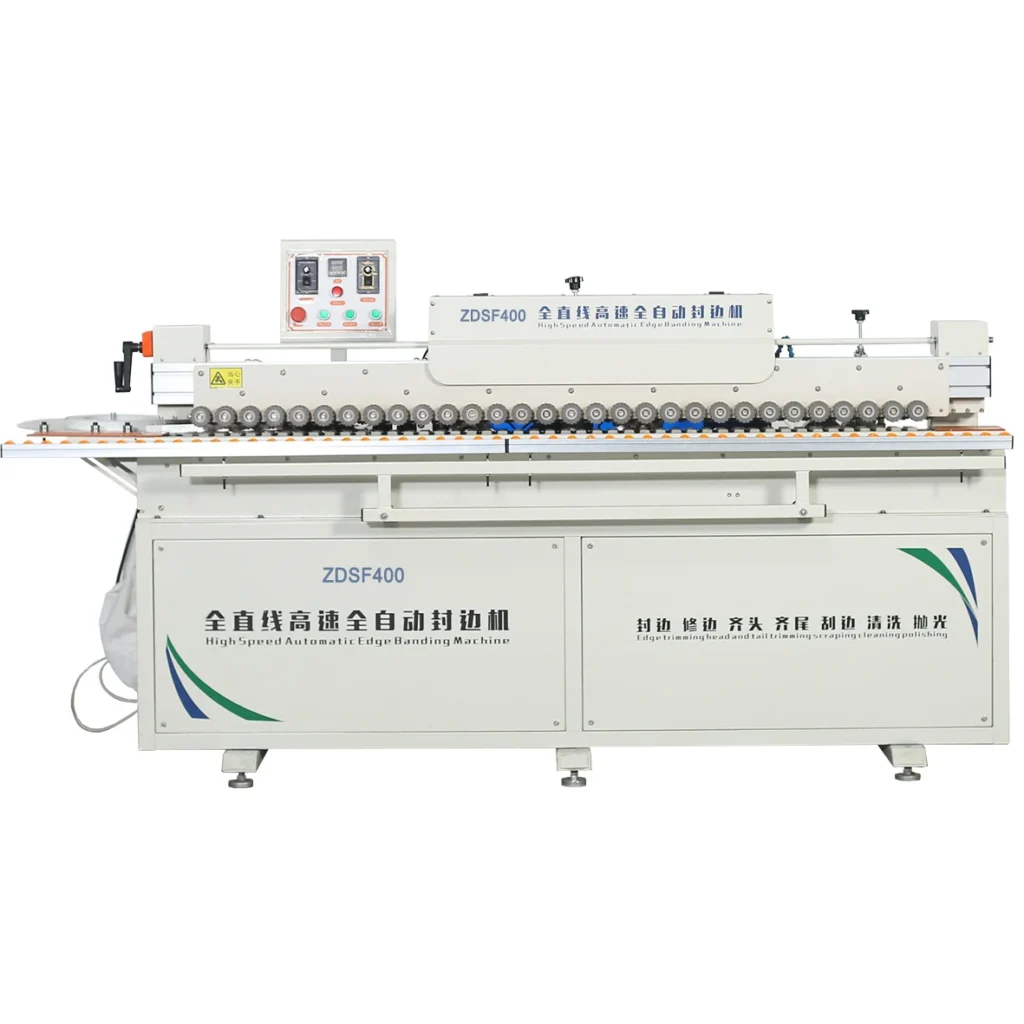
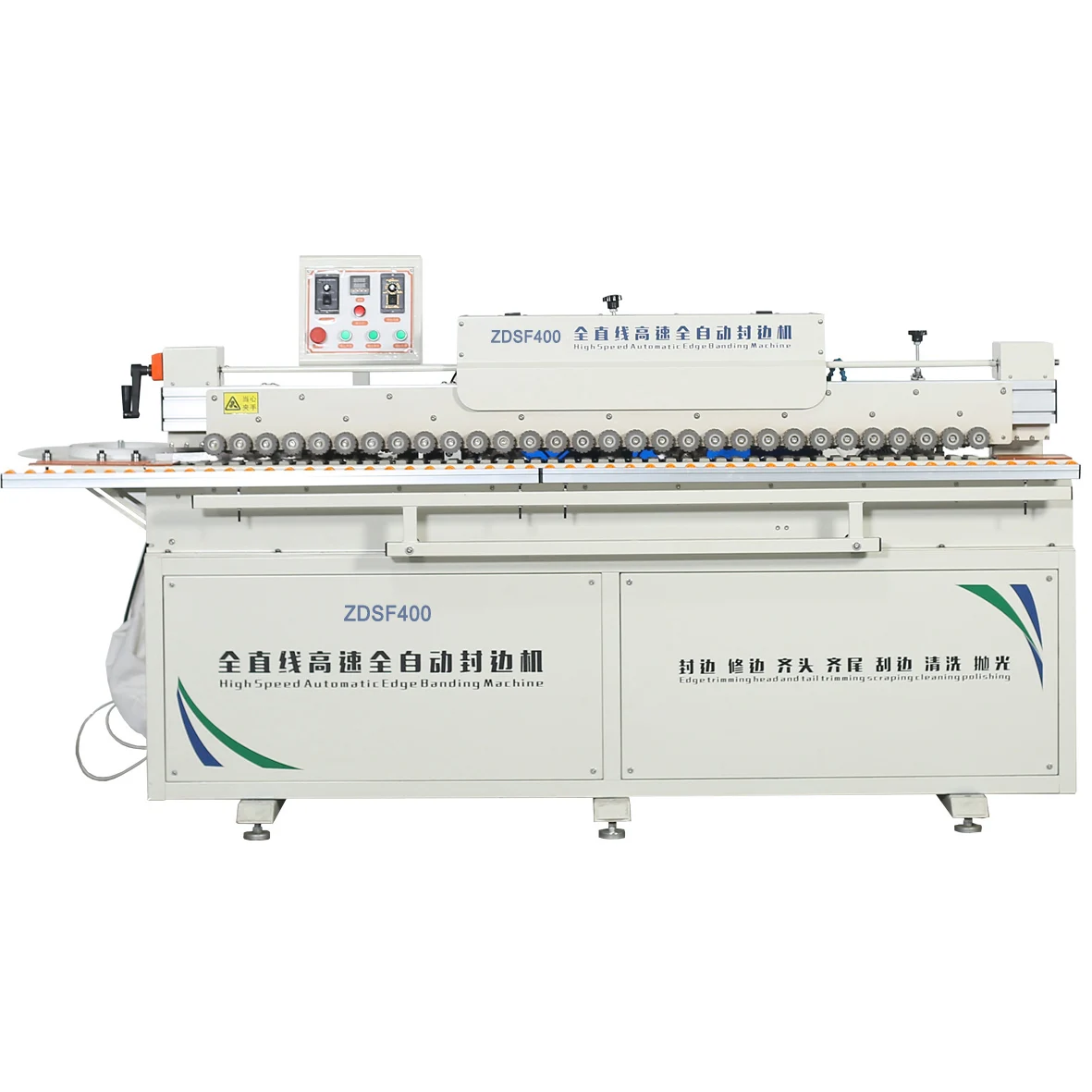
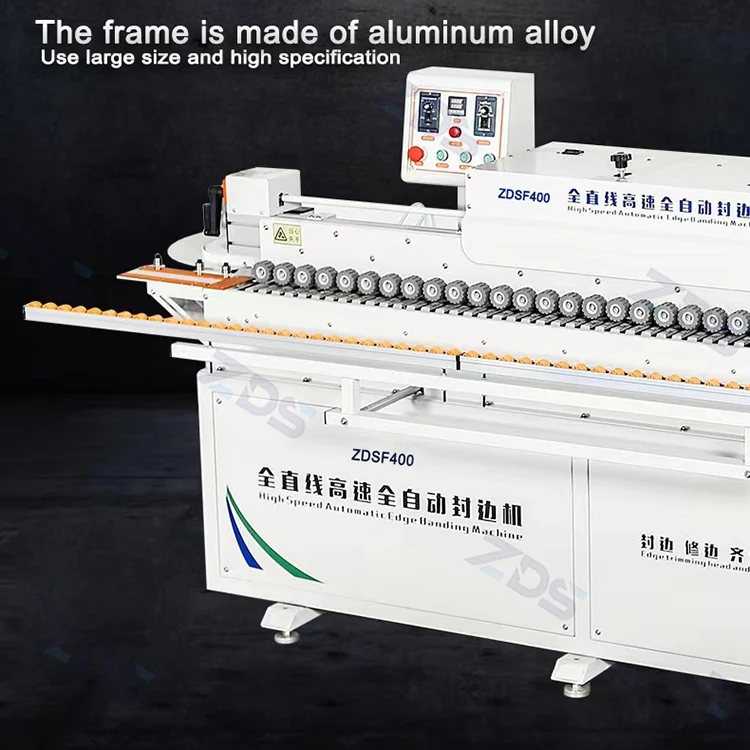
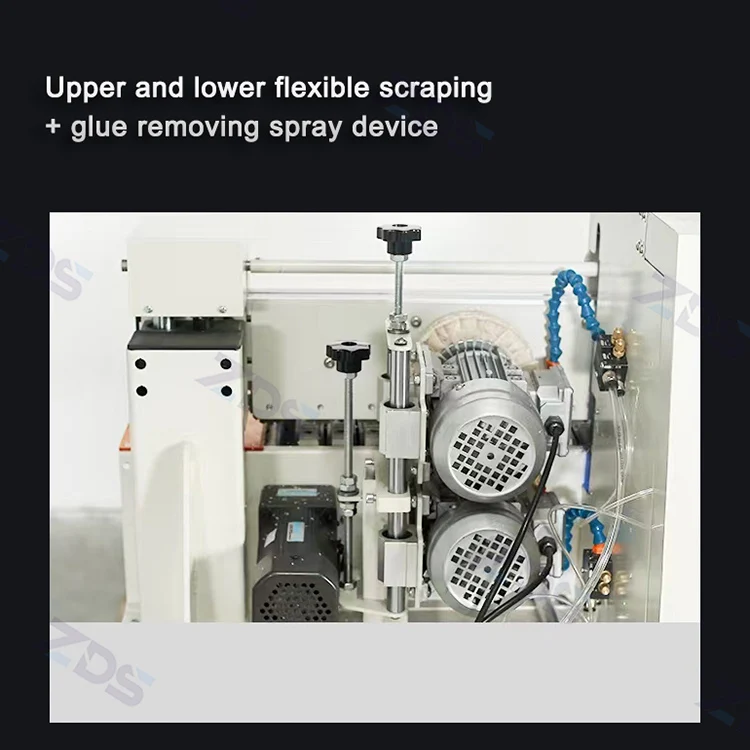
| Integrated Functions | Gluing, End cutting, Trimming, Scraping, Polishing, Vacuuming |
| Rated Voltage | 220V (frequency to be confirmed per destination) |
| Rated Power | 3 kW |
| Heating Power | 800 W (heat-up 5–10 min) |
| Trimming Power | 800 W × 2 at 24,000 rpm |
| Polishing Power | 180 W × 2 at 5,500 rpm |
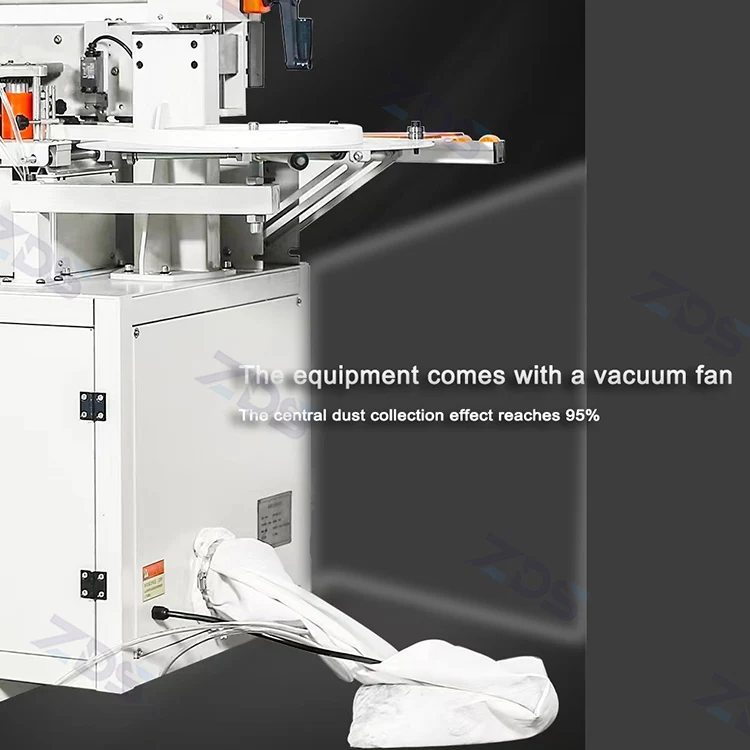
| Suction Power | 550 W |
| Rated Air Pressure | 0.4–0.6 MPa |
| Glue Pot Capacity | 1000 ml |
| Edge Strip Thickness Range | 1–3 mm |
| Panel Thickness Range | 10–55 mm |
| Feed Speed | 0–14 m/min (variable) |
| Conveyor Belt Speed | 0–14 m/min |
| Overall Dimensions (L×W×H) | 240 × 70 × 120 cm |
| Machine Weight | 370 kg |
| Warranty | One year |
Application Suitability
| Application | Material or Output |
|---|---|
| Cabinet door and carcass edge banding | MDF and particleboard, 10–55 mm thick |
| Plywood shelving straight-edge finishing | Plywood panels with PVC or veneer strip, 1–3 mm |
| Small-batch custom furniture runs | Solid wood panels requiring single-pass gluing through polishing |
| Secondary straight-edge station in larger plants | Overflow panels that do not require contour or pre-milling |
Why the Voltage Question Must Come Before the Price
A machine wired for the wrong frequency will burn its heating element before the first panel is edged.
I have watched an Automatic Edge Banding Machine in stock sit idle on a workshop floor for weeks because the buyer assumed 220V meant the same thing everywhere. In some regions the frequency is 50 Hz, in others 60 Hz, and the trim motors on this unit run at 24,000 rpm under a specific supply curve. When the curve is wrong, the motors overheat and the glue pot cannot hold temperature. We ask for a signed voltage and frequency confirmation before dispatch because rewiring on site is costly and delays production [NEED_CITE: voltage and frequency standards by export market].
Stock Availability and Dispatch Timing
The ZDSF400 is held as an Automatic Edge Banding Machine in stock so that small workshops and cabinet makers can shorten the gap between order and first cut. Once your voltage and panel sample are confirmed, the unit goes through a bench test and is crated for dispatch. Lead time is measured in days rather than the typical multi-week production cycle, which matters when a customer job is waiting on finished panels.
What the Single-Pass Layout Means for a Small Shop
Six stations — gluing, end cutting, trimming, scraping, polishing, and vacuuming — sit on one 240 cm frame. For a joinery shop moving away from hand-held routers and contact cement, that consolidation removes the need to buy separate machines and find floor space for each one. The variable feed speed from 0 to 14 m/min lets a less experienced operator start slow and increase pace as confidence grows, without changing tooling between boards [NEED_CITE: typical workflow stages in small furniture workshops].
How Feed Speed, Glue Pot, and Trimming Interact
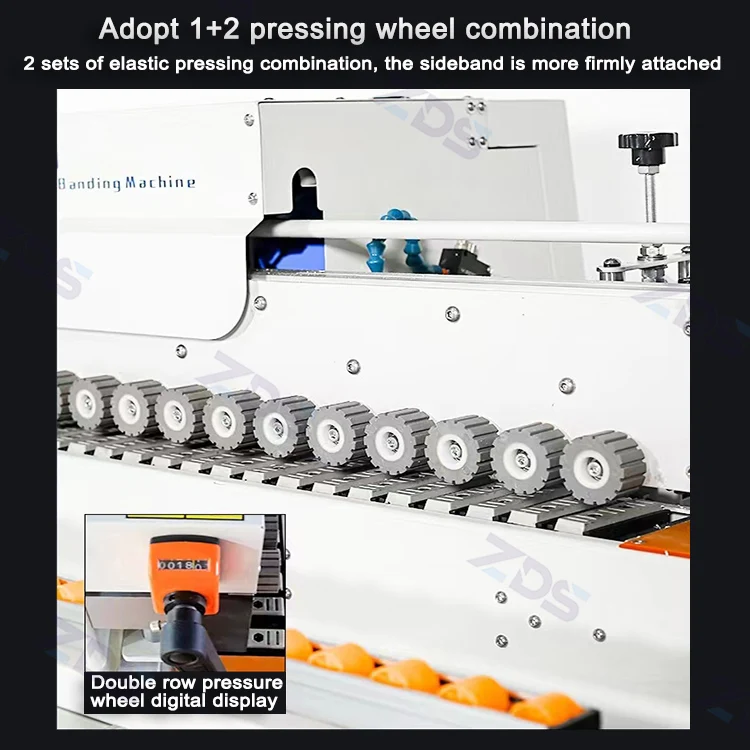
The 1000 ml glue pot with 800 W heating reaches working temperature in roughly five to ten minutes, which is fast enough for a morning start-up but still demands that the operator plan panel batches to avoid letting the adhesive cool between runs. At the maximum 14 m/min feed speed, the dual 800 W trimming spindles at 24,000 rpm must shear PVC or veneer cleanly; drop the speed for thicker 3 mm strip and the trim quality improves noticeably. Panel thickness from 10 to 55 mm covers most MDF and particleboard used in cabinet work, and the 0.4–0.6 MPa air pressure range is what keeps the pressure roller consistent across that span. The 550 W suction fan handles the bulk of trim dust, though a secondary extraction hose is advisable in enclosed rooms.
When a Compact Footprint Becomes a Constraint
A 370 kg machine on a 240 × 70 cm base fits where larger edge banders cannot, yet that same compact frame means the infeed and outfeed zones are short. Panels wider than a standard cabinet side may need a second operator supporting the trailing edge to prevent tipping. Shops that regularly run oversized wardrobe panels should verify that the available floor space on both sides of the conveyor allows safe handling before the machine arrives [NEED_CITE: workshop floor clearance guidelines for panel machinery].
Reasons Buyers Source This Unit Here
The ZDSF400 sits inside a full product family, so a workshop that later needs pre-milling or contour banding can move to a larger model from the same supplier without relearning controls. Voltage is confirmed and documented before crating, eliminating the arrival-day surprise of an incompatible power supply. A four-stage quality check — incoming material, in-process assembly, finished product, and pre-shipment verification — is completed on every unit, and the test record ships with the crate. Factory visits are welcomed for buyers who want to watch their own panel stock run through the machine before it is packed.
Documentation & Verification
- CE declaration of conformity matching the ZDSF400 configuration shipped
- Voltage and frequency confirmation sheet signed by your electrical contractor
- Pre-shipment test record with photographs of your panel material running through all six stations
- Operation and maintenance manual in the language you specify at order
- Spare parts list with reorder codes for trim cutters, polishing wheels, and glue pot seals
Installation, Commissioning & Support
- Requires a dedicated 220V circuit rated above the 3 kW total draw to avoid voltage sag during heating cycles
- Arrives partially assembled; allow two technicians and basic hand tools for final conveyor alignment
- Compressed air supply must hold 0.4–0.6 MPa at the inlet to keep the pressure roller consistent
- First-run parameter sheet provided so you can replicate factory test settings on your own panels
- Glue pot cleaning procedure detailed in the manual to prevent adhesive buildup between shifts
- Consumable trim cutters and polishing wheels included; reorder codes listed in the spare parts sheet
What to Send With Your Inquiry
To match the ZDSF400 to your line, share the panel materials and thicknesses you run most often, the edge strip type and thickness you intend to use, and the exact voltage and frequency at your facility. If you have existing upstream saws or downstream boring stations, note their feed heights so the conveyor transfer aligns. A sample panel and strip shipped to the factory allows a live test before dispatch.
Frequently Asked Questions
Q: Is the ZDSF400 currently in stock and how soon can it ship?
A: The ZDSF400 Automatic Edge Banding Machine in stock is held for quick dispatch. Once you confirm voltage, frequency, and panel sample results, the unit goes through a pre-shipment bench test and is crated. Typical dispatch follows within days rather than the multi-week lead of a built-to-order machine.
Q: How do I confirm the correct voltage and frequency for my country?
A: We provide a voltage and frequency confirmation form at the quotation stage. Your local electrician fills in the supply details at your installation point, signs it, and returns it. The machine is then wired and tested against that exact specification before it leaves the factory.
Q: Which edge strip materials can this machine handle?
A: The ZDSF400 applies PVC and veneer strips from 1 to 3 mm thick. Melamine and paper-backed strips within that thickness range are also compatible, provided the glue temperature and feed speed are adjusted. A sample strip test before shipment confirms adhesion and trim quality on your chosen material.
Q: Does the machine arrive fully assembled?
A: The ZDSF400 ships partially assembled to protect alignment during transit. The conveyor belt, pressure roller, and dust hood require on-site fitting. A printed manual and video guide walk through each step, and the process typically takes two people a few hours with standard hand tools.
Q: What spare parts are included and how do I reorder?
A: The crate contains a starter set of trim cutters, polishing wheels, and glue pot seals. A spare parts list with individual reorder codes is included in the documentation package. You can reorder consumables directly by referencing those codes, and most items are dispatched from stock.