
Description
Dispatch-Ready Configuration — voltage, frequency, and control language verified against your facility before the JL-1 leaves the factory floor.
Technical Specifications
| Parameter | Value |
|---|---|
| Model | JL-1 |
| Product Type | Wood Hinge Boring Machine |
| Rated Power | 1.5 kW |
| Voltage & Frequency | 380V / 415V three-phase four-wire (50Hz / 60Hz to be confirmed) |
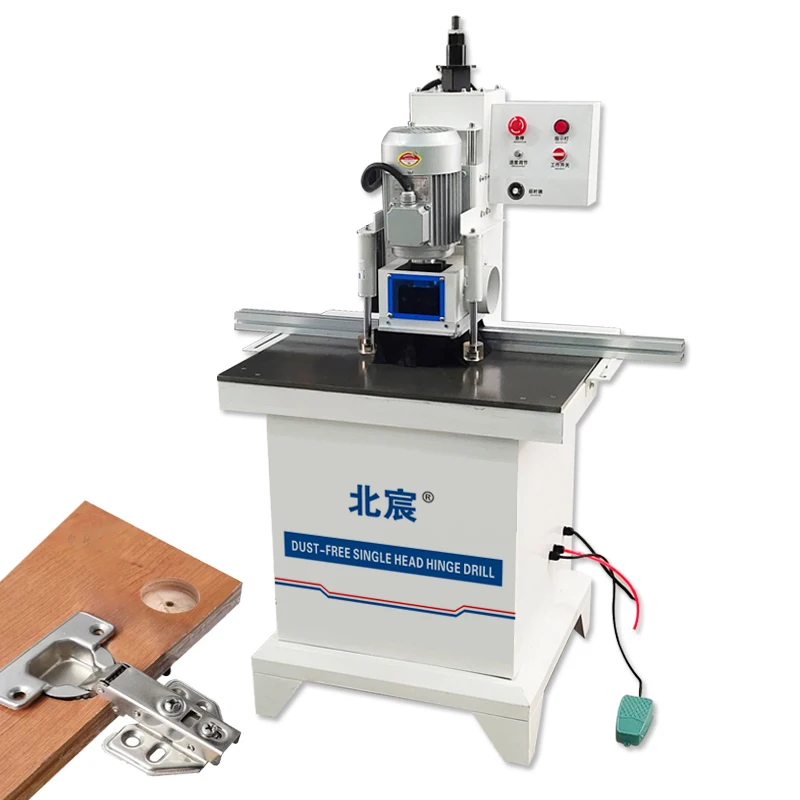
| Drill Head Configuration | Dual head: 35 mm large drill + 3 mm small drill |
| Control System | Foot switch control |
| Standard Application | Cabinet door hinge cup and pilot hole boring |
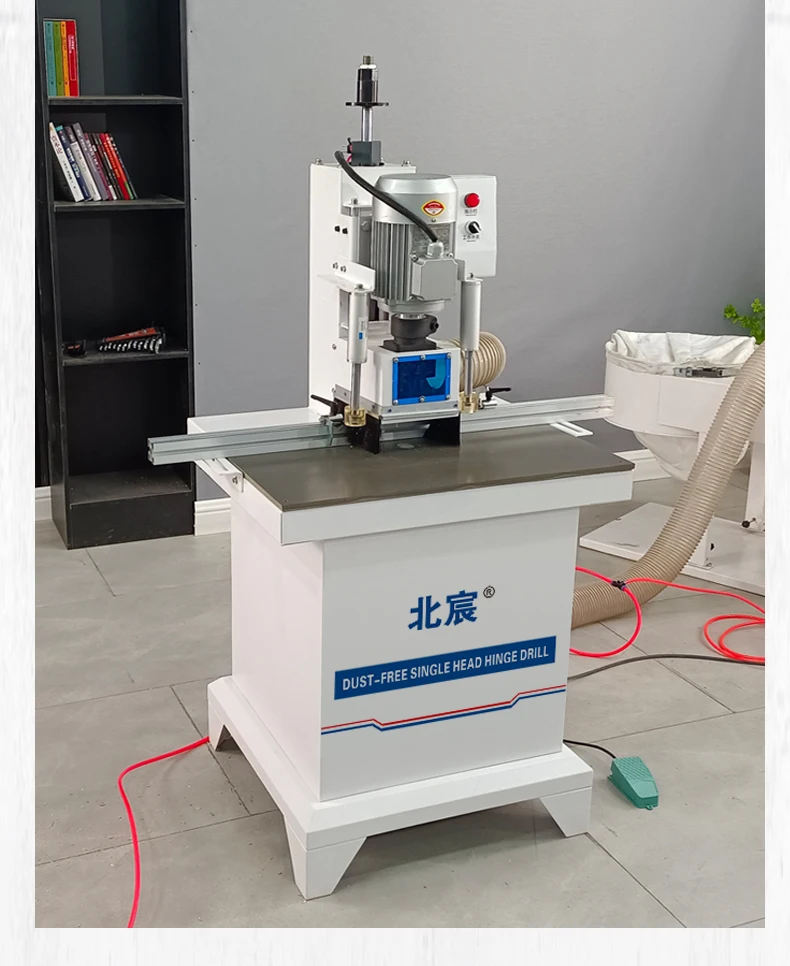
| Vacuum Connection | External vacuum port |
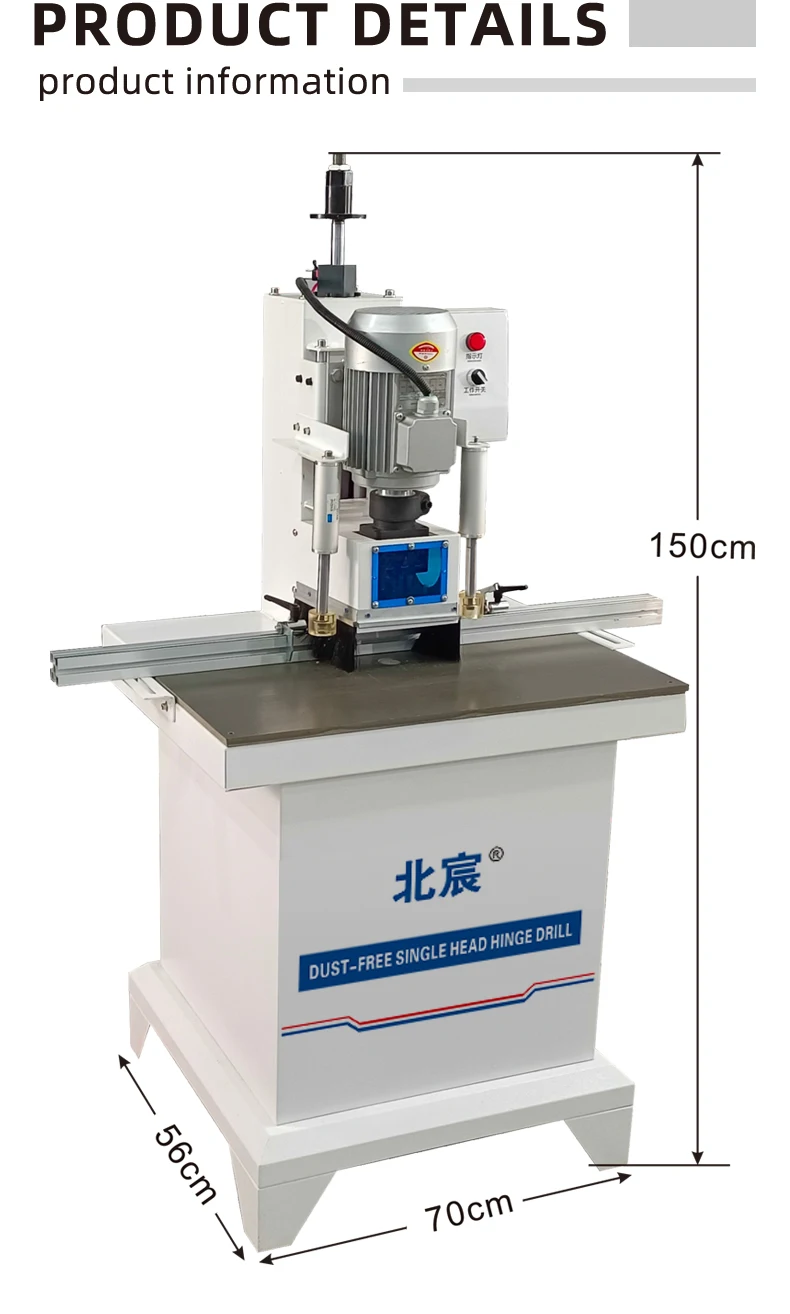
| Overall Dimensions (L × W × H) | 70 × 56 × 145 cm |
| Net Weight | 55 kg |
| Assembly State | Single-unit portable structure |
| Language Options | Chinese, English; Spanish or other languages available on request |
| Certification | CE |
| Customization | OEM logo, structural and parameter adjustments supported |
Application Suitability
| Application | Material or Output |
|---|---|
| Cabinet door hinge cup boring | MDF, plywood, particleboard panels |
| Wardrobe and closet door drilling | Solid wood panels up to standard hinge depth |
| Loose-leaf hinge pilot holes | Laminated board and veneer-faced substrates |
| Small-batch furniture production | Mixed panel types in a single workshop run |
| Joinery workshop hinge processing | Panel stock typically 16–25 mm thickness range |
Why the Voltage Question Should Come Before the Price on a Wood Hinge Boring Machine in Stock
A machine that cannot run on your local supply is not a bargain — it is a liability sitting on your workshop floor.
Over the years I have watched three-phase machines arrive at overseas joinery shops only to spin the motor in reverse because nobody confirmed 50 Hz versus 60 Hz before crating. The operator loads the first board, pulls the foot switch, and the drill head chews through the hinge cup position instead of cutting clean. That single oversight stalls an entire cabinet door line while an electrician rewires the feed or swaps the contactor [NEED_CITE: voltage and frequency standards by export market]. Every Wood Hinge Boring Machine in stock we dispatch has its voltage, frequency, and plug type locked into the order paperwork before the pre-shipment test begins.
Short Lead Times Without Skipping Electrical Verification
Stock availability matters when a furniture shop needs to fill a gap in the assembly station fast. The JL-1 ships as a single-unit portable structure, which keeps freight straightforward and reduces the window between order confirmation and workshop installation. What does not change is the electrical sign-off step: the 380V / 415V configuration is matched to your local grid specification, and the control panel language is set before dispatch rather than left as a field adjustment.
Compact Footprint for Workshops Still Growing Floor Space
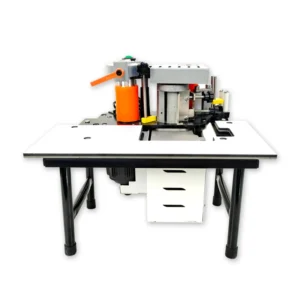
At 70 × 56 × 145 cm and 55 kg net weight, this machine fits into tight joinery layouts where a full multi-boring centre would dominate the room. A startup cabinet shop can position the JL-1 beside an existing edge bander or sliding table saw without rearranging the entire material flow. When production volume eventually grows, the unit relocates easily — no pit foundation, no anchored gantry, just a stable level surface and a dedicated three-phase circuit [NEED_CITE: CE machinery directive requirements for industrial equipment].
Reading the Spec Sheet Against Real Hinge Boring Demands
The 35 mm large drill handles the standard European hinge cup bore that most cabinet hardware requires, while the 3 mm small drill positions the pilot holes for the mounting plate screws in the same setup. This dual-head arrangement eliminates a second clamping step that handheld drills introduce. The 1.5 kW motor delivers consistent torque through MDF and particleboard without the bit wandering off centre, which is where most hinge alignment errors originate on the assembly bench. Foot switch control keeps both hands free to guide the panel against the fence, reducing the chance of tear-out on melamine-faced stock. External vacuum extraction connects to your existing dust collection system so bore debris does not accumulate around the drill bushing and affect depth consistency over a long production run.
What Happens When Configuration Details Get Overlooked
A hinge boring machine that arrives with the wrong control language forces the operator to guess which switch initiates the cycle and which releases the clamp. On a busy cabinet door run that hesitation compounds: misaligned cups, re-drilled panels, wasted board stock. Voltage mismatch causes slower motor rotation on 60 Hz grids fed with 50 Hz-rated motors, and the drill bit struggles through denser MDF cores, leaving rough bore walls that affect hinge seating [NEED_CITE: three-phase motor behaviour under frequency mismatch]. These are not engineering defects — they are configuration oversights that surface only after the crate is open.
Why Sourcing This Unit Through Our Ready-Stock Channel Works
The JL-1 benefits from the same four-stage quality control and precision-ground components that run through our full woodworking machinery range. Pre-shipment testing covers drill alignment, bore depth repeatability, and motor rotation direction at your confirmed voltage. Single-unit orders carry the same documentation package as a full production line order: you receive factory test records, a language-matched operation manual, and packing photographs before the container seals. OEM logo and custom panel colour are available without minimum order thresholds that typically apply to bulk machinery purchases.
Documentation & Verification
- CE declaration of conformity referencing the JL-1 hinge boring unit
- Electrical schematic confirming your specified voltage and frequency
- Factory test record with bore alignment photos on your panel material
- Operation and maintenance manual in agreed language before dispatch
- Spare parts list identifying drill bits, bushings, and foot switch components
- Packing photographs sent before container loading
Installation, Commissioning & Support
- Level floor surface required; 55 kg unit stabilises on adjustable machine feet
- Dedicated 380V / 415V three-phase circuit with earth leakage protection
- Arrives as single-unit portable structure; no on-site assembly needed
- First-run depth calibration performed on your sample panel stock
- Foot switch response and drill alignment verified during remote commissioning call
- Replacement 35 mm and 3 mm drill bits listed in shipped spare parts inventory
What We Need to Move Your Order Forward
Share your local three-phase voltage and frequency so we can match the motor winding and contactor before the machine enters pre-shipment testing. Confirm the control panel language your operators read daily. If you are running a specific hinge brand or cup diameter outside the standard 35 mm, send the hardware datasheet so we can verify drill bit compatibility before dispatch.
Frequently Asked Questions
Q: Is the JL-1 available for immediate dispatch, and does a single-unit order affect lead time?
A: The JL-1 is maintained in ready-stock configuration for fast dispatch. Single-unit orders follow the same pre-shipment electrical verification and testing protocol as larger shipments. The primary variable in lead time is confirming your voltage, frequency, and language preference before crating, which typically takes one to two working days once the order details are finalised.
Q: How do you confirm the correct voltage and plug type before shipping?
A: At order confirmation we request your facility’s three-phase supply specification including voltage, frequency, and socket type. The motor wiring, contactor rating, and power cable are then matched to that specification. A voltage confirmation document accompanies the factory test record so you can verify the match before the machine arrives on your workshop floor.
Q: Will the control markings and manual be in a language my operators can read?
A: Chinese and English are standard. Spanish and other languages are available on request and are applied to both the control panel markings and the operation manual before dispatch. This prevents operators from guessing switch functions during the first production run, which is where most setup errors occur on imported woodworking machinery.
Q: What drill bit sizes ship with the machine, and are replacements easy to obtain?
A: The JL-1 ships with a 35 mm large drill for hinge cup boring and a 3 mm small drill for pilot holes. Both are standard woodworking bore bits sourced globally. The spare parts list included in your documentation identifies the exact bit specifications so your local tooling supplier can stock replacements without waiting for a direct shipment.
Q: What preparation is needed on arrival before the first hinge boring cycle?
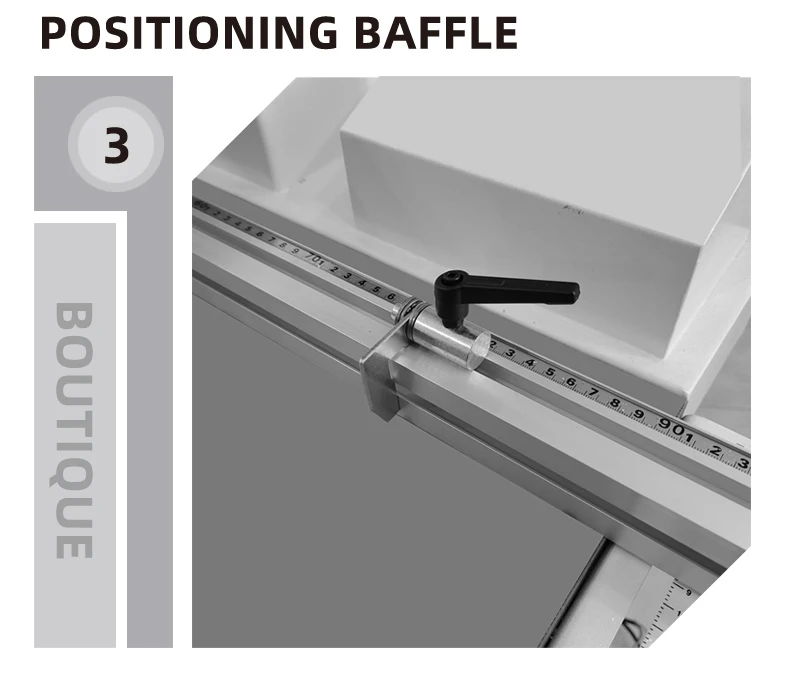
A: Place the unit on a level, stable surface and connect it to your confirmed three-phase supply. Attach your workshop’s external vacuum hose to the extraction port. Load a sample panel of the material you will be processing, set the bore depth using the guide rail adjustment, and run a test cycle using the foot switch. The operation manual walks through this sequence step by step.