Description
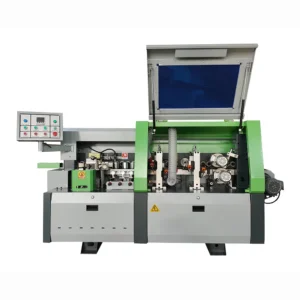
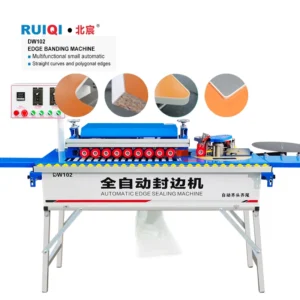
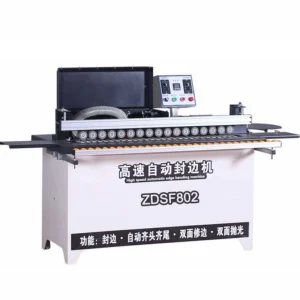
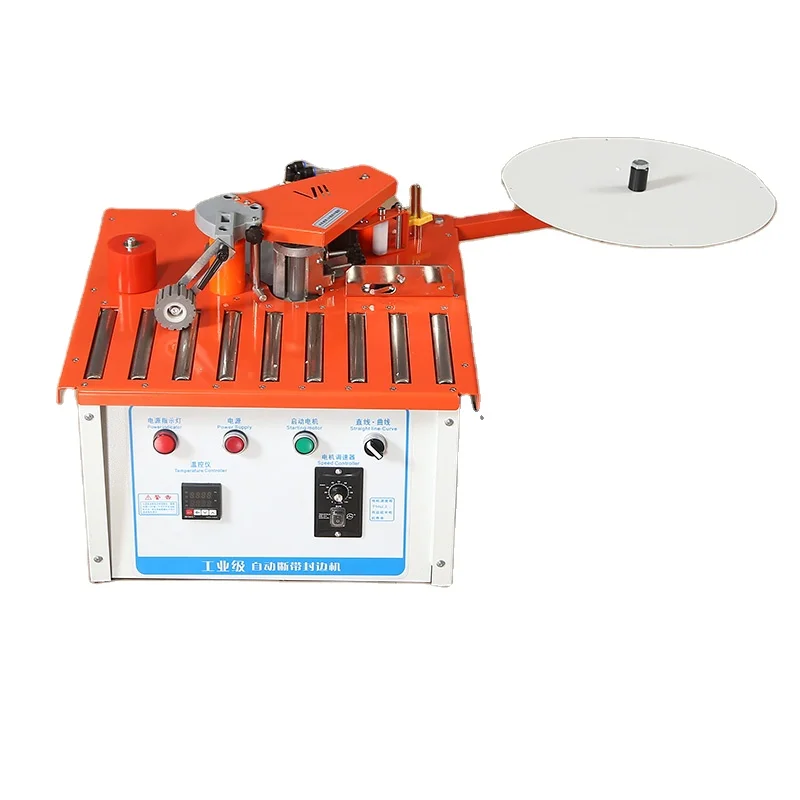
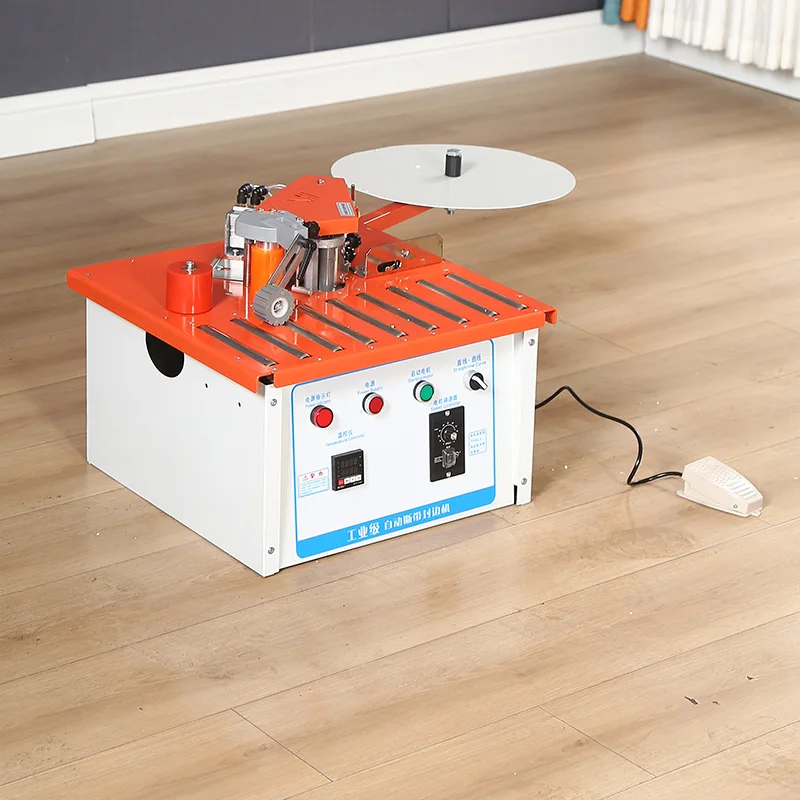
Ready Stock Dispatch — ZDSF50 mini edge banding machine units tested at 220V/110V and packed for immediate shipping so your workshop can start edge banding within days, not weeks.
Technical Specifications
| Parameter | Value |
|---|---|
| Model | ZDSF50 |
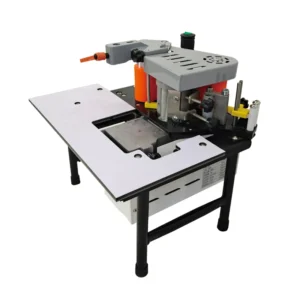
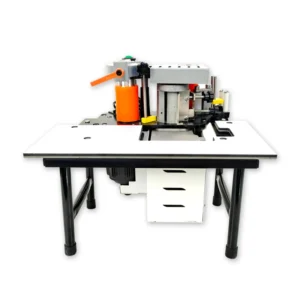
| Product Type | Mini Edge Banding Machine |
| Rated Power | 1.2 kW |
| Voltage | 220V / 110V (selectable at order) |
| Edge Banding Speed | 0–6 m/min |
| Strip Thickness Range | 0.5–1.5 mm |
| Sheet Thickness Range | 10–60 mm |
| Glue Pot Capacity | 1000 ml |
| Glue Heating | 4 heating tubes |
| Glue Application | Glue-coated rollers, double-sided gluing |
| Rated Air Pressure | 0.4–0.6 MPa |
| Heating Time | 5–10 min |
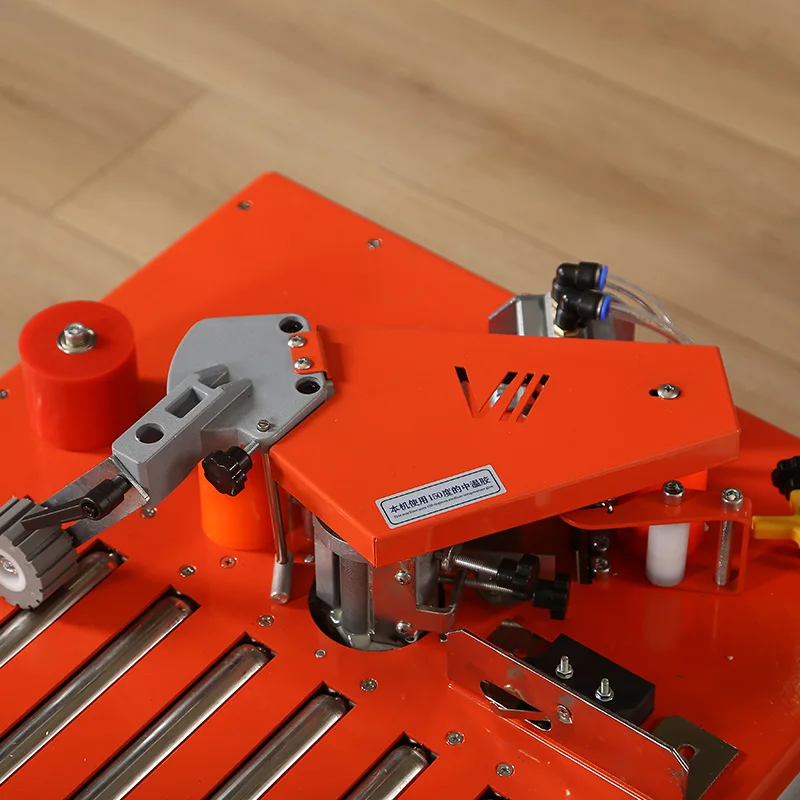
| Pressure Rollers | Adjustable, rubber material |
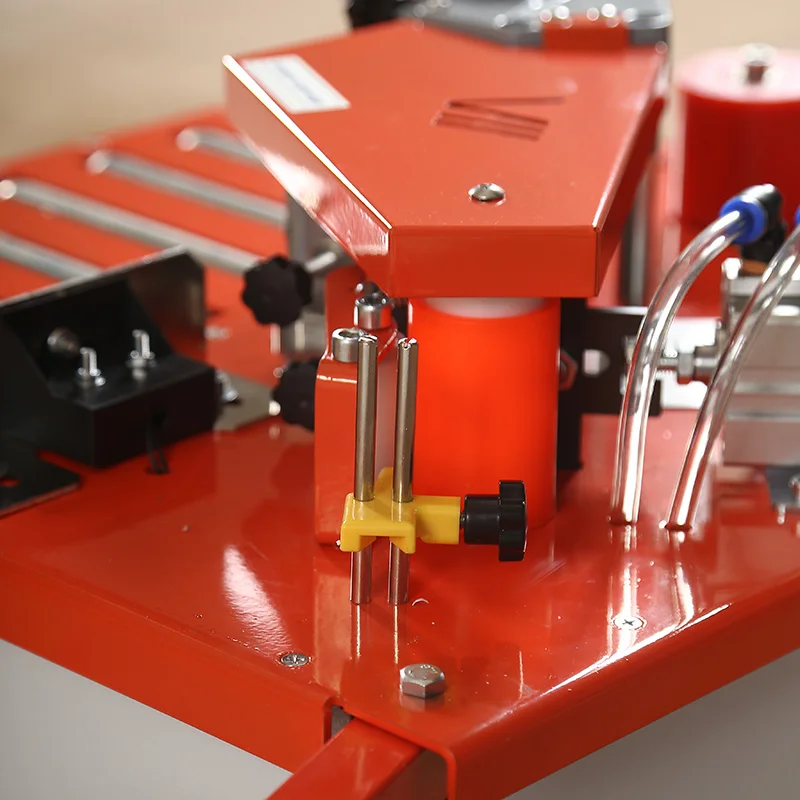
| Strip Transport | Adjustable bayonet for edge strip height |
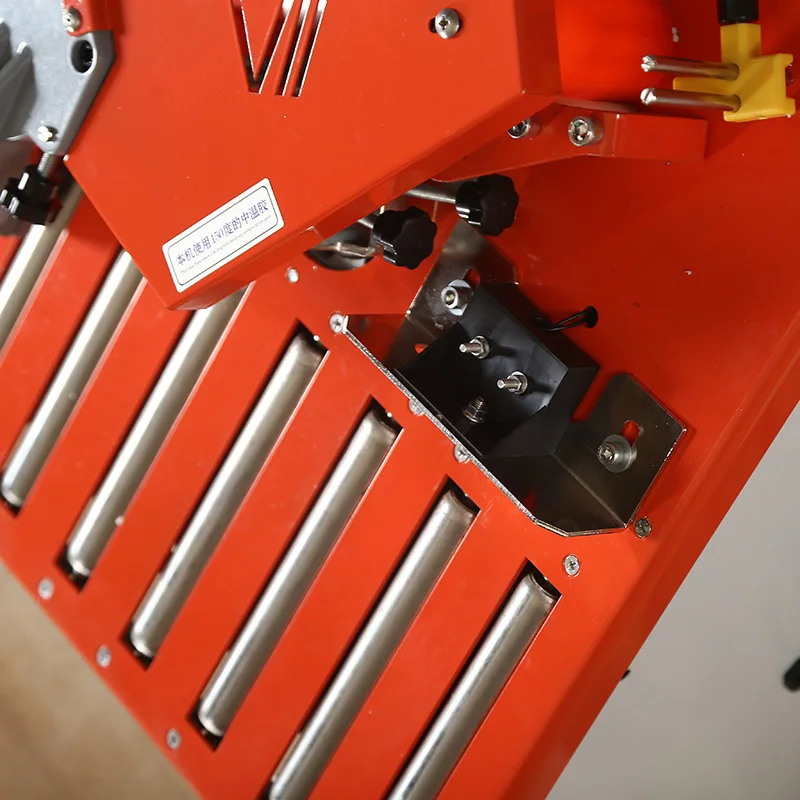
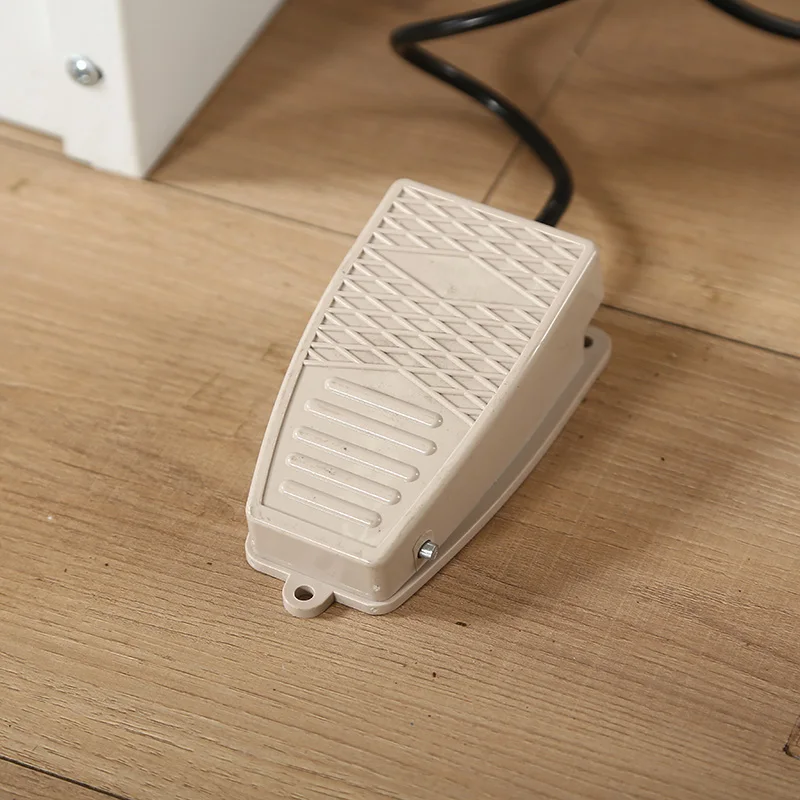
| Belt Breaking | Pneumatic, foot switch (curved) and travel switch (straight) |
| Overall Dimensions | 54 × 54 × 56 cm |
| Net Weight | 26 kg |
| Assembly State | Requires minor assembly (manual and video provided) |
Application Suitability
| Application | Material or Output |
|---|---|
| Custom cabinet door edge finishing | MDF and particleboard with PVC or veneer strips 0.5–1.5 mm |
| Curved and shaped panel edge banding | Plywood and paint-free board substrates up to 60 mm thick |
| Small joinery workshop production runs | Solid wood panels and blockboard with matching edge strips |
| On-site home decoration work | Paint-free melamine boards with pre-glued or hot-melt edge banding |
| Prototype and sample piece preparation | Mixed substrates requiring quick changeover between straight and curved edges |
Why the Voltage Question Must Come Before Dispatch
The ZDSF50 mini edge banding machine in stock fast delivery sounds convenient, but a machine arriving with the wrong voltage configuration turns that convenience into a three-week standstill. Confirming local voltage and frequency in writing before the machine leaves the factory floor is the single most important step in the ordering process.
I once watched a small curved-edge bander sit idle for nearly a month because the buyer’s workshop ran on a 60 Hz grid and the machine shipped configured for 50 Hz. The motor speed was off, the feed roller could not keep pace with the strip, and the glue pot temperature swung wildly. Swapping in a variable-frequency motor took longer than the original production lead time. [NEED_CITE: voltage and frequency standards by export market]
When you order a ZDSF50 from ready stock, the 220V or 110V configuration is confirmed on the order sheet before dispatch, not assumed. This eliminates the risk of receiving a machine that hums but cannot hold temperature or feed rate on your local grid.
Dual-Voltage Configuration and What It Means for Your Shop
The ZDSF50 ships selectable at 220V or 110V, which covers the vast majority of single-phase workshop grids worldwide. Because this is a 1.2 kW unit, the current draw stays within standard circuit capacity at either voltage, so most small workshops do not need a dedicated electrical upgrade. The glue pot reaches working temperature within 5 to 10 minutes on four heating tubes, meaning you can start banding shortly after powering up each morning.
For workshops in regions where the grid frequency differs from the standard 50 Hz, specifying the correct frequency at order ensures the motor RPM and feed speed remain accurate. This is where the ZDSF50 mini edge banding machine in stock fast delivery promise holds up: stock units are available in both voltage variants, and dispatch follows once configuration is locked.
Speed, Pressure, and Strip Control on Curved Edges
The 0–6 m/min feed range gives the operator full control when transitioning from a long straight run to a tight radius curve. On straight edges, the travel switch triggers automatic belt breaking at the panel end. On curves, the foot switch lets the operator decide exactly when to stop the strip, which matters when the radius is tight and excess strip would waste material.
The adjustable bayonet sets the strip height relative to the panel surface, and the rubber pressure rollers can be repositioned to maintain even contact across the curve. [NEED_CITE: edge banding adhesion standards for curved panel profiles] Pneumatic belt breaking at 0.4–0.6 MPa ensures a clean cut without tearing thinner PVC strips, which is a common frustration on manually operated machines.
What the Specs Mean for Actual Panel Output
The 10–60 mm sheet thickness range covers everything from thin 10 mm shelving stock to 60 mm solid-core door panels. Within this range, the double-sided gluing system applies adhesive to both the strip and the panel edge simultaneously through glue-coated rollers, which improves bond strength on porous substrates like particleboard where single-sided glue application often starves the joint.
The 1000 ml glue pot is sized for intermittent use rather than continuous production. In practice, this means the pot holds enough hot-melt adhesive for a batch of cabinet doors or a day’s worth of custom furniture pieces before needing a refill. The four heating tubes maintain a stable melt temperature, which keeps adhesive viscosity consistent and avoids the cold-streak defects that show up as visible glue lines on lighter PVC strips.
At 54 × 54 × 56 cm and 26 kg, the machine can sit on a standard workbench. This footprint matters for joinery workshops where floor space is already committed to a table saw, a drill press, and material storage racks.
The Hidden Cost of Skipping Pre-Dispatch Verification
When a machine ships without a documented voltage confirmation and a factory test run on representative panel stock, the buyer discovers tolerance problems only after installation. A strip that lifts at the corner of a curved panel is not a glue problem; it is often a feed-speed mismatch caused by uncorrected motor RPM. [NEED_CITE: CE machinery directive requirements for industrial equipment]
Workshops that skip the pre-shipment test record end up spending days adjusting roller pressure and glue temperature by trial and error, burning through strip material and losing production time. For a small operation running custom furniture orders with tight delivery dates, those lost days translate directly into late shipments and damaged client relationships.
Why Source This Machine Here
Voltage confirmation is written into the order process, so the ZDSF50 arrives configured for your grid, not a generic default. A pre-shipment test record with packing photographs accompanies every unit, giving you documented proof of working condition before it leaves the factory. The machine family ranges from entry-level to full-function models, meaning a workshop that starts with the ZDSF50 can scale to an automatic edge bander from the same supplier without relearning a new control system. Engineer-led configuration recommendations are provided within 24 hours of inquiry, and operation manuals are supplied in the buyer’s agreed language rather than a default that the operator cannot read.
Documentation & Verification
- CE declaration of conformity covering the ZDSF50 electrical and mechanical safety requirements
- Factory test record run on your specified panel thickness and strip material before dispatch
- Electrical schematic with confirmed voltage and frequency matching your workshop grid
- Operation and maintenance manual in your agreed language with illustrated assembly steps
- Spare parts list identifying consumable rollers, heating tubes, and pneumatic fittings
Installation, Commissioning & Support
- Place the 26 kg unit on a stable workbench; the 54 × 54 cm base requires no floor anchoring
- Connect to a dedicated 1.2 kW circuit matching the confirmed 220V or 110V supply
- Minor assembly required following the provided video guide and illustrated manual
- First-run glue temperature calibration on your specific PVC or veneer strip thickness
- Adjustable bayonet and roller setup demonstrated for both straight and curved panel profiles
- Replacement heating tubes and pressure rollers listed in the included spare parts document
Before You Order — What to Specify
To match the right ZDSF50 configuration to your workshop, provide your local voltage and frequency, the panel substrates and strip materials you work with most often, and whether your production is predominantly straight edges or includes curved and shaped profiles. If you are replacing a manual edge banding process, note your typical daily panel count so we can confirm this model fits your throughput requirement or recommend the next step up in the range.
Frequently Asked Questions
Q: Is the ZDSF50 in stock now and what is the dispatch lead time for a single unit?
A: Stock units are available for both 220V and 110V configurations. Single-unit orders are accepted, and dispatch lead time is quoted at the point of order confirmation based on current inventory. Shipping options and estimated transit times to your destination port are provided upfront so you can plan your workshop schedule accordingly.
Q: Can you confirm 110V or 220V will match my local power supply before I order?
A: Yes. Voltage and frequency are confirmed in writing on the order sheet before the machine is released for dispatch. This ensures the motor speed, glue pot heating, and feed rate all operate correctly on your local grid from the first day of commissioning.
Q: How is the machine packed and what shipping options are available to my country?
A: Each ZDSF50 is packed with protective cushioning and crated for transport. Packing photographs are shared with the buyer before dispatch. Shipping options including sea freight and courier services are quoted based on your destination, with transit estimates provided at order.
Q: What edge strip materials and panel thicknesses does this machine handle out of the box?
A: The ZDSF50 handles PVC and veneer edge strips from 0.5 to 1.5 mm thick on panel substrates ranging from 10 to 60 mm. It works on MDF, particleboard, plywood, and paint-free boards across both straight and curved edge profiles.
Q: Do you include an English manual and basic spare parts with the shipment?
A: The operation and maintenance manual is provided in the language agreed at order. A spare parts list identifying consumable items such as heating tubes, pressure rollers, and pneumatic fittings is included with every shipment for easy reordering.