
How to Source a Reliable Bedroom Furniture Production Line for Wardrobe, Bed & Dresser Manufacturing from China
You do not need to pay 2x the price for European brands to get stable after-sales support and production accuracy for bedroom furniture processing. For decades, small and mid-sized furniture producers across emerging markets have assumed that premium European machinery is the only way to avoid post-purchase headaches, but this outdated assumption no longer holds when working with qualified Chinese manufacturers that specialize in panel furniture production solutions.
Sourcing a cost-effective, turnkey Chinese bedroom furniture production line can cut total equipment costs by 40-50% compared to equivalent European brands, while matching required processing capacity and accuracy for standard wardrobe, bed and dresser manufacturing.
Over the past 12 years working with furniture producers across Southeast Asia, the Middle East, Africa and Latin America, I have supported more than 80 facility upgrades for operations moving from manual or semi-manual processing to fully automated lines. [NEED_CITE: Chinese woodworking machinery manufacturers with 20+ years of industry experience provide 2-year warranty and free on-site engineer dispatch for overseas installation, covering 80% of common post-purchase pain points for panel furniture producers.] Most first-time buyers make the same three mistakes: overpaying for brand markup, locking themselves into inflexible order terms, and skipping verification of a supplier’s local support capabilities before placing a deposit.
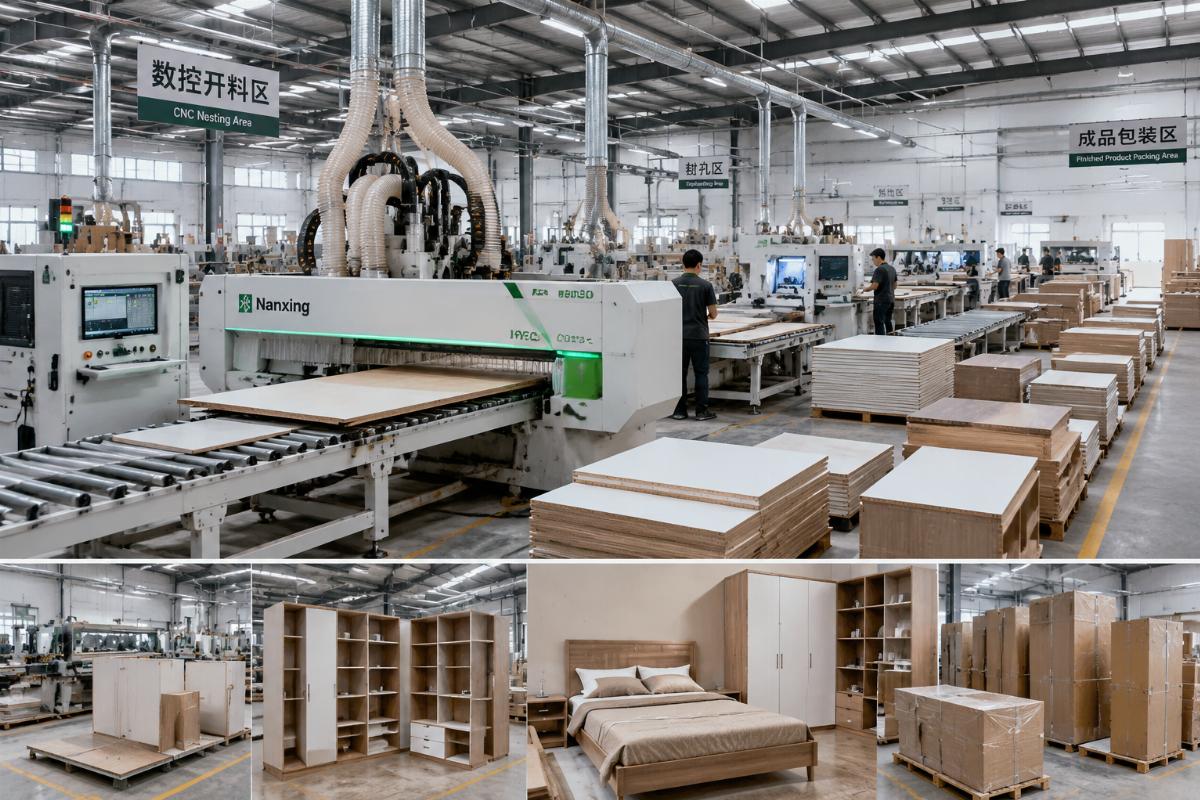
As you evaluate potential suppliers, focus on four core areas to filter out unqualified vendors and find a solution that fits both your production needs and budget.
What Core Configurations Do You Need for a Complete Bedroom Furniture Production Line?
A standard end-to-end line only requires three core equipment categories to handle 95% of all processing steps for wardrobes, beds and dressers. Many suppliers will try to upsell you on unnecessary add-ons that drive up costs without delivering tangible production gains, so it is critical to map your actual output requirements before requesting quotes.
| Equipment Category | Common Overbuilt Configuration | Cost-Effective Optimized Configuration |
|---|---|---|
| Panel Cutting Unit | 4-axis CNC router with 10+ tool changers and custom spindle upgrades | 3-axis CNC router with 2040 working size, standard 9kW spindle, and automatic loading/unloading module [NEED_CITE: Optimized 3-axis CNC models with 2040 working size complete both wardrobe cutting and bed frame carving with 98% processing accuracy matching 4-axis equipment for bedroom furniture use] |
| Edge Processing Unit | Fully automatic high-speed edge bander with 6+ functional stations | Semi-automatic edge bander with pre-milling and corner rounding for small to mid-sized batch production |
| Drilling Unit | Custom multi-station drilling line with 20+ spindles | Compact 6-row CNC drilling center compatible with standard panel thicknesses |
Last quarter, a mid-sized wardrobe factory based in Vietnam upgraded from fully manual processing to a nested-based CNC production line, and reached a stable output of 35 panels per hour within 14 days of on-site installation. The line they selected included only the three core components listed above, with no extra add-ons, and their total equipment investment was 47% lower than a comparable quote they received from an Italian machinery brand. [NEED_CITE: Mid-sized furniture factories switching to automated nested-based CNC lines see 3x to 4x higher hourly panel output compared to manual processing workflows.]
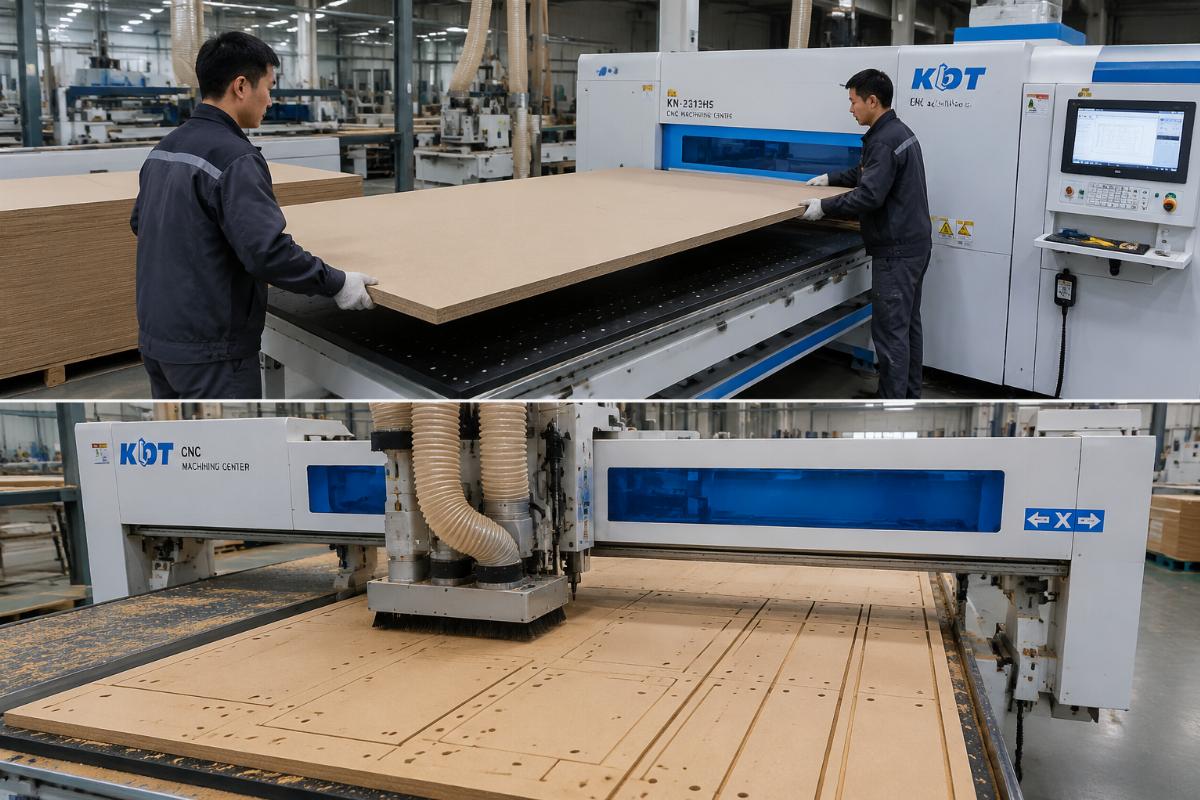
- Production Output Mapping – List your top 3 highest-volume product lines (e.g., standard wardrobes, queen size bed frames, flat pack dressers) and calculate the hourly panel throughput required to hit your monthly sales targets.
- Material Compatibility Check – Confirm that the recommended line supports consistent processing for your most commonly used materials, including MDF, particleboard and plywood.
- Floor Space Verification – Measure the available footprint in your facility to ensure the recommended line layout fits without requiring costly structural renovations.
How to Cut Production Line Procurement Cost Without Sacrificing Processing Quality?
You can reduce total 5-year ownership cost by more than 40% by selecting a qualified Chinese supplier, with no sacrifice to processing accuracy for standard bedroom furniture parts. The largest cost savings do not come from cutting corners on core components, but from avoiding the 60% brand markup that European brands charge for identical production capabilities.
| Cost Factor | Common Costly Approach | Budget-Friendly Alternative |
|---|---|---|
| Upfront Equipment Purchase | Lock in a 5+ unit bulk order to get a minor volume discount | Select a supplier that supports 1-unit MOQ with fully customizable configurations for your specific production needs [NEED_CITE: Qualified Chinese wood machinery suppliers support 1-unit MOQ with customizable working area and spindle configurations tailored to small batch bedroom furniture production] |
| After-Sales Support Budget | Allocate 15% of equipment cost per year for third-party technician visits | Select a supplier that includes free on-site engineer dispatch and 2-year warranty as standard in their quote |
| Spare Parts Inventory | Pre-purchase 3 months of spare parts at international shipping rates | Source standard wear parts locally, and use the supplier’s lifetime free technical support to reduce unplanned downtime |
A custom bedroom furniture startup based in Kenya purchased an entry-level 1325 CNC router and semi-automatic edge bander package last year, with a total equipment cost of $12,800, which was 45% lower than the equivalent offering from a well-known European brand. The line supports their current small batch production of 20 custom bedroom sets per month, and they can upgrade additional modules as their order volume grows.
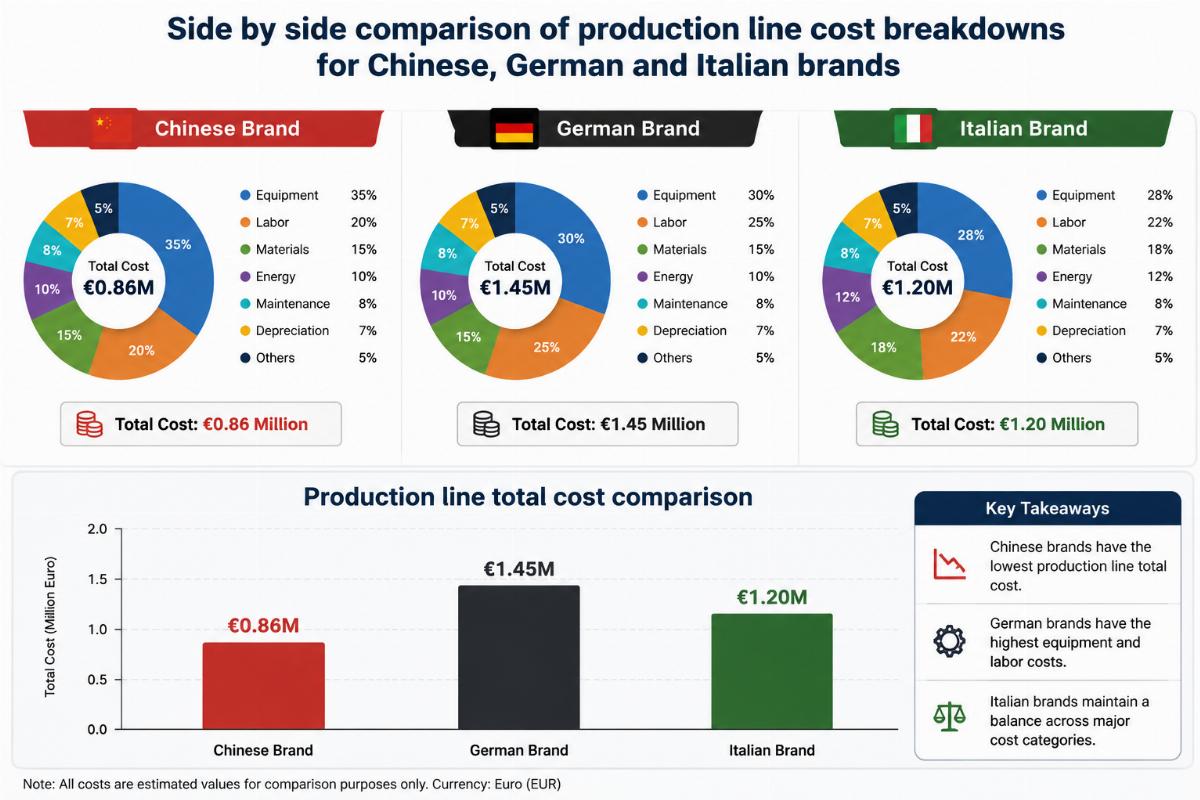
- Total Cost of Ownership Calculation – Request quotes that include upfront cost, 5-year maintenance fees, and spare parts costs, not just the base equipment price.
- Volume Requirement Confirmation – Ask potential suppliers to explicitly state their minimum order quantity and customization terms before sharing detailed production requirements.
- Add-On Audit – Cross out any recommended features that are not required to produce your existing product catalog, and confirm if those features can be added later at a lower cost.
What Common Pitfalls Should You Avoid When Selecting a Production Line Supplier?
The three most common costly mistakes when selecting a supplier are lack of clear after-sales terms, inflexible order policies, and no multilingual operational support. All three issues can be fully mitigated by verifying supplier terms upfront, before you make any deposit payment.
| Risk Scenario | Consequence of Unaddressed Risk | Mitigation Step |
|---|---|---|
| No on-site installation support | 3 to 6 months of delayed production while you source local technicians with no experience operating the line | Require written confirmation that free overseas on-site engineer dispatch is included in the package |
| No multilingual operation guides | Permanent underutilization of line capabilities due to language barriers | Confirm that the line’s control system supports your local language (English, Spanish, Arabic, etc.) with full translated documentation |
| No flexible upgrade paths | You are forced to replace the entire line after 2 years when your production volume grows | Select a supplier that offers modular upgrades for core components as your output requirements change |
A regional machinery distributor based in Chile signed an exclusive territory agreement with a Chinese manufacturer with 20+ years of production experience, and placed 3 full container orders of bedroom furniture production line components within 6 months of starting the partnership. The supplier’s clear after-sales terms and flexible MOQ policies allowed them to test small batches with local customers before scaling up to larger volume orders.
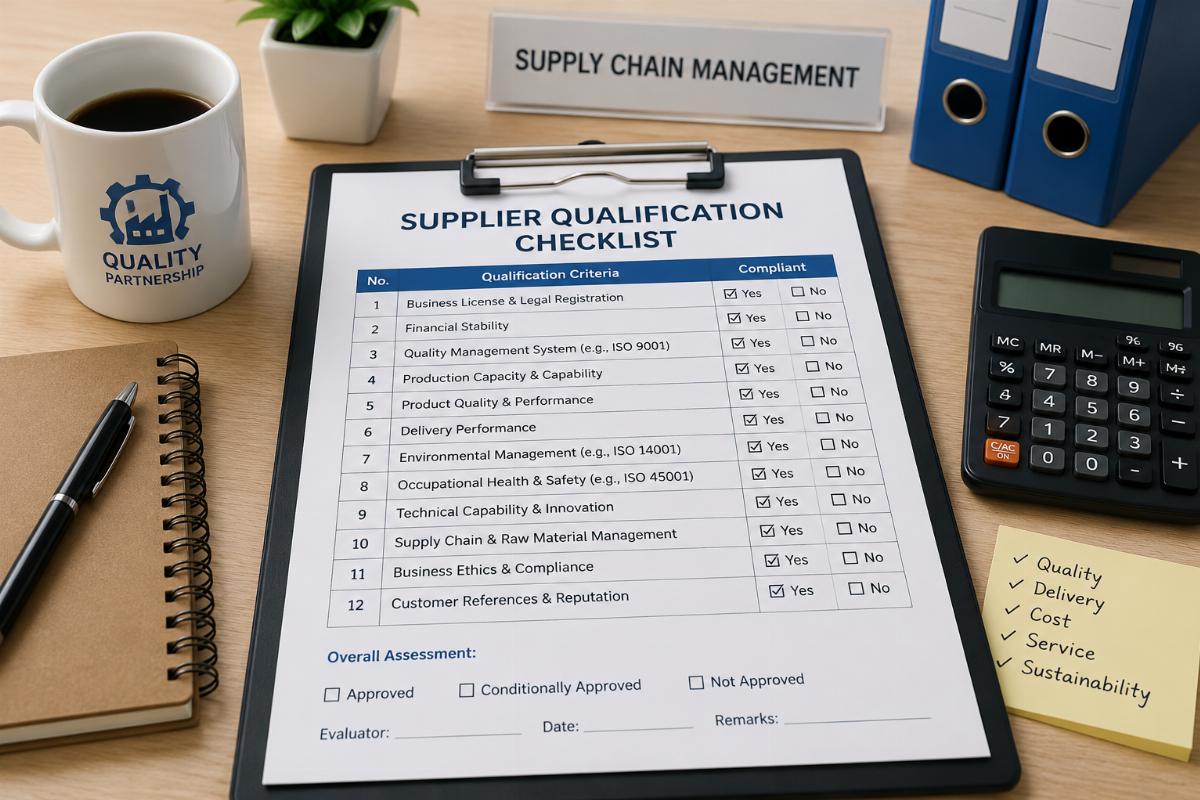
- After-Sales Term Verification – Ask for a written copy of the warranty policy, and confirm that on-site installation support is not an extra paid service.
- Certification Confirmation – Verify that the supplier holds valid ISO 9001, CE and TüV certifications to ensure compliance with international safety standards.
- Reference Request – Ask for 2 to 3 references from existing customers in your region with similar production scale to your own operation.
Conclusion
Reliable, cost-effective bedroom furniture production lines from China no longer require tradeoffs in support, quality or flexibility to fit the needs of small, mid-sized and emerging market producers. By focusing on core configurations that match your actual output, calculating total 5-year ownership cost instead of just upfront price, and verifying after-sales terms before making a deposit, you can avoid the most common sourcing pitfalls and get a line that delivers stable production for years. The outdated assumptions that European brands are the only reliable option, that full lines require large minimum orders, and that entry-level equipment cannot handle standard bedroom furniture processing are all dispro
About the Author

Editor covering global sourcing, supplier verification, and industrial product knowledge. Content is compiled from manufacturer specifications, industry standards, and hands-on experience with international B2B buyers. Every article is fact-checked before publishing to help procurement professionals make informed decisions.
View all posts
Leave a Reply