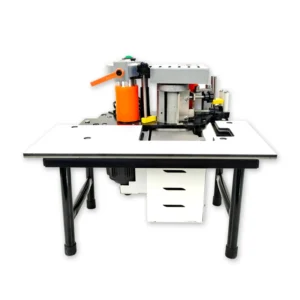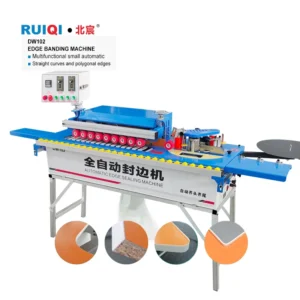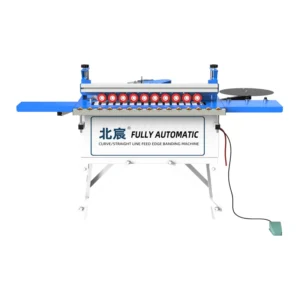
Description
Voltage-Verified Dispatch — Every DW3000 leaves the floor only after its motor nameplate and control transformer match the buyer’s confirmed local grid standard, eliminating the dead-on-arrival shock that stalls workshops for weeks.
Technical Specifications
| Parameter | Value |
|---|---|
| Model | DW3000 |
| Product Type | Automatic Edge Banding Machine |
| Total Power | 11 kW |
| Voltage & Frequency | 380V / 415V (50Hz / 60Hz configurable) |
| Feed Speed | 0–12 m/min |
| Minimum Sheet Length | 300 mm |
| Minimum Sheet Width | 150 mm |
| Edge Banding Height | 0–50 mm |
| Edge Banding Thickness | 0.3–3 mm |
| Pre-milling Motor | 2.2 kW |
| Heating Power | 2.2 kW × 2 (double heat gun) |
| Trimming Power | 2.2 kW × 2 |
| Polishing Power | 0.4 kW × 2 |
| Vacuum Power | 550 W |
| Transmission Power | 180 W |
| Glue Pot Capacity | 4000 ml |
| Air Source Pressure | 0.5–0.7 MPa |
| Pressure Wheel Groups | 8 groups, 30°–90° oblique adjustable |
| Feeding System | Double cylinder feeding belt |
| Edge Band Slotting Device | Included, height adjustable |
| Language Options | Chinese, English (customizable to Spanish or others) |
| Plug Options | EU, USA, AU, UK |
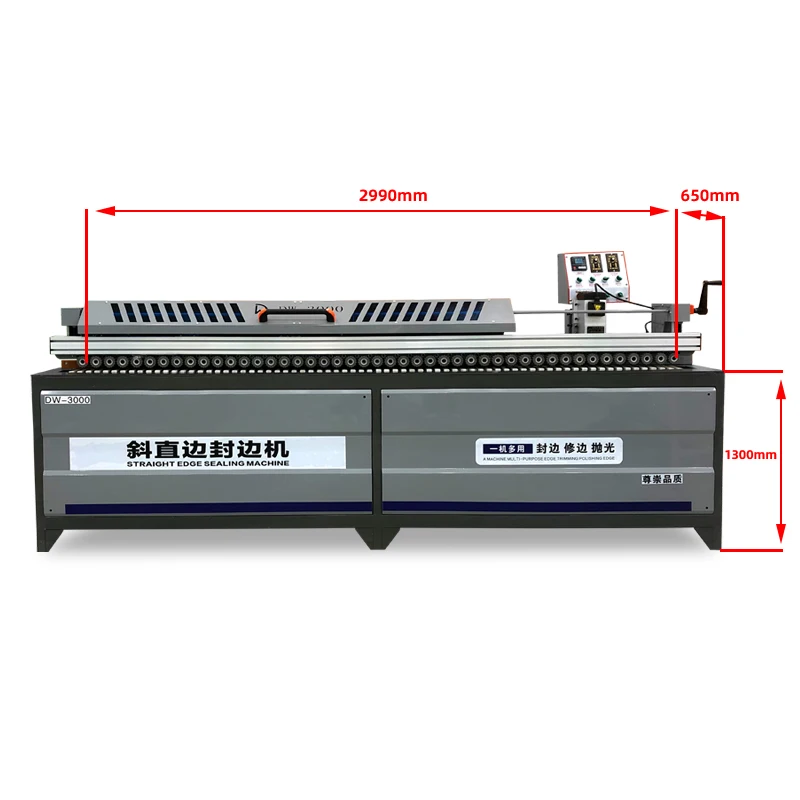
| Overall Dimensions (L×W×H) | 299 × 65 × 130 cm |
| Net Weight | 430 kg |
Application Suitability
| Application | Material or Output |
|---|---|
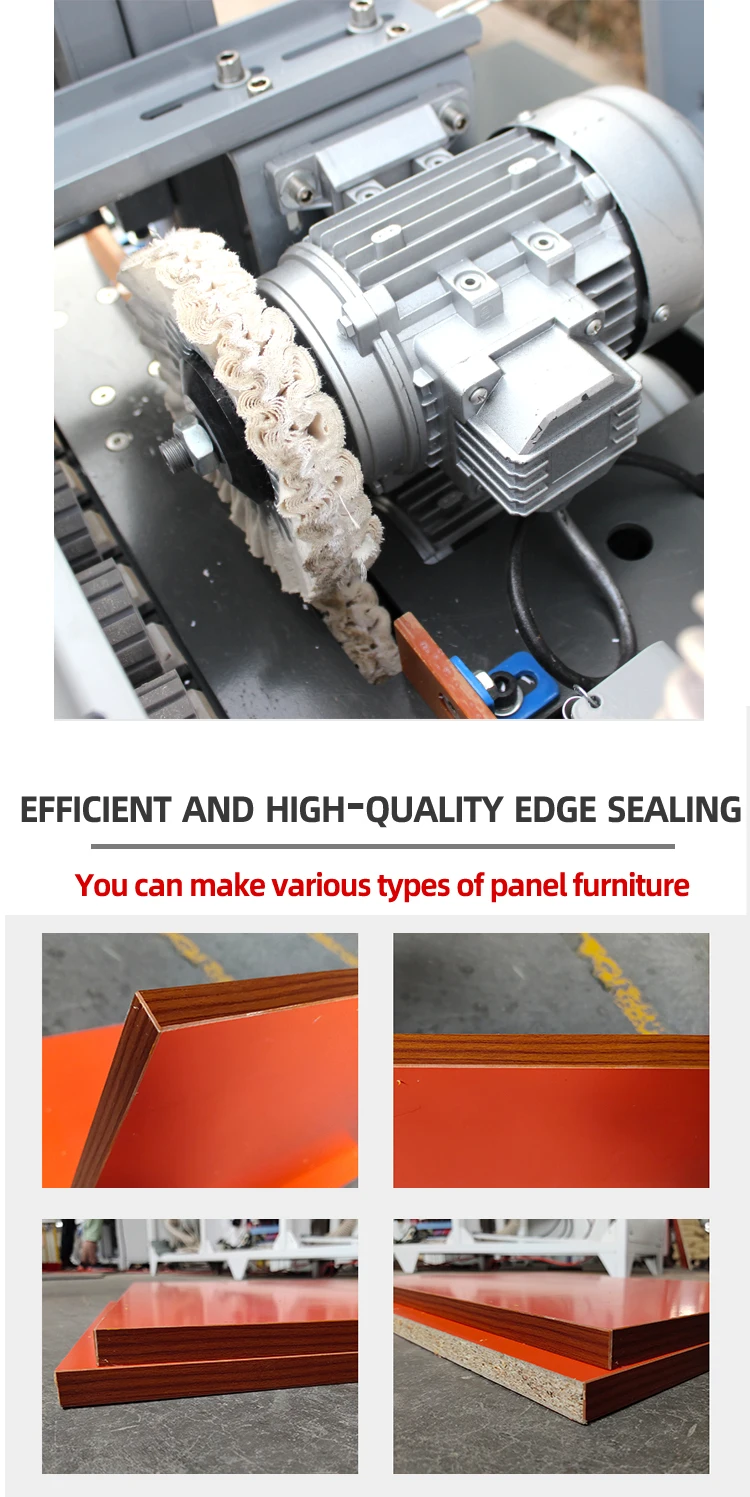
| Custom cabinet door edge finishing | MDF and plywood with PVC edge banding |
| Wardrobe and shelving panel production | Particleboard with melamine or veneer banding |
| Small-batch joinery components | Solid wood panels requiring pre-milling and scraping |
| Office furniture panel edging | Chipboard panels with 0.3–3 mm ABS or PVC strips |
| Beveled edge profiles for decorative panels | MDF boards with 30°–90° angled banding application |
Why the Voltage Question Should Come Before the Quotation
An automatic edge banding machine in stock is worthless if the motor trips the breaker on first power-up. I once watched a workshop in Lagos sit idle for three weeks — panels stacked to the ceiling, operators on standby — because a machine shipped with a 380V motor into a 415V three-phase supply. The transformer fix cost more time than the ocean freight itself [NEED_CITE: voltage and frequency standards by export market].
That failure is preventable. Before any DW3000 is crated, the electrical schematic is checked against the buyer’s confirmed voltage and frequency, the motor nameplate is verified, and the correct plug type is installed. This is not an optional add-on; it is a gate in the pre-shipment verification process. The result is a machine that runs when it arrives, not one that waits for an electrician and a transformer order.
Stock Availability and What It Means for Your Schedule
When a cabinet order is overdue and your current edge bander fails, you need an automatic edge banding machine in stock — not one on a production schedule. The DW3000 is held in ready-to-ship configuration, meaning the mechanical assembly, glue pot, and feeding belt are complete. Dispatch lead time then depends on voltage confirmation and pre-shipment testing, not on building the machine from scratch.
Single-unit orders are standard. A workshop adding one edge bander to fill a bottleneck does not need to meet a container-load minimum. This makes the DW3000 practical for joinery shops upgrading from manual banding or for furniture factories replacing a machine that has gone down mid-contract.
Customization Without Delaying the Shipment
The standard DW3000 carries 380V / 415V dual compatibility, but the control panel language, plug format, and voltage-frequency pairing are confirmed per order. Spanish-language panels for Latin American buyers, UK plugs for West African markets that follow British wiring standards, or 60Hz configurations for regions running that grid frequency — these are set before crating, not retrofitted on arrival [NEED_CITE: CE machinery directive requirements for industrial equipment].
This matters because a control panel in an unreadable language stalls commissioning just as effectively as a wrong-voltage motor. Operators who cannot navigate the interface will not adjust feed speed or glue temperature correctly, and edge quality suffers from day one. Confirming language and electrical specs upfront keeps the machine productive from its first shift.
How the DW3000 Specifications Translate to Workshop Output
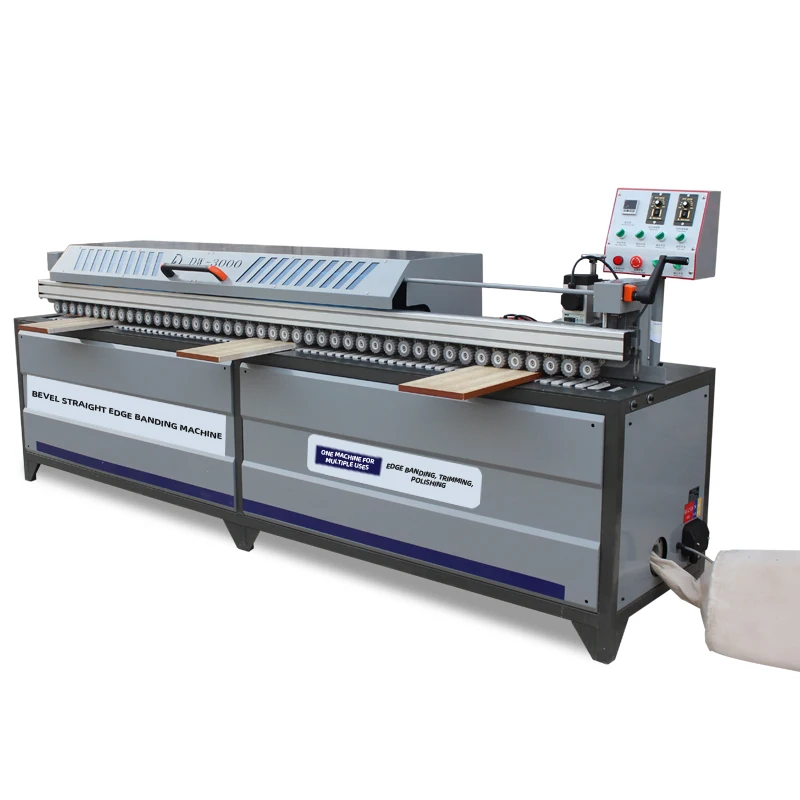
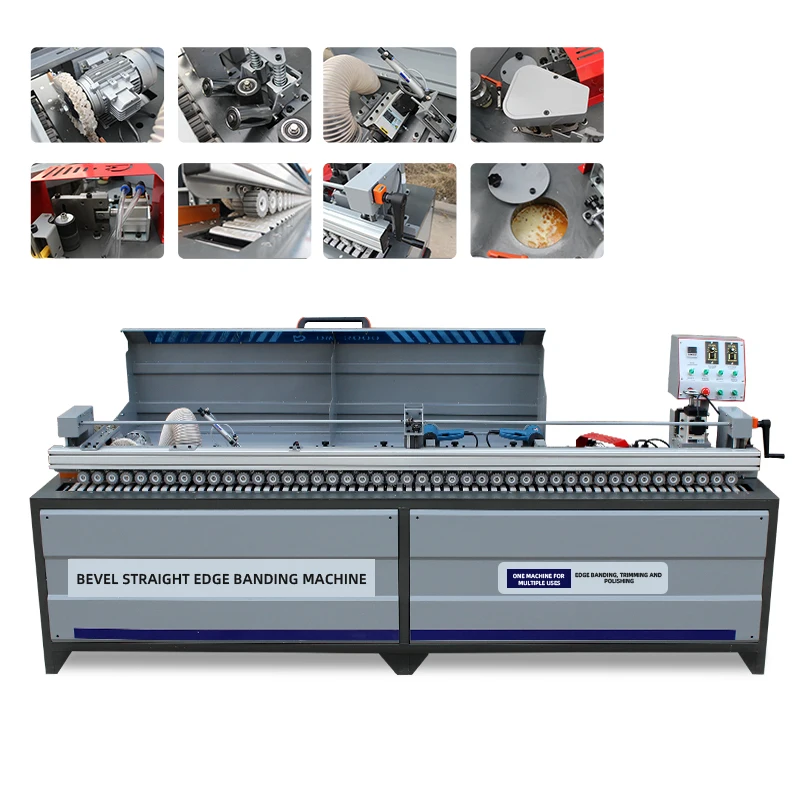
The 0–12 m/min feed speed with double cylinder feeding belt keeps panels flat and shake-free through each station. For a workshop running both thin 3 mm MDF drawer sides and 18 mm particleboard shelving, stable transport means the pre-milling cutter engages consistently and the trimming motors follow the panel edge without chatter.
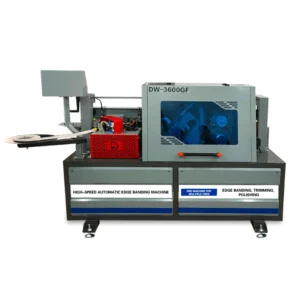
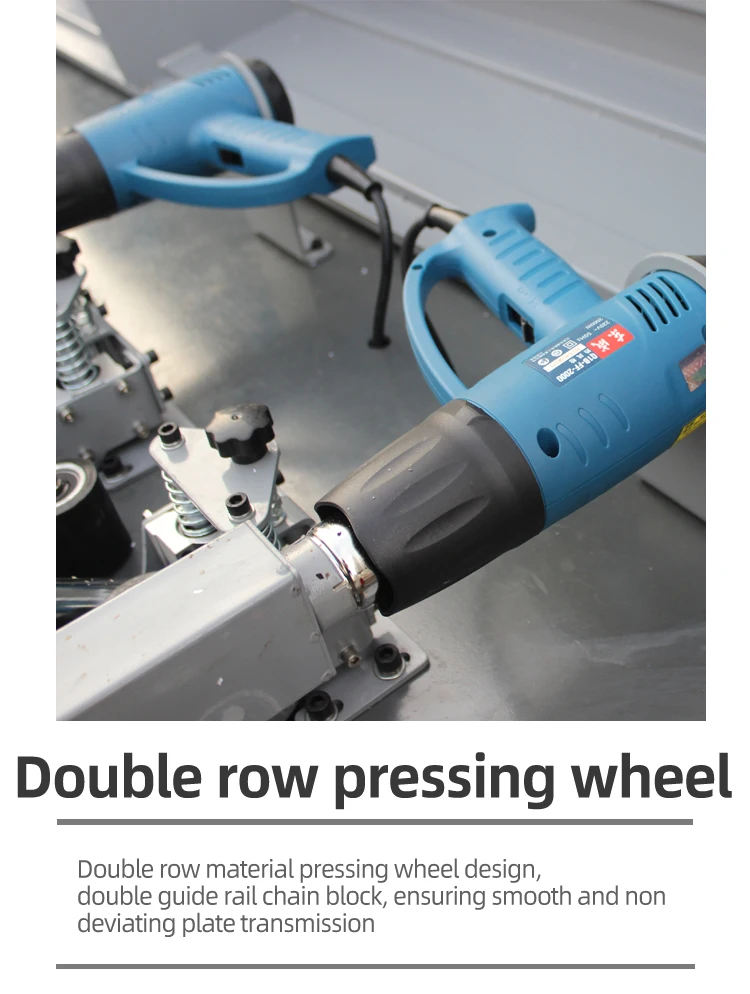
Three spindle motors — pre-milling, trimming, and finishing — handle the full sequence from raw panel edge to polished finish. The 8 groups of oblique pressure wheels, adjustable from 30° to 90°, press the banding strip into corners and beveled profiles that flat pressure systems miss. The double heat gun design activates glue evenly across the 0.3–3 mm thickness range, which matters when switching between thin PVC and thicker veneer strips on the same production day [NEED_CITE: thermal activation requirements for hot-melt edge banding adhesives].
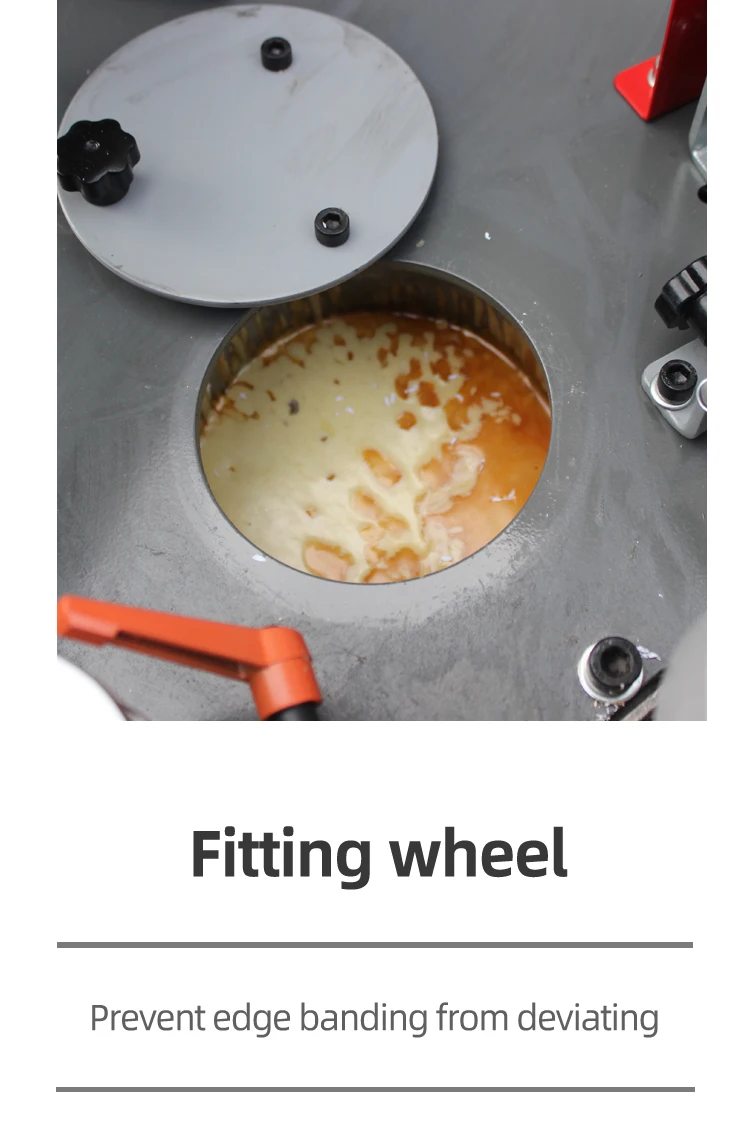
The 4000 ml glue pot holds enough adhesive for sustained runs without frequent refills, and the 550 W vacuum system captures trim waste at the source, keeping the workshop floor clear of PVC chips that can interfere with downstream assembly stations.
The Cost of Skipping Configuration Verification
Machines ordered without confirming local electrical standards arrive dead. Machines with control panels in the wrong language sit while the buyer hunts for a translator. Entry-level edge banders pushed beyond their designed volume develop feed belt slip and trimming drift, which shows up as visible glue lines on assembled cabinets — a defect caught by the end customer, not by your QC [NEED_CITE: common causes of edge banding adhesion failure on particleboard substrates].
These are not theoretical risks. They are the exact failure modes I have seen on installation sites where the machine was chosen on price and speed alone, with no one verifying that voltage, language, pressure wheel angle, and throughput expectations actually matched the workshop’s real conditions.
Why Source the DW3000 Through This Channel
In-house manufacturing with patented cutting mechanisms means tolerance claims on the DW3000 are verifiable, not just stated in a brochure. The four-stage QC process — incoming material, in-process, finished product, and pre-shipment — catches miswired motors and misaligned trimming spindles before crating, not after arrival.
Voltage, plug, and language customization is treated as standard procedure, not a special request. An engineer reviews your workshop’s feed height, panel range, and throughput requirement before confirming the quotation, so the machine you receive is the machine your line actually needs. The full product family — from entry-level to full-function pre-milling — sits under one roof, so a workshop scaling production can add capacity without switching suppliers.
Documentation & Verification
- Factory test record run on your specified panel thickness and edge banding material before dispatch
- Electrical schematic with confirmed voltage, frequency, and plug type for your facility
- Operation and maintenance manual supplied in your agreed language with illustrated spare parts diagrams
- CE declaration of conformity covering the DW3000 configuration as shipped
- Packing photographs showing crating, moisture barrier, and securing points before the container is sealed
Installation, Commissioning & Support
- The DW3000 requires a level concrete floor capable of supporting 430 kg plus dynamic load during feeding cycles
- A dedicated 380V or 415V three-phase circuit with appropriate breaker rating must be installed before machine arrival
- Machine ships fully assembled; position, connect air supply at 0.5–0.7 MPa, and power on for first-run calibration
- Glue pot heating and feed speed parameters are set during commissioning based on your edge banding material and thickness
- Spare scraper blades, trimming cutters, and pressure wheel replacements are included per the packed spare parts list
- Routine maintenance intervals for glue pot cleaning and belt tension are documented in the supplied manual
Before You Request a Quotation
To configure the right DW3000 for your line, share your primary panel materials (MDF, particleboard, plywood, or solid wood), the edge banding types and thicknesses you run most often, and your local voltage and frequency standard. If you are replacing a machine in an existing line, note the upstream and downstream equipment so feed height and throughput can be matched. Confirm the control panel language your operators need and whether you require a sample processing test on your own material before shipment.
Frequently Asked Questions
Q: Is the DW3000 currently in stock and what is the dispatch lead time?
A: Yes, the DW3000 is held in ready-to-ship condition with mechanical assembly and testing complete. Dispatch follows voltage confirmation, pre-shipment electrical verification, and crating. Typical lead time from order confirmation to shipment is measured in days rather than weeks, depending on customization requirements and destination port scheduling.
Q: Can I confirm the voltage, frequency, and plug type before ordering?
A: Absolutely. Voltage and frequency confirmation is a required step before any DW3000 ships. You provide your facility’s electrical standard, and we verify the motor nameplate, control transformer, and plug format match. The electrical schematic is shared for your approval prior to dispatch.
Q: What languages are available for the control panel?
A: The DW3000 ships standard with Chinese and English interface options. Spanish and other languages are available as customization options confirmed at order placement. The goal is that your operators can navigate feed speed, glue temperature, and trimming adjustments without translation barriers on day one.
Q: Can I order a single unit, or is there a minimum order quantity?
A: Single-unit orders are accepted. The DW3000 is suitable for workshops adding one edge bander to fill a production gap or replacing a failed machine. There is no container-load minimum — you order what your line requires.
Q: What shipping options are available and how is the machine packed for transport?
A: The DW3000 is crated with moisture barriers and secured to a pallet base suitable for ocean freight or air cargo depending on urgency. Packing photographs are provided before the container is sealed. Shipping method and routing are confirmed based on your port, timeline, and budget.