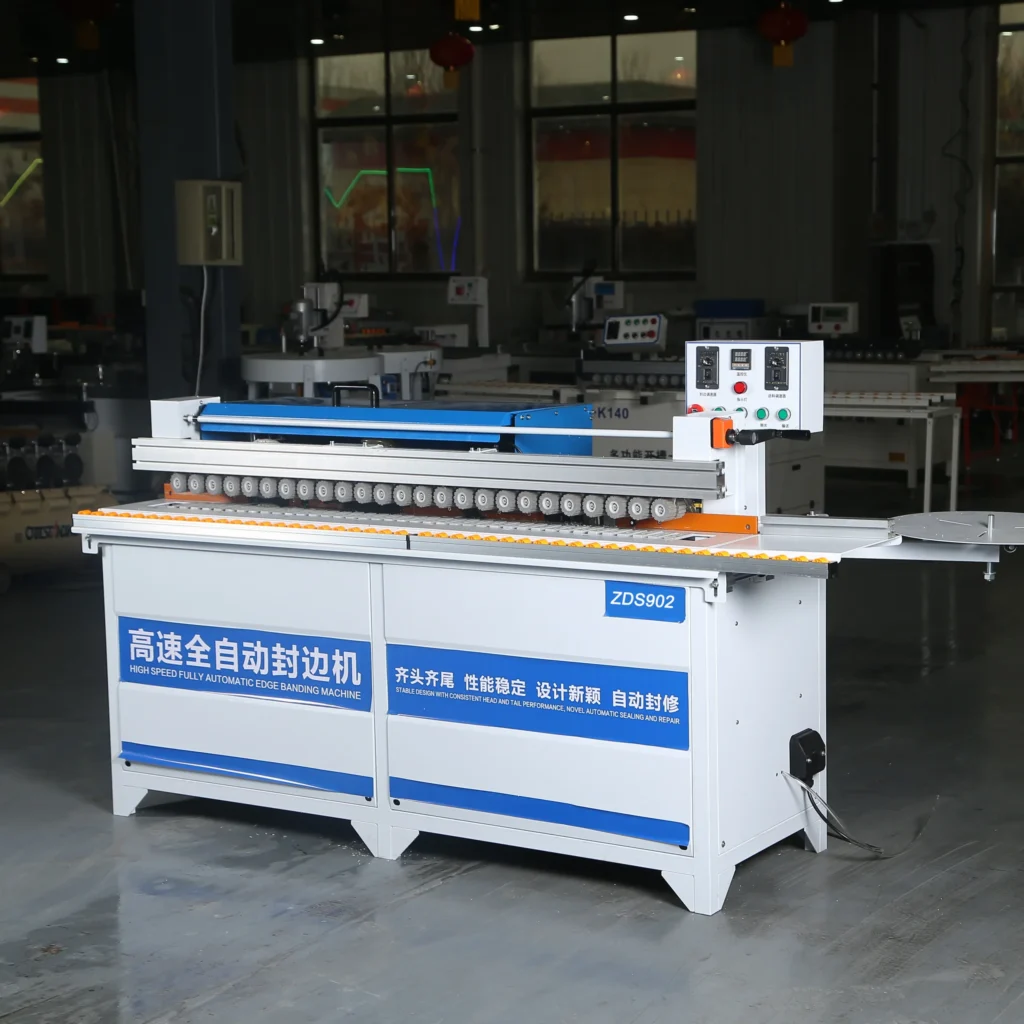
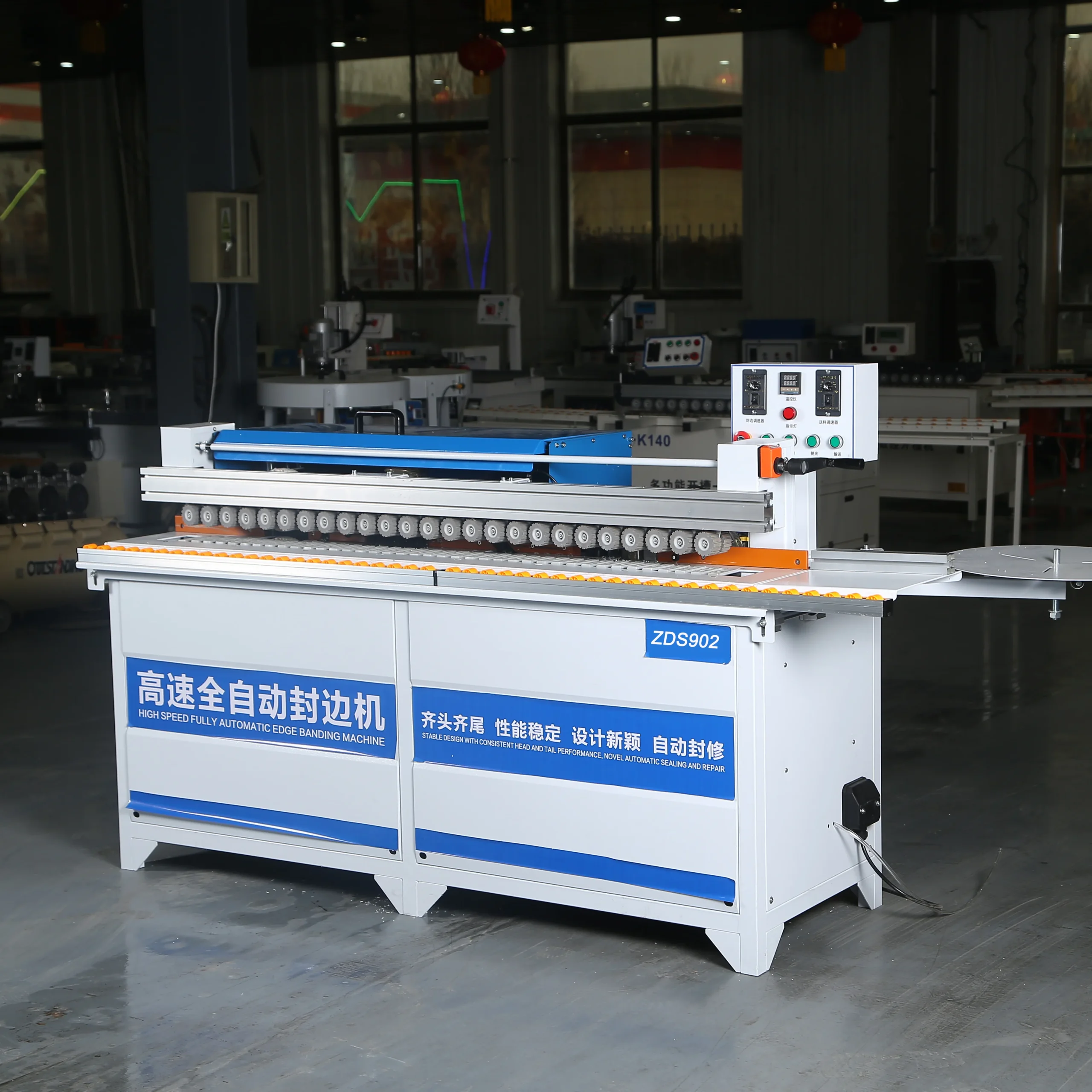
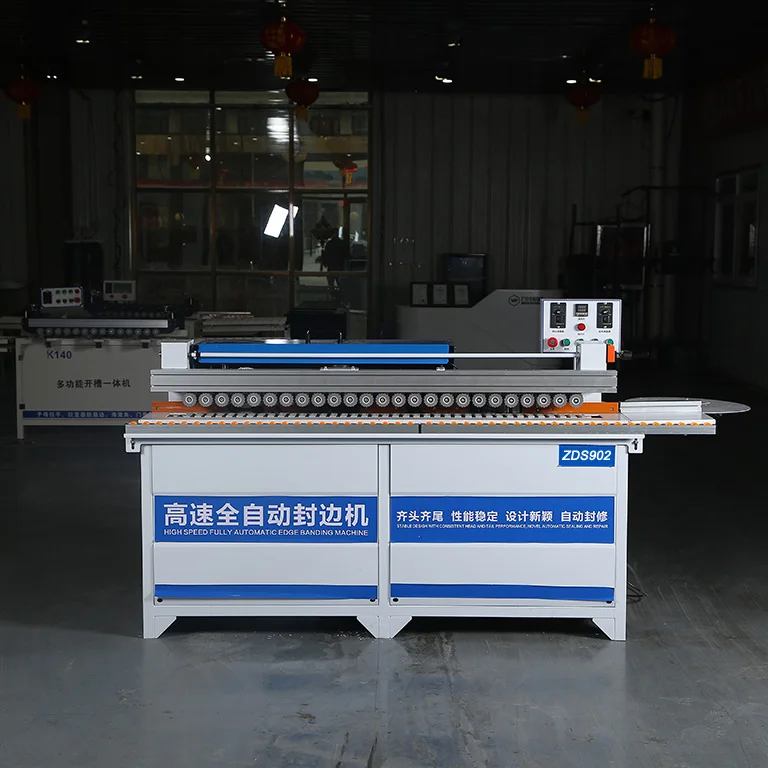
Description
Ready-Stock Dispatch — Every fully automatic edge banding machine leaves our Ningjin facility only after voltage, frequency, and plug type are matched to your workshop’s local supply and verified on the test bench.
Technical Specifications
| Parameter | Value |
|---|---|
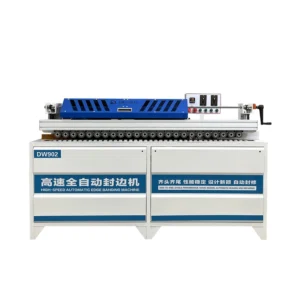
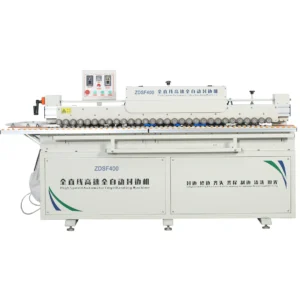
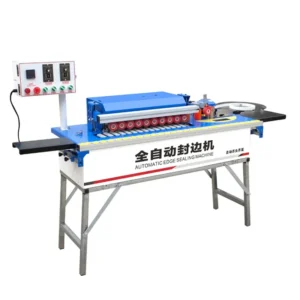
| Product Type | Fully Automatic Edge Banding Machine |
| Voltage | 220V (verify frequency and phase for your region) |
| Total Power | 4200W |
| Equipment Size | 207 × 60 × 122 cm |
| Weight | 245 kg |
| Edge Band Height Range | 0–35 mm |
| Edge Band Thickness Range | 0.6–2.0 mm |
| Glue Pot Capacity | 4000 ml |
| Edge Banding Type | Linear Edge Banding Machine |
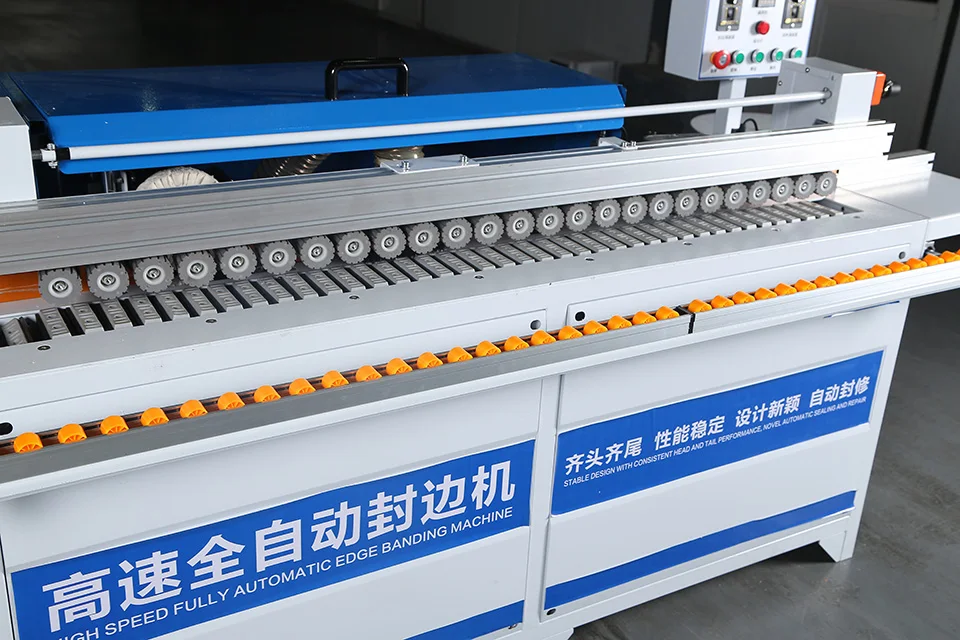
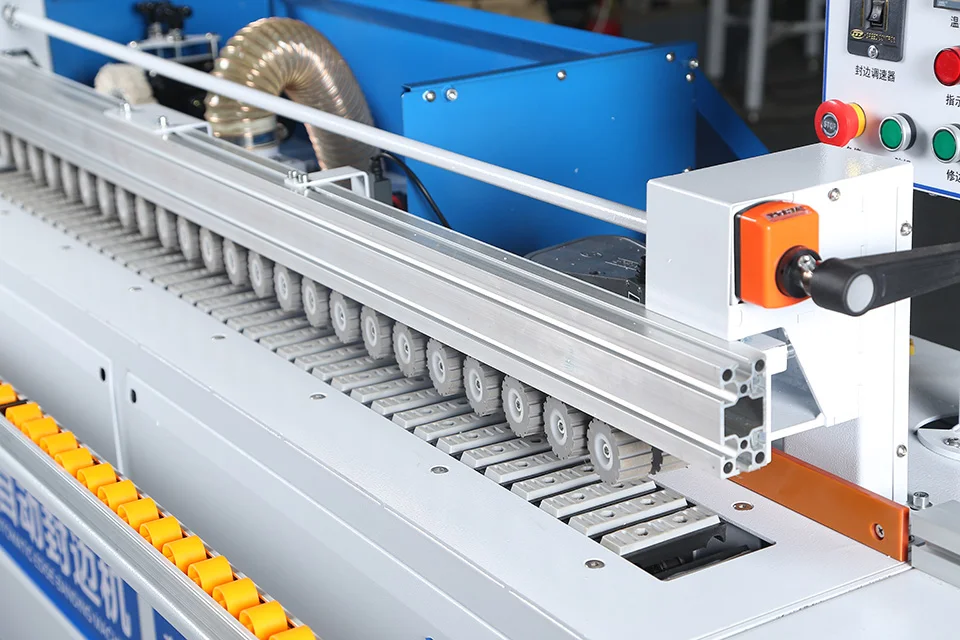
| Pressure System | Integrated pressure beam, double rows of pressure wheels, adjustable handle |
| Conveyor Belt | Silicone material |
| Cutting Device | Pneumatically controlled edge strip cutter |
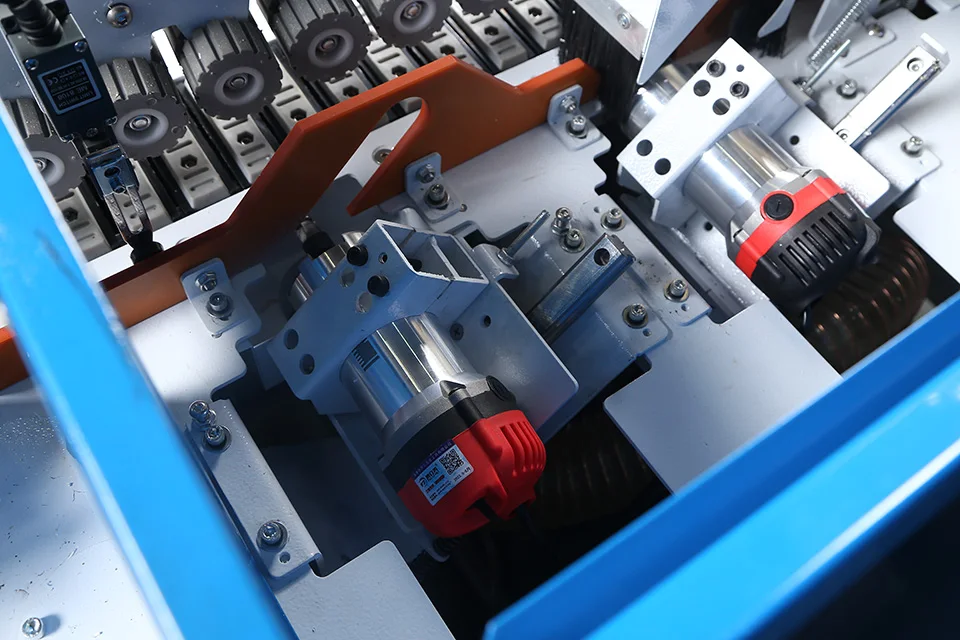
| Trimming Motors | Double high-speed motors, up-and-down action |
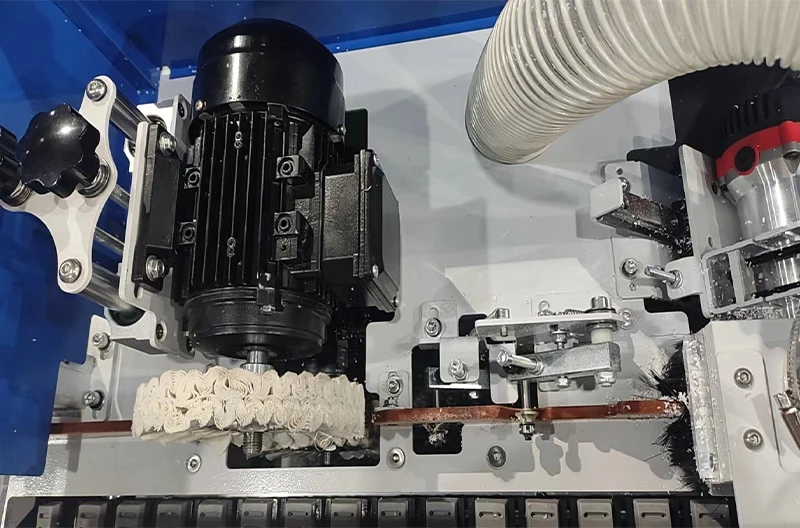
| Polishing Motors | Dual up-and-down polishing motors |
| Key Features | Double-sided gluing, intelligent temperature control, independent operating platform |
| Assembly State | Requires on-site assembly; manual and video guidance provided |
| Warranty | 1 year |
Application Suitability
| Application | Material or Output |
|---|---|
| Custom cabinet door edge finishing | Melamine-faced particleboard with 0.6–2.0 mm PVC edge band |
| Wardrobe panel production | MDF boards with veneer or PVC linear banding |
| Small-batch furniture runs | Plywood shelving panels requiring trimming and polishing on both edges |
| Workshop upgrade from manual banding | Pre-cut panel stock in melamine, MDF, and particleboard |
Why Voltage Verification Must Happen Before You Pay
An automatic edge banding machine in stock is only useful if it runs the moment you plug it in. Confirming your workshop’s voltage, frequency, and phase before dispatch prevents the kind of failure that leaves a machine sitting idle for weeks while a transformer is sourced locally.
I spent two days in a Bogotá workshop watching an operator stare at a tripped breaker because the machine in the crate was wired for a supply that did not exist in his building. The panel was 220V/60Hz; the machine had been set for a different standard. Nobody had asked the right question before the crate was sealed. That kind of oversight costs more than the shipping itself [NEED_CITE: voltage and frequency standards by export market]. A stocked unit should ship fast, but speed means nothing when the electrical configuration is wrong.
Dispatch Speed Without the Guesswork
Keeping an automatic edge banding machine in stock means the unit is assembled, tested, and crated — not that it is a generic box waiting for a label. Before any machine leaves the floor, the glue pot is filled, the conveyor runs under load, and the pneumatic cutter cycles through its full stroke. What changes from order to order is the electrical configuration and the language on the control panel, both confirmed during the quotation stage so there is no rework on arrival.
Stock Does Not Mean One-Size-Fits-All
A stocked machine still goes through a four-stage check: incoming component inspection, in-process assembly verification, finished-product functional test, and pre-shipment run with your specified panel thickness and edge band material. The test record travels with the crate. When you open it, you already have documented proof of how the machine performed on materials matching your production [NEED_CITE: pre-shipment inspection standards for woodworking machinery].
What the Glue Pot and Pressure Beam Actually Mean for Your Panels
The 4000 ml glue pot is sized so that a small workshop running cabinet doors in batches does not stop every twenty minutes to refill adhesive. For PVC bands up to 2.0 mm thick, consistent glue temperature across a long run matters more than peak temperature — the intelligent temperature control maintains the melt within a narrow window so adhesion stays even from the first panel to the last. The integrated pressure beam with double rows of pressure wheels presses the band against the panel edge uniformly; the adjustable handle lets you set the gap for panel thicknesses within the machine’s working range. Silicone conveyor belts grip melamine and veneer surfaces without marring, which matters when the finished side is already laminated. The pneumatic cutter snips the band at the panel’s leading and trailing edges before trimming begins, so the double high-speed trimming motors only deal with overhang — not excess length.
When a Cheap Stock Machine Costs More Than a Custom Build
Buying the first automatic edge banding machine in stock you find on a marketplace can backfire when the pressure beam cannot adjust to your panel thickness, leaving a visible glue line on thinner MDF sheets. Operators then compensate by slowing the feed manually, which defeats the purpose of automation and introduces inconsistency between shifts. Pneumatic cutters that lack proper maintenance access seize after a few months, and replacing them means downtime that no stock availability can shorten [NEED_CITE: common failure points in linear edge banding machines].
Why Buyers Come Back for a Second Machine
The same engineering team that configures the line layout for a full factory also checks the voltage plate on a single stocked unit before it ships. The glue pot, trimming motors, and polishing stations are sourced and assembled in-house, so spare parts match the machine that arrived — not a substitute from a different batch. Documentation travels in the crate, not as an afterthought emailed weeks later. Every stocked machine can be reconfigured with a different control language or voltage setting during the pre-shipment test, because the electrical cabinet is built to accept multiple standards rather than hardwired to one.
Documentation & Verification
- CE declaration of conformity covering the full machine assembly and electrical cabinet
- Factory test record run on panel thickness and edge band type matching your order
- Electrical schematic showing the confirmed voltage, frequency, and phase wiring
- Operation and maintenance manual written in your agreed language before dispatch
- Spare parts list with part numbers matching the components installed in your unit
Installation, Commissioning & Support
- Requires a dedicated circuit rated for the 4200W total power draw with proper grounding
- Machine footprint of 207 × 60 × 122 cm needs clear access on both sides for panel feeding and trimming inspection
- Arrives partially disassembled; video-guided reassembly covers pressure beam alignment and conveyor tensioning
- First-run commissioning includes glue temperature calibration for your specific PVC or veneer band thickness
- Pneumatic cutter maintenance schedule provided with lubrication intervals and seal replacement part numbers
- Spare polishing pads and trimming blades included in the initial shipment for early production runs
What We Need to Ship Your Machine This Week
Tell us your workshop’s supply voltage, frequency, and phase so we can match the electrical cabinet before crating. Let us know which edge band materials you run most often — PVC thickness, veneer type, and whether you work primarily with melamine particleboard or MDF — so the pre-shipment test mirrors your actual production. If your operators need the control panel in a specific language, confirm that at the quotation stage and it will be set before the machine is sealed.
Frequently Asked Questions
Q: What voltage options are available and how is compatibility confirmed before shipping?
A: The machine is configurable for common industrial voltages including 220V setups. Before dispatch, we request your workshop’s exact voltage, frequency, and phase details, then verify the wiring against the electrical schematic. The pre-shipment test runs the machine on the confirmed configuration, and the test record is packed with the unit.
Q: How quickly can this automatic edge banding machine in stock be dispatched?
A: Stocked units are assembled and can ship once voltage confirmation, control language, and pre-shipment testing are complete. This typically takes a short period after order confirmation, depending on how fast you provide your electrical specifications and language requirements.
Q: What panel materials and edge band types does this machine handle?
A: It processes melamine, MDF, particleboard, and plywood panels with PVC or veneer edge bands in the 0.6–2.0 mm thickness range and up to 35 mm height. The glue pot and pressure beam are set during the pre-shipment test to match the materials you specify.
Q: Is assembly required on arrival, and what support is provided?
A: Yes, partial assembly is required. The shipment includes an operation manual in your language and video guidance covering reassembly steps such as pressure beam alignment, conveyor belt tensioning, and pneumatic cutter connection.
Q: What spare parts are included, and how are replacements sourced?
A: The initial shipment includes a spare parts list with numbered items matching your machine’s installed components. Consumables such as polishing pads and trimming blades for early runs are included, and replacements are available through direct order using the part numbers in your documentation.