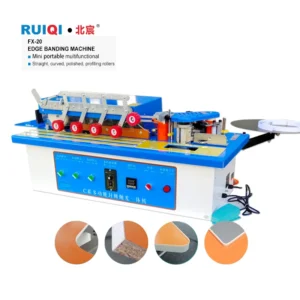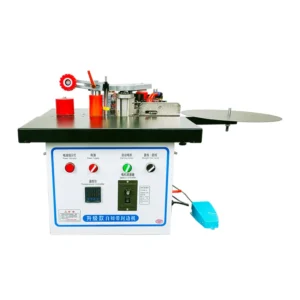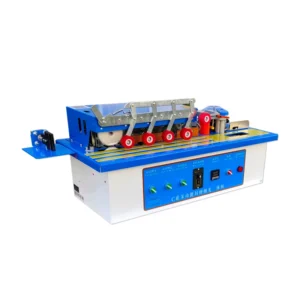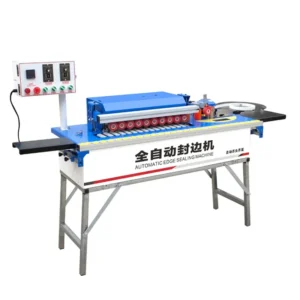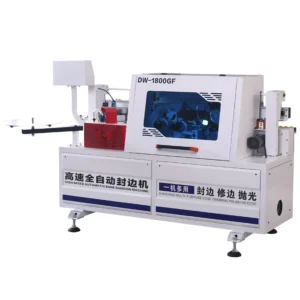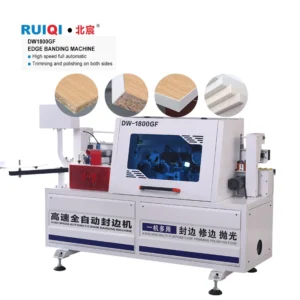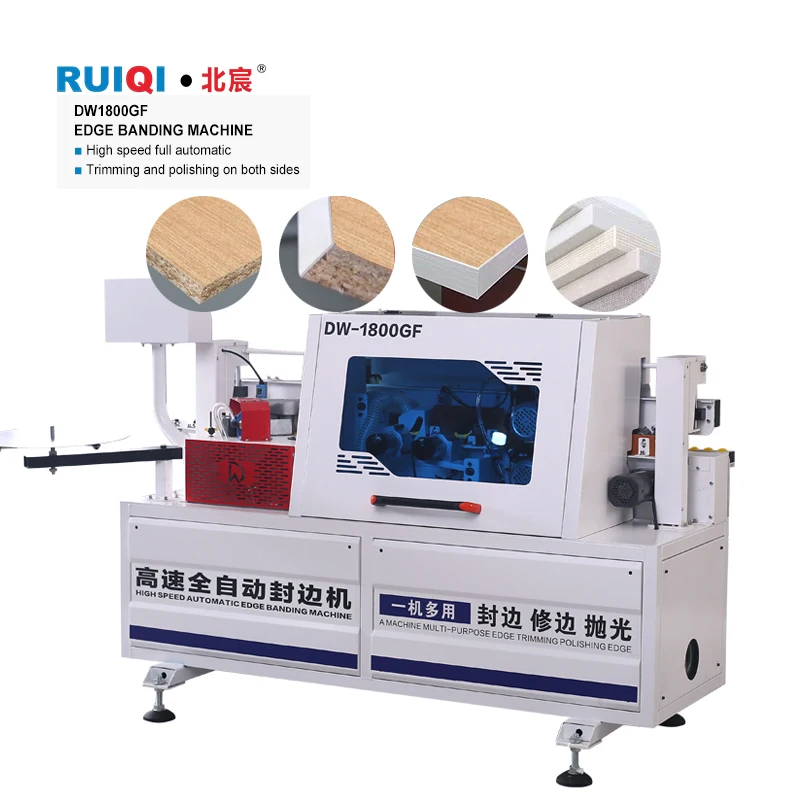
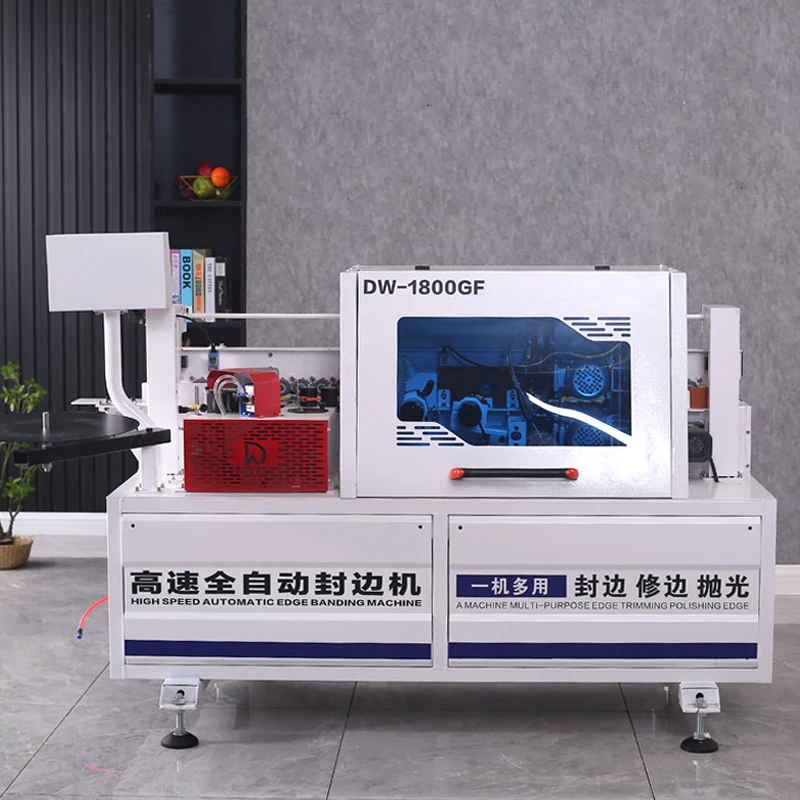
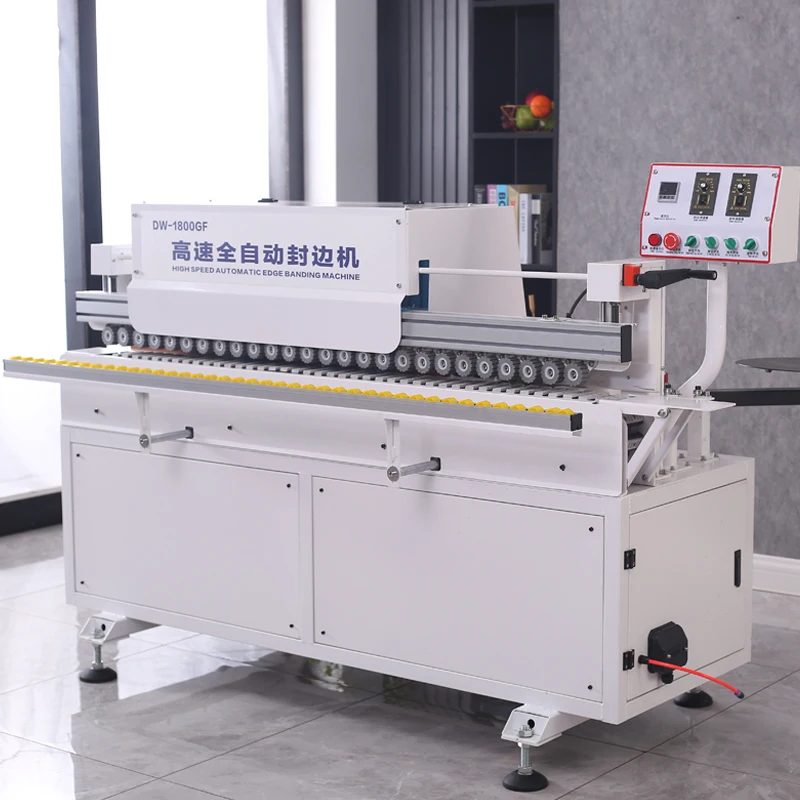
Description
Fast Dispatch Guarantee — every DW1800 automatic edge banding machine leaves our Ningjin facility with voltage, frequency, and plug type confirmed in writing against your local grid, eliminating the dead-on-arrival surprises that stall workshop commissioning.
Technical Specifications
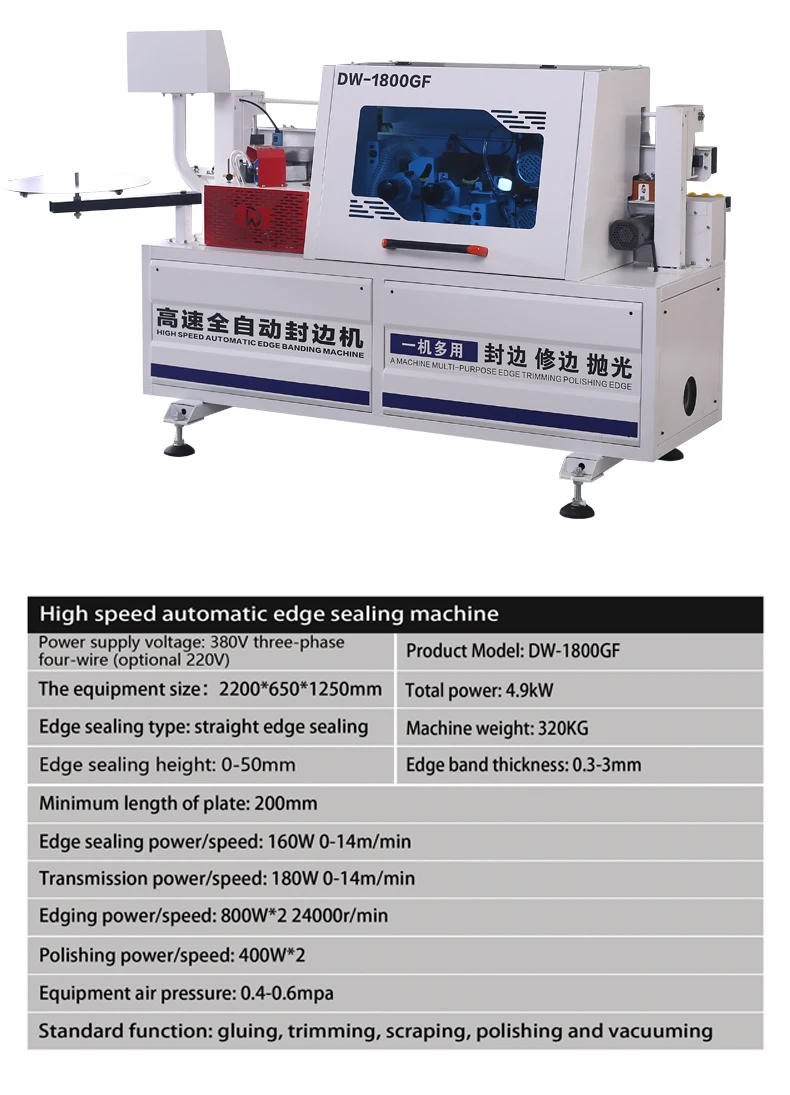
| Parameter | Value |
|---|---|
| Model | DW1800 |
| Product Type | Automatic Edge Banding Machine |
| Total Installed Power | 4.9 kW |
| Voltage Options | 380V / 220V / 415V (50Hz or 60Hz — confirm before order) |
| Feed Speed | 0–14 m/min (basis not stated in source) |
| Edge Banding Thickness Range | 0.3–3 mm |
| Edge Banding Height Range | 0–50 mm |
| Minimum Sheet Dimensions | 200 mm length × 100 mm width |
| Glue Pot Capacity | 4000 ml |
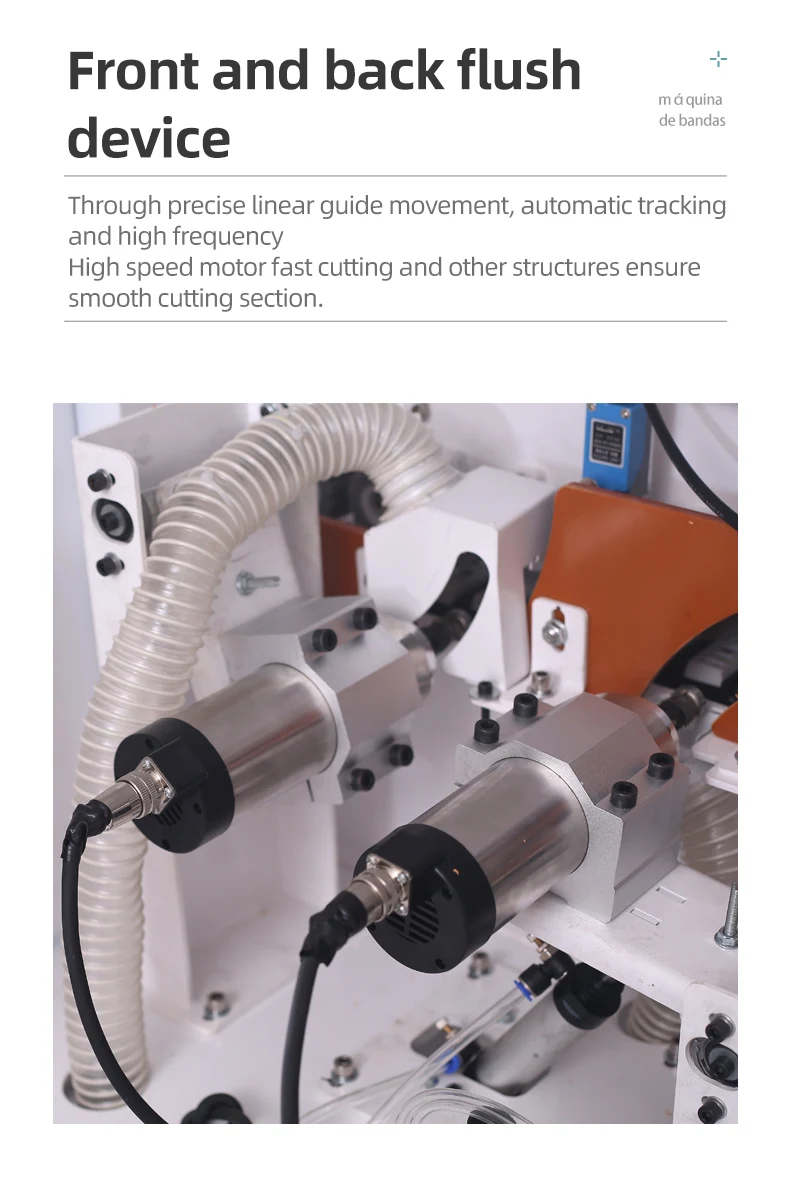
| Trimming Spindle Speed | 24,000 r/min |
| Trimming Motor Power | 800 W × 2 |
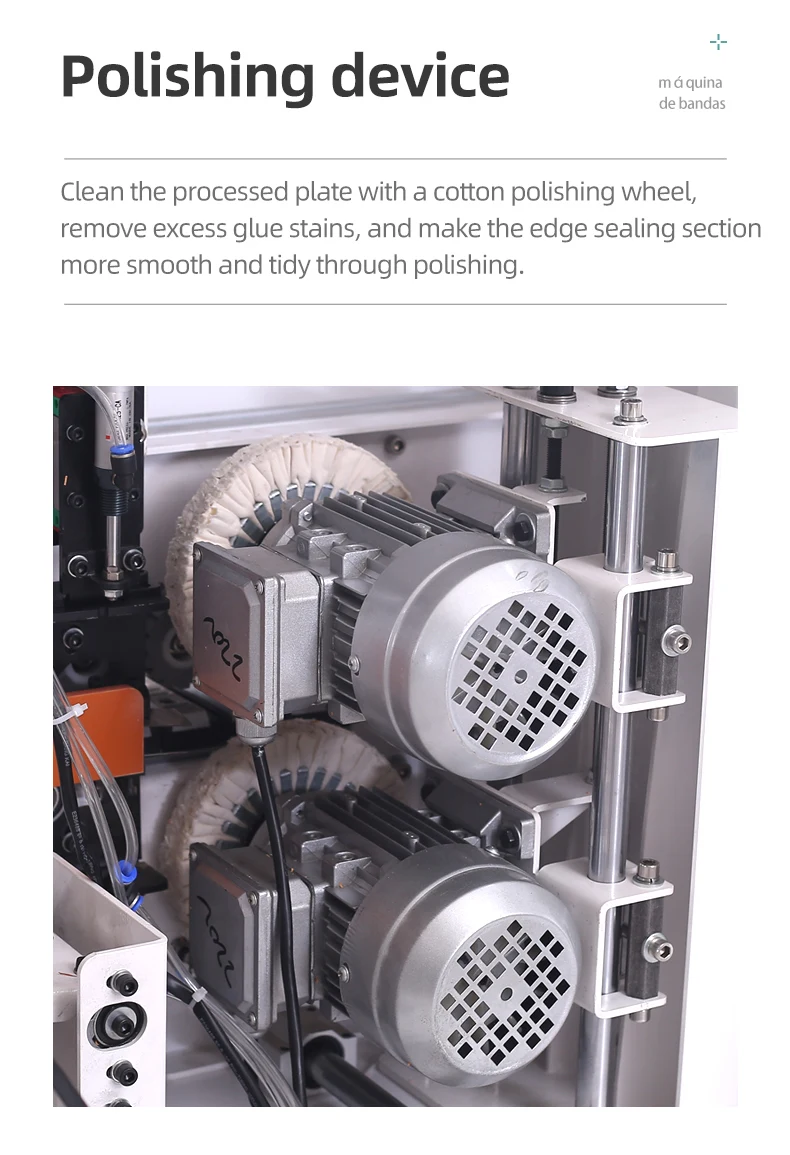
| Polishing Motor Power | 380 W × 2 |
| Vacuum Motor Power | 550 W |
| Edge Feed Motor Power | 160 W |
| Transmission Motor Power | 180 W |
| Required Air Pressure | 0.4–0.6 MPa |
| Overall Dimensions (L×W×H) | 220 × 65 × 125 cm |
| Net Weight | 320 kg |
| Control Panel Language | English, Chinese (Spanish and others configurable) |
| Plug Options | EU, USA, AU, UK |
Application Suitability
| Application | Material or Output |
|---|---|
| Custom cabinet door edge finishing | MDF and particleboard with PVC or melamine banding |
| Small-batch plywood shelving production | Plywood panels up to 50 mm edge height |
| Joinery workshop panel processing | Solid wood and wood-based panels of comparable hardness |
| Starter furniture workshop automation | ABB boards and organic glass plates within thickness range |
Why Voltage Confirmation Must Happen Before the Purchase Order
A machine built for 380V/50Hz will burn out its motors on a 220V/60Hz grid within the first hour of operation.
I once signed off on a shipment to a workshop in West Africa where the purchase order never mentioned frequency. The local grid ran 60Hz, the machine was wired for 50Hz, and the trimming spindles overheated before the first panel cleared the polishing station. That automatic edge banding machine in stock sat idle for eleven days while we shipped replacement motors. [NEED_CITE: voltage and frequency standards by export market] Now every unit we dispatch carries an electrical schematic stamped with the buyer’s confirmed grid specification — the DW1800 included. No assumptions, no defaults.
Ready-to-Ship Configuration for Single-Unit Orders
Most woodworking machinery suppliers require container-load minimums before they will configure a machine for your region. The DW1800 ships as a single unit with your chosen voltage, plug type, and control panel language set before crating. This matters for a small workshop placing its first automated equipment order — you get one automatic edge banding machine in stock that works on day one, not a project that requires an electrician and a translator before production starts.
Stock Availability Without the Custom-Build Wait
Workshops transitioning from hand-edging to machine processing cannot afford multi-week build cycles. The DW1800 is held in ready stock, meaning dispatch follows configuration confirmation rather than a full production schedule. Feed speed, trimming stations, and glue pot are all pre-assembled and tested — what ships is a complete unit, not a kit requiring field assembly. [NEED_CITE: typical lead times for configured woodworking machinery exports]
What the Specification Sheet Actually Means for Your Panels
The 24,000 r/min trimming spindle speed matters because slower spindles tear PVC banding on MDF rather than shearing it cleanly, leaving visible ridges that require hand-scraping downstream. The 0.3–3 mm banding thickness range covers the two most common workshop scenarios: thin PVC for cabinet carcasses and thicker solid-wood lipping for visible shelf edges. A 4000 ml glue pot runs a full shift of standard panel edging without requiring a refill mid-batch, which prevents the cold-start glue inconsistencies that show up as visible seams on light-colored melamine. The 0–14 m/min variable feed lets operators slow down for plywood — which feeds less predictably than MDF due to grain direction — and speed up for uniform-density particleboard runs.
The Cost of Skipping Pre-Shipment Verification
Buying an edge bander without requesting a test run on your actual panel stock means discovering tolerance problems only after the machine is bolted to your floor. Panels that fail assembly because of 1 mm banding overhang are not a defect — they are a configuration mismatch that a pre-shipment test would have caught. [NEED_CITE: CE machinery directive requirements for industrial equipment] Workshops that skip this step frequently discover that the feed chain does not grip their specific plywood grade, or that the glue temperature range does not suit their banding supplier’s adhesive formulation.
Why Procurement Through This Channel Reduces Risk
Single-unit orders ship without minimum quantity pressure, which suits workshops buying their first automatic edge bander. Voltage, frequency, and plug are confirmed on the electrical schematic before the machine leaves the floor — not assumed from a country list. The control panel language is set to your operator’s requirement, so commissioning does not stall on untranslated menus. Pre-shipment testing uses panel stock matching your specification, and the test record travels with the documentation pack. An engineer reviews your production scope before quotation, ensuring the DW1800 matches your throughput requirement rather than selling you a machine that will be outgrown in six months.
Documentation & Verification
- CE declaration of conformity covering the DW1800 mechanical and electrical safety scope
- Factory test record showing edge finish output on your specified panel thickness and material
- Electrical schematic with confirmed voltage, frequency, and plug type stamped before dispatch
- Operation and maintenance manual in English, Spanish, or your agreed language
- Spare parts list with reorder codes for trimming cutters, glue roller, and feed chain links
Installation, Commissioning & Support
- Requires a level concrete floor section of approximately 220 × 65 cm with 125 cm overhead clearance
- Dedicated circuit matching confirmed voltage (380V/220V/415V) with appropriate breaker rating for 4.9 kW total load
- Arrives fully assembled — no field reassembly of trimming or polishing stations required
- Air compressor connection at 0.4–0.6 MPa needed for pneumatic pressure rollers and scrapers
- First-run parameter setting for glue temperature and feed speed calibrated to your panel material
What to Include With Your Inquiry
To match the DW1800 to your workshop, provide the panel materials you process most frequently, the edge banding type and thickness you use, and your local voltage and frequency. Confirm the control panel language your operators require and whether you need a sample panel returned with the quotation for finish verification before committing to the order.
Frequently Asked Questions
Q: Is the DW1800 available in stock, and what is the dispatch lead time for a single unit?
A: The DW1800 is held in ready stock for single-unit orders. Dispatch follows completion of voltage confirmation, plug configuration, control panel language setup, and pre-shipment testing on your specified panel material. Typical turnaround from order to crate is measured in days rather than weeks, depending on configuration complexity and test requirements.
Q: How do you confirm my country’s voltage and plug type before shipment?
A: We request your local voltage, frequency (50Hz or 60Hz), and plug standard during the quotation stage. This information is written onto the electrical schematic and signed off before the machine enters final testing. The DW1800 supports 380V, 220V, and 415V configurations with EU, USA, AU, and UK plug options available.
Q: What panel thickness and material combinations does the DW1800 handle within its 0–50 mm edge height range?
A: The machine processes MDF, particleboard, plywood, solid wood panels, ABB boards, and organic glass plates within its thickness capacity. Edge banding thickness from 0.3 to 3 mm covers PVC, melamine, and thin solid-wood lipping. Feed speed is adjustable so operators can match the rate to material density and grain behavior.
Q: Can I order a sample panel processed on the DW1800 before committing to purchase?
A: Yes. Send us a representative panel from your stock along with your preferred banding material, and we will run it through the DW1800 during pre-shipment testing. The finished sample and a test record documenting edge finish quality ship with the machine or can be sent ahead for your evaluation before dispatch.
Q: What spare parts ship with the machine, and how do I reorder consumables after installation?
A: Each DW1800 ships with a spare parts pack covering high-wear items including trimming cutters and scraper blades appropriate to your banding material. The documentation pack includes a parts list with reorder codes. Consumable reorders are processed against those codes, and we confirm compatibility with your specific machine configuration before dispatch.