Description
Fast Dispatch Readiness — stocked ZDS368A units with confirmed voltage and frequency matching avoid the arrival-dead machine problem that stalls overseas furniture workshops.
Technical Specifications
| Parameter | Value |
|---|---|
| Model | ZDS368A |
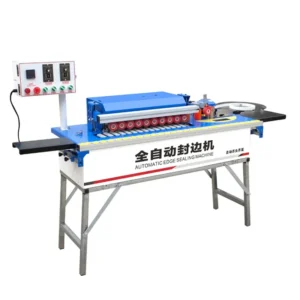
| Product Type | Automatic Edge Banding Machine |
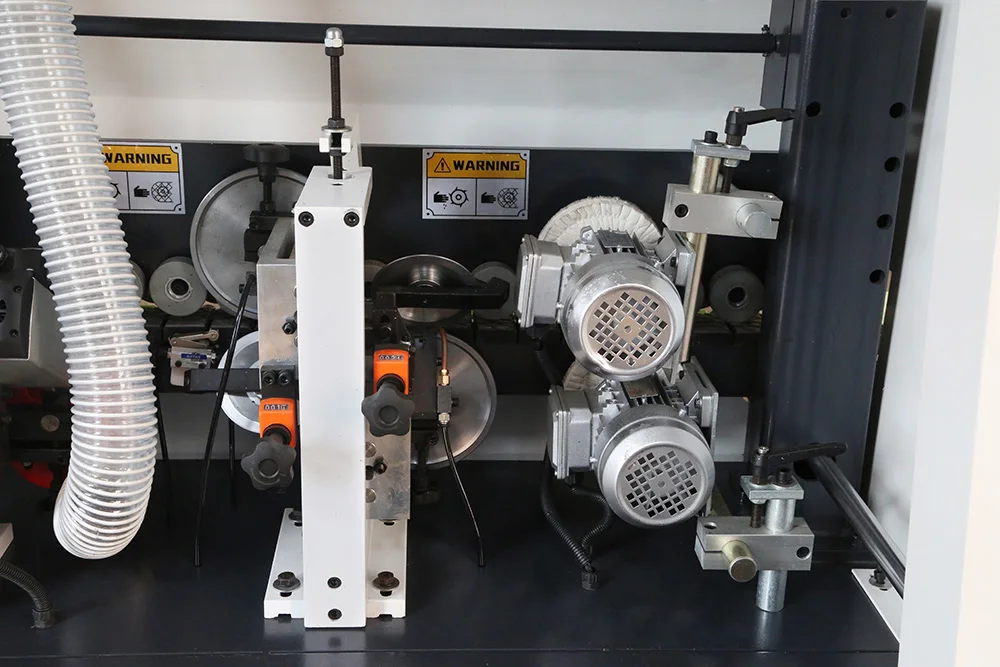
| Main Functions | Gluing, End Trimming, Rough Trimming, Fine Trimming, Scraping, Buffing |
| Panel Thickness Range | 10-55 mm |
| Edge Thickness Range | 0.3-3.5 mm |
| Min. Panel Width | 40 mm |
| Min. Panel Length | 60 mm |
| Conveyor Belt Speed (Feed Speed) | 18 m/min |
| Working Pressure | 0.6-0.8 MPa |
| Rated Power | 8.5 kW |
| Voltage | 380V / 3-phase (frequency to confirm 50Hz or 60Hz before dispatch) |
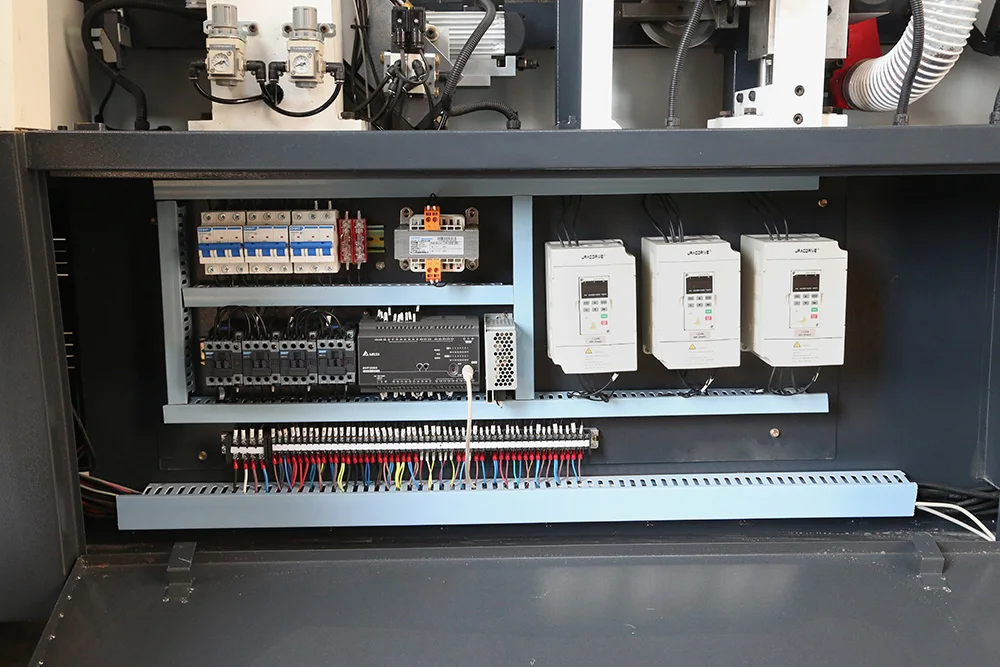
| Control System | Taiwan Delta PLC with Touch Screen |
| Inverter | JORAL (Switzerland brand) |
| Pneumatic Components | Taiwan AirTAC cylinder and safety valve |
| Electrical Components | Delixi/Chint air switch and contactor; Japanese Omron travel switch |
| Edge Material Compatibility | PVC, veneer (up to 4 cm width) |
| Net Weight | 1500 kg |
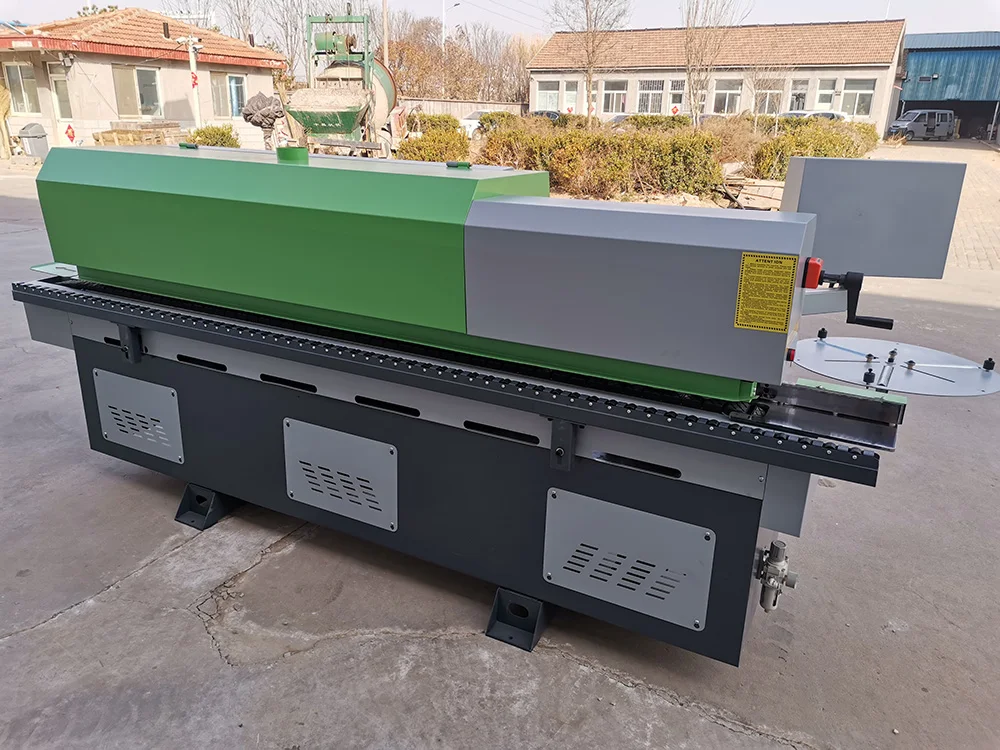
| Overall Dimensions (L×W×H) | 4200×1000×1500 mm |
| Warranty | 1 year |
Application Suitability
| Application | Material or Output |
|---|---|
| Custom cabinet door and carcass production | MDF and particleboard panels with PVC or veneer edge banding |
| Learning desk and office furniture panel finishing | Plywood and particleboard with 0.3-3.5 mm PVC edges |
| Small-batch wardrobe panel edge sealing | Melamine-faced boards with straight linear edges |
| Workshop replacement of manual banding | Boards from 10 mm to 55 mm thickness in linear feed runs |
Why the Voltage Question Must Come Before the Quotation
An Automatic Edge Banding Machine in stock ships within days, but a 380V unit arriving in a 415V facility sits silent until a transformer is sourced locally.
I have stood in workshops in West Africa watching brand-new machines gather dust because the electrical supply on site did not match what was built at the factory. A three-week wait for a step-down transformer turns a fast dispatch advantage into a delayed commissioning headache, and the operator frustration compounds daily [NEED_CITE: voltage and frequency standards by export market]. Confirming the target facility’s voltage and frequency before releasing an order eliminates this single most common cause of arrival-dead equipment.
Six Stations Covered in a Single Pass
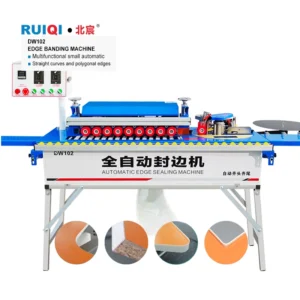
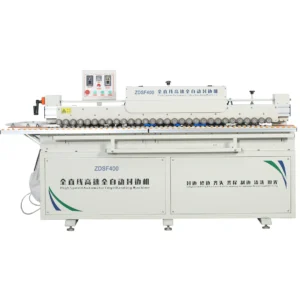
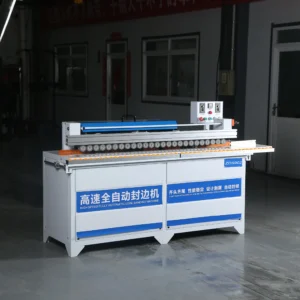
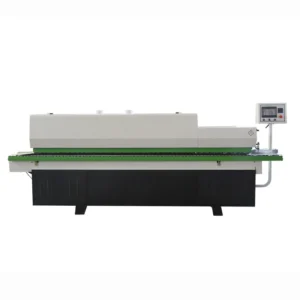
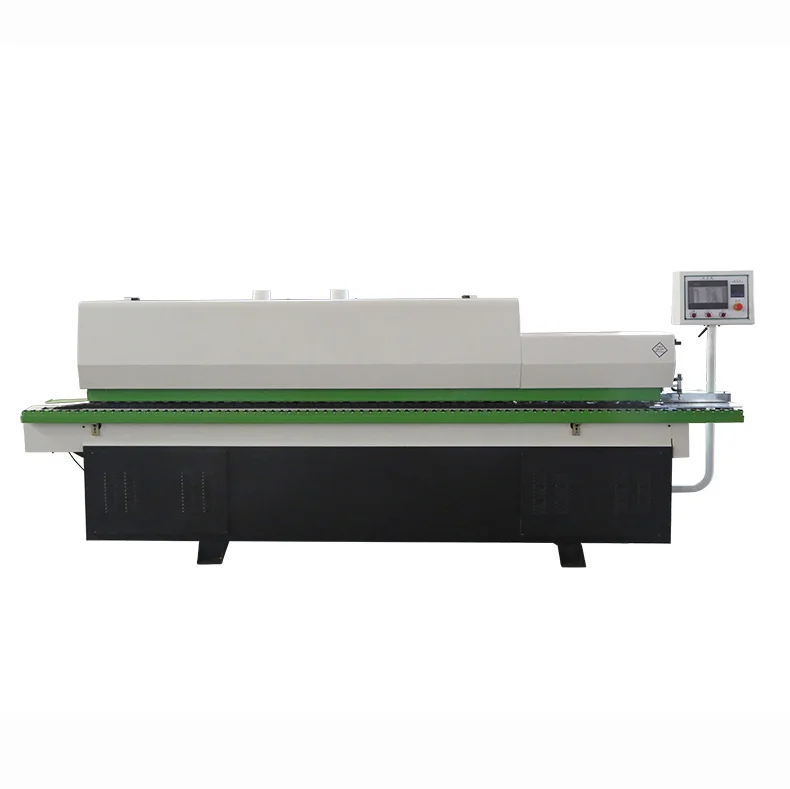
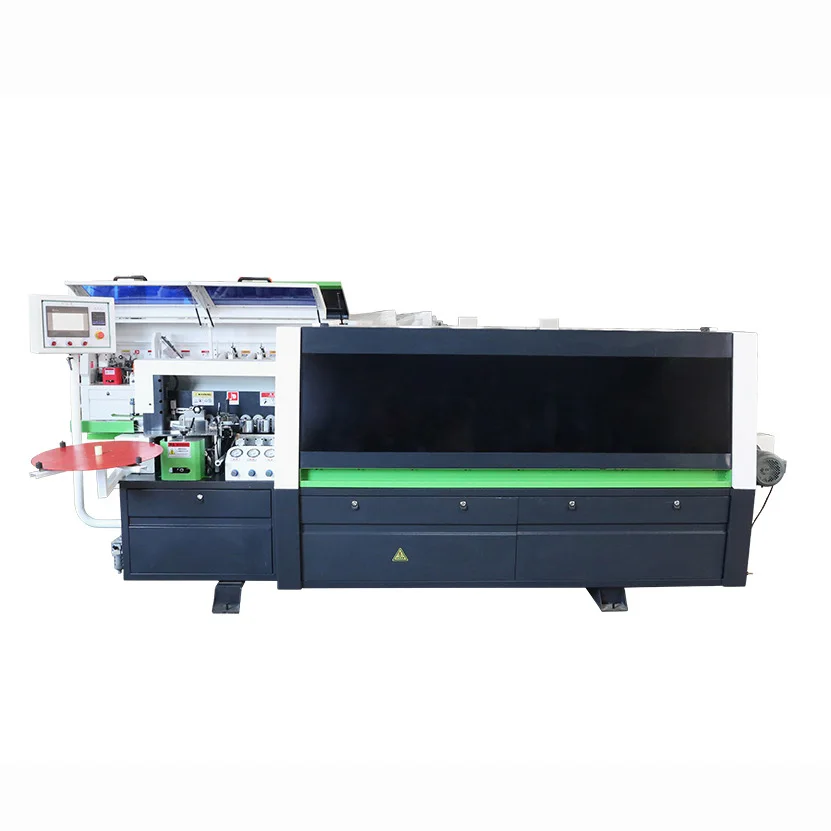
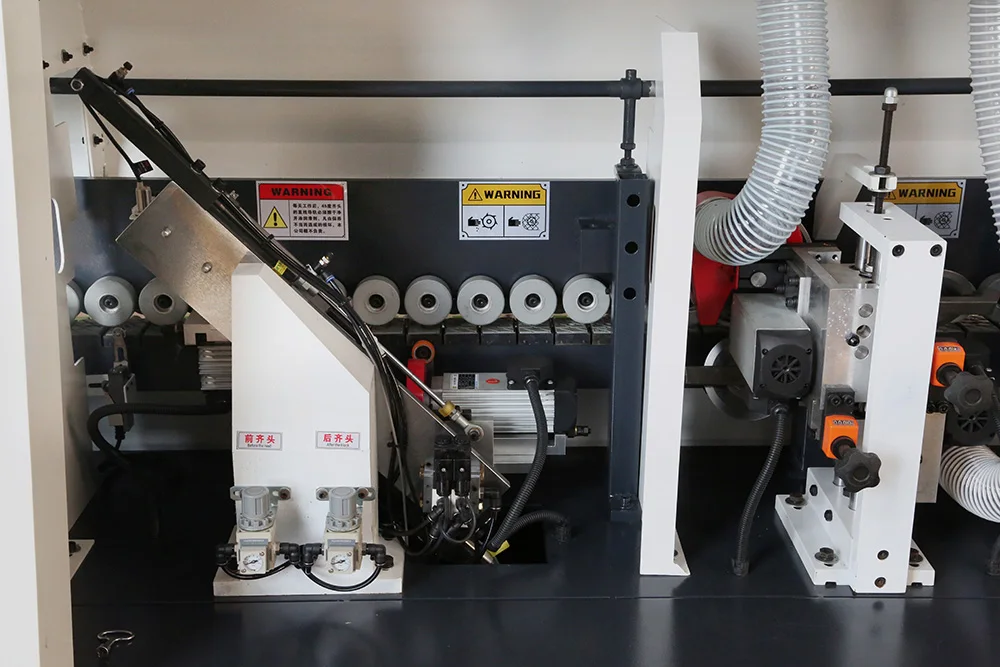
The ZDS368A sequences gluing, end trimming, rough trimming, fine trimming, scraping, and buffing along one conveyor path, so a panel enters raw-cut and exits with a finished edge ready for assembly. For a small-to-mid furniture workshop replacing a manual or semi-automatic banding step, this consolidation removes the intermediate handling and re-positioning that introduces edge misalignment. An Automatic Edge Banding Machine in stock with this station count means a cabinet maker can send panels through once and move them directly to boring or hardware fitting.
Control Interface and Component Traceability
The Taiwan Delta PLC touch screen gives operators a visual panel for feed speed, glue temperature, and station on/off toggles, reducing the time spent reading cryptic indicator lights during changeover. Behind the panel, AirTAC pneumatic cylinders handle the trimming and scraping actuation while Omron travel switches register panel position for each station trigger. When a distributor stocks this configuration, the component brands are recognizable to local electricians and pneumatic technicians, which shortens fault diagnosis once the machine is on a customer’s floor [NEED_CITE: PLC and pneumatic component serviceability in export markets].
Reading the Specification Sheet Against the Shop Floor
The 10-55 mm panel thickness range covers most furniture-grade MDF, particleboard, and plywood used in cabinet and desk manufacturing, while the 40 mm minimum panel width allows narrow drawer-side and shelf-support strips to pass through without special jigs. Feed speed at 18 m/min suits batch runs where panel variety changes every few dozen pieces rather than continuous single-product runs; operators can load, inspect, and sort at a pace that keeps one person productive at the infeed and outfeed ends. The 0.3-3.5 mm edge thickness range accommodates thin PVC for cost-driven carcass work and thicker veneer for visible cabinet doors where edge appearance matters at assembly. Glue pot temperature and conveyor synchronization are managed by the PLC, so when an operator switches from 0.5 mm PVC to 2 mm veneer, the transition relies on preset parameters rather than manual timing adjustments.
What Happens When the Feed Speed and Panel Range Are Mismatched
Running panels outside the stated 10-55 mm thickness or pushing feed speed beyond the rated conveyor setting produces visible glue lines and inconsistent trimming, defects that only appear once the panel reaches assembly and no longer sits flat in the jig. Workshops that buy on price alone and then overload the machine with production volumes it was not configured for end up blaming the banding quality on the glue or the edge material, when the root cause is a throughput mismatch [NEED_CITE: edge banding defect causes in small-batch furniture production]. Confirming daily panel count and average board thickness before ordering prevents this mismatch from becoming a commissioning dispute.
Why Buyers Source This Model from Our Ready-Stock Channel
Stocked ZDS368A units are held with 380V three-phase wiring, and voltage confirmation with the buyer’s facility electrician happens before the crate is sealed, not after the bill of lading is issued. Pre-shipment testing runs actual MDF and particleboard samples through all six stations, and the output photos or video are shared with the buyer so edge quality is verified before the machine leaves the factory floor. Operation manuals and touch screen labels are prepared in the language the buyer’s operators will read, removing the commissioning stall that happens when a control panel arrives in an unreadable script. Single-unit orders are fulfilled from this channel without requiring a container-load commitment, which suits a distributor ordering a demonstration machine or a workshop adding its first automatic banding capability.
Documentation & Verification
- Factory test record showing glue line and trim quality on buyer’s specified panel thickness
- Electrical schematic with confirmed voltage and frequency for the destination facility
- Operation and maintenance manual prepared in the buyer’s agreed language
- Spare parts list covering scraper blades, trimming cutters, buffing wheels, and travel switches
- Packing photographs documenting crate reinforcement before container loading
Installation, Commissioning & Support
- Requires a level concrete floor capable of supporting 1500 kg across the 4200 mm frame length
- Dedicated 380V three-phase circuit with breaker rated above 8.5 kW continuous draw
- Arrives partially disassembled; user manual and video guide cover reassembly steps
- First-run commissioning includes glue temperature calibration and station timing alignment via PLC
- Remote video support available for initial parameter setup and operator familiarization
- Wear parts inventory recommendation provided based on buyer’s daily panel volume
Preparing a Dispatch-Ready Inquiry
To release a stocked unit quickly, share your facility’s confirmed voltage and frequency, the primary panel material and thickness range you run, and the language needed on the touch screen and manual. If you are a distributor evaluating a single sample unit for showroom demonstration, note whether your local network supports 50 Hz or 60 Hz so the inverter and motor are matched before packing.
Frequently Asked Questions
Q: How quickly can a stocked ZDS368A ship after order confirmation?
A: Once voltage, frequency, and manual language are confirmed with the buyer, the unit undergoes a pre-shipment test run and is typically released for freight booking within days. Actual transit time depends on the destination port and chosen shipping method, and door-to-door delivery quotes can be arranged at the time of order.
Q: My workshop runs on 415V or 220V three-phase — can the machine be adapted?
A: The stocked configuration is 380V three-phase, and frequency must be confirmed as 50 Hz or 60 Hz before dispatch. If your facility voltage differs, let us know the exact supply rating so we can advise whether the unit can be rewound or whether a transformer is required on site before the machine is crated.
Q: Does the touch screen support languages other than Chinese?
A: The Taiwan Delta PLC interface can be configured in English and other languages upon request. Confirm the operator language at the time of order so the screen labels and alarm messages are set before the pre-shipment test, avoiding delays during on-site commissioning.
Q: What spare parts should I order alongside the machine?
A: Scraper blades, fine trimming cutters, buffing wheels, and Omron travel switches are the primary wear items. A recommended first-order spare parts list is provided based on your estimated daily panel volume, and all components use recognizable brands available through regional industrial suppliers.
Q: Is on-site installation support available after delivery?
A: The machine ships with an assembly manual and video guidance for reassembly. Remote video support covers initial power-up, glue pot calibration, and station timing. For buyers requiring an engineer visit, availability and terms are confirmed at the order stage based on destination and schedule.