
Description
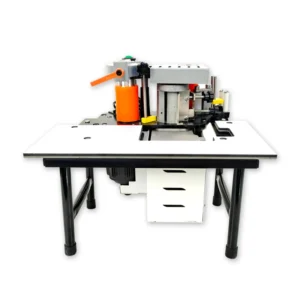
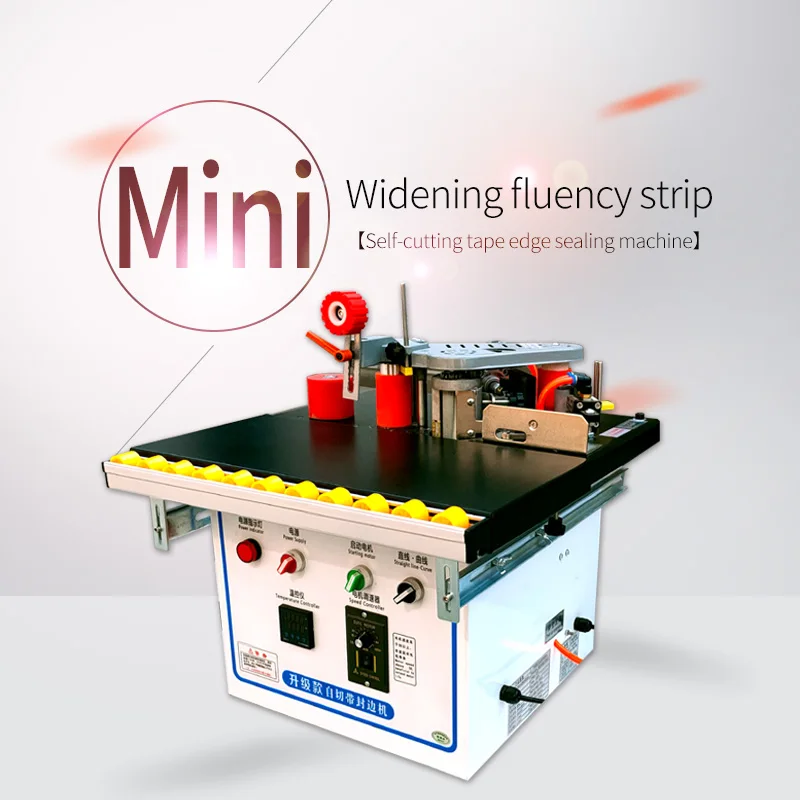
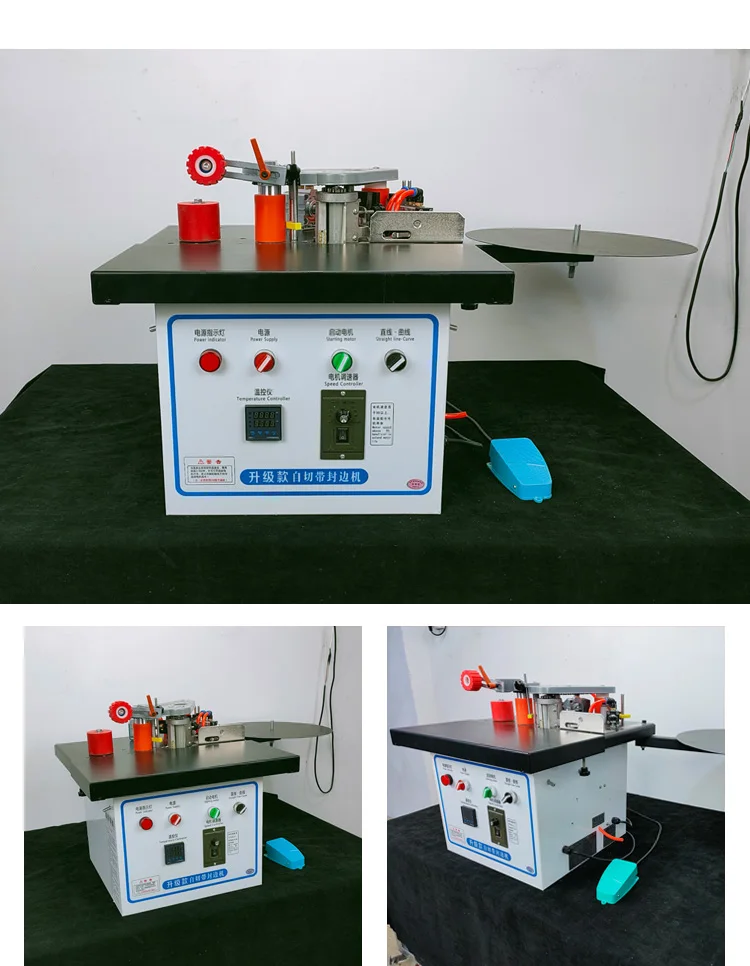
Ready-to-ship configuration — The ST-50 Automatic Edge Banding Machine arrives with voltage matched to your grid and the control panel in your language, tested on your actual panel material before dispatch.
Technical Specifications
| Parameter | Value |
|---|---|
| Model | ST-50 |
| Product Type | Automatic Edge Banding Machine |
| Total Power | 1000 W |
| Edge Power | 20 W |
| Voltage Options | 220V / 380V / Customizable |
| Glue Pot Capacity | 1000 ml |
| Edge Banding Thickness | 0.3–3 mm |
| Edge Banding Height | 0–50 mm |
| Minimum Sheet Length | 25 cm |
| Minimum Sheet Width | 3 cm |
| Air Source Pressure | 0.5–0.8 MPa |
| Product Size | 50 × 50 × 47 cm |
| Product Weight | 22 kg |
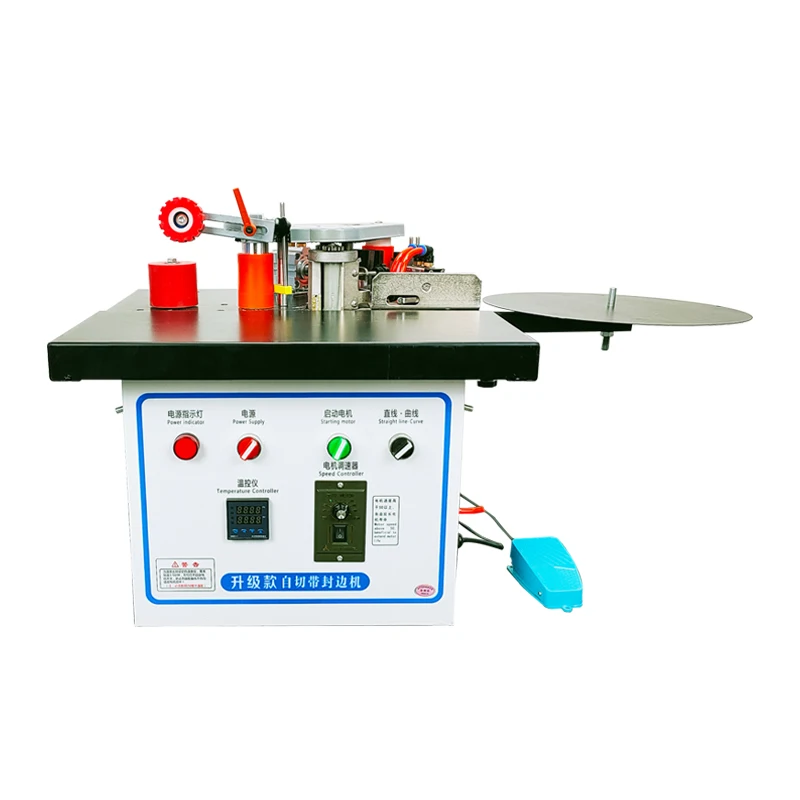
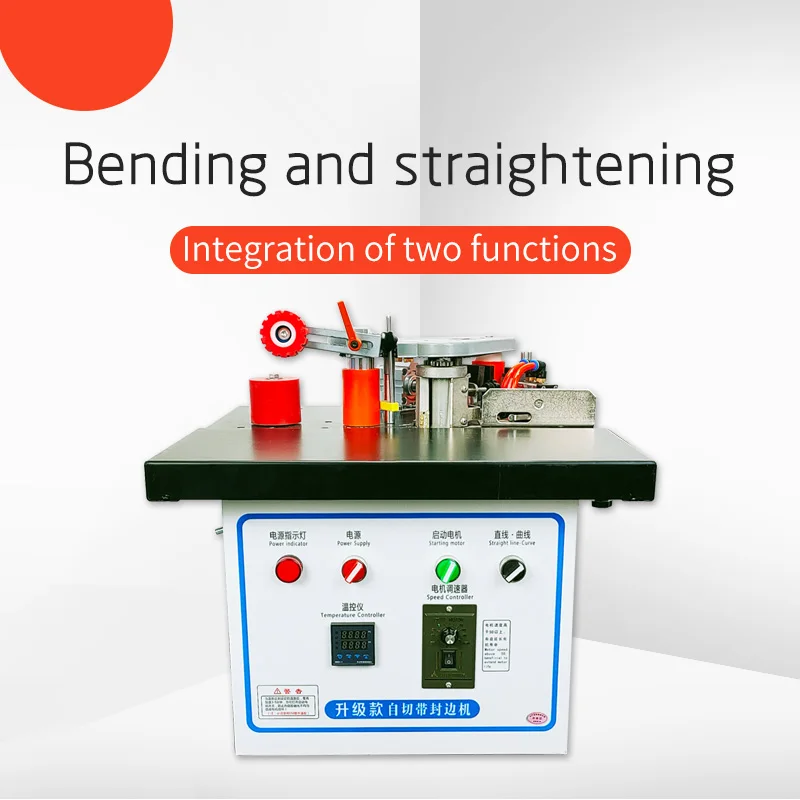
| Key Features | Curved and straight edge banding, multilingual control panel, interchangeable plug types (EU, USA, AU, UK) |
Application Suitability
| Application | Material or Output |
|---|---|
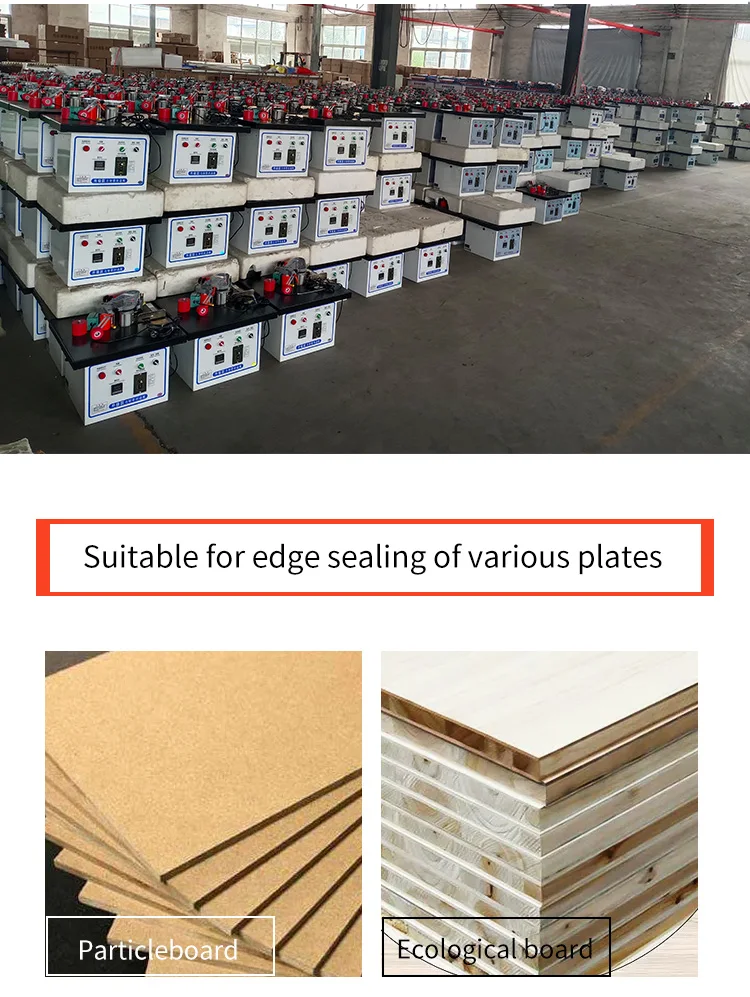
| Small workshop edge sealing | MDF, particleboard, plywood panels for custom cabinet doors and shelving |
| On-site furniture repair | Ecological board and solid wood board for restoration and refurbishment work |
| Home decoration production | PVC and melamine edge banding on curved and straight profiles |
| Joinery startup operations | Small-batch plywood and particleboard for bespoke furniture pieces |
Why the Voltage Question Must Be Answered Before Dispatch
An edge bander wired for the wrong frequency will overheat its motor and destroy the glue pot thermostat within the first week of operation.
I remember a batch of edge banders we sent to the Middle East. The buyer tested them on particleboard at our factory and everything looked fine. When they switched to MDF density board at their own site, the glue temperature parameters were wrong for the local power frequency. The glue line was visible on every piece. The entire batch had to be pulled back, recalibrated, and resent — a delay that cost them three weeks of production and our team an embarrassing amount of rework. That situation taught me to always confirm actual voltage and frequency before any Automatic Edge Banding Machine in stock leaves our loading dock [NEED_CITE: voltage and frequency standards by export market].
Single-Unit Dispatch Without Minimum Order Delays
Workshops moving off manual edge sealing rarely need a full production line on day one. The ST-50 is positioned for exactly that transition point — a compact, self-contained unit that handles both curved and straight profiles without requiring auxiliary conveyor systems or dust extraction integration. You place one order, and the machine ships independently. This matters for joinery startups and furniture repair shops where floor space and capital are both constrained, and where waiting weeks to fill a container minimum simply delays revenue.
What the 1000 ml Glue Pot Means for Your Daily Output
Refilling a glue pot mid-run means stopping production, waiting for the new charge to reach working temperature, and then recalibrating the feed. The 1000 ml capacity on this Automatic Edge Banding Machine in stock supports extended production runs between refills, which translates to fewer thermal cycles on the heating element and more consistent edge adhesion across your workday. For a small workshop running cabinet fronts or shelving units, this capacity typically covers a full morning or afternoon session without interruption [NEED_CITE: thermal cycling effects on edge banding adhesive consistency].
How Thickness Range and Panel Dimensions Define Your Workflow
The 0.3–3 mm edge banding thickness range covers PVC, veneer, and melamine strips — the three materials most small furniture operations rotate through. The 0–50 mm edge banding height accommodates standard panel thicknesses from thin 3 mm backing boards up to 50 mm solid wood slabs. Where this matters practically: if your work involves both 18 mm particleboard carcasses and 25 mm MDF door fronts, the ST-50 handles both without fixture changes. The 25 cm minimum sheet length and 3 cm minimum width set the lower boundary for viable workpieces — anything smaller than that typically requires hand application regardless of machine capability.
The Cost of Skipping Voltage and Material Confirmation
When a buyer orders an edge bander without specifying their panel material, the factory defaults to a standard glue temperature profile calibrated for particleboard. Switch to MDF or plywood without adjusting that profile, and the glue either fails to bond or squeezes past the edge strip leaving visible residue. I have seen this exact mismatch delay projects across multiple export markets. The machine itself is not at fault — the configuration simply was not matched to the actual substrate. This is why we now ask every buyer for their primary material before confirming any order, even for ready-stock units that could ship the same day [NEED_CITE: MDF and particleboard glue temperature differential requirements].
Why Procurement Through This Channel Works
Our engineering team provides a formal configuration proposal within 24 hours of receiving your inquiry, specifying voltage, frequency, plug type, and control language — not just a model number and a price. The ST-50 ships with a pre-shipment test record on your actual panel material, so you see documented proof of edge quality before the crate closes. Voltage confirmation is recorded in writing before production or dispatch, preventing the grid-mismatch failures that plague unverified orders. Every unit includes a spare parts list from day one, so consumables and wear items are reorderable without reverse-engineering part numbers from a foreign-language manual [NEED_CITE: CE machinery directive requirements for industrial equipment].
Documentation & Verification
- CE declaration of conformity covering the ST-50 edge banding machine
- Electrical schematic confirming your specified voltage and plug configuration
- Factory test record documenting edge quality on your panel material
- Operation and maintenance manual in your agreed language
- Packing photographs showing the unit secured before crate closure
Installation, Commissioning & Support
- Requires a dedicated 220V or 380V circuit matching your confirmed frequency specification
- Compact 50 × 50 × 47 cm footprint fits standard workshop benches without foundation work
- Arrives fully assembled with your selected EU, USA, AU, or UK plug pre-installed
- 0.5–0.8 MPa air source connection needed — standard workshop compressor covers this requirement
- Control panel set to your chosen language at factory before dispatch for immediate operation
What We Need to Configure Your Order
To match the ST-50 to your workshop, tell us your primary panel material and thickness, the edge banding strips you use most often, and your local voltage and frequency. If you are replacing a manual process or scaling from a smaller machine, let us know your expected daily volume so we can confirm this unit fits your throughput requirements.
Frequently Asked Questions
Q: Is the ST-50 in stock and what is the dispatch lead time?
A: The ST-50 Automatic Edge Banding Machine in stock is available for single-unit dispatch. Once your voltage, frequency, plug type, and control language are confirmed, the unit undergoes a pre-shipment test on your panel material. Typical dispatch follows within a short window after configuration verification is complete.
Q: Can I order a single unit, and is there a minimum order quantity?
A: Single-unit orders are the standard for this model. There is no minimum order quantity requirement. The ST-50 is designed for workshops that need one reliable edge bander rather than a full production line, and the ordering process reflects that simplicity.
Q: Will the machine arrive set to my local voltage with the correct plug type?
A: Yes. Voltage and frequency are confirmed in writing before dispatch. The machine is wired and tested at the specified voltage, and the plug is fitted to your regional standard — EU, USA, AU, or UK — so it is operational upon arrival without adapter conversion.
Q: What edge banding materials and thicknesses does this model handle?
A: The ST-50 handles PVC, veneer, and melamine edge banding strips from 0.3 mm to 3 mm thick, applied to both curved and straight profiles. It is suited to MDF, particleboard, plywood, ecological board, and solid wood board within the 0–50 mm height range.
Q: What shipping options are available, and how is the machine protected in transit?
A: Shipping options are quoted at order confirmation based on your destination. The 22 kg unit is packed with internal bracing to protect the glue pot and feed mechanism. Packing photographs are provided before dispatch so you can verify securing and protection before the shipment leaves our facility.