

Description
Ready to Ship — XZF450 units are packed and staged in our Shandong warehouse, dispatched with confirmed voltage, plug type, and language on the control panel before the crate leaves the floor.
Technical Specifications
| Parameter | Value |
|---|---|
| Model | XZF-450 |
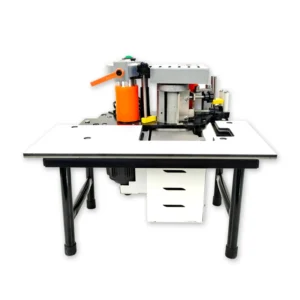
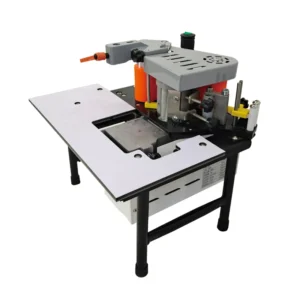
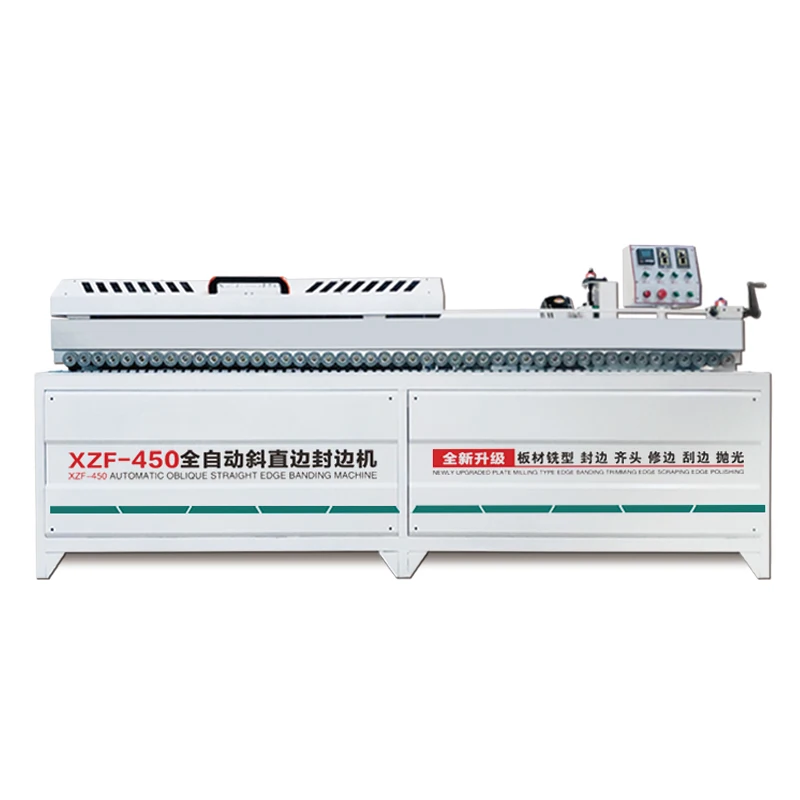
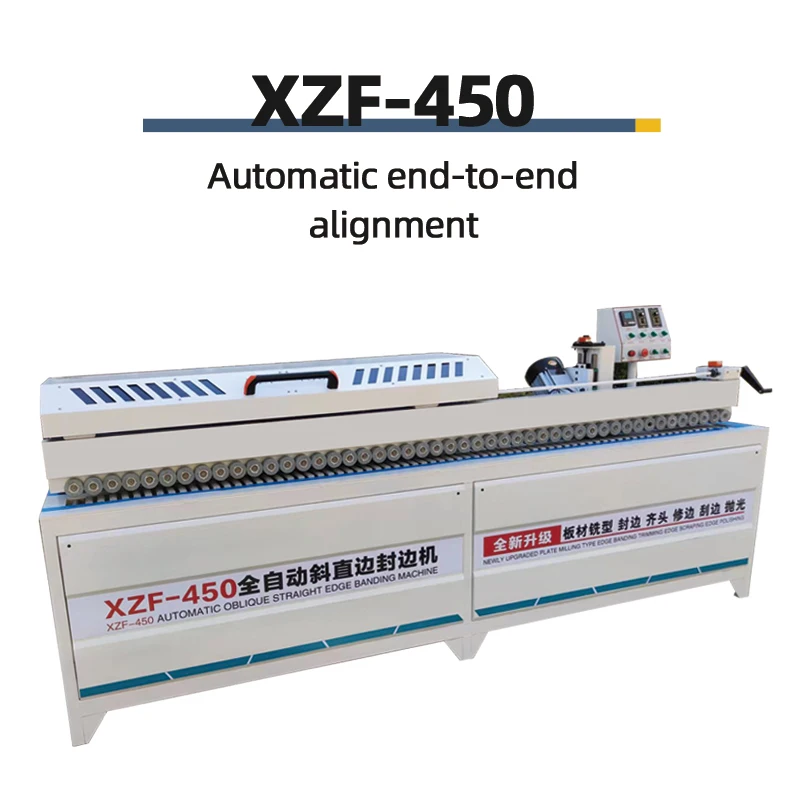
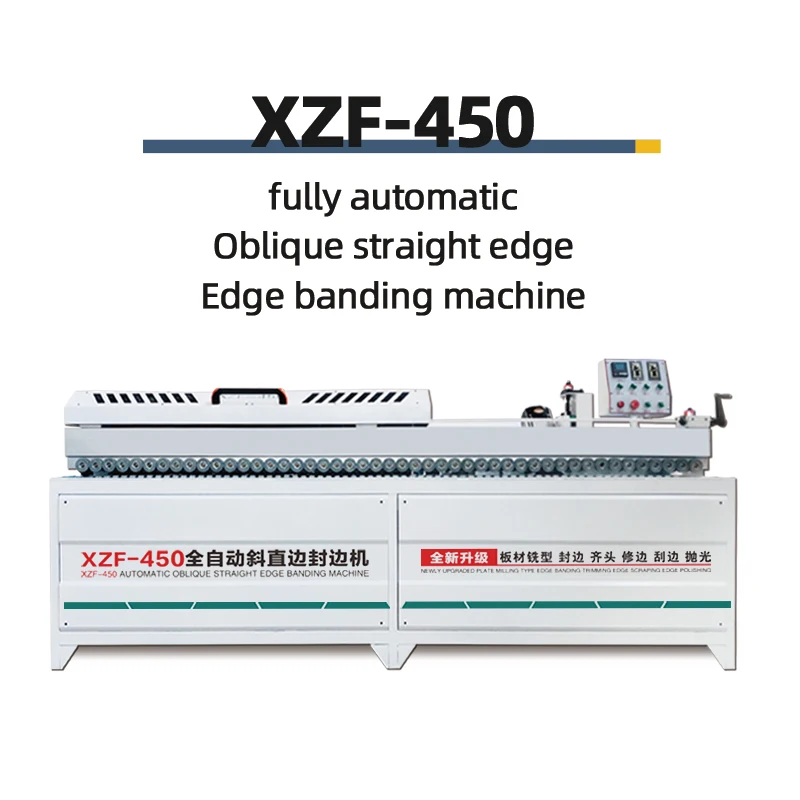
| Product Type | Automatic Oblique Straight Edge Banding Machine |
| Total Installed Power | 9.5 kW |
| Pre-milling Motor | 4 kW |
| Trimming Power | 2.2 kW × 2 |
| Polishing Power | 0.4 kW × 2 |
| Edge Feeding Power | 0.16 kW |
| Vacuum Power | 550 W |
| Transmission Power | 180 W |
| Feed Speed | 0–12 m/min |
| Voltage Options | 380V / 415V (configurable) |
| Air Source Pressure | 0.5–0.7 MPa |
| Glue Pot Capacity | 4000 ml |
| Minimum Sheet Length | 300 mm |
| Minimum Sheet Width | 150 mm |
| Edge Banding Height Range | 0–50 mm |
| Edge Banding Thickness Range | 0.3–3 mm |
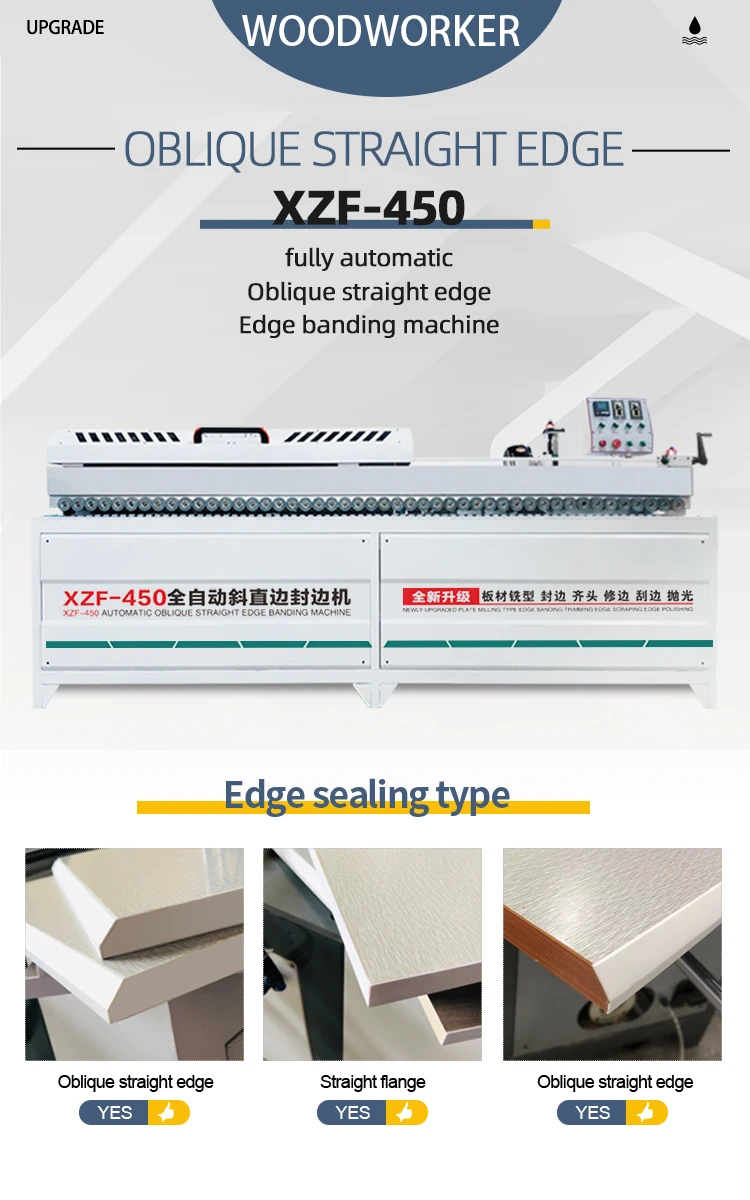
| Standard Process Stations | Pre-milling, 30°/45°/60° oblique and straight banding, trimming, scraping, polishing, high-power vacuuming |
| Machine Dimensions | 3000 × 650 × 1350 mm |
| Machine Weight | 430 kg |
| Control Panel Language | Chinese and English (customizable to Spanish or other languages) |
| Plug Options | EU, USA, AU, UK |
Application Suitability
| Application | Material or Output |
|---|---|
| Cabinet door and carcass panel edge banding | MDF, melamine-faced board, particleboard |
| Custom furniture straight and beveled edge finishing | Plywood, blockboard, solid wood panels |
| Polymer door profile edge sealing | PVC and polymer composite profiles |
| Small-batch oblique edge treatments | 30°, 45°, and 60° angled workpiece edges |
| Medium-volume production line integration | Furniture and cabinet manufacturing workshops |
Why Voltage Confirmation Must Happen Before the Crate Is Sealed
An Automatic Edge Banding Machine in stock is only useful if it powers on the day it arrives at your workshop. We have seen machines land at foreign ports with a 380V/50Hz motor bolted in, while the buyer’s facility runs 415V/60Hz — the motor overheats within the first shift, the inverter faults, and the machine sits idle while a replacement is sourced across an ocean. [NEED_CITE: voltage and frequency standards by export market]
Every XZF-450 order is matched to your facility’s exact voltage and frequency before dispatch, with the correct plug type fitted and documented on the electrical schematic.
I once walked into a customer’s shop where a freshly delivered edge bander was still wrapped in plastic three weeks after arrival. The electrician had refused to energize it because the nameplate did not match the local supply, and the importer had not asked the question before shipping. That downtime cost the buyer more than any price difference between suppliers ever could. [NEED_CITE: CE machinery directive requirements for industrial equipment]
Stock Availability and Dispatch Readiness
The XZF-450 is maintained in ready-to-ship inventory, meaning your order enters the packing queue rather than the production queue. This matters when a furniture workshop needs to fill a gap in the line after an older machine goes down, or when a cabinet maker has a seasonal order surge and cannot absorb a multi-week build cycle. Each stocked unit undergoes a pre-shipment functional run before crating.
What "Ready Stock" Actually Covers
Having an Automatic Edge Banding Machine in stock does not mean shipping a generic unit and hoping it fits your requirements. The glue pot, the pre-milling station, and the oblique banding heads are all assembled and calibrated at the factory. What still requires confirmation is your voltage, your preferred plug standard, and the language on the control panel — all of which are adjusted in the pre-shipment stage so the machine arrives configured, not just available. [NEED_CITE: industrial equipment export compliance and documentation standards]
Reading the Specs That Matter on the Floor
The 4 kW pre-milling motor is sized to remove saw marks and minor edge damage from panels that have been cut on sliding table saws, which directly affects how well the edge band adheres downstream. If the pre-mill is underpowered, the operator compensates by slowing feed speed or making multiple passes — neither of which is sustainable in a production rhythm.
The feed speed range of 0–12 m/min gives the operator latitude to slow down for thick PVC edge banding on contoured workpieces and speed up for thin melamine strips on standard rectangular panels. Matching feed speed to banding material and thickness is what separates a clean trimmed edge from one that chips or leaves visible glue lines.
With a 4000 ml glue pot, the XZF-450 can run a sustained batch without stopping for a refill — important when you are edge banding hundreds of cabinet sides in a single shift. A smaller pot forces the operator to break rhythm every few dozen panels to top up adhesive, and each temperature fluctuation risks inconsistent glue spread.
The 30°, 45°, and 60° oblique banding capability means one machine handles beveled door edges and standard 90° carcass panels without requiring a secondary station or a separate dedicated machine.
The Real Cost of Skipping Pre-Shipment Verification
Buyers who focus only on delivery speed sometimes skip voltage confirmation or forget to specify their edge banding material thickness range. The machine arrives, the plug does not fit, and an adapter is jury-rigged — which introduces a resistance point that can trip breakers under the 9.5 kW total load. In other cases, the operator loads 3 mm solid wood banding into a machine that was never told to expect that thickness, and the trimming knives chatter against material they were not set up to handle. [NEED_CITE: common causes of edge banding machine commissioning failures]
These are not manufacturing defects. They are configuration gaps that a structured pre-shipment checklist prevents entirely.
Why Buyers Source This Machine Through Our Stock Channel
Stocked inventory means your XZF-450 is allocated from completed production, not scheduled into a build slot — this shortens the timeline between purchase order and bill of lading.
Voltage and plug customization are handled before crating, so the machine matches your workshop’s electrical infrastructure on arrival rather than requiring an on-site electrician to rewire the incoming supply.
The control panel language is set to your operator’s requirement — English, Spanish, or another specified language — so commissioning does not stall because the crew cannot read the interface.
A factory test record is generated on panel stock within the machine’s stated thickness range, giving you evidence that the unit performed before it left Shandong.
Pre-shipment photographs of the packed crate and internal securing are shared before the container is sealed, so you know exactly how your Automatic Edge Banding Machine in stock was prepared for transit.
Documentation & Verification
- Electrical schematic with confirmed voltage and frequency for your facility
- Factory test record run on your specified panel thickness and edge banding material
- Operation and maintenance manual in your chosen control panel language
- Spare parts list with part numbers for consumable trimming and scraping blades
- Packing photographs showing crate securing and moisture protection before seal
Installation, Commissioning & Support
- Requires a level concrete floor with clearance for the 3000 × 650 mm footprint plus operator access on both sides
- Dedicated 380V or 415V circuit rated for the 9.5 kW total draw, with proper earth bonding
- Arrives partially assembled; conveyor and dust shroud require on-site fitting and alignment
- First-run parameter setup covers pre-mill depth, glue temperature, and trimming knife offsets for your specific board
- Operator training covers feed speed adjustment across the 0–12 m/min range for different edge banding thicknesses
- Consumable spare blades and scraper inserts ship with the initial order for early maintenance cycles
What to Include with Your Inquiry
To move from inquiry to dispatch efficiently, provide your facility’s voltage and frequency, the edge banding materials and thicknesses you run most often, and whether your panels arrive pre-cut or require pre-milling on this machine. If your workshop has a compressed air system, confirm the available pressure at the point of connection so we can verify compatibility with the 0.5–0.7 MPa requirement.
Frequently Asked Questions
Q: Is the XZF-450 currently in stock, and how soon can it ship?
A: The XZF-450 is maintained in ready-stock inventory for dispatch without a full production cycle. Once your voltage, plug type, and control panel language are confirmed, the unit enters pre-shipment testing and packing. Actual ship date depends on your port and chosen freight method, and we provide the timeline at quotation stage.
Q: My workshop runs 220V/60Hz — can this machine be adapted?
A: The XZF-450 is configurable across voltage options including 380V and 415V as standard. If your facility operates on a different supply, confirm the exact voltage, phase, and frequency at inquiry stage so we can assess motor and transformer compatibility before the order is finalized.
Q: Does the control panel support English or other languages?
A: The control panel ships in Chinese and English by default. Spanish and other languages can be configured upon request. Specify your preferred language when placing the order so the correct firmware is loaded before the pre-shipment test run.
Q: Will this machine handle my panel and edge banding dimensions?
A: The XZF-450 accepts sheets from 300 mm minimum length and 150 mm minimum width, with edge banding heights up to 50 mm and thicknesses from 0.3 to 3 mm. If your typical workpieces fall near the upper or lower limits of these ranges, share your exact dimensions so we can confirm suitability.
Q: How is a single machine packed and shipped for international delivery?
A: Each XZF-450 is secured in a crate with internal bracing and moisture protection. Packing photographs are shared before sealing. Shipping method — less-than-container or full container — depends on your order volume and destination port, and is confirmed during the quotation process.