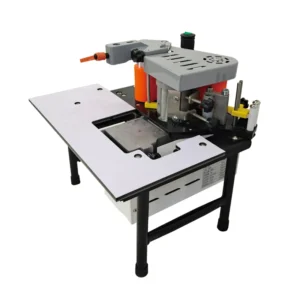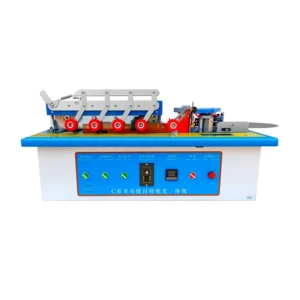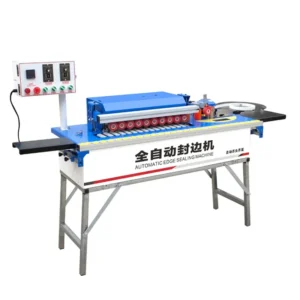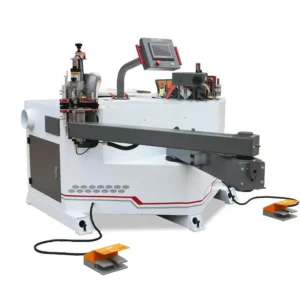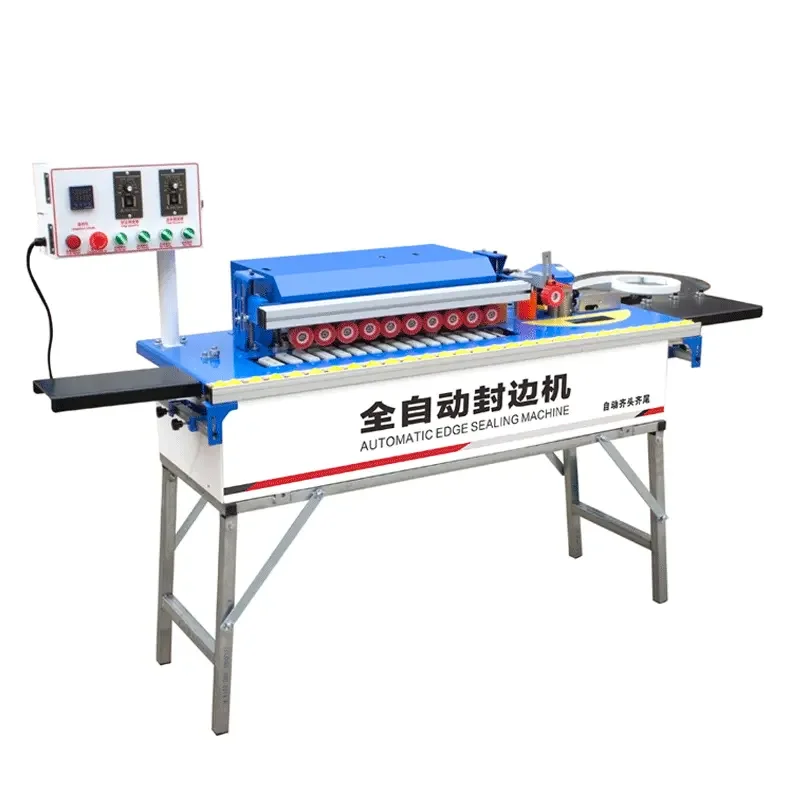
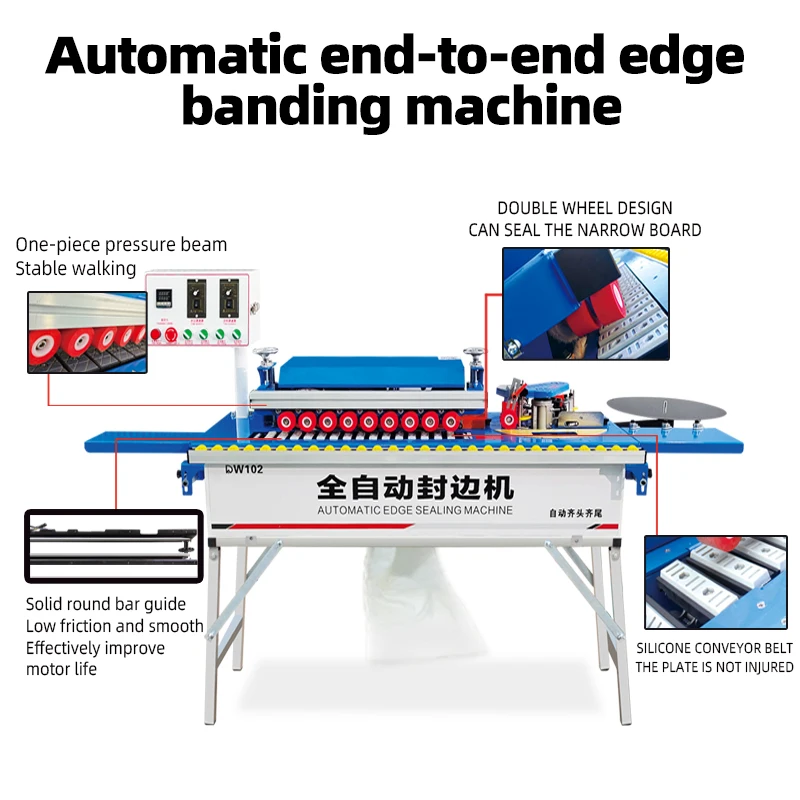
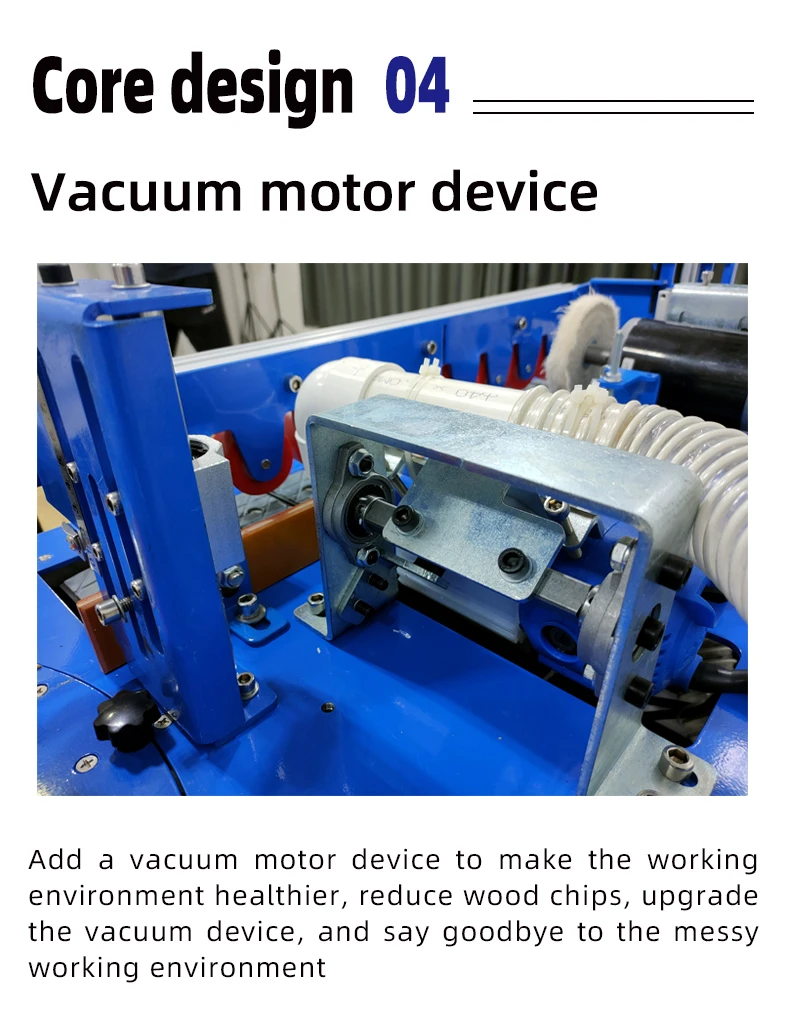
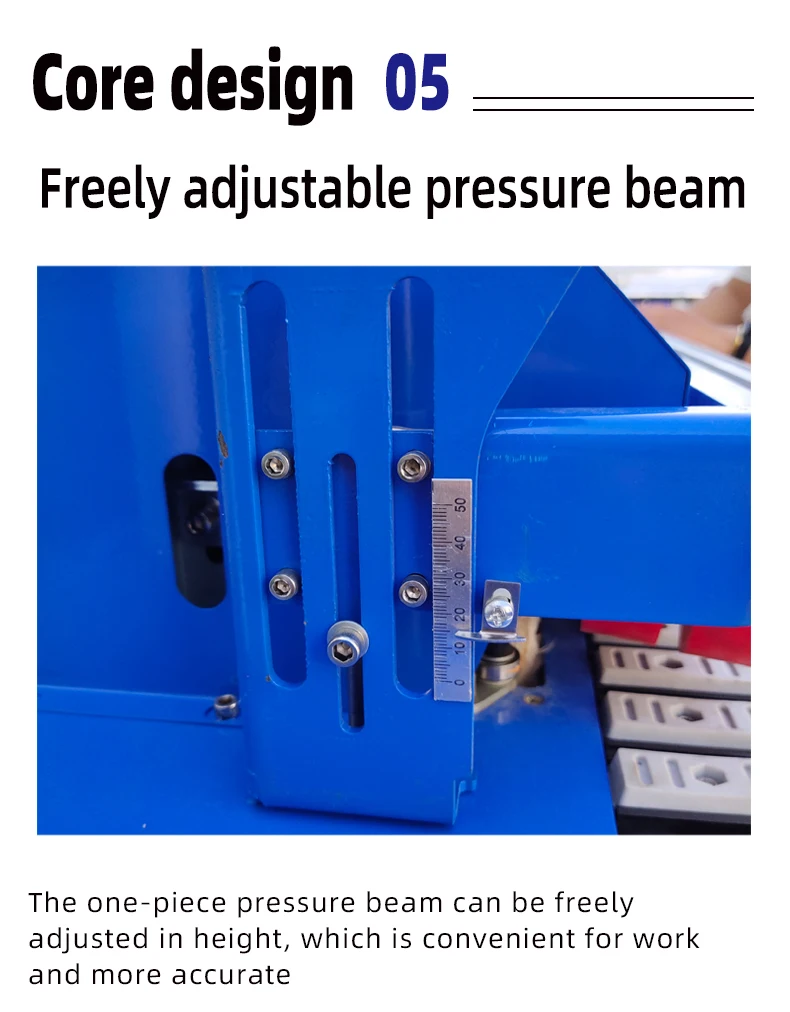
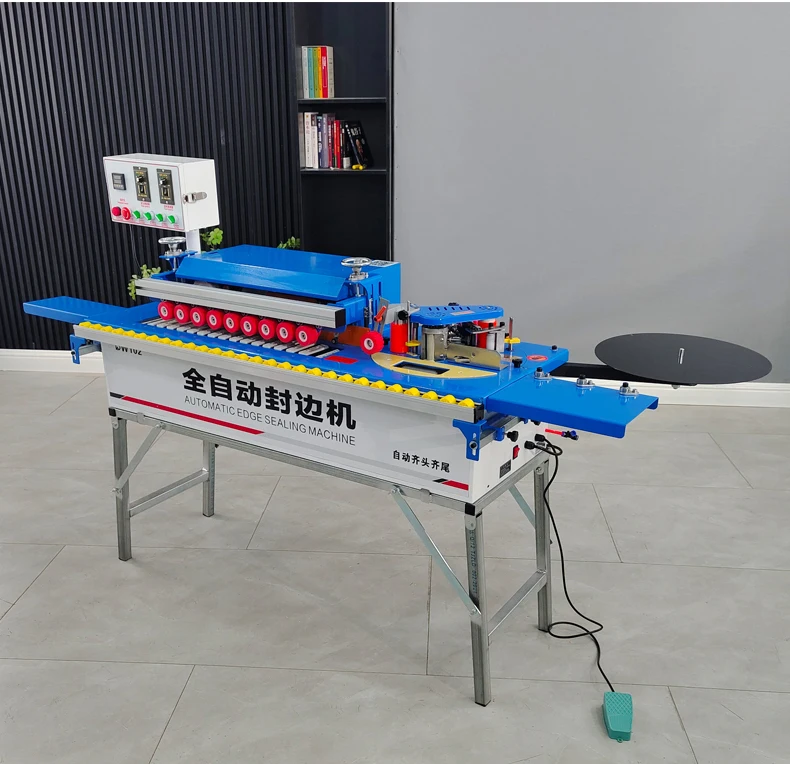
Description
Stock Verified Before Dispatch — every DW102 Semi-Automatic Edge Bander is voltage-confirmed and panel-tested against your specified material before it leaves the factory floor, avoiding the dead-on-arrival surprises that plague small workshop imports.
Technical Specifications
| Parameter | Value |
|---|---|
| Model | DW102 |
| Product Type | Semi-Automatic Edge Bander |
| Total Power | 3800W |
| Voltage | 220V / 380V / customizable |
| Trimming Power | 650W × 2 |
| Polishing Power | 180W × 2 |
| Vacuum Power | 1200W |
| Edge Banding Thickness | 0.3–3 mm |
| Edge Banding Height | 0–50 mm |
| Minimum Sheet Length | 250 mm |
| Minimum Sheet Width | 50 mm |
| Air Source Pressure | 0.5–0.8 MPa |
| Glue Pot Capacity | 1000 ml |
| Product Dimensions | 1280 × 470 × 690 mm |
| Product Weight | 75 kg |
| Key Features | Curved and straight edge banding, automatic head and tail cutting, edge trimming, polishing, vacuum hold-down |
| Certification | CE |
Application Suitability
| Application | Material or Output |
|---|---|
| Cabinet door edge finishing | MDF and melamine-faced particleboard |
| Custom furniture panel processing | Plywood and blockboard up to 50 mm thickness |
| Small-batch joinery production | Solid wood panels with PVC or veneer banding |
| Polymer door profile edging | PVC and composite door blanks |
| Curved panel finishing | Shaped MDF and plywood components with 0.3–3 mm banding |
Why Voltage Confirmation Must Come Before the Order
A Semi-Automatic Edge Bander in stock means nothing if the motor cannot start in your workshop.
I once watched a small cabinet shop receive a compact edge bander that matched every spec on paper — except the frequency. The 60 Hz supply at their site ran the 50 Hz motor hot within the first afternoon, and the glue pot thermostat drifted off its set point. The operator spent two weeks chasing edge adhesion problems before anyone thought to check the nameplate. Most buyers in this segment focus on feed speed and trimming stations, but electrical mismatch remains one of the most common reasons imported woodworking machines sit idle after delivery [NEED_CITE: voltage and frequency standards by export market]. When sourcing a Semi-Automatic Edge Bander in stock for quick dispatch, confirming the local supply configuration is the first checkpoint, not the last.
Dispatch Timing Without the Guesswork
Small workshops rarely have the luxury of multi-week production schedules. The DW102 Semi-Automatic Edge Bander in stock is positioned for buyers who need a single unit moved quickly — a replacement machine after an unexpected breakdown, or the first step away from hand-applied edging tape. Stock availability is confirmed at inquiry, and dispatch lead time is quoted alongside shipping options so that the decision to order and the decision to ship happen in the same conversation.
Curved and Straight in One Footprint
Workshops producing custom cabinet doors and shaped furniture components often run both straight panels and radiused pieces within the same batch. The DW102 handles curved and straight edge banding without requiring a secondary machine or manual template work. Combined with automatic head and tail cutting and vacuum hold-down, the operator loads the panel and manages the feed while the machine sequences glue application, trimming, and polishing. This matters for shops moving from manual contact-adhesive methods where consistency depends entirely on the worker’s hand pressure and timing.
What the Spec Sheet Actually Means on the Shop Floor
The 650W × 2 trimming motors provide enough spindle speed to clean-cut PVC and thin veneer banding without tear-out on the substrate edge — a detail that becomes visible when assembled cabinet boxes show chipped melamine at the joints. The 0.3–3 mm banding thickness range covers the two most common material families in small-to-medium furniture production: thin PVC for high-volume cabinet carcasses and thicker wood veneer for visible door fronts. The 1000 ml glue pot is sized for intermittent batch work rather than continuous line production, which keeps the unit compact at 128 × 47 × 69 cm and avoids the thermal management issues that arise when large glue volumes sit heated during low-throughput shifts. Air pressure between 0.5 and 0.8 MPa drives the pneumatic actuators for head-tail cutting and hold-down — a standard compressor range that most small workshops already have in place [NEED_CITE: typical compressed air requirements for small woodworking machinery].
The Cost of Skipping the Upstream Check
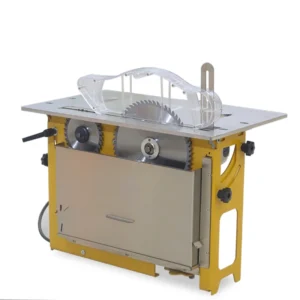
A semi-automatic edge bander sits in the middle of a workflow. If the sliding table saw upstream cuts panels with a 1 mm variation in width, the operator on the DW102 compensates by hand every single piece — and the trimming stations cannot fully correct an edge that arrives out of square. I have seen workshops blame the bander for poor adhesion when the real cause was a worn saw blade leaving a rough substrate edge that the glue could not wet out evenly. Before the machine ships, we confirm the panel condition it will receive, not just the output it should produce [NEED_CITE: substrate preparation standards for edge banding adhesion].
What You Get Beyond the Machine Itself
Voltage and frequency are locked to your site supply before production, not assumed from a regional default. The control panel language is set to the operator’s working language — Chinese, English, Spanish, or others on request — so commissioning does not stall over translated button labels. Every unit goes through a pre-shipment test run on panel stock matching your specified material and thickness, with photographs and a test record included in the documentation package. The DW102 carries CE certification, and the factory operates under ISO 9001 quality management with a four-stage inspection process covering incoming materials through final pre-shipment verification. For buyers ordering a single unit, OEM branding and private-label options are available without minimum-quantity barriers typical of larger production runs.
Documentation & Verification
- CE declaration of conformity matching the DW102 configuration you ordered
- Electrical schematic confirming voltage, frequency, and plug type for your site
- Factory test record on your specified panel material and edge banding thickness
- Pre-shipment photographs of the packed unit and crate markings
- Operation and maintenance manual delivered in your agreed language
Installation, Commissioning & Support
- Requires a level floor with 1280 × 470 mm footprint clearance and operator access on the feed side
- Dedicated circuit matching confirmed voltage and 3800W total load, with breaker sizing per local code
- Arrives as a single compact unit at 75 kg — two-person lift, no crane or forklift needed
- First-run parameter setting for glue temperature and pneumatic pressure against your banding material
- Spare parts list covering trimming blades, polishing wheels, and glue pot heating element included at shipment
Before You Request a Quote
Send us your panel material type, the edge banding thickness and material you plan to run, and the local voltage and frequency at your workshop. If you have an existing saw or panel sizing station upstream, share its output tolerance so we can confirm feed compatibility. Let us know your preferred control panel language and whether you need door-to-door shipping quoted to your facility.
Frequently Asked Questions
Q: What is the typical dispatch lead time for a stocked DW102?
A: Stocked units are prepared for dispatch once voltage, frequency, and control panel language are confirmed against your site requirements. A pre-shipment test run on your specified panel material is completed before crating. Transit time depends on the shipping method selected — sea freight, air freight, or express courier — and the destination country. We quote the full timeline at the order stage so there are no hidden delays between payment and delivery.
Q: How do you confirm voltage and plug type for my country?
A: At inquiry we ask for your workshop supply voltage, frequency, and plug standard. The DW102 supports 220V and 380V configurations with customization available for other requirements. An electrical schematic reflecting the confirmed configuration ships with the machine. This step is completed before production begins, not after the unit is built, so there is no rework or adapter dependency on arrival [NEED_CITE: CE machinery directive requirements for industrial equipment].
Q: Which edge banding materials work with this machine?
A: The 0.3–3 mm thickness range covers PVC, ABS, melamine, and wood veneer banding commonly used in cabinet and furniture production. The glue pot runs standard hot-melt EVA adhesive suitable for most substrate and banding combinations. For unusual materials such as thick solid wood lipping or pre-glued banding activated by heat, share the specification at inquiry so we can confirm compatibility before the order.
Q: Can the control panel be supplied in Spanish only?
A: Yes. The DW102 control panel is available in Chinese, English, Spanish, and other languages on request. We confirm the language at order stage and set it before dispatch. The operation manual and spare parts list are also delivered in the same language to ensure the operator can reference both the panel labels and the documentation without translation gaps.
Q: What spare parts should I order with the machine?
A: The standard shipment includes a spare parts list identifying wear items: trimming blades, polishing wheels, and the glue pot heating element. For workshops running daily production, we recommend ordering an additional set of trimming blades and polishing wheels at the time of purchase to avoid downtime waiting for replacements. Consumable quantities depend on your daily throughput and banding material hardness.