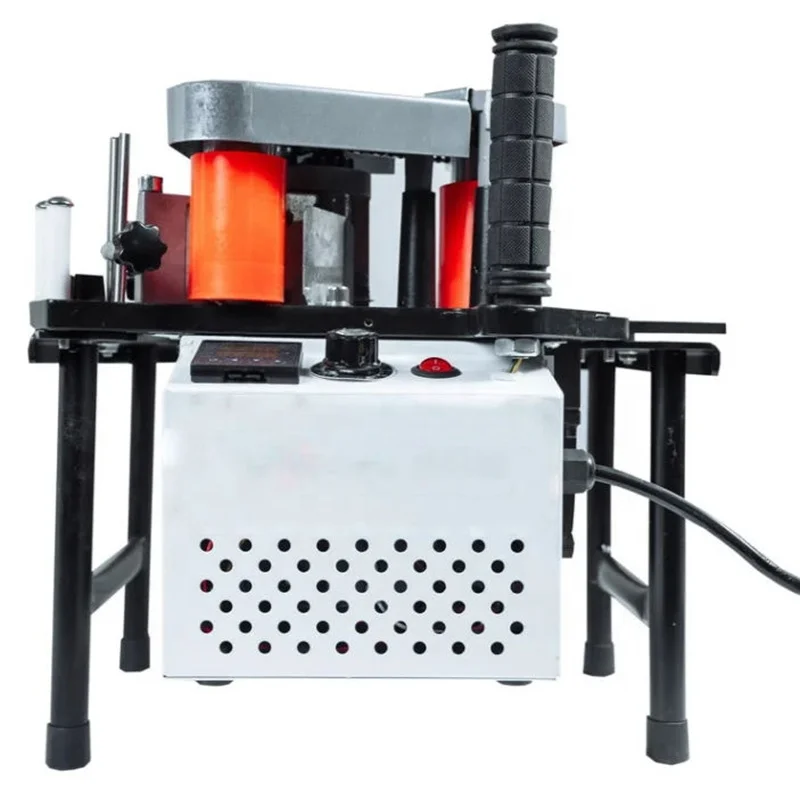
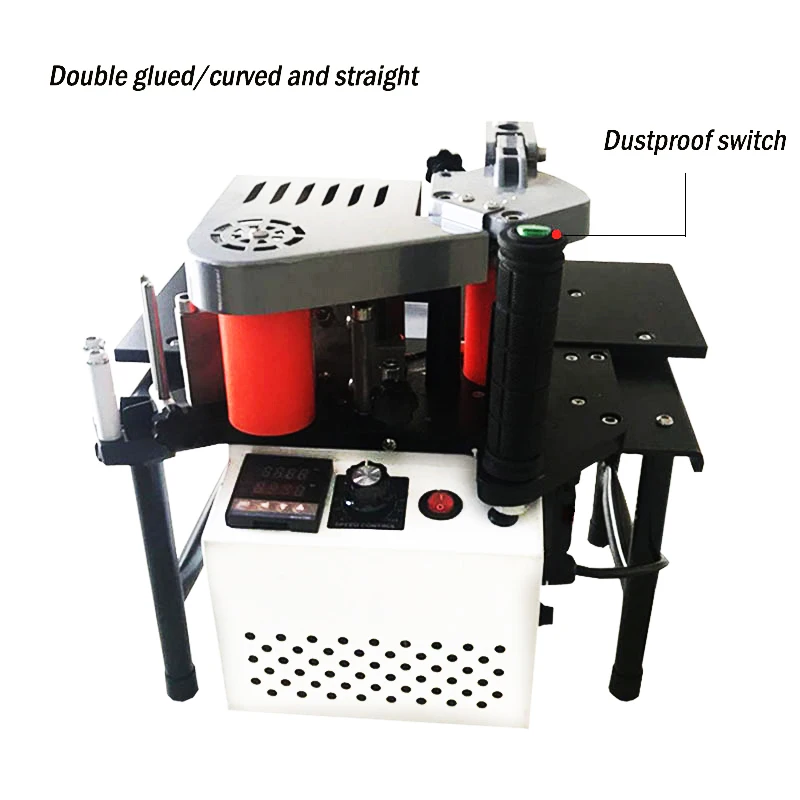
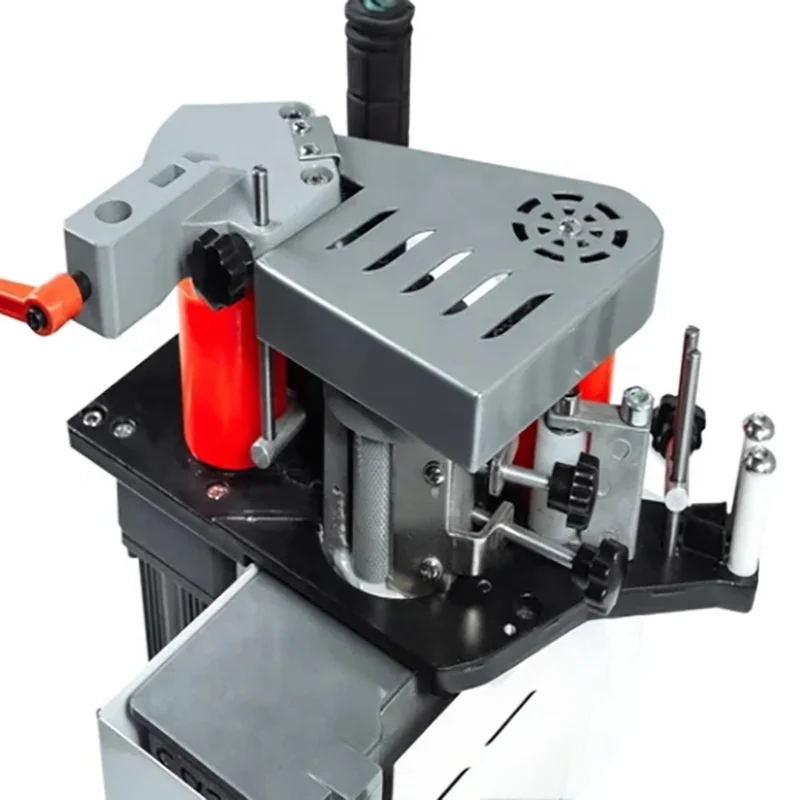
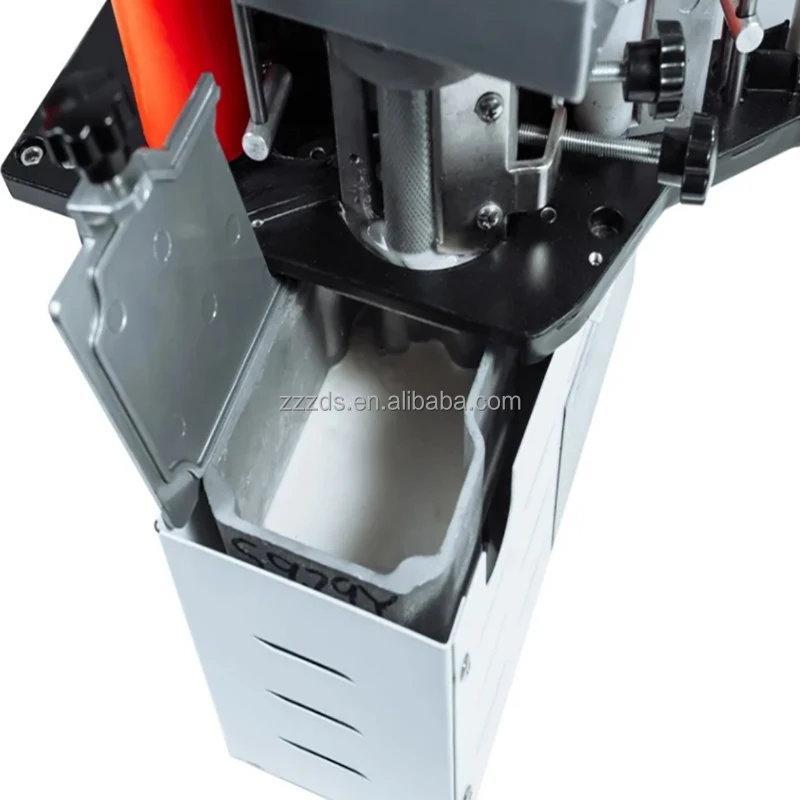
Description
Dispatch-Ready Guarantee — Every portable edge banding machine in stock ships only after plug type, voltage, and frequency match your site’s actual power supply, eliminating warehouse dead time.
Technical Specifications
| Parameter | Value |
|---|---|
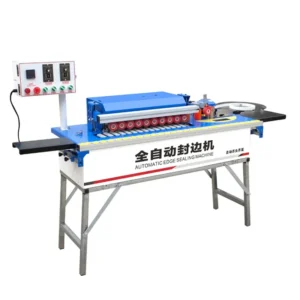
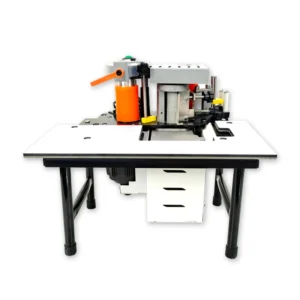
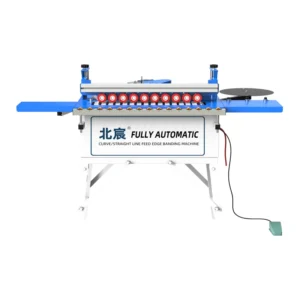
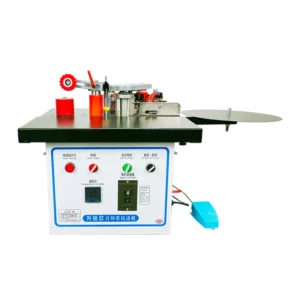
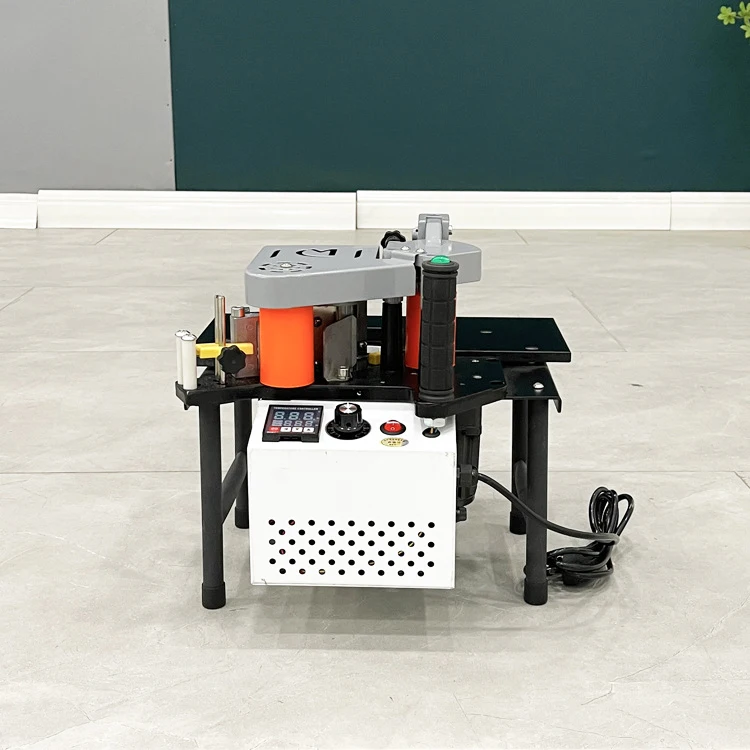
| Product Type | Portable Edge Banding Machine |
| Shape of Edge-banding Plates | Curved, straight and special-shaped sheet |
| Edge Thickness Range | 0.3–3mm |
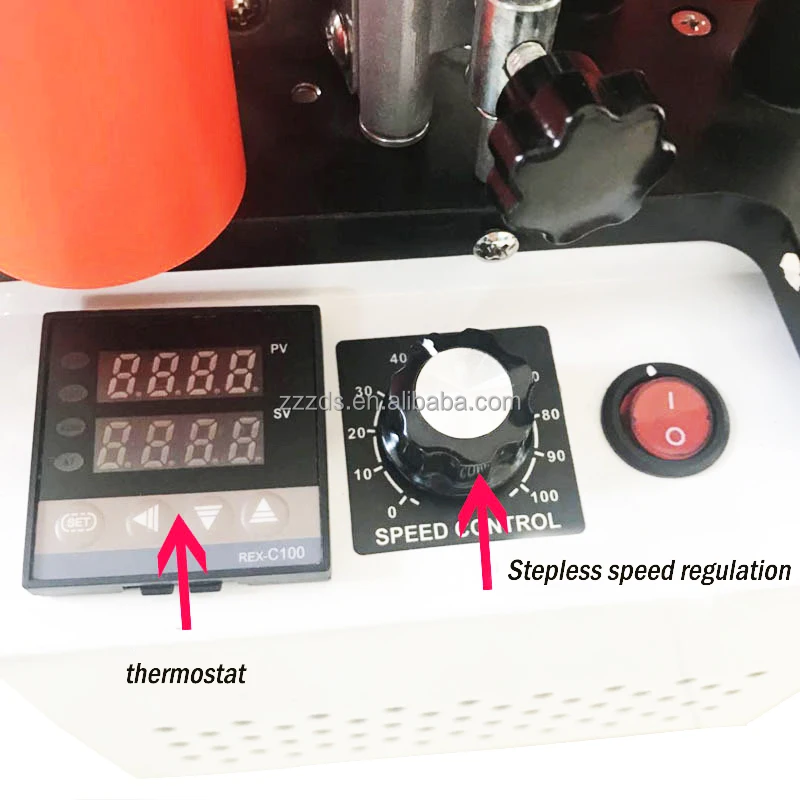
| Edge Sealing Speed | 0–6 m/min |
| Panel Thickness Range | 7–60mm |
| Gluing Method | Double-sided gluing |
| Glue Pot Volume | 1000ml |
| Net Weight | 14kg |
| Voltage & Frequency | Multiple plug options available (EU/AU/UK/USA/CN) — exact voltage to be confirmed at order (basis not stated in source) |
| Assembly State | Portable, hand-held operation |
Application Suitability
| Application | Material or Output |
|---|---|
| On-site edge banding for custom furniture installers | MDF, plywood, particleboard and solid wood panels |
| Small workshop curved and straight edge finishing | PVC and veneer edge banding on panel substrates 7–60mm thick |
| Joinery startup replacing manual edge treatment | Mixed panel formats with special-shaped profiles |
| Cabinet maker handling low-volume custom orders | Melamine and laminate edges on particleboard and MDF carcasses |
Why the Voltage Question Must Come Before the Fast Dispatch
A portable edge banding machine in stock is only useful if it actually runs on your site’s power supply.
I remember a customer overseas who ordered a small edge bander and received it within days. The box arrived, the machine came out, and then sat untouched for weeks because the plug didn’t match and the voltage was wrong for their local grid. That unit became a heavy paperweight instead of a production tool [NEED_CITE: voltage and frequency standards by export market]. The lesson stuck with anyone who has handled cross-border machinery sales: confirming electrical specifications before dispatch takes minutes, while resolving a mismatch after arrival takes weeks and costs far more in idle labor, transformer purchases, and frustrated operators standing around a machine they cannot switch on.
What Ready-to-Ship Really Means for Small Workshops
When a joinery workshop or installation crew needs a portable edge banding machine in stock, speed matters — but not at the expense of correctness. Each unit leaves the warehouse only after the buyer confirms the plug type and voltage frequency for their destination. The available options span EU, AU, UK, USA, and CN plug standards, which covers the majority of single-phase markets where this class of hand-held bander operates. This confirmation step is built into the ordering process rather than treated as an afterthought.
Single-Unit Orders Without the Minimum-Order Headache
Larger factories may purchase full production lines, but many buyers on this store need exactly one machine. A cabinet maker replacing a worn hand tool, an installation crew adding edge finishing capability to their van, or a startup workshop buying its first mechanized bander — these are the orders that fill the dispatch queue. Single-unit purchasing here means the same pre-shipment verification applies whether the order is one portable edge banding machine or ten. No buyer is deprioritized because their order volume is small [NEED_CITE: small workshop machinery procurement challenges].
Reading the Specs That Actually Matter on Site
The panel thickness range of 7–60mm covers most furniture-grade substrates from thin MDF drawer sides up to thick plywood shelving and solid wood worktops. Double-sided gluing with a 1000ml pot means adhesive is applied to both the panel edge and the banding strip simultaneously, which improves adhesion on porous substrates like particleboard where single-sided glue application can starve the bond line. The edge thickness range of 0.3–3mm accommodates everything from thin PVC veneer strips up to thicker ABS or solid wood lipping. Feed speed runs up to 6 m/min, which suits hand-guided operation where the operator controls travel pace against the workpiece rather than relying on a powered feed mechanism.
The Hidden Cost of Skipping Electrical Confirmation
Machines quoted without verifying local voltage and frequency arrive unusable — this is one of the most common complaints in cross-border equipment trade. A 220V machine plugged into a 110V supply runs at reduced power and overheats the motor. A 380V unit connected to a single-phase domestic outlet simply will not start. In both cases, the buyer faces weeks of downtime while sourcing a transformer or rewiring the workshop [NEED_CITE: electrical mismatch failures in imported machinery]. For a small team relying on a single portable edge banding machine to finish jobs on schedule, that delay is not an inconvenience — it is lost revenue on every installation contract waiting in the queue.
What Makes This the Right Place to Order
Voltage and plug confirmation happens at the order stage, not after the machine is already crated, because catching a mismatch before dispatch is always faster than resolving one after arrival. Pre-shipment testing includes a functional run on actual panel material, with photographs documenting the unit operating under power. The documentation package travels with the machine so that when it arrives, the operator has the electrical schematic, operation manual, and maintenance guide in hand — not buried in an email chain. Factory-trained support is available for remote commissioning guidance once the unit is unboxed and connected to the correct power supply.
Documentation & Verification
- CE declaration of conformity specific to portable edge banding equipment class
- Electrical schematic confirming voltage, frequency, and plug type for your market
- Factory test record showing edge banding run on panel material matching your thickness range
- Operation and maintenance manual provided in your agreed language before dispatch
- Pre-shipment packing photographs documenting machine condition and accessory completeness
Installation, Commissioning & Support
- Single-phase power connection matching confirmed plug type — no three-phase supply required for this 14kg hand-held unit
- Glue pot filled with appropriate hot-melt adhesive matching your edge banding material before first run
- Hand-held operation requires a stable work surface at comfortable waist height for operator control
- First commissioning includes test pass on scrap panel to verify glue temperature and feed pressure settings
- Spare glue pot seals and scraper blades recommended as initial consumable order alongside the machine
- Routine cleaning of glue residue from feed path after each work session to prevent buildup
Tell Us What You Need Before You Order
Share your panel material type, typical thickness range, and edge profile shape so we can confirm this portable unit fits your workload. Provide your site voltage and frequency along with plug standard so the correct electrical configuration is prepared before dispatch. If you are replacing an existing manual process or adding edge banding capability to a mobile installation team, mention your daily volume so we can advise whether this single-unit portable bander matches your throughput requirement or whether a benchtop model would serve you better.
Frequently Asked Questions
Q: What plug and voltage options are available for my country?
A: EU, AU, UK, USA, and CN plug standards are available. Voltage and frequency must be confirmed at the time of order to match your local grid supply. This step is completed before dispatch so the machine arrives ready to connect without adapters or transformers.
Q: How quickly can a single unit be dispatched from stock?
A: Stocked models are prepared for dispatch once the voltage and plug configuration is confirmed and pre-shipment testing is completed. A single-unit order receives the same verification process as a larger batch, with packing photographs shared before the crate leaves the warehouse.
Q: What edge profiles and panel thicknesses does this portable bander handle?
A: The unit handles curved, straight, and special-shaped edge profiles on panels ranging from 7mm to 60mm thick. Edge banding material thickness from 0.3mm to 3mm is supported, covering PVC, veneer, and melamine strips commonly used in furniture and joinery work.
Q: What spare parts and consumables should I order with the machine?
A: Replacement glue pot seals, scraper blades, and a supply of hot-melt adhesive matched to your edge material are recommended alongside the initial purchase. Having these consumables on hand prevents work stoppages once the machine is in regular daily use.