Description
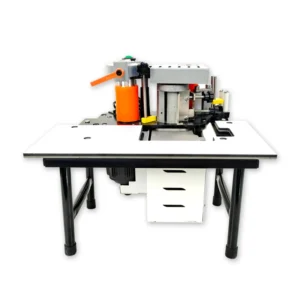
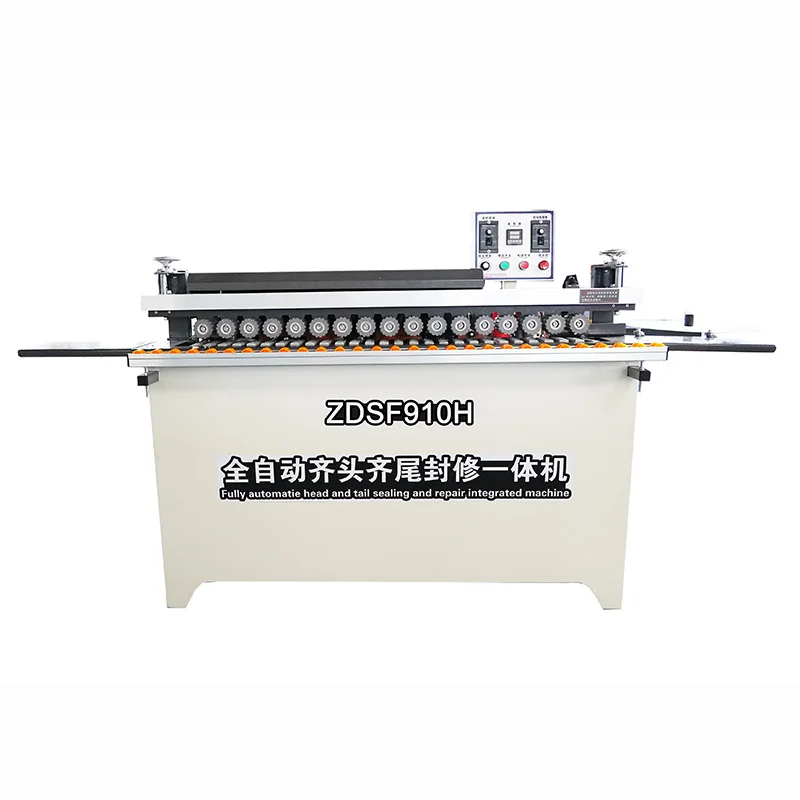
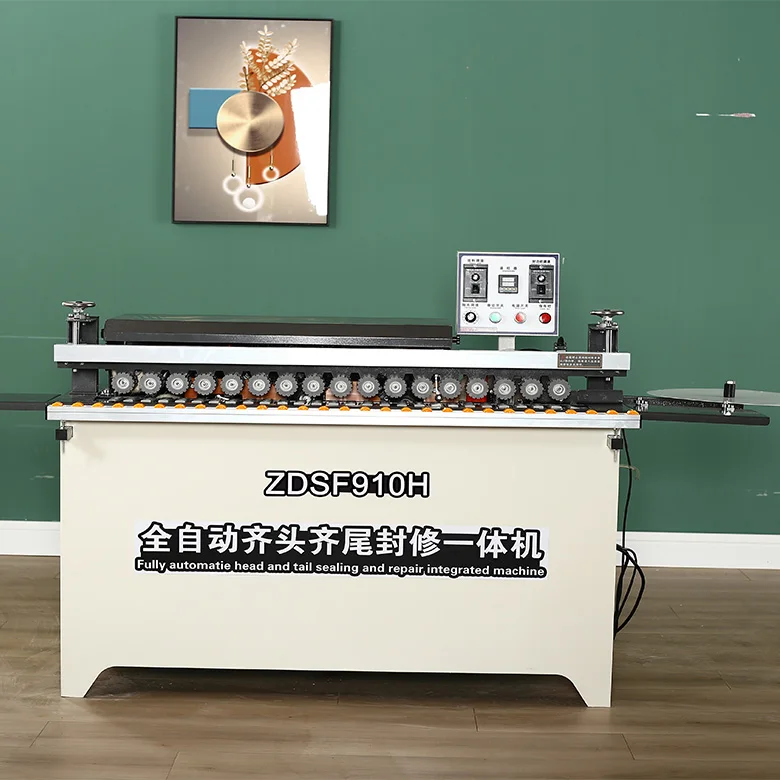
Ready-Stock Dispatch — This 910H automatic edge banding machine in stock ships with voltage and plug specifications confirmed against your local supply before the crate leaves the factory floor.
Technical Specifications
| Parameter | Value |
|---|---|
| Model | 910H |
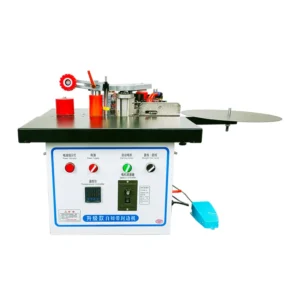
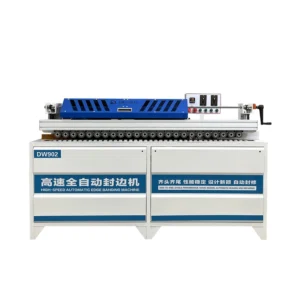
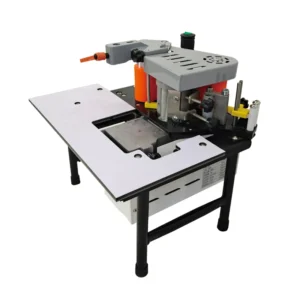
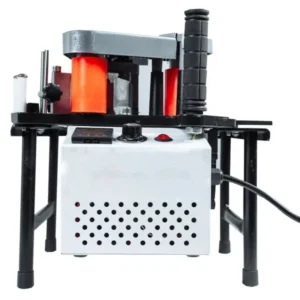
| Product Type | Miniature Fully Automatic Curved and Straight Edge Banding Machine |
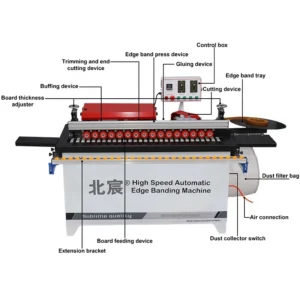
| Function | Automatic plate feeding, double-sided gluing, upper and lower polishing, head and tail trimming |
| Edge Type | Both curved and straight lines (180-degree rotation switch) |
| Voltage & Frequency | 220V 50Hz |
| Rated Power | 4kW |
| Heating Power | 800W |
| Polishing Power | 180W × 2 |
| Trimming Power | 800W × 2 |
| Rated Air Pressure | 0.4–0.6MPa |
| Suction Power | 1200W |
| Sheet Thickness Range | 10–50mm |
| Strip Thickness Range | 0.5–2.5mm |
| Minimum Board Width | 2.5cm |
| Glue Capacity | 1000ml |
| Transmission Type | Crawler transmission with steel rod slide rails |
| Trimming Mechanism | 4-blade alloy arc knife |
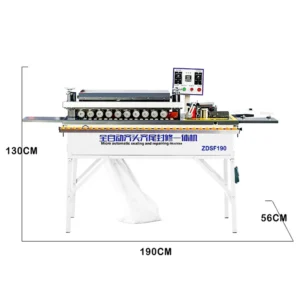
| Overall Dimensions (L×W×H) | 1300×560×1090mm |
| Net Weight | 140kg |
Application Suitability
| Application | Material or Output |
|---|---|
| Custom cabinet door edging | MDF and particleboard with PVC or melamine strips |
| Curved reception desk profiles | Plywood and shaped solid wood panels |
| Small-batch joinery production | Straight shelving and carcass panels up to 50mm thick |
| Startup workshop transition | Manual-to-machine edge banding on furniture components |
| Narrow drawer side edging | Boards as narrow as 2.5cm with 0.5–2.5mm strip thickness |
Why the Voltage Question Should Come Before the Price on an Automatic Edge Banding Machine in Stock
Confirming your workshop’s voltage and frequency before checkout prevents a machine from sitting idle while you source a step-up transformer.
I once watched a Nordic cabinet maker take delivery of a fully automatic edge bander only to discover the factory had wired it for 380V three-phase while the shop ran on 400V. The machine sat under shrink wrap for nearly a month while a transformer was ordered and installed. That delay cost more than the transformer itself — missed delivery deadlines, idle operators, and a frustrated end customer. When you order an automatic edge banding machine in stock, the assumption that "it will just work" is where expensive mistakes begin. Voltage, frequency, and plug configuration are not afterthoughts; they are the first line items that need locking down. [NEED_CITE: voltage and frequency standards by export market]
Dual-Purpose Curved and Straight Capability in One Compact Footprint
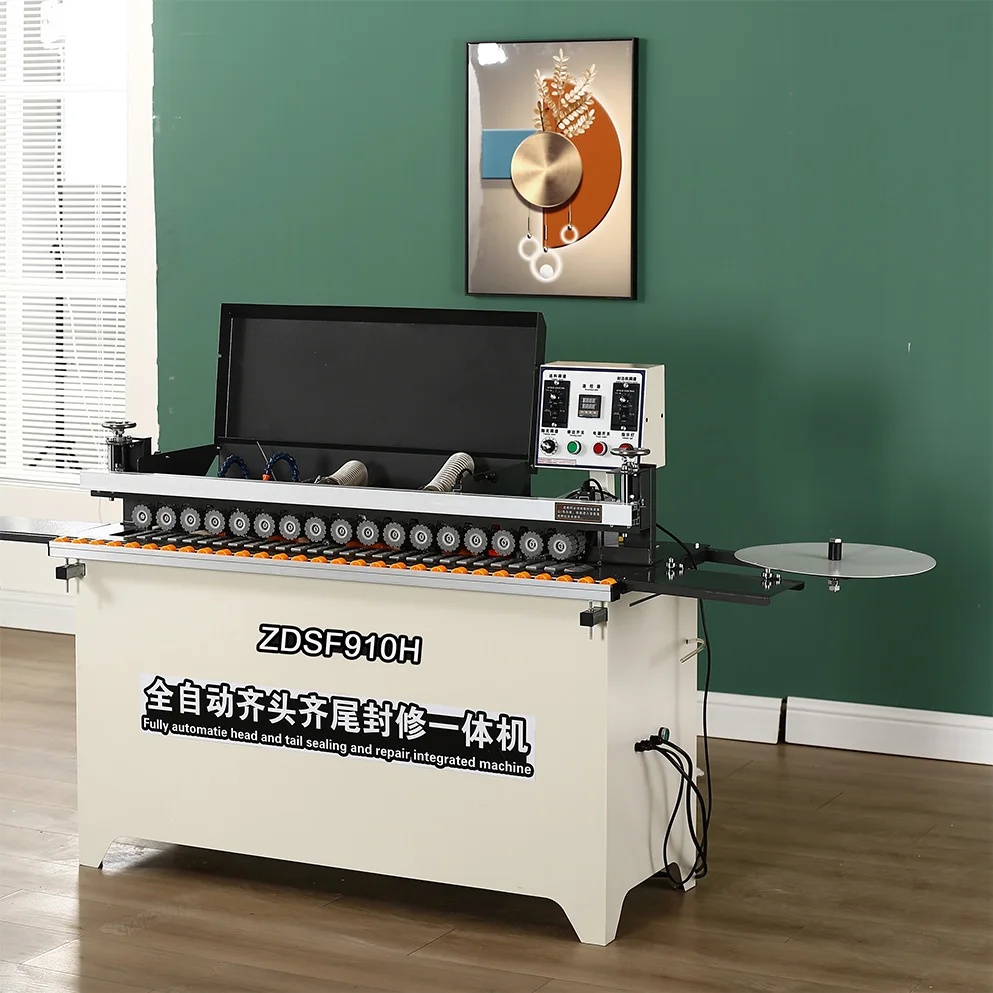
Most small workshops buy a straight-line edge bander first and add a curved profile machine later when a custom job demands it. The 910H eliminates that second purchase by rotating its feed table 180 degrees, switching from straight conveyance to curved edge banding without a separate station. For a shop running custom furniture in small batches, this means one operator, one glue pot, and one trimming setup handle the full range of panel profiles that walk through the door.
Dispatch Lead Time Without a Production Queue
Ordering an automatic edge banding machine in stock means the unit is built, tested, and crated — not sitting in a configuration queue waiting for an engineer to assign a build slot. The 910H moves from warehouse to freight forwarder on a timeline measured in days rather than the multi-week lead times typical of made-to-order woodworking lines. [NEED_CITE: typical dispatch lead times for stocked woodworking machinery] That speed matters when a new contract lands and your existing manual edge banding station is the bottleneck.
What the Spec Sheet Numbers Mean for Your Daily Output
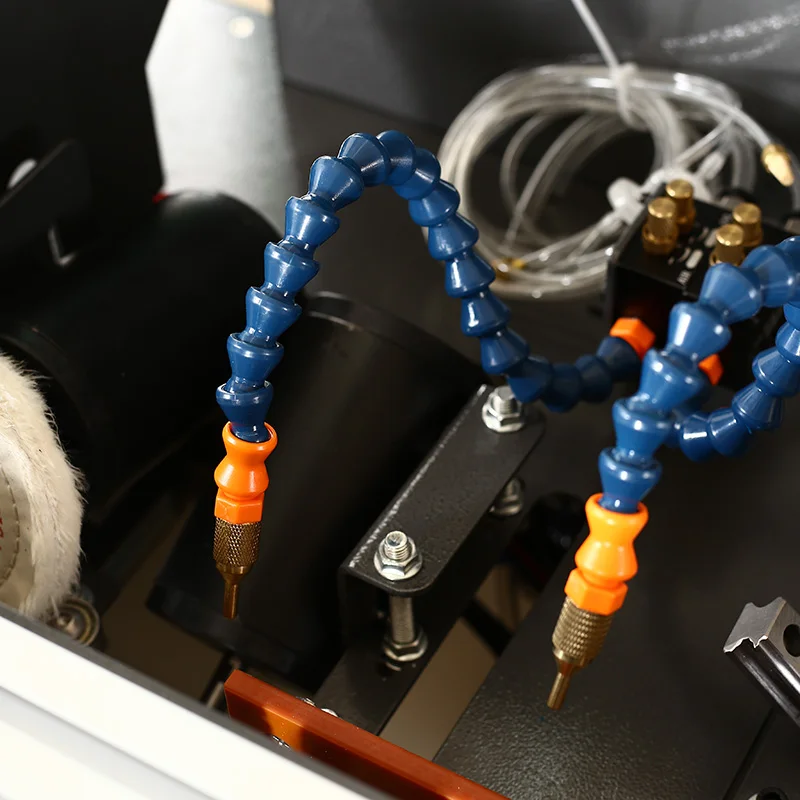
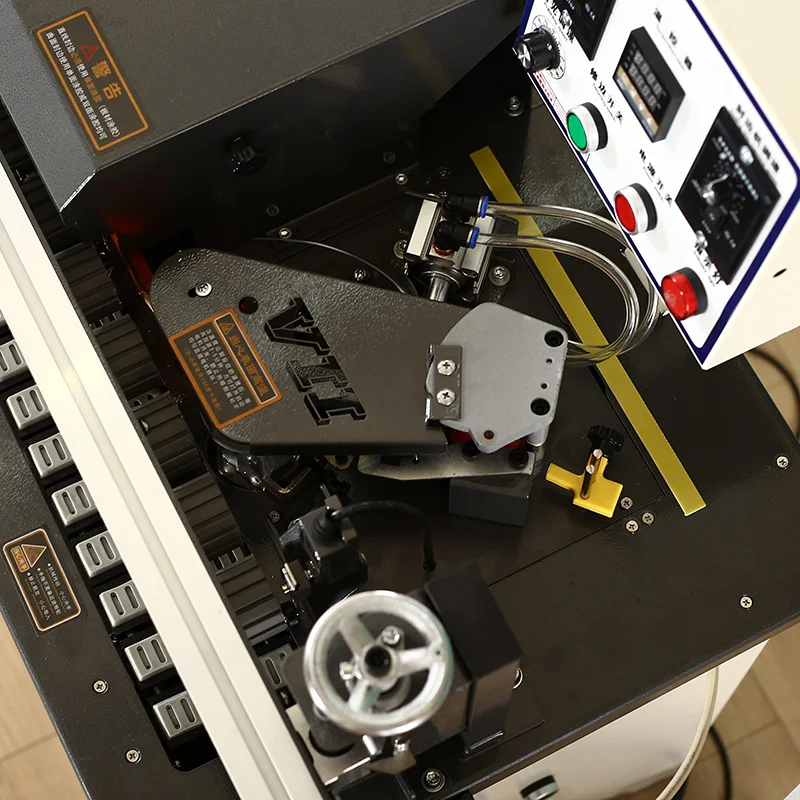
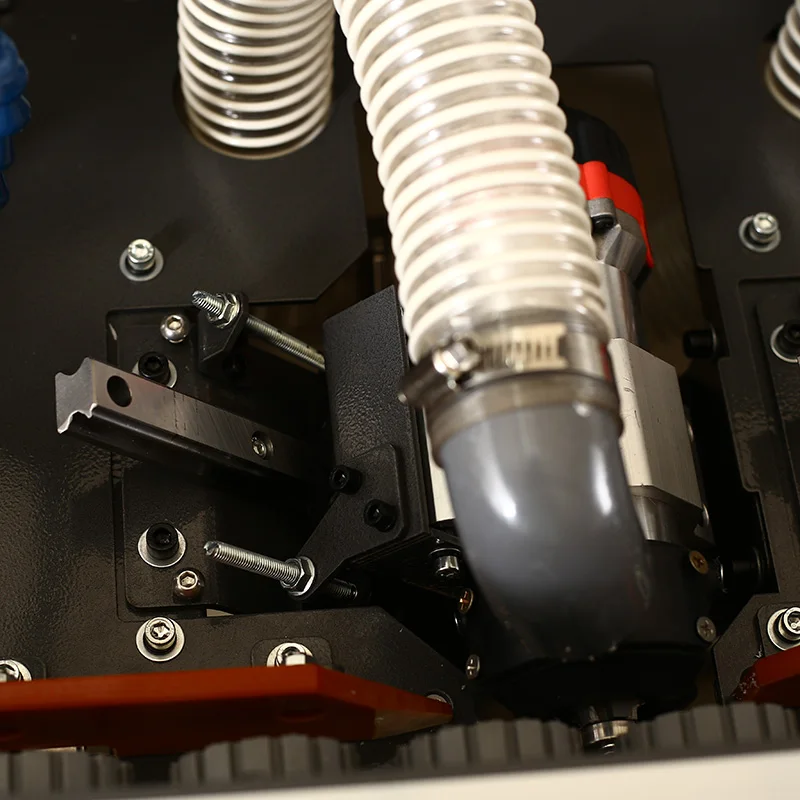
The 10–50mm sheet thickness range covers everything from thin MDF shelving to thick solid-wood tabletops, so the same machine handles carcass panels and feature pieces without retooling. The 4-blade alloy arc knife on the trimming station cuts both head and tail ends in a single pass, which reduces the sanding and touch-up work downstream. Double-sided gluing with an adjustable roller ensures the bond line stays consistent whether you are running 0.5mm melamine or 2.5mm PVC, and the integrated glue line cleaning device strips squeeze-out before it can set on the panel face. The 1200W suction port pairs with the two large-diameter dust collectors to keep trimming debris off the conveyor belt, maintaining feed accuracy over long production runs.
The Hidden Cost of Skipping Pre-Shipment Verification
A machine that leaves the factory without a documented voltage check and plug confirmation can arrive with a control panel that does not power on, or worse, powers on and trips the workshop breaker the moment the heating element engages. I have seen importers spend weeks sourcing replacement contactors because the original units were rated for a frequency that does not match the local grid. Pre-shipment verification is not paperwork for its own sake — it is the step that catches a mismatched thermal overload relay or an undersized breaker before the crate is nailed shut. [NEED_CITE: common electrical mismatches in exported woodworking equipment]
What Ready-Stock Procurement Actually Gets You
Voltage and plug type are confirmed in writing before the machine is released, so you will not open a crate to find a plug that does not fit your workshop outlet. Every stocked 910H ships with a factory test record showing it ran on your specified panel thickness and edge strip material. The operation and maintenance manual is printed in the language your operators read, not a generic translation that leaves critical setup steps ambiguous. Spare parts for the trimming blades, glue roller, and pressure wheels are listed and included, so your first reorder is not a guessing game. Single-unit orders are fulfilled from inventory without a minimum order quantity requirement.
Documentation & Verification
- Factory test record on your specified panel thickness and edge strip material before dispatch
- Electrical schematic confirming voltage, frequency, and plug type for your local supply
- Operation and maintenance manual in your agreed language covering setup and daily maintenance
- Spare parts list with part numbers for trimming blades, glue roller, and pressure wheels
- Packing photographs of the crated 910H before it leaves the warehouse
Installation, Commissioning & Support
- Requires a dedicated 220V circuit rated for at least 4kW with correct breaker sizing
- Compact 1300×560mm footprint fits against a workshop wall with room for the extended feed plate
- Pneumatic connection needs a 0.4–0.6MPa supply line with a standard quick-connect fitting
- First-run calibration covers glue roller volume, trimming knife depth, and pressure beam height
- Operator training covers the 180-degree curved-to-straight rotation and multi-function button sequence
- Replacement trimming blades and glue rollers available through standard spare parts reorder
Before You Place the Order
Send your workshop’s exact voltage, frequency, and plug type so the electrical configuration is locked before dispatch. Specify the panel materials and edge strip thicknesses you run most often so the pre-shipment test uses real stock from your production. Confirm whether you need the manual in a specific language for your operators. If your shop already has upstream saws or downstream boring stations, share their feed heights so the 910H integrates without a height mismatch at the transfer point.
Frequently Asked Questions
Q: Is the 910H currently in stock and what is the dispatch lead time?
A: The 910H is held in ready stock and can be dispatched once pre-shipment testing and voltage confirmation are completed. Lead time from order to freight handover is typically measured in days rather than weeks, depending on the configuration checks required for your local electrical supply.
Q: Can the voltage be adapted to my local supply if it is not 220V 50Hz?
A: Voltage and frequency must be confirmed before the machine is released. If your workshop runs on 110V, 60Hz, or another configuration, specify this at the time of order so the electrical components can be verified or adapted before the crate leaves the warehouse.
Q: What edge banding materials does the 910H handle?
A: The machine handles PVC and melamine edge strips in the 0.5–2.5mm thickness range. The adjustable glue roller and heating element are set up to bond these materials reliably across the full 10–50mm panel thickness range.
Q: How do I switch between straight and curved edge banding?
A: The feed table rotates 180 degrees to switch from straight-line conveyance to curved profile feeding. The multi-function control panel adjusts feed parameters accordingly, and the same trimming and polishing stations serve both modes.
Q: What spare parts ship with the machine and how do I reorder?
A: The 910H ships with a spare parts list covering trimming blades, glue roller, and pressure wheels. Initial consumables are included in the crate, and reorders are placed by referencing the part numbers in the supplied documentation.