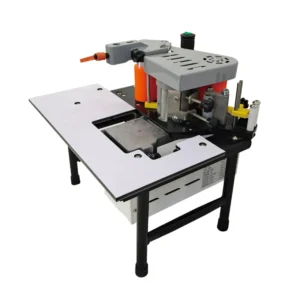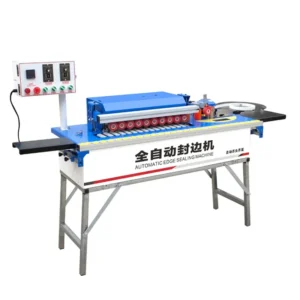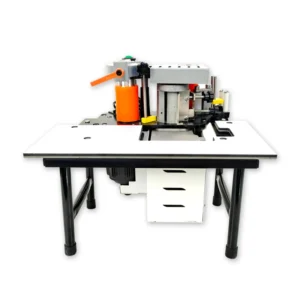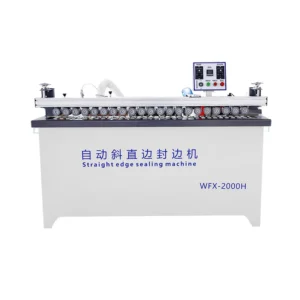
Description
Ready to Dispatch — ZDSF190 dual-purpose edge bander ships with confirmed 220V/50Hz configuration, pre-tested on your specified panel stock before it leaves the floor.
Technical Specifications
| Parameter | Value |
|---|---|
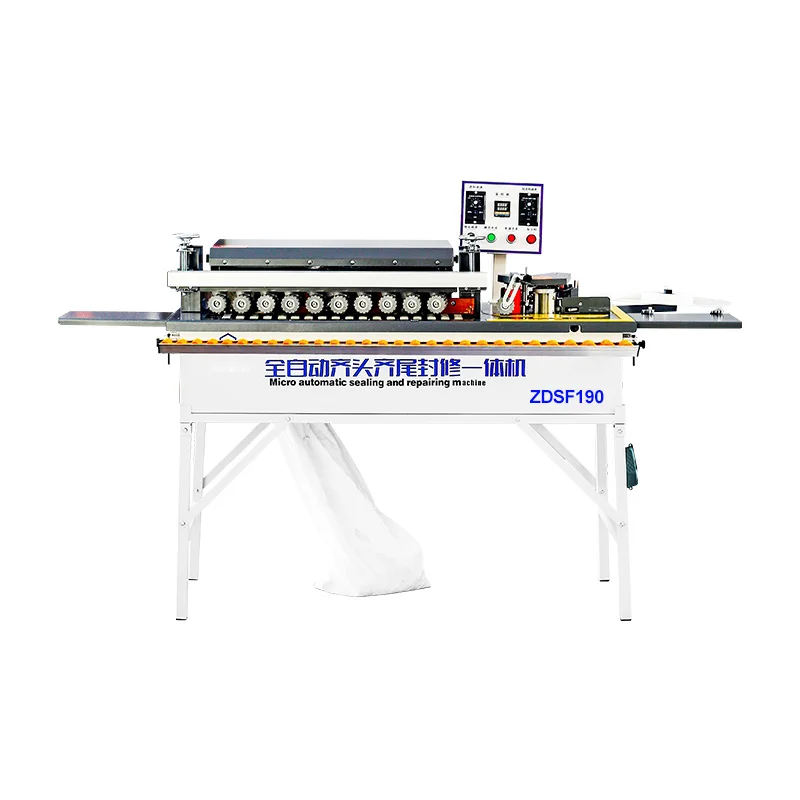
| Model | ZDSF190 |
| Product Type | Automatic Curved and Straight Edge Banding Machine |
| Function | Automatic plate feeding, belt breaking, double-sided gluing, upper/lower trimming, polishing, curved & straight edge banding, large diameter surrounding vacuum |
| Edge Type | Both curved and straight lines |
| Voltage & Frequency | 220V 50Hz |
| Rated Power | 4kW |
| Heating Power | 800W |
| Trimming Power | 800W × 2 |
| Polishing Power | 180W × 2 |
| Suction Power | 1200W |
| Transmission Power | 120W |
| Belt Power | 25W |
| Feed Speed | 0–14 m/min |
| Sheet Thickness Range | 10–50 mm |
| Strip Thickness Range | 0.5–2.5 mm |
| Glue Capacity | 1000 ml |
| Rated Air Pressure | 0.4–0.6 MPa |
| Trimming Cutter | 4-blade alloy arc knife |
| Conveyer Type | Crawler transmission with steel rod slide rails |
| Feed Mechanism | Double-row rubber pressure wheels |
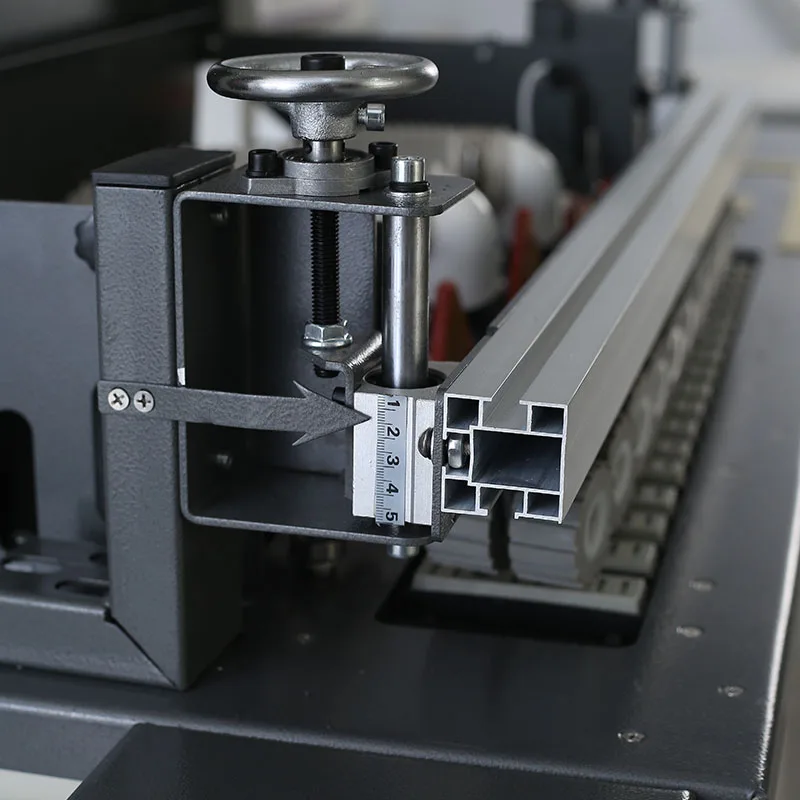
| Pressure Beam | Adjustable aluminum alloy |
| Edge Strip Cutting | Pneumatically controlled |
| Control Panel | Multi-function button operation |
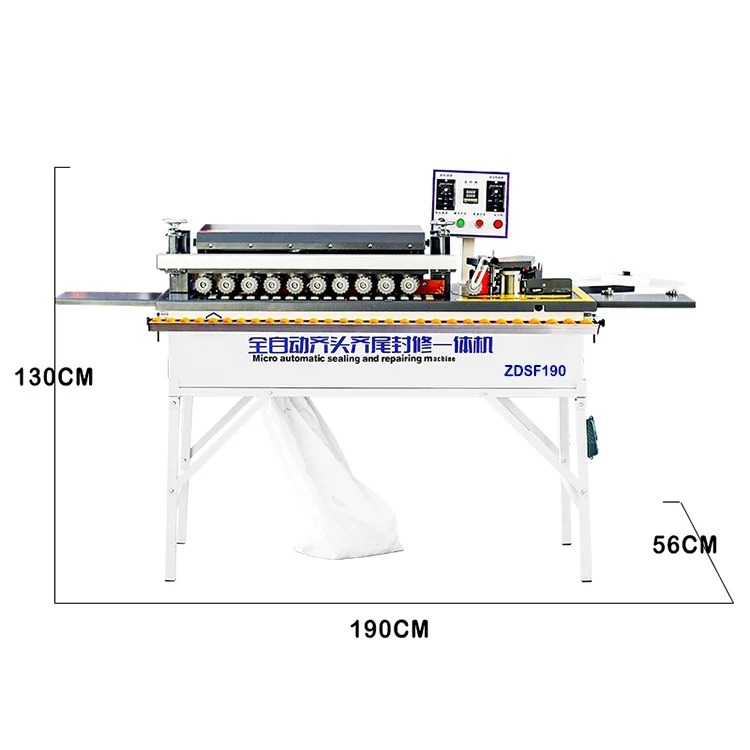
| Overall Dimensions (L×W×H) | 1900 × 560 × 1300 mm |
| Net Weight | 120 kg |
Application Suitability
| Application | Material or Output |
|---|---|
| Custom cabinet carcass edge banding | MDF and particleboard panels 10–50 mm thick |
| Curved door profile banding | Plywood and MDF shaped components with 0.5–2.5 mm PVC or veneer strips |
| Tabletop and shelving edge finishing | Solid wood panels and melamine-faced board |
| Contoured furniture components | Shaped MDF and plywood with curved or straight edge profiles |
| Small workshop mixed-run production | Short batches alternating straight and curved stock on a single machine |
Why the Voltage Question Should Come Before the Price
Buying an automatic curved straight edge banding machine in stock without locking down your local voltage first is a gamble that stalls commissioning for weeks. I once watched a custom cabinet shop sit idle for nearly a month because their new edge bander arrived wired for 440V while the workshop only had 380V available — waiting on a transformer ate into their delivery schedule and cost them a client.
Voltage confirmation happens at quotation, not at the dock. Every ZDSF190 leaving our floor ships with a signed voltage sheet matching your facility’s supply, so the machine powers up the day it is unpacked.
When a machine arrives with mismatched voltage, the problem is never just the transformer. Operators lose confidence, electricians improvise, and warranty disputes begin before the first panel runs through [NEED_CITE: voltage and frequency standards by export market]. The ZDSF190 is configured at 220V 50Hz for single-phase markets, and we verify the match in writing before dispatch.
Dual-Purpose Configuration Means One Machine Covers Your Floor
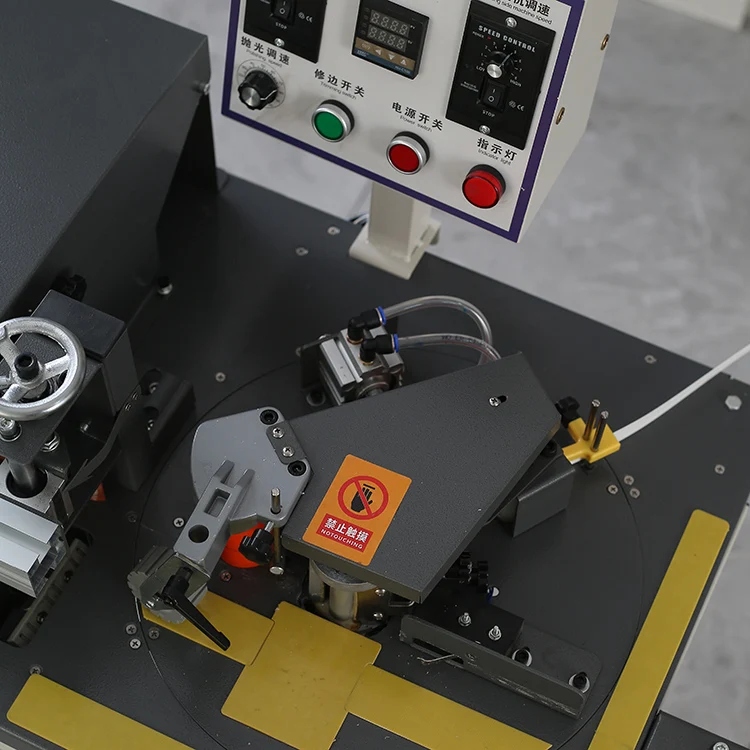
Workshops running both straight carcass panels and curved door profiles usually face a choice: buy two machines or compromise on one. The ZDSF190 eliminates that trade-off. Rotating the working head 180 degrees switches the machine from straight to curved edge banding mode, letting a single operator handle both profiles within the same shift without repositioning the workpiece on a separate station.
For a joinery shop moving from hand-held routers to automated feeding, having an automatic curved straight edge banding machine in stock means you can accept mixed orders immediately. Curved tabletops, arched cabinet doors, and straight shelving all pass through the same feed path, trimmed by the same 4-blade alloy arc cutter.
Speed and Simplicity From Inquiry to First Panel
This is a ready-stock model, which matters when your current edge finishing bottleneck is costing you orders. The ordering path is short: confirm your voltage, panel thickness range, and preferred control language, and the machine ships from existing inventory rather than entering a production queue. Typical dispatch from stock avoids the multi-week build cycles that custom-configured machines require [NEED_CITE: typical lead times for stocked vs built-to-order woodworking machinery].
The 120 kg footprint and 1900 mm length fit through standard workshop doors and onto existing floors without structural reinforcement. Once positioned, the 220V single-phase supply plugs in without a dedicated three-phase circuit — a practical detail for smaller shops sharing power with lighting and dust extraction.
How the Numbers Translate on the Shop Floor
Feed speed runs from 0 to 14 m/min, which suits short-batch production where operators need to watch glue flow and trimming quality on each panel rather than pushing maximum throughput. The 10–50 mm sheet thickness range covers everything from thin MDF drawer sides to thick plywood shelving without changing pressure wheel setups between jobs.
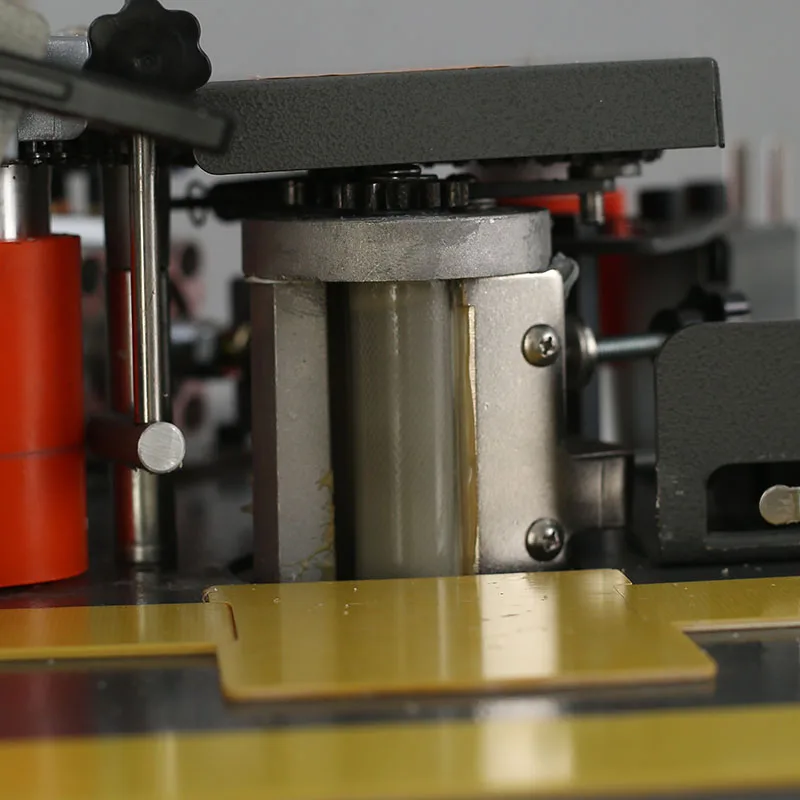
The double-sided gluing system holds 1000 ml of adhesive with an adjustable roller, keeping consistent coverage on both PVC and veneer strips between 0.5 and 2.5 mm thick. In practice, this means the operator sets the glue thickness once per strip type and lets the machine maintain it, reducing the visible glue lines that appear when hand-application varies across a batch.
The crawler transmission rides on steel rod slide rails with double-row rubber pressure wheels gripping the panel from above. This feed arrangement holds heavier boards steady through the trimming and polishing stations, preventing the chatter marks that show up on curved profiles when a lighter feed system loses contact mid-pass.
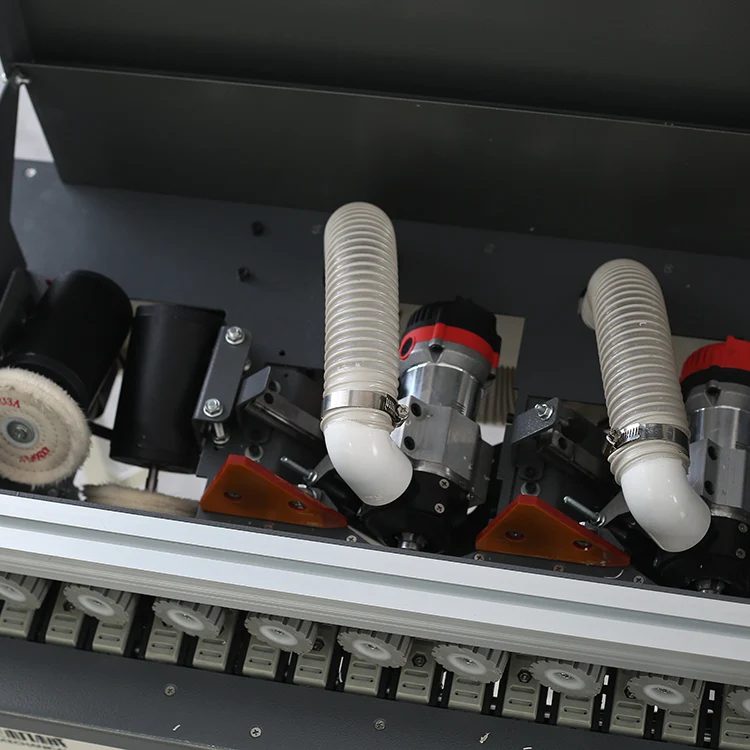
The dual 1200W dust collectors pull shavings and glue residue away from the trimming zone at the source. Keeping the cutter path clear extends blade life and prevents adhesive buildup on the arc knife, which directly affects the surface finish on your next panel.
The Hidden Cost of Specifying a Machine for the Wrong Duty
I have seen small workshops buy entry-level straight-only edge banders, then try to force curved profiles through by hand-feeding at odd angles. The pressure wheels lose grip, the trimmer scores the laminate, and within months the feed mechanism shows premature wear it was never designed to absorb.
The consequence is never just one bad edge. Scratched panels get reworked, edge strips delaminate after assembly, and the shop ends up buying a second machine anyway — except now they own two units where one dual-purpose machine would have fit the floor plan and the budget [NEED_CITE: common causes of premature wear in edge banding feed mechanisms]. Buying the right configuration upfront is always cheaper than buying twice.
Why Procurement Starts Here
Every ZDSF190 ships with a factory test record showing actual panel samples run on your specified sheet thickness and strip material — not a generic demo, but your exact stock. The pre-shipment verification covers glue adhesion, trimming finish, and feed stability before the crate closes.
Voltage and frequency are confirmed in writing at quotation stage, matched to your facility’s supply, so there is no on-site electrical guesswork. The operation and maintenance manual arrives in the language your operators read, covering mode switching, glue roller adjustment, and cutter replacement.
Spare parts lists ship with the machine, identifying exact part numbers for trimming blades, glue rollers, and pressure wheels. Reordering consumables does not require photographing worn components and hoping the supplier recognizes them.
Documentation & Verification
- Voltage confirmation sheet matching your facility’s 220V 50Hz supply, signed before dispatch
- Factory test record on your specified sheet thickness and strip material with trimmed sample panels
- Operation manual in agreed language covering curved-to-straight mode switching and glue adjustment
- Spare parts list with part numbers for arc knives, glue rollers, and rubber pressure wheels
- Electrical schematic showing single-phase wiring and heating circuit for local electrician reference
- Packing photographs documenting machine condition and crate integrity before container loading
Installation, Commissioning & Support
- Requires a flat concrete floor with 1900 × 560 mm clear space plus operator access on three sides
- Single-phase 220V 50Hz dedicated circuit rated above 4kW to avoid shared-load voltage drops
- Arrives fully assembled; position, level the adjustable aluminum alloy pressure beam, and connect air supply at 0.4–0.6 MPa
- First-run calibration covers glue roller gap, trimming depth, and feed speed setting for your strip thickness
- Consumable reorder cycle for 4-blade alloy arc cutters depends on daily run hours and strip abrasiveness
- Dual dust collector ports require connection to extraction rated at or above 1200W suction capacity
What We Need to Move Your Order Forward
Tell us the panel materials you run most often — MDF, particleboard, plywood, or solid wood — along with the thickness range that covers the majority of your orders. Confirm your workshop’s voltage and frequency so we can lock the configuration before the machine leaves stock.
If you are replacing a manual edge finishing process, let us know your current daily panel count and the split between straight and curved profiles. That tells us whether the 0–14 m/min feed range matches your volume or whether we should discuss a higher-throughput model from the same product family.
Frequently Asked Questions
Q: What is the dispatch lead time for the ZDSF190 from ready stock?
A: The ZDSF190 ships from existing inventory, which avoids the build queue that custom-configured edge banders require. Once your voltage, panel thickness, and control language are confirmed at quotation, the machine enters pre-shipment testing. Typical dispatch follows within days rather than weeks, though exact timing depends on current stock levels and destination logistics.
Q: Can the voltage be customized for 110V or 380V markets before shipment?
A: Yes. The ZDSF190 is configurable across a voltage range from 110V to 440V to match different market standards. The required voltage and frequency must be confirmed at quotation stage so the correct motor, heating element, and control transformer are fitted before the machine enters testing. A signed voltage confirmation sheet ships with the documentation package.
Q: How do I switch between straight and curved edge banding modes?
A: Mode switching on the ZDSF190 involves rotating the working head assembly 180 degrees, which repositions the feed path and trimming stations for the selected profile type. The multi-function control panel adjusts feed and trimming parameters accordingly. Operators typically complete the changeover within minutes, and the operation manual covers the full procedure step by step.
Q: What edge banding strip materials and thicknesses does this machine accept?
A: The ZDSF190 handles PVC and veneer edge banding strips between 0.5 and 2.5 mm thick. The double-sided gluing system with adjustable roller maintains consistent adhesive coverage across both material types. For each strip type, the operator sets the glue gap once, and the machine holds that setting through the batch.
Q: What spare parts are included, and how do I reorder consumables?
A: Each ZDSF190 ships with a spare parts list identifying part numbers for trimming cutters, glue rollers, and pressure wheels. Initial consumables are included in the shipment. Reordering uses the same part numbers, which avoids the back-and-forth of identifying worn components by photograph. We maintain stock of high-wear items for repeat orders.