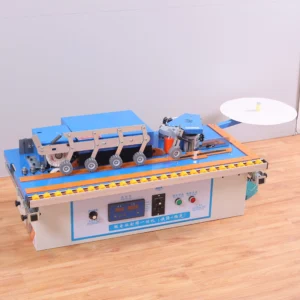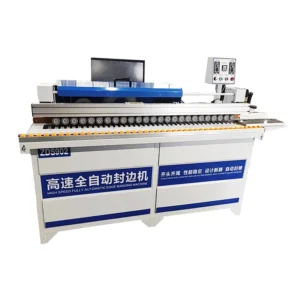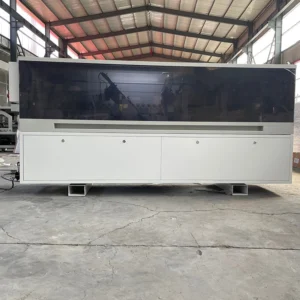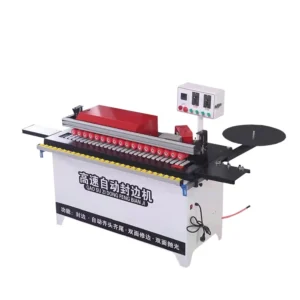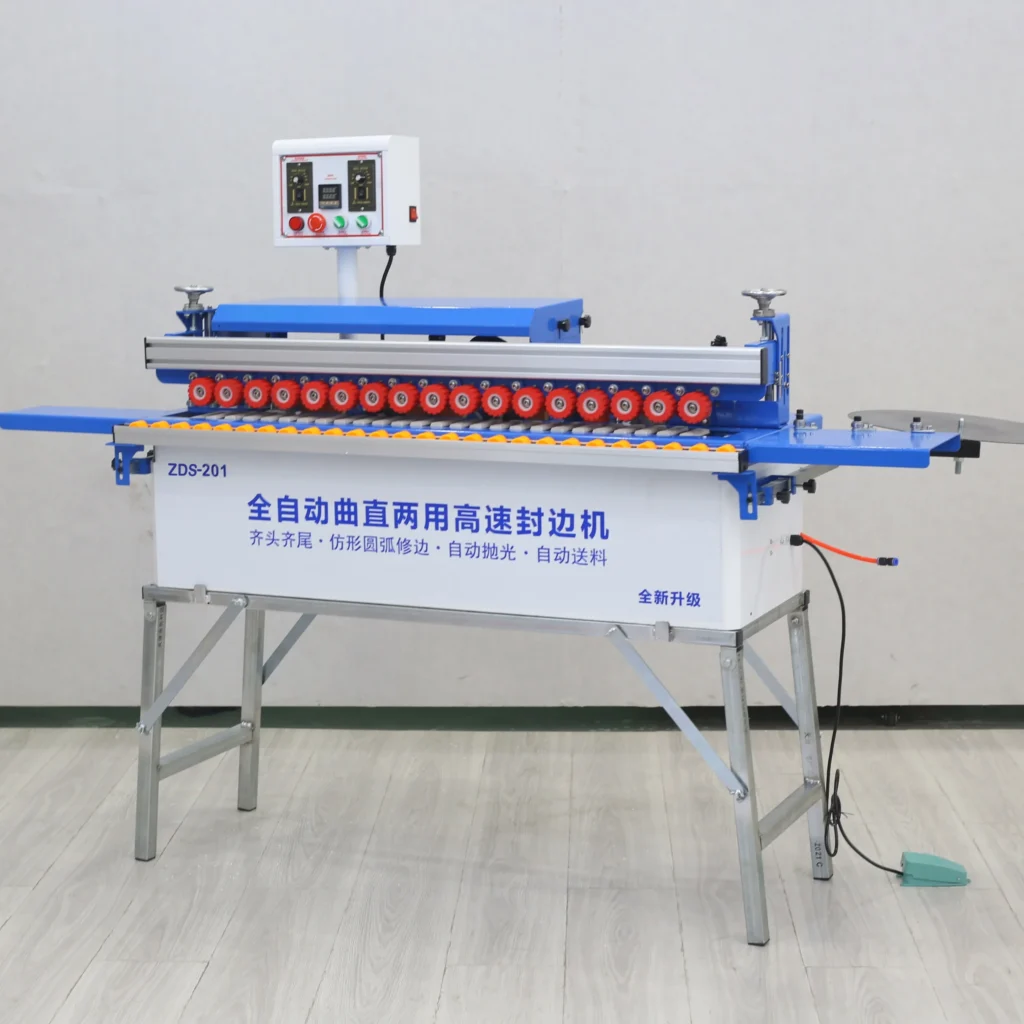
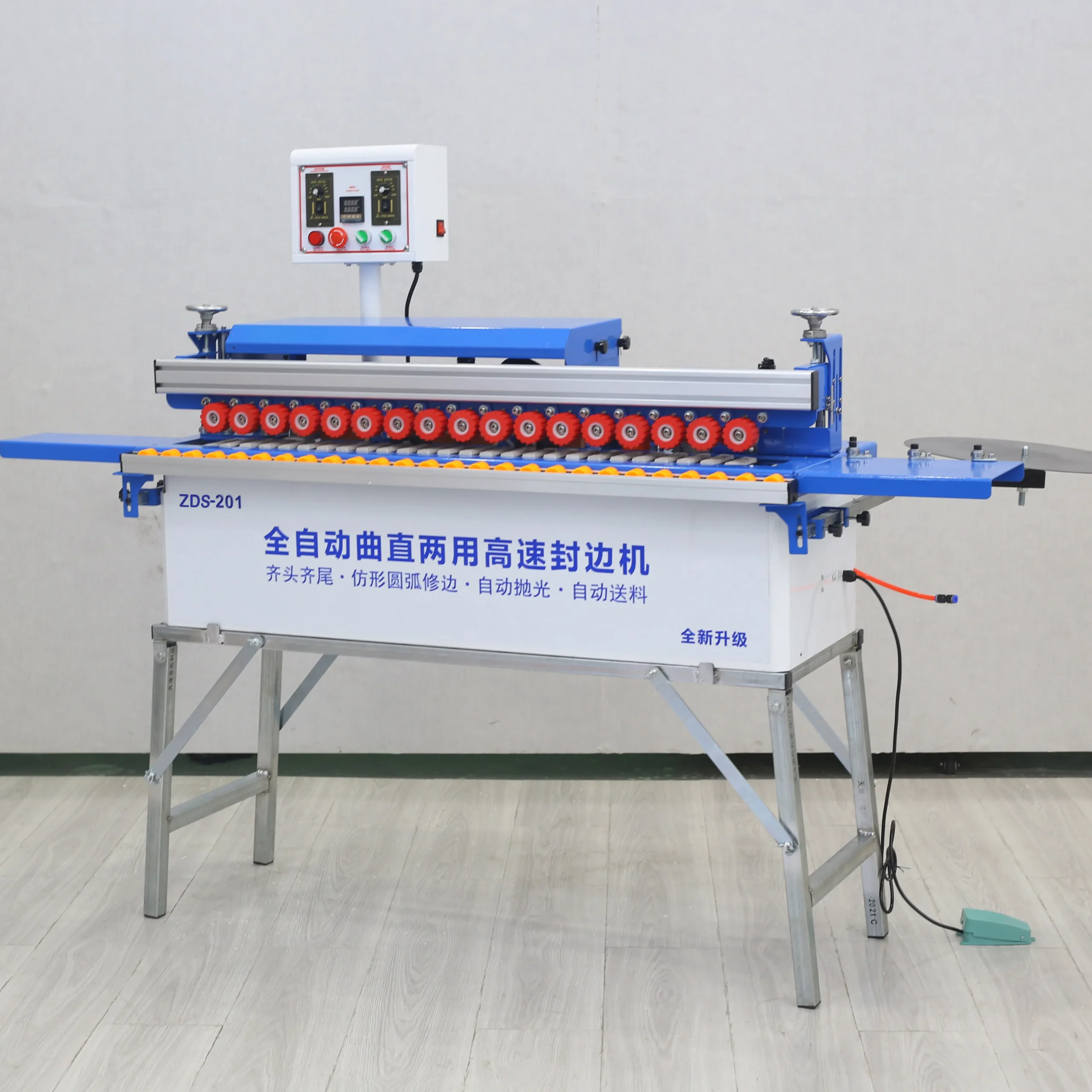
Description
Ready-Stock Dispatch — Voltage, frequency, and plug type confirmed in writing before any portable edge banding machine leaves the warehouse.
Technical Specifications
| Parameter | Value |
|---|---|
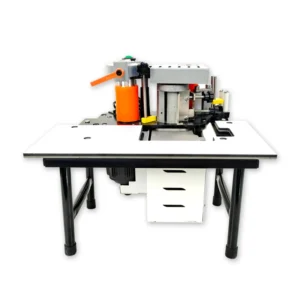
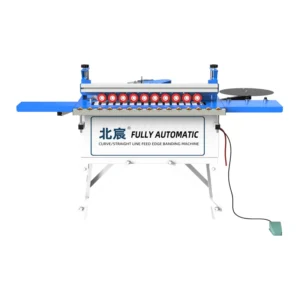
| Product Type | Portable Edge Banding Machine (Curved & Straight) |
| Heating Power | 1.2 kW |
| Total Power | 3 kW |
| Edge Banding Speed | 0–26 cm/s |
| Feeding Speed | 0–15 m/min |
| Edge Banding Thickness | 0.3–3 mm |
| Panel Thickness Range | 8–50 mm |
| Overall Dimensions (L×W×H) | 1200×450×750 mm |
| Net Weight | 85 kg |
| Transport Power | 180 W |
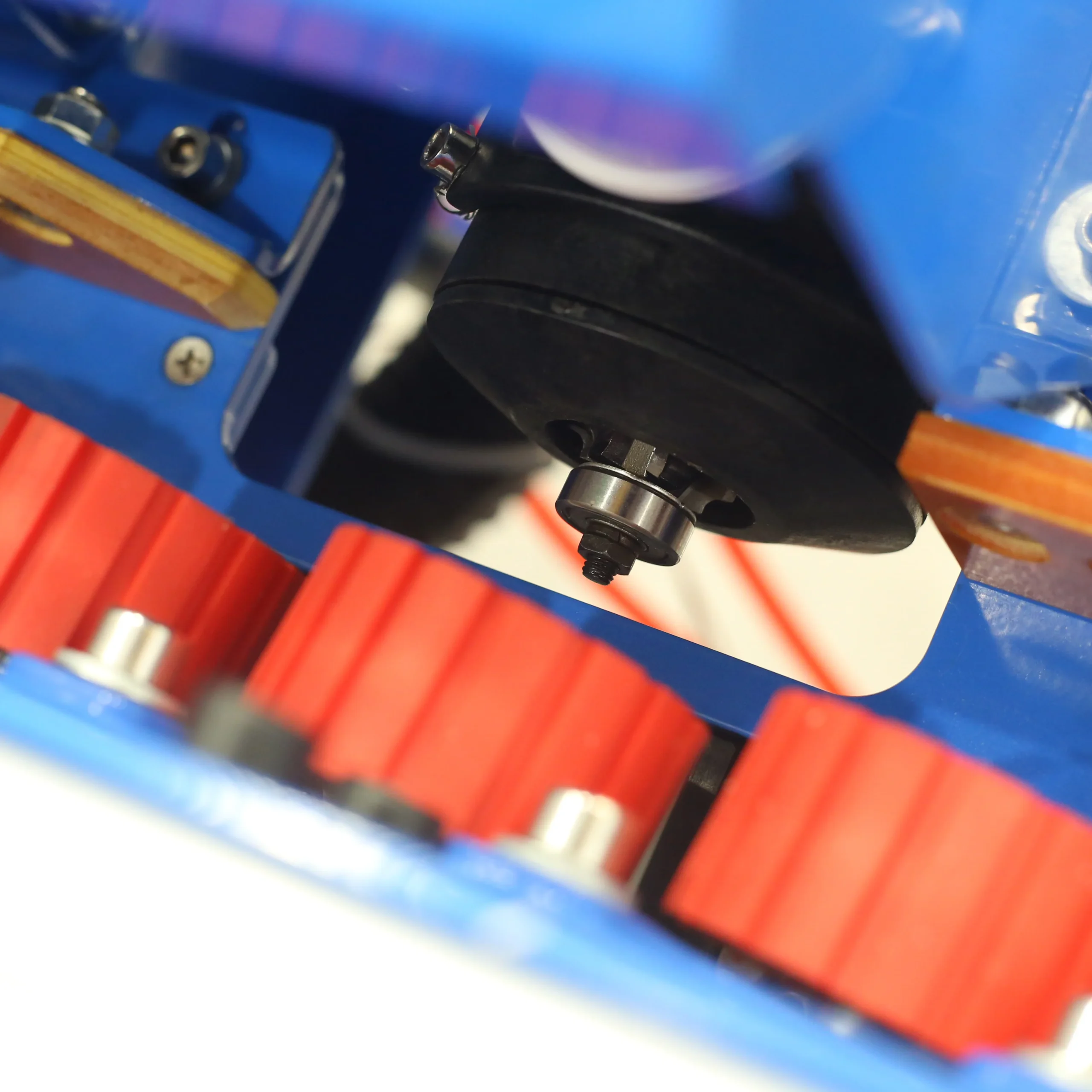
| Trimming Cutter | 4-blade alloy arc knife |
| Dust Collection | Dual large-diameter collectors, 99% effect |
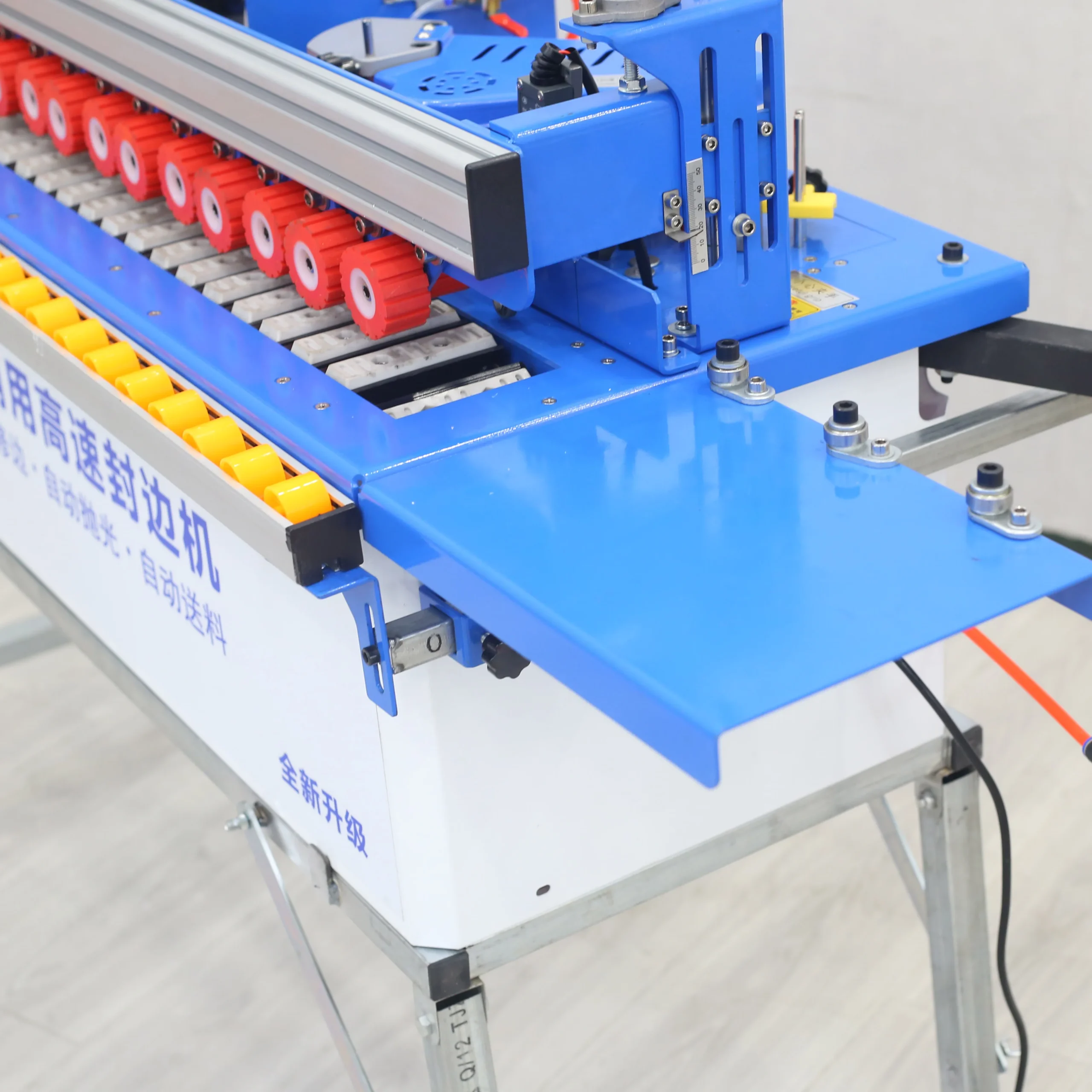
| Feed Mechanism | Crawler transmission with steel rod slide rails |
| Pressure Beam | Adjustable aluminum alloy |
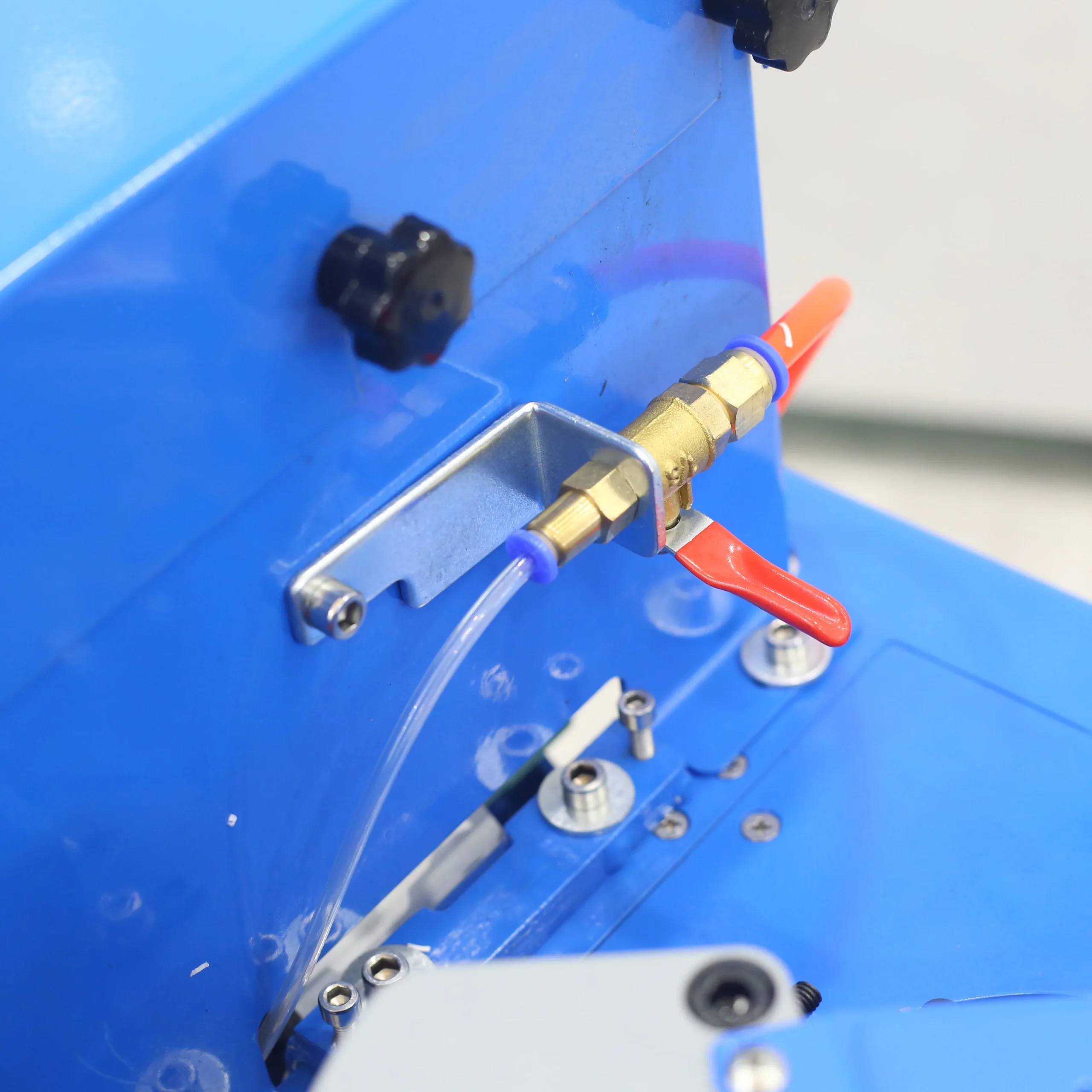
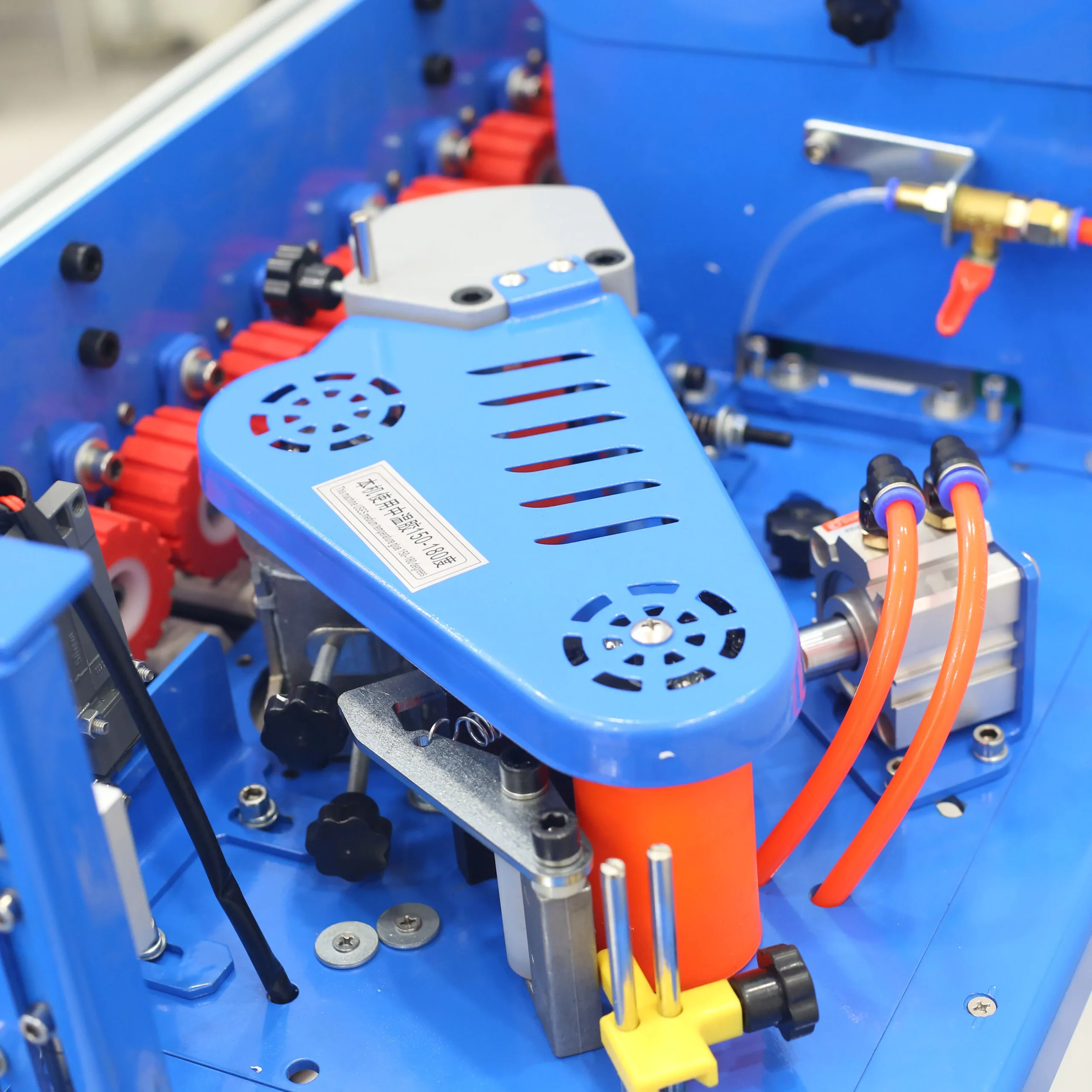
| Edge Strip Cutting | Pneumatically controlled |
| Voltage & Frequency | Configurable (basis to be confirmed before order) |
| Control System | Multi-function button operation panel |
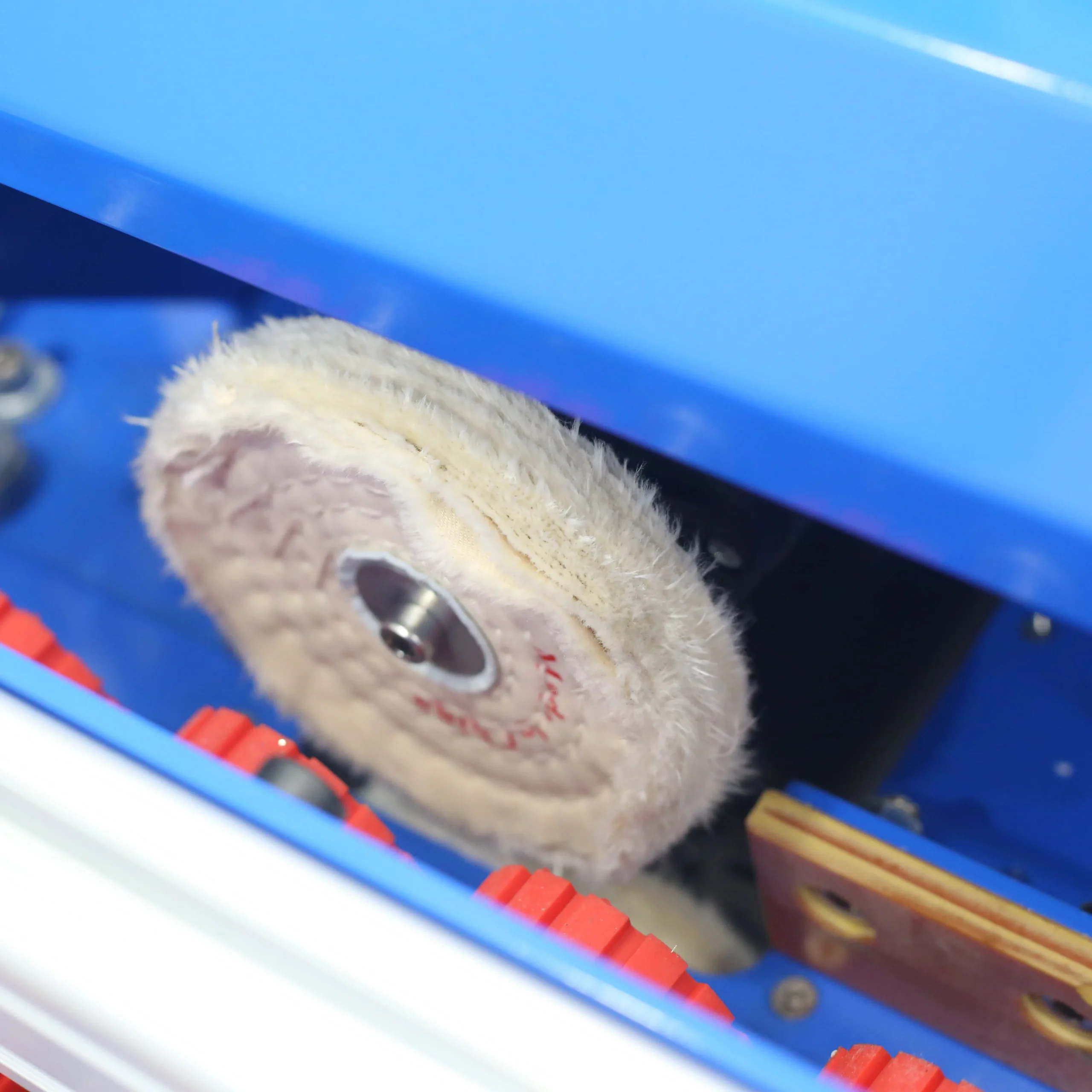
| Key Features | Automatic trimming and buffing, 180° rotation for curved and straight edge banding |
Application Suitability
| Application | Material or Output |
|---|---|
| Small joinery workshops scaling from manual to machine production | MDF, particleboard, plywood panels with PVC edge banding |
| Custom cabinet makers handling curved-front doors | Shaped solid wood panels with veneer or PVC banding (0.3–3 mm) |
| On-site or mobile edge banding for low-volume runs | Straight and curved panel edges up to 50 mm thick |
| Startup furniture makers needing versatile first equipment | Plywood and MDF boards requiring both radius and linear banding |
Why the Voltage Question Must Be Settled Before the Portable Edge Banding Machine Ships
A machine that cannot plug in on arrival is a machine that does not exist.
I spent years on the assembly floor before moving into order fulfillment, and the fastest way to lose a customer is not a tolerance issue or a cosmetic scratch — it is a voltage mismatch. One custom cabinet shop ordered a mini portable unit without confirming their local three-phase supply. The machine arrived, the operator plugged it in, and nothing happened. Three weeks of downtime while a transformer was sourced and rewired. That portable edge banding machine in stock means nothing if it sits dead on the workshop floor [NEED_CITE: voltage and frequency standards by export market].
Every region has different industrial supply standards, and assuming compatibility from a catalog photo is a mistake that costs weeks, not hours.
Stock Availability and Dispatch Windows
The primary reason buyers come to this channel is speed. This portable edge banding machine in stock configuration is staged for fast dispatch once site conditions are verified. The 85 kg unit ships as a single portable assembly — no foundation work, no multi-day rigging. A small workshop moving from hand-applied banding to their first powered edge bander typically needs the machine running within days of arrival, not months.
Dispatch timing depends on confirming voltage, plug type, and control panel language before the crate is sealed. Once those details are locked, the unit moves through pre-shipment testing and ships on a standard freight schedule.
Dual-Mode Flexibility for Small-Batch Production
The 180° rotation mechanism lets one machine cover both straight panel edges and curved profiles without a second purchase. For a startup joinery shop producing custom cabinet doors with radius corners, this eliminates the need to buy two dedicated units [NEED_CITE: CE machinery directive requirements for portable woodworking equipment]. The four-blade alloy arc cutter trims curved PVC and veneer banding to a polished finish, and the pneumatically controlled strip cutter keeps the operator workflow consistent across varying panel geometries.
Crawler feed with steel rod slide rails holds panels stable through the banding zone at feed rates up to 15 m/min, which matters when a small team is running mixed batches of straight shelves and curved door fronts on the same shift.
Reading the Specs That Actually Affect Panel Output
The 8–50 mm panel thickness range covers the majority of furniture-grade board stock, from thin 8 mm MDF drawer bottoms to thick 50 mm solid wood worktops. Staying within this range keeps the adjustable aluminum alloy pressure beam properly engaged — running panels outside the rated thickness risks uneven glue transfer and banding lift at the trim station.
The 1.2 kW heating element brings the glue pot to operating temperature for PVC and veneer banding between 0.3 and 3 mm. Thicker banding within that window requires slightly slower feed speeds to allow full adhesive activation. The dual large-diameter dust collectors capture trim and buffing debris at the source, keeping the workshop floor clear and protecting the slide rails from particle buildup that would degrade feed accuracy over time.
The Hidden Cost of Skipping Pre-Dispatch Verification
When a portable edge bander arrives without confirmed electrical specifications, the buyer faces transformer rental, electrician callouts, and idle operators standing around an unpowered unit. These costs are never listed on the commercial invoice but they show up on the workshop’s schedule [NEED_CITE: common causes of commissioning delays in imported woodworking machinery]. Beyond the financial hit, operators who start on a machine under time pressure tend to skip proper setup steps — incorrect glue temperature, uncalibrated trim cutters — and the first batch of panels comes off with visible glue lines or chipped edges.
Spec verification before dispatch is not paperwork; it is the difference between a machine that runs on day one and one that takes a week to commission.
Why This Is the Right Channel for a Fast Order
Stock availability means typical multi-week lead times are replaced with rapid dispatch once site conditions are confirmed. Voltage and frequency are matched to your local supply — 110 V to 440 V options are configured before the machine is crated, not after it arrives. An operation and maintenance manual is produced in your agreed language so your operator can read every parameter setting on day one.
Pre-shipment testing includes running actual panel stock through the banding, trimming, and buffing cycle, with photographs provided before the crate is closed. The four-stage quality control process covers incoming components, in-process assembly, finished product inspection, and final pre-shipment verification.
Documentation & Verification
- Factory test record showing your panel thickness and banding material running through the machine before dispatch
- Electrical schematic confirming your specific voltage, frequency, and plug configuration
- Operation and maintenance manual written in your operator’s agreed language
- Spare parts list with part numbers matching your exact machine configuration
- CE declaration of conformity and ISO 9001 certificate included in the shipping document set
- Packing photographs documenting machine condition and crate sealing before handover to freight forwarder
Installation, Commissioning & Support
- Requires a dedicated 3 kW circuit matching your confirmed voltage and frequency — no shared line with other heavy equipment
- 1200×450 mm footprint fits a standard workbench area; bench-top placement requires a stable surface rated for 85 kg
- Pneumatic edge strip cutting needs connection to a workshop air supply at the specified operating pressure
- First-run calibration includes glue pot temperature adjustment for your specific PVC or veneer banding thickness
- Dual dust collectors require connection to existing extraction ducting or standalone collection bags
- Multi-function button panel walkthrough provided in your language covering feed speed and trim depth settings
What to Include in Your Inquiry
Share your local voltage, frequency, and plug type so the correct electrical configuration is built before dispatch. Confirm the edge banding material you run most often — PVC, veneer, or both — and the typical panel thickness range in your current production. Let us know if your operators need the control panel and manual in a specific language so everything is ready on arrival.
Frequently Asked Questions
Q: Is this portable edge banding machine currently in stock, and how fast can it ship?
A: The unit is held in ready-stock configuration and staged for fast dispatch. Actual ship date depends on completing voltage, frequency, and language confirmation before the pre-shipment test runs. Once those details are locked and the test is photographed, the machine moves to crating and freight handover within a short window.
Q: What voltage options are available, and how do you confirm compatibility before shipping?
A: The machine is configurable across voltage ranges from 110 V to 440 V with matching frequency settings. Before dispatch, we require written confirmation of your site supply specifications. The electrical configuration is then built to match, and an electrical schematic is included in the documentation package so your electrician can verify on arrival.
Q: Can this machine handle both PVC and veneer banding on curved panels?
A: Yes. The 180° rotation mechanism switches the unit between straight and curved edge banding modes. The four-blade alloy arc cutter trims PVC and veneer banding from 0.3 to 3 mm on curved profiles, and the adjustable pressure beam accommodates panel thicknesses from 8 to 50 mm across both material types.
Q: What are the minimum workshop space and power requirements for installation?
A: The 1200×450×750 mm footprint sits on a standard workbench or bench-top surface rated for 85 kg. A dedicated 3 kW electrical circuit at your confirmed voltage is required, plus a compressed air connection for the pneumatic edge strip cutter. Dust collection connects to existing extraction or standalone bags.
Q: How are spare parts and consumables supplied after delivery?
A: A detailed spare parts list with specific part numbers ships with the machine. Replacement trim blades, buffing pads, and glue pot components can be reordered using those numbers. The list matches your exact machine configuration so there is no guesswork when ordering consumables for ongoing production.